Teaching cops the art of observation

This vintage typwriter is our featured image.

Cops and reporters are often at odds. But — as someone once told me — we’re also a lot alike. For one thing — as someone also told me — we’re all students of human behavior.

For cops, the ability to read people is literally a matter of life and death. Besides being key to survival on the street, it is also an essential factor in making arrests and the successful prosecution of the offenders.

As a result, good cops can read body language as easily as most people can read a newspaper. The best can spot a “tell” or visual cue about someone’s true intentions, from a proverbial mile away.

But even the best make mistakes. And even honest mistakes can have disastrous consequences.

Clearing Things Up

Let’s face it. Cops are nothing if not cynical. But given the nature of their work, who could really blame them for seeing the world through jaded eyes? Unless, of course, that cynicism morphs into something worse. Once that happens, there’s no going back.

So law enforcement agencies throughout the United States are now turning to an expert in another field in order to help their officers see things differently. Her name is Amy E. Herman, and The New York Times just did a feature story about her.
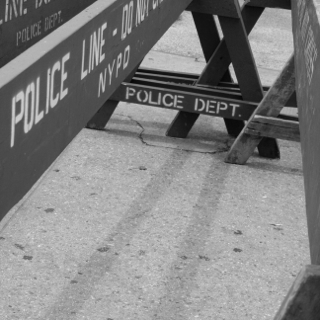
Black and white photograph of New York Police Department barriers taken by Alexandra Bogdanovic
NYPD barriers. Photo by Alexandra Bogdanovic

The piece, which you can read in print or at nytimes.com, focuses on Herman’s role as an “expert in visual perception” and her work with the New York Police Department. Specifically, the story’s about what happened when Herman took a few of New York’s Finest to the Metropolitan Museum of Art.

As Herman reportedly told them: “I’ve had people say, ‘I hate art,’ and I say, ‘That’s not relevant. This is not a class about Pollock vs. Picasso. I’m not teaching you about art today; I’m using art as a new set of data, to help you clear the slate and use the skills you use on the job. My goal when you walk out the door is that you’re thinking differently about the job.”

In other words, the “field trip” served as a perfect opportunity for the cops to hone their powers of observation.

As I See It

As far as I’m concerned, this is a fantastic program — and the NYPD’s decision to take advantage of it couldn’t make me happier.

Alexandra Bogdanovic
Founder/owner of In Brief Legal Writing Services, Alexandra Bogdanovic. Photo by N. Bogdanovic

You see, I studied art history in high school and college. I loved every single minute of it. Yes, you learn about art and architecture. But that’s not all. You learn how to look at the big picture — and all of the minute details. You learn how to evaluate both, and put everything in its proper context.

To put it another way, you learn critical thinking skills. You learn how to describe what you’ve seen in writing. You’ll find that two people can look at the exact same painting, sculpture or artifact and see something entirely different. But you’ll also learn the importance of seeing something for what it is not what you think it is.
A ‘dogged’ quest for justice

This vintage typwriter is our featured image.

I love it when I find cool stories on the Internet — and I love to share good news. So I was definitely excited when I came across a heartwarming article about Patty Richardson.

Richardson is a North Carolina-based private investigator who “specializes in animal cases.” Right now she’s focused on catching the (alleged) scumbags who swipe and sell dogs.

Now that may come as a surprise to you. Frankly it surprised me, too. But given what I’ve learned about “dognapping” and related scams recently, I’m glad to hear there’s someone out there who’s willing to help people whose dogs have disappeared.

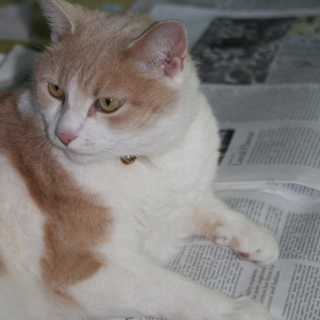
Eli, the In Brief Legal Writing Services mascot.
In Brief Legal Writing Services mascot Eli catching up on the latest news. Photo by Alexandra Bogdanovic

Of course, you might not be lucky enough to have a PI like Richardson where you live. And even if you do, there are steps you can take to find your dog before you summon reinforcements. The website fidofinder.com offers a comprehensive plan of action to follow when panic over a missing sets in. You should:

  • Calm down, take a breath and start with the obvious. Thoroughly check the house, yard and immediate area to make sure your dog is really “gone.”
  • Try to figure out how the dog got out of the house or yard and how long it might have been gone. That will give you clues about where it went and how far to look.
  • Designate someone to stay at home and man the phone when you start the search. That way someone will be available if anyone calls to report finding your dog, or brings it directly back to the house.
  • Be prepared to conduct a thorough preliminary search of the neighborhood by bringing a flashlight and photos of the dog with you.
  • Re-canvas your neighborhood on foot and by car if the initial search was not successful. You should also plaster the area with “missing dog” posters; and contact local veterinarians, animal shelters and animal control.
  • Use all available resources to spread the word, including social media and newspaper ads.
  • Remember the power of word-of-mouth. Tell your family, friends and neighbors about your missing pet.

To end on a personal note, here’s a little advice from yours truly. Don’t be afraid to call the authorities if you have reason to believe someone has stolen your pet. After all, the police are here to protect and serve.

NYC’s top cop unfazed by random attacks

This vintage typwriter is our featured image.
Black and white photograph of New York Police Department barriers taken by Alexandra Bogdanovic
NYPD barriers. Photo by Alexandra Bogdanovic

Oh, goody. New York City Police Commissioner Bill Bratton doesn’t seem to think a recent bunch of random attacks on ordinary New Yorkers is cause for alarm.

I feel so much better now. I’ll hop right on the next commuter train headed into the City. Once I get there, I’ll take the subway all over the place without thinking twice, as if nothing’s happened.

Or not.

I’m old enough to remember how scary Manhattan was in the 1970s and ’80s.  When I was little my parents kept a close eye on me on the train, and one of them — usually my father — had a death-grip on my hand from the minute our feet hit the platform at Grand Central. He didn’t let go until we arrived at our final destination, or until we were on the train heading back to the relative safety of the New York City suburbs.

We walked everywhere in Manhattan back then. Or we took a cab. Riding the bus was rare and taking the subway was unheard of. Dad said it was too dangerous — and I believed him.

I am old enough to appreciate the City’s renaissance. By the turn of the 21st century, it was safe enough — and I felt brave enough — to venture into Manhattan alone. I even camped out in Rockefeller Center one night. Of course I did with a group of friends so we could have the best “seats” for an outdoor concert the next day.

After I moved back to Connecticut from Virginia in 2012, I took advantage of my proximity to the greatest city on the face of the earth. In fact I romped all over it. I even gained the confidence to take the bus and the subway where ever I wanted to go.

Now The New York Times report about  random crimes occurring throughout the Big Apple sends shivers down my spine. According to the Jan. 27 article, at least a dozen people have been targeted by men armed with “knives or razors” in recent months.

In and of itself, news of these incidents — some of which have occurred on the subway, in subway stations and on public streets — is chilling. The police commissioner’s response is, too.

“We will always have crime in the city,” Bratton told The New York Times.

That may be true, Mr. Bratton. But it is your agency’s job to do something about it.


Why tougher gun laws will backfire

This vintage typwriter is our featured image.

So here’s the official disclaimer: I am not “pro gun.” I don’t even like guns…

They scare me. I’ve never even touched one (unless you count the toy cap guns and water pistols I played with when I was little). The thought of ordinary, law-abiding citizens having access to, much less toting assault rifles and similar firearms makes me sick. That they’re seemingly the weapons of choice for all manner of criminals, terrorists and other “bad guys” is an issue I will touch on later. For now all you need to know is that absolutely no one outside of the military, para-military organizations (law enforcement) and similar groups needs or should have any access to those types of weapons. Period.

Having said that, I am not a “gun grabber,” either. I fully respect and support the right to bear arms afforded to Americans under the Second Amendment. I believe that most law-abiding citizens who have guns believe and engage in responsible gun ownership. I also believe that any laws aimed at restricting access to certain types of firearms – or limiting gun ownership in general – will always backfire.  Ultimately these well-intentioned but deeply misguided laws will result in more criminal activity and more violence – not less.

The simple reason for this is one that President Obama and the rest of the gun control gang fail to realize: Laws only matter to those of us who choose to follow them.

Black and white photograph of New York Police Department barriers taken by Alexandra Bogdanovic
NYPD barriers. Photo by Alexandra Bogdanovic

Does anyone honestly believe that criminals will be deterred by tougher gun laws? If anything, organized crime groups, gangs, terrorists and their cronies welcome them. Think about it. It’s a simple question of supply and demand. Less or stricter access to “legal” firearms will create an even more lucrative black market. Unfortunately for the general public, the rush to claim the lion’s share of the revenue generated from illegal arms sales could easily result in more competition among certain people who couldn’t care less about who gets caught in the crossfire.

If you don’t believe me, all you have to do is find a U.S. History book and turn to the section on Prohibition…

Then there’s the matter of mass shootings. In their wake, much is made about how the perpetrator obtained his or her weapon(s). While it is largely a moot point, those who call for new gun laws claim stricter rules will reduce public access to the types of weapons used in the course of these tragic events. In a perfect world, that would be true. But we all know this world is far from perfect. Does anyone honestly think that someone desperate  or angry or crazy or determined enough to commit an act of terrorism or a mass shooting is all that concerned about the law? If someone is truly hell-bent on committing such a heinous act, he or she will use any means necessary to do so.

So President Obama can weep and stomp his feet, gnash his teeth and threaten to take executive action on the issue as much as he would like, while the rest of the gun control gang sings his praises.

The rest of us can only hope for the best.