
Something old, or something new?

This vintage typwriter is our featured image.

A Connecticut lawmaker’s efforts to strengthen existing animal cruelty laws raises an interesting question — and one that may not be unique to his state. Should there be tougher penalties for offenses committed under the current laws, or should the state’s animal cruelty statute be completely rewritten?

Alexandra Bogdanovic
Founder/owner of In Brief Legal Writing Services, Alexandra Bogdanovic. Photo by N. Bogdanovic

In a recent New Britain Herald article, State Rep. Gary Bryan explained why he’s backing legislation that failed to gain enough support to make it to the governor’s desk last year.  If it is enacted, anyone convicted of deliberately “maiming, torturing or mutilating animals” will face harsher punishments than they do now.

But one skeptic quoted in the story says  more can — and should be done.  In fact, the man in charge of New Britain’s animal control claims that the current rules are outdated and confusing. That makes successful prosecution of animal cruelty cases more difficult, Sgt. Paul Keller tells the New Britain Herald.

The solution? Keller suggests scrapping everything and rewriting the state’s animal cruelty statute with an emphasis on clarity and simplicity.

The thought of doing that might make some legislators run screaming from the room. I mean, why make things easier? Why make things better?

But all joking aside, I think they should do whatever it takes to ensure that anyone who intentionally injures an animal in any way is successfully prosecuted and punished to the fullest extent of the law.

If that means working their butts off to make sure the bill Byron’s backing makes it to the governor’s desk this year, so be it. If that means making partial revisions to the existing statute, then so be it. And if that means rewriting the entire statute, well, so be it.

What do you think? Leave a comment and let me know.


A quick trip to the DMV? Yeah, right…

This vintage typwriter is our featured image.

So here’s a quick survey for you. If you had a choice would you rather:

  1. Have a root canal
  2. Have a colonoscopy
  3. Go to the Department of Motor Vehicles

Sorry, “None of the above” is not an option.

Seriously. Does anyone like going to the DMV? Does anyone enjoy standing in long lines, filling out confusing paperwork and then sitting around for an hour or two or…

You get the point. And if you live in Connecticut, Governor Dannel Malloy feels your pain. Or so he says. According to a recent article in The Courant, the state’s chief executive knows just how to make future trips to the DMV quicker.

If you’re so inclined, you can learn all about Malloy’s plan here. Personally, I think the solution is painfully obvious. Hire and train more people. There’s nothing more infuriating than walking into the Department of Motor Vehicles and seeing one hundred people in line and a grand total of twelve DMV staffers on duty to meet their needs. As long as that’s the case, of course you’ll be waiting forever! Furthermore, and this is an important caveat, make sure the staffers on duty know what they’re doing. If there’s one thing that is more aggravating than the scenario I just mentioned, it’s standing in line forever and then having the person in front of you ask the clerk a difficult question. In my experience, it will add at least fifteen minutes to your wait — less if you are lucky.

Alexandra Bogdanovic
Founder/owner of In Brief Legal Writing Services, Alexandra Bogdanovic. Photo by N. Bogdanovic

Of course this idea will generate a backlash from many Connecticut residents and politicians who bemoan the state of its fiscal health and despise the idea of a bloated government workforce.

If the state can’t or won’t expand DMV staff to meet existing needs, perhaps it could simplify or reduce the rules that  necessitate trips to the DMV.

There are other options. Some have suggested outsourcing or privatization.  Maybe a multi-faceted approach would be best. I guess only time will tell. For now all I know for sure is that something has to give.


Make it stop! A plea for tougher telemarketing laws

This vintage typwriter is our featured image.

After hearing her voice at least once a day every day for God only knows how long, I have come to the conclusion that a day without hearing from “Carmen” is like a day without sunshine.

Apparently, “Carmen” is really concerned about me. For some reason my financial well-being means a great deal to her. “She” really wants to help me improve my credit and get lower interest rates. I know because she calls to tell me so. At least once  per day. Every day.

Alexandra Bogdanovic
Founder/owner of In Brief Legal Writing Services, Alexandra Bogdanovic. Photo by N. Bogdanovic

Sometimes she calls in the morning. Sometimes she calls in the afternoon. Sometimes she calls when I’m in the middle of dinner. If I don’t answer, she leaves a message. She doesn’t care if I hang up. She just calls back. You’d think she could take a hint. Or not.

I have no idea how she got my cell phone number… but sometimes she even calls on that.

To be honest, I’ve had it. I can’t take it anymore. I’m sick of hearing her funky, computer-generated voice. At this point, I just want “her” to quit bugging me. Are you out there “Carmen?” Can you hear me? If so, just leave me alone already! Please!

On a serious note, I guess I should take matters into my own hands. But here in Connecticut, the only way to keep from getting harassed by telemarketers is to sign up with the National Do Not Call Registry. There’s information on the state’s Department Of Consumer Protection website about how to how to join.

The DCP says it also enforces the “Do Not Call” law, so if worst comes to worst, I guess I can always file a complaint with the agency. The only catch is I’d have to put it in writing.

In the meantime, I’m taking this opportunity to appeal to state and federal lawmakers. I am asking nicely… no, I’m begging you. Enact stricter telemarketing laws. Please!

“Carmen” is driving me crazy!


Cruel and unusual punishment

This vintage typwriter is our featured image.

As a cops and courts reporter for more than 20 years, I covered more than my share of heartbreaking stories…

There was the aftermath of 9/11 in the New York City suburbs and the accidental drowning death of a small autistic boy. There were homicides, car crashes that claimed young lives and the “war stories” about battered young veterans coming home from Afghanistan or Iraq.

But for some reason the stories that bugged me most — the ones that I remember to this day — are those that involved animal cruelty, abuse or neglect.

As someone who loves animals and as a responsible pet owner, I couldn’t — and still can’t understand why anyone would deliberately hurt or even neglect an innocent dog, cat, horse… or any other creature for that matter. But you don’t need to love, or even like animals in order to find this behavior reprehensible. All you’ve got to be is a compassionate human being.

Alexandra Bogdanovic
Founder/owner of In Brief Legal Writing Services, Alexandra Bogdanovic. Photo by N. Bogdanovic

As someone who loves animals and as a compassionate person, I found a recent account about the confiscation of dozens of animals in Connecticut to be especially disturbing. According to a wtnh.com report, a complaint alerted authorities that something was amiss at the East Hampton complex back in September. Subsequent attempts to ensure the animals — including more than 30 horses — received adequate care on site reportedly yielded mixed results.

“The horses, along with two dogs, several rabbits and more than 80 chickens, were removed from the Fairy Tail Equine facility after an investigation that determined the animals were malnourished, not receiving proper veterinary care and kept in unhealthy conditions,” the Connecticut Department of Agriculture reported February 3. 

 Connecticut officials also said that the horses, which were confiscated pursuant to  a search-and-seizure warrant signed by a Superior Court judge, were transported to the department’s Second Chance large animal rehabilitation facility in Niantic. The smaller animals that were also seized have since been sent to nearby animal shelters.

 An investigation is ongoing and it is unclear whether the owners will face criminal charges.

In some cases, criminal charges aren’t warranted. Some people are simply financially or emotionally incapable of providing adequate care for their animals. Some are just irresponsible. In such cases, a simple ban on future ownership is all that’s needed.


Having said that, studies show in many cases that people who are capable of harming animals also show little regard for human life. As long as that is so, it’s essential that animal cruelty cases continue to be taken seriously and that offenders are prosecuted to the fullest extent of the law.


When the law goes to the dogs

This vintage typwriter is our featured image.

You must admit, my quest for blog fodder has yielded some pretty interesting results. Since I started doing these posts, I’ve written about everything ranging from pets (including my own) to New York City crime, an assessment of the Virginia courts and a recent U.S. Supreme Court ruling.

Alexandra Bogdanovic
Founder/owner of In Brief Legal Writing Services, Alexandra Bogdanovic. Photo by N. Bogdanovic

Last week I came across an interesting article in The Plainville Citizen about a controversial dog confiscation case. The lawsuit reportedly headed for U.S. District Court in Connecticut  “pits” the “owners and trustee” of a pit bull named Luca — who stands accused of biting people in three separate incidents — against the Town of Plainville. For brevity’s sake, I won’t go into too much detail about the litigation but you can read about it here.

I only say that because — as intriguing as it is — the lawsuit itself isn’t really what caught my attention. Now the details about the attorney representing the plaintiffs — that grabbed my attention. The man’s name is Richard Bruce Rosenthal, and according to The Plainville Citizen’s report, he is a self-proclaimed “dog lawyer.” He is also the co-founder of The Lexus Project, which provides “legal defense for all breeds.”

While doing some additional research about the organization, it became evident that some people embrace its mission — and some condemn it. Although I have mixed feelings on the subject, I am unwilling to do either.

However I am curious about whether or not animal advocacy is a growing trend in the legal world. At this point, I know of a former lawyer who is now involved in the mediation of animal disputes. I also read about a character with a similar role in the novel, The Hand That Feeds You by A.J. Rich.

How about you? Are you a lawyer or paralegal involved in animal advocacy? Do you know anyone who is? What do you think of the idea?

Leave a comment and let me know.


Baby, it’s cold outside!

This vintage typwriter is our featured image.

Newsflash: it’s winter, it’s cold and it might snow.

Dateline — Greenwich, Conn. As I write this, the East Coast is bracing for a weekend snow storm. And if the media is to be believed, this will be a storm of epic proportions – especially in the mid-Atlantic states.

Here in the greater New York City suburbs, some meteorologists are actually showing some restraint. They say we will only get 4 to 7 inches where I live and more further to the south and west. I’ll take it — but I must confess that I’ll be much happier if this nor’easter is a total dud. I’d really rather not spend my birthday shoveling snow, especially since I’ll officially be one step closer to the big “5-0.”

Alexandra Bogdanovic
Founder/owner of In Brief Legal Writing Services, Alexandra Bogdanovic. Photo by N. Bogdanovic

But all joking aside, the arrival of winter and all of the unpleasantness that it entails raises serious concerns for pet owners, animal lovers and those of us who are also interested in the law as it relates to the health and safety of dogs and cats.

To that end, local and national news outlets publish tons of stories about caring for companion animals during this time of year. One article that recently caught my attention was about a proposed change to existing rules in Ohio. According to the article on nbc4i.com, state lawmakers are considering proposed legislation requiring pet owners to bring their dogs inside in “extreme weather conditions.” Under current laws, people are allowed to leave healthy dogs outdoors as long as they provide adequate shelter.

Connecticut law also mandates that animals have access to acceptable “protection from the weather.” Anyone who fails to provide it may be charged with cruelty to animals. The penalty upon conviction is a maximum fine of $250, up to one year in jail, or both.

In New York, there are comprehensive rules about what constitutes appropriate shelter for “dogs left outdoors” and the penalties for failing to provide it. Perpetrators face fines ranging from $50 to $100 for the first offense, and $100 to $250 for the second and each ensuing offense. Under the law, violators have a set period of time to bring the standard to acceptable standards. Failure to take necessary action within that period can result in another violation.

Personally, I think it boils down to compassion and common sense. Please use both.


No easy answers

This vintage typwriter is our featured image.

Recently publicized incidents involving New Jersey and Connecticut animal shelters raise important questions for everyone concerned about the plight of unwanted dogs and cats in America.

As reported on NorthJersey.com, the Montclair, NJ, case highlights the controversy and confusion surrounding the use of the term “no-kill” in association with animal centers, shelters, and so forth. Taken on its face value, the term implies that no animal admitted to the facility will be euthanized for any reason. But as experts in the field quickly point out, that’s not necessarily the case. While policies likely vary, some, like those in place at the shelter in question, do permit euthanasia under extenuating circumstances.

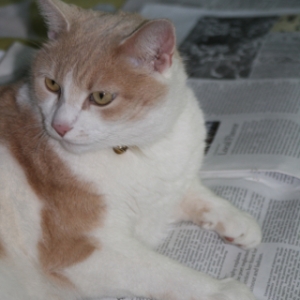
Eli, the In Brief Legal Writing Services mascot.
Eli reading.

Meanwhile, the director of one Connecticut shelter is wrestling with an entirely different issue. For years, many northern shelters, adoption and rescue groups have been “saving” unwanted dogs and cats from southern states where – for numerous reasons – their fate is uncertain. According to published reports, the Branford shelter director is wondering if that’s still a good idea. Her argument is that there are plenty of pets in need of good homes in Connecticut as it is, and that their needs should  be prioritized.

I’m not about to weigh in on either one of these debates. All I know is that any way you look at it, there is no easy answer.