Sorry, my mistake…

This vintage typwriter is our featured image.

This is so embarrassing. I mean, I really hate to admit it…. but I guess I should just go ahead and get it over with. So here goes nothing…

I’m not perfect.

Alexandra Bogdanovic
Founder/owner of In Brief Legal Writing Services, Alexandra Bogdanovic. Photo by N. Bogdanovic

I know, I know. No one is. But I hold myself to ridiculously high standards. I always have.

So when I see a typo in a blog (or anything else I’ve written for that matter), I get pretty mad at myself. I wasn’t kidding when I said it’s embarrassing. It’s actually humiliating — and in my line of work, it can also be very costly.

Think about it — I provide writing and editing services for attorneys — so who on earth would want to hire me if they scrolled through my website and found a whole bunch of mistakes? Never mind, that’s a rhetorical question.

Perhaps I shouldn’t be so hard on myself, though. As I said earlier, we all make mistakes. And usually I catch and correct my typos pretty quickly.  That in itself is pretty remarkable considering how our minds tend to play tricks on us when we are rereading our own copy.

Yes, I usually catch my bloopers straight away — but not always. Sometimes it takes a few hours — and sometimes it takes longer. It all depends on whether I read the material aloud as I am writing it, or if I am reading it to someone else after the fact.

One would think that the spell-checker (is spell-checker hyphenated?) or proofreading tool on a computer would help prevent the inevitable gaffes, bloopers, blunders and faux pas. Think again. These tools will help catch some spelling mistakes. They’ll help reduce grammatical errors. But the bottom line is, if a sentence with a mistake in it makes sense to the computer, the computer won’t even notice there’s something wrong.

Trust me. I speak from experience. Plenty of experience.

At least I know why I goof. Sometimes I forget to delete a word when I’m reworking a sentence. Sometimes I forget to delete unnecessary punctuation, as well. Sometimes, I realize that I’ve been using the passive voice (which I hate), but forget to change all of the language when I switch to the active voice. Sometimes I make mistakes when I’m overtired and sometimes my fingers just work faster than my brain. And let’s face it. Sometimes I’m just sloppy.

As I said earlier, no one is perfect.

Of course it would probably help if I let someone else edit my work. Another set of eyes is supposed to help. But I can’t afford to hire anyone right now and even if I could, I doubt I’d let them have editing privileges.

Yes, I’m a little bit of a control freak — especially when it comes to my writing. But as I said earlier, no one is… Never mind. I’m sure you get the point.

And anyhow, a second — or even a third — set of eyes doesn’t always help. I say this as someone who worked at newspapers for more than 20 years. Mistakes would often go unnoticed — even when we had editors and copy editors to review copy before the paper went “to bed.”

“Collectively we all felt like a bunch of asses afterwards…”

On one especially memorable (and humiliating) occasion, my editor wrote  a headline for a story about local beach pollution and the consultants hired to assess the situation. Only no one noticed that he left the last “s” out of the word “assess” until it was too late. Collectively we all felt like a bunch of asses afterwards…

Yes, that pains me to this day. But at least we weren’t alone. You can read about some real doozies here.

Hopefully I won’t make any terrible blunders — but if that does transpire, I am counting on you, my small but loyal band of followers, to let me know. All I ask is that you do so nicely. After all, we are all in this together.

You can also let me know how you feel about typos in general. Do you struggle with your own mistakes? Do you get upset when you see mistakes in other people’s copy? Share your thoughts in the comments section below…
After Dallas, Baton Rouge and Nice, I surrender

This vintage typwriter is our featured image.

Phew! The s–t storm that the landscapers were creating in my yard just ended and I can finally hear myself think. More importantly, Eli feels safe enough to come out of hiding.

To me, the tree shredding machine in use for the better part of an hour sounded like a jet engine on steroids. I can only imagine what it sounded like to my cat. All I know is, the second that racket started, he tried to dive under the bed. When he discovered there wasn’t any room there, he sought refuge elsewhere.

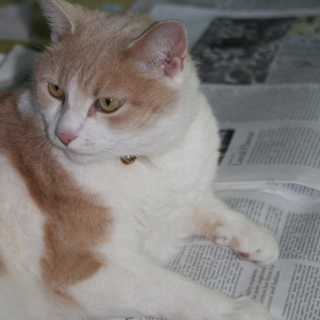
Eli, the In Brief Legal Writing Services mascot.
In Brief Legal Writing Services mascot Eli catching up on the latest news. Photo by Alexandra Bogdanovic

Lately I’ve been wishing I could hide under the bed. Not that it would solve anything. But given recent events in Dallas and Nice and Baton Rouge — and current events in Cleveland — I just need a break from all of the madness.

My faith in humanity is taking a beating. My moral outrage is almost spent. I can’t cry anymore. I’ve had it. I’m pooped.

Fortunately, I found some stories that have nothing to do with cop killing, terrorism, or presidential politics. Since I’m exceedingly generous — and since we can all use some good news at this point, I’ve decided to share links to my favorites. In no particular order, here they are:

  1. In California, Ventura County Animal Service just got a big grant from the Petco Foundation. According to published reports, the agency will use it to fund a program that helps people keep their pets. You can read more here.
  2. A new study just identified some really cool pets for people who want something other than a dog or cat. Of course, getting one might be a little tricky. Find out why here.
  3. Eli hates going to the vet. And to be honest, I hate taking him there. If you and your pet feel the same way, “mobile pet care” could be the solution. Read this to learn more.
  4. A large donation will allow a New York State humane society to help people who can’t afford to feed their pets. Read more here.

I hope this lifts your spirits or makes you smile. Maybe things aren’t as bad as they seem, after all.

A police reporter’s perspective

This vintage typwriter is our featured image.

I haven’t been able to stop thinking about my friends lately — and with good reason. Most of them are cops.

I’ve known a lot of these guys for at least 12 years. I’ve known some of them longer than that.

Alexandra Bogdanovic
Founder/owner of In Brief Legal Writing Services, Alexandra Bogdanovic. Photo by N. Bogdanovic

Having said that, I must admit I wasn’t happy about getting the cops and courts beat when I started working at The Greenwich Post back in 1996. In fact, it was the last thing I wanted. I was so upset I cried. But I did my job. I didn’t love it — but it was OK.

When a new reporter joined the staff, I happily handed her the police beat. And it was only when I no longer had the job that I learned to appreciate it. With no pressure, I started doing some features on the Greenwich Police Department and getting to know everybody there a lot better. From that point on, covering cops was all I wanted to do.

In 1999 I left the Post to work at a weekly newspaper in Westchester County. And that’s when I got a chance to cover not one but three different law enforcement agencies. Two of them are pretty small and the police beat in those communities was pretty tame. And then there was the PCPD.

The Port Chester Police Department is pretty small, too. But because it serves a more urban, densely populated and ethnically diverse community, let’s just say that writing about crime there was often… challenging. Believe it or not, it was fun, too.

A lot had changed by 2003. The publisher had sold the newspaper where I had actually enjoyed working in the summer of 2001. The new owners were…. well, the less said about them, the better. So in January 2004, I moved 300 miles away from home to join the staff of what had once been one of the best suburban newspapers in the country.

I had a five-year plan when I moved to Warrenton, Va. But for various reasons I ended up staying there for more than eight. The cops in the law enforcement agencies I covered there became friends. And because I had moved to Virginia alone, without knowing anyone, they also became my surrogate family. That didn’t mean I compromised my objectivity, though. If anything, it made me work even harder to make sure my “journalistic integrity” remained in tact. (You can stop laughing now. It does exist — and I did have it.)

Having said that, there was one time when I almost lost it. It was December 29, 2009. I had just brought Eli home from the vet, and was making lunch when I heard a court deputy’s voice come across the police scanner. “Officer down! All units! Shots fired! Officer down!”

At first I thought it was some sort of drill. But I didn’t waste too much time thinking about it. I set the land speed record from my house to the courthouse, where a bank robbery suspect awaiting a hearing made a desperate bid to escape. He stabbed one deputy in the face and then used his first victim’s gun to shoot another deputy who intervened.

I arrived at the Fauquier County Circuit Court building to find the scene had already been secured. No one objected when I joined a K-9 handler on the perimeter and snapped some photographs of one of the victims being loaded into an ambulance. Long before the D.C. media arrived on the scene, I learned that perpetrator was quickly subdued and that both deputies — one of whom I knew pretty well — were expected to make full recoveries.

It was a very, very close call.

I think about that day every time I hear about a police officer being hurt or killed in the line of duty. I say a silent prayer for the victim(s) and their families. And then I thank God it was no one I know.

I think about my friends every time I hear about a law enforcement officer being hurt or killed in the line of duty. And then I say a prayer that they’ll all stay safe. Because they have husbands and wives and boyfriends and girlfriends and children and parents who would be destroyed if anything happened.

And then I think about the thugs and criminals who prey on innocent, law-abiding citizens and the cops who are sworn to protect them. And then I say a prayer that they’ll be brought to justice — even though I know that seldom happens.

Frankly it makes me sick. But not half as sick as I feel when I listen to President Obama and New York City Mayor Bill de Blasio making baseless and ignorant comments that fuel anti-police sentiment. Thanks largely to their anti-law enforcement rhetoric, people like alleged Dallas sniper Micah Johnson think it’s perfectly okay to declare open season on police.

Now I will never deny that there are some really bad cops out there. There are plenty of racists and bullies in uniform — there is no doubt about it. They make me sick. And yes, Mr. Obama, they should be held fully accountable for their actions.

But what about the thugs and gangsters and criminals who routinely target honest, decent, hard-working cops in law enforcement agencies across the country? What about all of the people in this country who want to kill cops just because they’re cops? What about them, Mr. President? What about them?

An open letter to American politicians after the Dallas shooting

This vintage typwriter is our featured image.

Dear President Obama et al:

It’s been less than a week since alleged Dallas gunman Micah Johnson killed five police officers and injured seven in a hate-fueled rampage.

I’ve heard some people are angry because they don’t think some of you’ve said enough about the tragedy. Personally I think you’ve all said too much. And every time you open your mouths, things get even worse.

Wreath. Shot at Memorial Day Service in Warrenton, Virginia in 2011. Photo by Alexandra Bogdanovic
Memorial Day Wreath. Warrenton, Va., 2011. Photo by Alexandra Bogdanovic

So please do me a huge favor. Just be quiet.

The immediate aftermath of a national tragedy is not the time to promote your personal and political agendas. Please show some respect. Give the victims’ families the time and space they need to grieve before you start pontificating about racism, gun control or any other relevant issue. There will be plenty of time to talk about that later.

Please remember that it’s not always about you — and that most of us couldn’t really care less about what you think.

I seldom agree with New York Police Commissioner Bill Bratton, but as he said when Donald Trump and Hillary Clinton reportedly approached him in the wake of the Dallas shootings:

“Our interest is staying out of the politics of the moment, and not to provide photo ops,” Bratton said. “If Mr. Trump wants to speak to me, I would be happy to brief him on what we’re doing. If Sen. Clinton wants to speak to me, I would very happy to brief her on what we’re doing. But we are not in the business of providing photo ops for our candidates.”

Perhaps you should all take the hint.

But if or when another tragedy befalls us and you feel compelled to say something about it, please consider the following suggestion:

My fellow Americans,
In the wake of the tragedy that has befallen our nation, it is understandable that you should seek comfort and reassurance from your elected leaders. Please know that we are monitoring the situation and will do everything within our power to ensure the safety and security of all of our citizens.
Because this is an ongoing investigation, we are refraining from any comments about the incident itself at this time. We respectfully request that the media directs questions to the appropriate authorities. We also request that the media respects the victims’ families need for privacy….

Thank you for your time and consideration with regards to this matter.
Sincerely,
A Concerned Citizen

Hate begets hate

This vintage typwriter is our featured image.

If just half of the information that has surfaced about alleged Dallas cop killer Micah Johnson over the weekend is true — and I do stress if because I would really rather not get sued — one thing is for sure. This was a sick, warped, twisted young man.

“We’re convinced that this suspect had other plans and thought that what he was doing was righteous and believed that he was going to make law enforcement and target law enforcement, make us pay for what he sees as law enforcement’s efforts to punish people of color,” Dallas Police Chief David Brown said in published reports.

Brown also said that recent police shootings that claimed the lives of black men in other parts of the country prompted the rampage that injured seven law enforcement officers and killed five.  When police tried to convince him to surrender after the shooting, the alleged gunman indicated he wanted to kill even more police officers, Brown added.

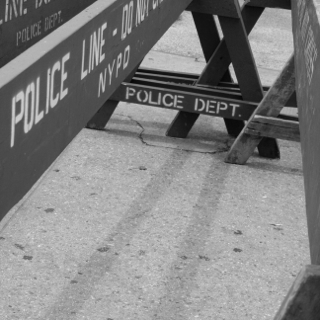
Black and white photograph of New York Police Department barriers taken by Alexandra Bogdanovic
NYPD barriers. Photo by Alexandra Bogdanovic

If that’s not twisted, I don’t know what it is.

It’s also sad. Very sad. But in all honesty, it’s not surprising — because that’s what hate does. The ugliness hardens your heart. It messes with your mind. Before you know it, you’ve been consumed by it — and there’s no going back.

Now, some of you may be wondering what a middle-aged, middle class white woman from Connecticut really knows about hate — or discrimination for that matter. Trust me. I know plenty.

If I had a dollar for every misogynist comment I heard while working as a police reporter, I would be independently wealthy. Every time I got upset, one of the guys asked whether it was “that time of the month.” Every time I showed any emotion, one of the guys said it “must be a woman thing.”  I had a strict rule about dating guys in the agencies I covered. I never did it. Ever. But if you think that stopped the “locker room talk,” think again. I guess it’s just the price I paid for being “one of the boys.”

As if all of that wasn’t bad enough, I never made as much as my male colleagues. And my male bosses — who were easily intimidated by an assertive woman — routinely treated me like garbage. Not that I put up with it at all.

But yes, I know a few things about gender discrimination.

I know a few things about hate, too. Back in the 1990s, my father received death threats because of his ethnicity (and a Letter to the Editor he sent to The New York Times). Things got so bad we had a wire tap on our phone and FBI agents in our house.

I was the one who answered the phone when one guy called and asked for Dad. When I asked what he wanted, he said something about a furniture order. When I told him (in no uncertain terms) that I had no idea what he was talking about, he told me to “tell that effing Serb his coffin is ready.”

Yes, I remember that phone call to this day. And yes, I know a few things about hate.

I also know we all have choices. Ultimately we determine how we react to discrimination or hate. We can choose violence, or we can find another way to defeat those who are determined to bring us down.

Some of the greatest men in history found another way. Dr. Martin Luther King Jr. Nelson Mandela. Mahatma Gandhi. All three suffered. All three fought for what they believed in. All three advocated for change through nonviolent means.

I’m not exactly a “sit around the camp fire and sing Kumbaya” kind of girl. I don’t agree with everything these men espoused. But I do believe we should all strive to follow their lead.

Because at the end of the day, hate begets hate. Violence breeds more violence. And nothing will change.

The restoration of American greatness has nothing to do with Donald Trump

This vintage typwriter is our featured image.

My Fellow Americans —

As I write this, most of you are no doubt counting the hours until the long holiday weekend. I am sure you are preoccupied with travel plans and dreading the drive to the beach or the lake or the mountains. I am sure you are looking forward to hanging out with family and friends. I have no doubt you are also looking forward to pool parties, parades, barbecues, and fireworks.

Old Glory. American Flag. Photo taken at Memorial Day Ceremony by Alexandra Bogdanovic
American Flag. As seen at Memorial Day ceremony in Warrenton, Virginia. May 2011. Photo by Alexandra Boganovic

As I write this, I am pondering the wisdom of writing a “political” blog on my business site, especially given the political climate in the United States these days. To do so would be professional suicide.

So it’s a good thing this has absolutely nothing to do with politics. It has to do with us.

You see the true measure of American greatness has nothing to do with Donald Trump — or Hillary Clinton, for that matter. It has nothing to do with Bernie Sanders or anyone else who wants to be president. It has nothing to do with who is in the White House or who is in Congress or who is in charge of each state.

It has nothing to do with Republicans or Democrats, or liberals or conservatives. It doesn’t matter if our leaders are progressives or populists.  It has nothing to do any political label or political philosophy.

The true measure of American greatness lies in its people. It lies in each and every one of us. Whether we like it or not. Whether we care to admit it or not.

We The People Of The United States…

The undeniable link between American greatness and its people can be traced through history. In fact, it can be traced to a time before the United States as we know it even existed.

It can be traced back to the time when a bunch of colonists, fed up with British tyranny and oppression, decided to do something about it. They decided to fight back.

In the Declaration of Independence, dated July 4, 1776, they said:

“We hold these truths to be self-evident, that all men are created equal, that they are endowed by their Creator with certain unalienable Rights, that among these are Life, Liberty and the pursuit of Happiness. — That to secure these rights, Governments are instituted among Men, deriving their just powers from the consent of the governed (emphasis added), — That whenever any Form of Government becomes destructive of these ends, it is the Right of the People (emphasis added) to alter or to abolish it, and to institute new Government, laying its foundation on such principles and organizing its powers in such form, as to them shall seem most likely to effect their Safety and Happiness.”

Red, White and Blue Umbrella. Pictured on Memorial Day, 2011. Photo by Alexandra Bogdanovic
Patriotic Colors. Memorial Day Ceremony in Warrenton, Va., May 2011. Photo by Alexandra Bogdanovic

A similar sentiment is conveyed in the Preamble to our Constitution, which reads:

“We the People of the United States, in Order to form a more perfect Union, establish Justice, insure domestic Tranquility, provide for the common defence, promote the general Welfare, and secure the Blessings of Liberty to ourselves and our Posterity, do ordain and establish this Constitution for the United States of America.”

Note how these documents are written. They do not begin with “We, the leaders of the United States of America.” Nor do they say anything about “we, the politicians of the United States of America.”

Gee, I wonder why?

Together, We Can Make America Great Again

Wreath. Shot at Memorial Day Service in Warrenton, Virginia in 2011. Photo by Alexandra Bogdanovic
Memorial Day Wreath. Warrenton, Va., 2011. Photo by Alexandra Bogdanovic

But seriously, putting all sarcasm and snarfiness aside, what does this really mean?

In the simplest terms, it means that as Americans we are in charge of our own destiny. It also means that our future will be shaped not by the decisions our leaders make, but the key decisions we all make every day. They are:

  • How to react to hateful political rhetoric
  • Whether to embrace politicians that engage in hateful rhetoric
  • How to handle our political differences
  • Whether to let those differences tear us apart
  • How to regard compromise (as a sign of strength or weakness)
  • How to react to the things we don’t understand
  • How to react to the things that scare us
  • How to handle disagreements
  • How to express ourselves
  • Whether to exercise our right to vote
  • Whether to do our due diligence so we are fully informed when we cast our ballots
  • Whether to let the mainstream media, educators and pop culture dictate what we think
  • Whether to let others dictate how we behave

When all is said and done, what we choose to do determines not only how others view us, but how we see ourselves. After all, it is easy to blame our leaders for everything that is wrong with our country. It is much harder to look in the mirror.

An (alleged) criminal with a conscience… who knew?

This vintage typwriter is our featured image.

OK. I admit it. I am a cynic. No, make that a dyed-in-the-wool cynic. And I’m proud of it. Not that it should come as a shock or anything. I was a reporter for more than 20 years.

Alexandra Bogdanovic
Founder/owner of In Brief Legal Writing Services, Alexandra Bogdanovic. Photo by N. Bogdanovic

So imagine my surprise when I came across an article with the following headline: “Fugitive pens letter to law enforcement agencies a week after his capture.”

At first I thought the story might have been left over from April Fools’ Day and someone accidentally re-posted it. Then I thought it was a hoax. Then I actually read it.

Yep, it’s for real, alright. Seriously.

Here’s what happened. Apparently this guy in Texas wasn’t happy about getting pulled over by the police. So he decided to get out of the car and run… and with that, a routine traffic stop turned into a royal cluster-bleep.

The good news is that the good guys — and their dogs — did catch him. Eventually. From what I read, the chase lasted an hour before he was finally taken into custody.

“What I witnessed that night by all the law enforcement personnel was a level of professionalism and team work and respect that I’ve never seen before,” Gregory Wylie said in his letter, which FOX 12 News posted along with the story.

Wylie also admits that he ran because he was “not man enough to face the consequence of my action which led up to the point in my life.”

Well, I don’t know about you. But I, for one, applaud Wylie for having the courage to admit that. It takes guts to admit your shortcomings and it takes a certain amount of intestinal fortitude to apologize.

Still, I can’t help but question his motives. Was he really sorry for what he did? Or did he just want to score points with the judge?

Words to soothe a savage beast: how reading affects traumatized dogs

This vintage typwriter is our featured image.
Eli, the In Brief Legal Writing Services mascot.
In Brief Legal Writing Services mascot Eli catching up on the latest news. Photo by Alexandra Bogdanovic

A few weeks back, I mentioned that my cat, Eli, is extremely sensitive. And in that regard, nothing’s changed.

But I did learn something interesting the other day. Or more accurately an article in The New York Times confirmed something I’ve always suspected: animals might not understand everything we say, but they definitely understand our tone of voice.

I guess that’s why volunteers read to dogs at the ASPCA in New York City.

“As long as you read in a nice soothing voice, they enjoy it,” Hildy Benick, 69, a volunteer who has been with the reading program since shortly after it started, told the Times.

Victoria Wells is the senior manager of behavior and training at the ASPCA. She started the reading program in 2013, and says it is a great way to help dogs that have to relearn how to trust people.

“You know within each session the progress that they’re making,” she told the Times.  “In the beginning of the session, the dog might be in the back of their kennel cowering, and then they move forward, lie down, relax; their tail might wag.”

Meanwhile, across the country, volunteers are reading to dogs and cats at the Arizona Animal Welfare League and SPCA.

Like their counterparts in New York City, the animals awaiting adoption in Phoenix are good listeners. And apparently they’re not too picky about which reading material their human pals share. If you think about it, that’s saying a lot, considering some of the college kids that volunteer at the shelter often read from their text books, according to Whitney Fletcher, Director of Volunteers & Special Events at AAWL & SPCA.

“As you read out loud, you are focusing on something other than the animal,” she says. “In turn, the animal grows accustomed to your presence and voice, which is calming. Dogs and cats find the rhythmic sound of a voice very comforting and soothing.”

If it works with shelter animals, there’s no reason why it shouldn’t work with our dogs and cats, too. So the next time you curl up with a good book, try reading to your pet and see what happens. He (or she) just might enjoy it.

A plea for sanity

This vintage typwriter is our featured image.

“I met a girl who sang the blues
And I asked her for some happy news
But she just smiled and turned away…”

— from “American Pie” by Don McLean

Alexandra Bogdanovic
Founder/owner of In Brief Legal Writing Services, Alexandra Bogdanovic. Photo by N. Bogdanovic

I know it’s only Monday, but it’s been a hell of a week.

By now you know that a Florida gunman killed 50 people and injured 53 at a gay nightclub in Orlando early Sunday morning. The massacre is “the deadliest mass shooting in U.S. history,” according to published reports.

In other news, late last week and again over the weekend, several media outlets published stories about the pleas for leniency in sentencing made by convicted sex offender Brock Turner’s parents. In and of itself that is not a big deal. What makes it newsworthy — and frankly unbelievable — is that not once do Dan or Carleen Turner express concern or remorse about what their little golden boy did. In fact, they were both too busy crying about how “the verdict” ruined their lives to acknowledge he did anything wrong.

What is even more disgusting is that these self-centered, narcissistic swines (for lack of a better description) got their wish. Their son, Brock, who was convicted of sexually assaulting an unconscious woman behind a dumpster on the Stanford University campus in January 2015, got only six months in jail and three years probation.

Elsewhere over the weekend, English and Russian soccer “fans” gathered in France, where teams representing their countries faced off in Euro 2016, the European Championship tournament. Unfortunately, troublemakers from both countries reportedly incited violence prior to and during the game.

Collectively, this is more than enough to make any sane person wonder just what the hell is going on.

Stop The World, I Want To Get Off

What is almost as disturbing as the violence itself is the reaction to it. In this case, I am referring specifically to the reaction that occurred in the wake of the Sunday morning massacre.

Media reports issued before all of the facts were known fueled speculation about the shooter and his motive. Politicians started mouthing off before all of the facts were known. People commenting on Internet stories about the incident resorted to trading insults, name calling, and generally carrying on in a completely disgusting and reprehensible manner.

Not that it surprised me. That’s what always happens after an incident of this magnitude. But that doesn’t make it right. Not by a long shot.

The time in the immediate aftermath of any tragedy is not the time to politicize the issue, nor is it the time to engage in the stupidity commonly seen on the Internet. Honestly, does screaming louder than the other guy or calling him names or insulting his mother really make anyone feel better? Does it do any good? Does it change anything?

I think not.

Enough Is Enough

The hours and days following a tragedy of this magnitude is the time to find compassion in our hearts and rally to help everyone affected. It is the time to offer what little solace we can for families and friends of those who were lost and those who were injured. It is the time to grieve for and with those now facing inexplicable heartache. It is time to respect their privacy, but it also time to give them a forum to share their feelings if they wish to do so.

We must give those who were injured space and time as they begin to heal. We must give those who lost friends and loved ones time to mourn.

Then — and only then — will there come a time when we must put our differences aside and have a meaningful discussion about the important issues at hand. We must find it within ourselves to put our egos aside and enter an open dialogue about terrorism, radical Islam, gun control, gun owners rights, homophobia and the hate that generally plagues this country.

It is crucial that we find some way to come together — and we can do it. We did it after 9/11 — and we can do it again. We must.

If we don’t, we are doomed. It’s as simple as that.

Teaching cops the art of observation

This vintage typwriter is our featured image.

Cops and reporters are often at odds. But — as someone once told me — we’re also a lot alike. For one thing — as someone also told me — we’re all students of human behavior.

For cops, the ability to read people is literally a matter of life and death. Besides being key to survival on the street, it is also an essential factor in making arrests and the successful prosecution of the offenders.

As a result, good cops can read body language as easily as most people can read a newspaper. The best can spot a “tell” or visual cue about someone’s true intentions, from a proverbial mile away.

But even the best make mistakes. And even honest mistakes can have disastrous consequences.

Clearing Things Up

Let’s face it. Cops are nothing if not cynical. But given the nature of their work, who could really blame them for seeing the world through jaded eyes? Unless, of course, that cynicism morphs into something worse. Once that happens, there’s no going back.

So law enforcement agencies throughout the United States are now turning to an expert in another field in order to help their officers see things differently. Her name is Amy E. Herman, and The New York Times just did a feature story about her.

Black and white photograph of New York Police Department barriers taken by Alexandra Bogdanovic
NYPD barriers. Photo by Alexandra Bogdanovic

The piece, which you can read in print or at nytimes.com, focuses on Herman’s role as an “expert in visual perception” and her work with the New York Police Department. Specifically, the story’s about what happened when Herman took a few of New York’s Finest to the Metropolitan Museum of Art.

As Herman reportedly told them: “I’ve had people say, ‘I hate art,’ and I say, ‘That’s not relevant. This is not a class about Pollock vs. Picasso. I’m not teaching you about art today; I’m using art as a new set of data, to help you clear the slate and use the skills you use on the job. My goal when you walk out the door is that you’re thinking differently about the job.”

In other words, the “field trip” served as a perfect opportunity for the cops to hone their powers of observation.

As I See It

As far as I’m concerned, this is a fantastic program — and the NYPD’s decision to take advantage of it couldn’t make me happier.

Alexandra Bogdanovic
Founder/owner of In Brief Legal Writing Services, Alexandra Bogdanovic. Photo by N. Bogdanovic

You see, I studied art history in high school and college. I loved every single minute of it. Yes, you learn about art and architecture. But that’s not all. You learn how to look at the big picture — and all of the minute details. You learn how to evaluate both, and put everything in its proper context.

To put it another way, you learn critical thinking skills. You learn how to describe what you’ve seen in writing. You’ll find that two people can look at the exact same painting, sculpture or artifact and see something entirely different. But you’ll also learn the importance of seeing something for what it is not what you think it is.