As 2016 draws to a close, The New York Times has mixed news for female attorneys and law school students.
On one hand, the newspaper reports, most of the students currently enrolled in American law school are women. Apparently this is the first time that’s happened.
Founder/owner of In Brief Legal Writing Services, Alexandra Bogdanovic. Photo by N. Bogdanovic
Currently, 55,766 women nationwide are studying for a juris doctor degree, compared with 55,059 men, according to American Bar Association (ABA) data cited by the Times. First-year students are more than 51 percent women, or 19,032, and 48.6 percent men, or 18,058.
“There are more women than men based on data we have,” Barry Currier, managing director for accreditation and legal education at the A.B.A.’s Section of Legal Education and Admissions to the Bar told the Times.
“It is a snapshot in time, and the numbers can be updated by the schools. But it is not likely to be large numbers.”
In the same article, a law professor warned against reading too much into the statistics. Specifically, Deborah J. Merritt said that additional information she compiled with a colleague shows that not all of the women that study law do so at the top-tier schools. The law school from which a student graduates had a direct impact on job placement and earnings, she added.
Additional ABA data seems to support that conclusion. As of this year, it shows, there were more than 1.3 million licensed attorneys in the United States. Of those, only 36 percent are women.
Clearly there’s still room for improvement. But at least we’re heading in the right direction.
Like most little girls, I loved horses and always wanted one of my own. Unlike most little girl, I was highly allergic to them. So I didn’t start riding until I was a teenager.
Founder/owner of In Brief Legal Writing Services, Alexandra Bogdanovic. Photo by N. Bogdanovic
Since then I’ve ridden semi-competitively (as the captain of the Manhattanville College Equestrian Team), but mostly for fun. I’ve also volunteered as a “side walker” in therapeutic horseback riding programs for physically and emotionally challenged kids. And in all honesty, that’s what I miss the most. There’s just something about seeing a kid’s face light up while he or she is riding that’s really, really cool.
Recently, I read about a different kind of therapeutic program that benefits people and horses. This one is based at a women’s prison in Niantic, Connecticut. Co-sponsored by the state Department of Agriculture, it allows the inmates to help care for horses that were confiscated during animal cruelty investigations.
“[The inmates] do everything from help feeding, cleaning out the stalls, moving them around from pen to pen,” Damian Doran, a Supervisor at the York Correctional Facility told a New Haven television station. “The animals have had hard lives, and in some ways the inmates can relate to that because they have had their own struggles, too,” he added.
The inmates learn about responsibility, learn skills they can use after they’ve been released. Most importantly, they learn (or relearn) what it’s like to care for another living creature.
The horses learn (or relearn) to trust people while waiting to be adopted.
Any way you look at it, everyone gets a second chance. And in my book, that’s pretty damned cool.
Anyone who has followed this blog for any length of times knows that I am unashamed and unapologetic when it comes to my support for law enforcement.
I simply cannot, do not, and will never buy into the politically correct, liberal, media-driven narrative that most American cops are violent, racist, subhuman creatures who are running amok with impunity.
Founder/owner of In Brief Legal Writing Services, Alexandra Bogdanovic. Photo by N. Bogdanovic
Having said that, my support is not unconditional, nor is it given blindly. As a former crime reporter, I am fully aware of the abuses perpetrated by some police officers. As I have said before — and will no doubt say again — any police officer who engages in racism or otherwise abuses their authority should be punished to the fullest extent of the law.
Apparently I am not alone.
Earlier this month I came across an article about an Indiana man who is also voicing his support for law enforcement. His name is Craig B. Moore, and he recently wrote a song called Thin Blue Line.
Proceeds from downloads on iTunes, Google Play and Amazon will be used to benefit the families of slain law enforcement officers and fund regional law enforcement programs. Specifically, the money will go to the Indiana Chapter of C.O.P.S. (Concerns of Police Survivors), the Hancock County Sheriff’s Department and the Rush County Sheriff’s Department.
The proceeds designated for the Hancock County Sheriff’s Department and Rush County Sheriff’s Department will be used for each agency’s K-9 program.
Moore’s goal is to raise $10,000 for the organizations.
As he told an Indiana TV station, “I hope that this reaches a lot of people and helps provide some sort of comfort to them.” Moore also said he wants the police to know how most Americans feel about them. He explained that he wrote the song in order to “provide the message that they’re our heroes, they’re out there to protect all of us day and night and they work hard to do that.”
Moore got the idea for the song after his brother-in-law — who works for the Rush County Sheriff’s Department — wrote to him this summer. According to Moore’s brother-in-law, Joshua Brinson, the letter was basically a “one page kind of an essay based on a fallen officers funeral and what goes through with all of that.”
Brinson reportedly wrote the letter after five officers were killed in Dallas over the summer.
He then sent it to Moore.
“It affects all of us that wears the uniform, but more importantly, it affects the families and that’s kind of how I looked at that,” said Brinson.
To say it’s been a rough year for American law enforcement is a bit of an understatement. There’s been too much sadness, too much loss, too much fear, too much mistrust, and too much ignorant rhetoric.
And in a year when the people who have screamed the loudest and engaged in the most hateful rhetoric have dominated the news, it’s nice to hear that someone has actually raised his voice for a good cause.
As a volunteer at a local animal shelter, I’ve seen my share of mistreated and unwanted pit bulls. And it’s heartbreaking. For the most part, these are wonderful, affectionate dogs in desperate need of loving homes.
They get a bad wrap — and they don’t deserve it.
An Adopt-a-Dog volunteer with a dog up for adoption at the annual Puttin’ on the Dog show in Greenwich last September. Photo by A. Bogdanovic
If you don’t believe me, just wait until you hear this story about an heroic pit bull puppy. According to various media accounts, Apollo, a five-month-old pit bull, was out for a walk with his master’s girlfriend when he came to her rescue.
As the New York Post reports, Maya Fairweather, 18, decided to take Apollo for a walk in the Red Hook section of Brooklyn, N.Y., at approximately 10 p.m. Monday. She had just turned the puppy loose in a neighborhood park when an unknown man allegedly attacked her.
“I felt someone pull my headphones,” Fairweather told the Post. “I thought it was my boyfriend grabbing me, so I turned around and smiled — but it wasn’t my boyfriend.”
As the alleged assailant knocked her to the ground and tried to remove her pants, Apollo intervened. Showing remarkable bravery, tenacity and loyalty, the puppy bit the man and held on until Fairweather could get away.
“He was protective,” Fairweather said, referring to Apollo. “I think it would’ve been a lot worse. I wouldn’t have been so lucky.”
Fortunately, Apollo also emerged from the incident unscathed.
Police are now looking for the suspect in the case — and with all of the publicity it has generated, it is unlikely he will remain at large for long.
And with all of the fuss over Apollo’s heroism, it’s unlikely anyone will mess with his master or Fairweather again. If nothing else, Apollo can always lick someone to death, she said.
“He is a sweet dog. I never thought he would bite anyone. He never bit anyone before. He’s usually very friendly and just jumps on everyone,” she told the Post.
I know I’ve said it before — and I’ll probably say it again. This is one of the coolest, most awesome stories I’ve come across in a long time. And this time I mean it. Really.
In Brief Legal Writing Services mascot Eli catching up on the latest news. Photo by Alexandra Bogdanovic
Apparently, Connecticut school kids recently “elected” a new governor. Or more accurately, a new “Kid Governor.” Her name is Jessica Brocksom and she’s in fifth grade.
According to published reports, the John F. Kennedy Elementary School student is the second Kid Governor elected as part of the Connecticut Public Affairs Network’s Kid Governor program.
Brocksom “defeated” six other students from Connecticut schools who submitted campaign videos this year. She secured the victory by capturing most of the 4,000 votes cast by fifth-graders from more than 40 towns.
As one Connecticut TV station reported, the key to Brocksom’s success was a timely and appealing platform.
“I just chose something that I felt very passionate about and I knew animals was one of my things because not many people pay attention to animals,” Brocksom informed the media during her first “post-election” news conference.
Among other things, Brocksom feels strongly about harsher punishments for those convicted of animal abuse.
As the newly elected Kid Governor, Brocksom will share her passion for animal advocacy with her peers beginning after her “inauguration” in January. Specifically, she will share ideas about how kids can get involved in activities to help unwanted and abused animals.
“You can just have a bin and have it like a food drive once or twice a year and you can donate a lot to an animal shelter to help with the animals that have been abused,” said Brocksom.
Organizers said the Connecticut Public Affairs Network created the Kid Governor program in order to “teach kids about civics and state government, but also about civic participation.”
Based on this year’s outcome, I’d say the program’s definitely a success. Congratulations, Jessica. And best of luck in the future. I’d say it’s looking pretty bright.
Last week, Connecticut’s law enforcement family lost a true hero.
According to published reports, Thor, a Wethersfield Police K-9, died in the line of duty. He was just three years old.
The incident ultimately that claimed his life began with an alleged kidnapping in Hartford last Monday. The suspect in the case reportedly took the victim to a Wethersfield motel. The suspect fled into a wooded area nearby, and that’s when Thor gave chase. As he did, he disappeared from view.
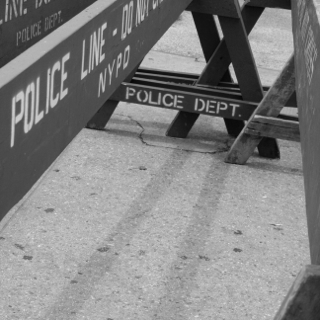
NYPD barriers. Photo by Alexandra Bogdanovic
“Officers found someone matching the suspect’s condition in Rocky Hill and a state trooper found Thor on the ground with internal bleeding,” a Connecticut TV station reported.
No one knows exactly how Thor got hurt. Police did say Thor was taken to an animal hospital, where he died last Tuesday from complications after receiving a blood transfusion.
The sergeant in charge of the Wethersfield Police Department’s K-9 unit said the agency plans on honoring the fallen police dog. Details have not yet been publicized, however condolences may be sent to:
Chief of Police James Cetran
Wethersfield Police Department
250 Silas Deane Highway
Wethersfield, CT 06109
Sadly, Thor is not the only K-9 killed in the line of duty last week. The Volusia County Sheriff’s Office in Florida is also mourning the loss of K-9 Forest.
Information on the portion of the Officer Down Memorial Page website specifically dedicated to fallen police dogs indicates that K-9 Forest was shot and killed “while attempting an apprehension of a vagrant fugitive near Vann Park in Deltona, Florida.”
In that case, officers also sent the two-year-old German Shepherd into a wooded area. That’s when the fugitive “opened fire on Forest and deputies as Forest attempted an apprehension.” Forest was taken to a nearby animal hospital, where he eventually succumbed to his injury.
Condolences may be sent to:
Sheriff Ben Johnson
Volusia County Sheriff’s Office
123 W. Indiana Avenue
DeLand, FL 32720
Thor and Forest died roughly one week after K-9 Jardo of the Boise City (Idaho) Police Department also succumbed to injuries sustained in the line of duty.
He was reportedly shot while “attempting an apprehension on a suspect wanted for shooting two citizens and carjacking an elderly woman.”
The suspect opened fire when Jardo, a six-year-old Belgian Malinois, found him, striking Jardo, and two officers who were assisting his handler.
Jardo was reportedly transported to an emergency veterinary hospital suffering from a gunshot wound to the chest. He was released several days later, but developed complications. He was taken back to the vet where he died while undergoing additional surgery.
Condolences may be sent to:
Police Chief Bill Jones
Boise Police Department
333 N Mark Stall Place
Boise, ID 83704
Earlier this year, I teamed up with a client and one of her colleagues to co-research and co-write an article about the use of Service Animals and Emotional Support Animals (ESAs).
The article appeared “Animal Law” edition of the Maryland Bar Journal. You can find it here. Because it’s a fairly long piece, I totally understand if you don’t have time to read the whole thing. In fact, I’d be happy to hit the high points for you.
In Brief Legal Writing Services mascot Eli catching up on the latest news. Photo by Alexandra Bogdanovic
Basically, we began by describing Services Animals and ESAs, and discussed the rules and regulations governing their use. We also touched on some of the controversies stemming from their use. Most importantly, we shared ideas about how to accommodate everyone’s needs without resorting to costly and ineffective litigation.
Little did I know how timely that article would turn out to be. Since its publication this summer, I have seen countless stories about the same topics in the mainstream media. In fact, I found this one just a couple of weeks ago. It’s about someone taking a duck on a plane.
Yes, you heard me. A duck! I’m sorry. That’s utterly ridiculous. I’ve heard of people being allowed to take service dogs on planes (and even that causes problems sometimes). But a duck?
Yes, it sounds crazy. But apparently it’s not all that unusual. In fact, if a passenger has proper documentation, it seems like almost anything goes.
“We have seen service monkeys, even comfort pigs,” TSA spokesperson Mike McCarthy told the media. “There really isn’t much that would surprise our officers,” he added.
There’s no doubt that service animals, Emotional Support Animals and therapy animals help people cope with and overcome serious physical and psychological issues. And I suppose there’s no rule that says that a service animal, Emotional Support Animal or therapy animal must be a dog or cat. Horses have “worked” as therapy animals for years.
I can’t say for sure but I would venture to guess that most reasonable, open-minded people don’t mind if someone travels with a service animal or ESA — as long as there is a legitimate need. From what I’ve seen and heard, troubles arise when it is obvious that the person with the service animal or ESA abuses the rules.
Beyond that, there are other legitimate concerns. As someone who was once horribly allergic to dogs, cats (and just about every other animal you could possibly imagine), I am not to sure how I would have felt about being cooped up on an airplane with a dog nearby.
There are also people who are afraid of some animals — especially dogs. Who knows. Perhaps there are some people who are equally afraid of pigs, ducks, lizards and any other assortment of animals permitted on public transportation these days. Is it really fair to subject them to emotional distress just to accommodate someone else’s needs?
For the purposes of this blog, that is a rhetorical question. But it also warrants serious thought.
Unfortunately, there is no easy answer.
As long as people love animals — and as long as service animals, ESAs and therapy animals continue to help their human counterparts cope with physical and psychological challenges — the debate will continue.
For some strange reason, some people just don’t get it.
In a society governed by rule of law, you can’t do whatever you want.
Well, you can try. But you probably won’t get away with it. So if you do break the rules, you’d better be prepared for the consequences. Because let’s face it. Chances are you will probably get caught. You will probably be convicted. And then you will probably be punished accordingly.
In Brief Legal Writing Services mascot Eli catching up on the latest news. Photo by Alexandra Bogdanovic
If you’re caught, tried and convicted, you might as well take your punishment like a big boy (or girl) and be done with it.
But like I said, some people just don’t get it.
For example, take this 71-year-old Maine woman who was reportedly convicted of animal cruelty. As part of her punishment, the court prohibited her from having more pets.
Apparently that doesn’t matter to her. Carol Murphy seems to think she can do whatever she wants.
As the Associated Press reported, “Murphy was convicted of animal cruelty in 2005 and was banned from having pets. She was convicted of the charge five years later, and was again barred from owning animals.”
Of course, Murphy insists she never did anything wrong. Clearly it seems she sees nothing wrong with having more pets — even though she was banned from doing so.
Yes, Carol Murphy definitely seems to hold the deeply misguided belief that she can do whatever she wants. With impunity.
Apparently someone disagrees. So she was convicted of contempt of court.
As far as I’m concerned, she’s beyond contempt. But that’s just my humble opinion.
Just when I thought things couldn’t get any worse, I came across this story about George Soros. And frankly it makes me sick.
Apparently Soros — a man about whom I have absolutely, positively nothing nice to say — sank millions of his allegedly “hard-earned” dollars into local law enforcement races across the country. Clearly he did this to influence the outcome. And unfortunately, it worked.
NYPD barriers. Photo by Alexandra Bogdanovic
According to the Associated Press, Soros “mouthpiece” Michael Vachon said the billionaire’s motives were completely above-board. Specifically, Vachon claims that Soros “contributed to candidates in these local law enforcement races because of his longtime interest in ending mass incarceration, combatting racial disparities within the criminal justice system and abolishing the death penalty.” Really, it’s all good, Vachon insists. Soros “believes that society benefits when the criminal justice system is fair.”
So do I. But I also believe that the criminal justice system works most effectively when the good people who devote their lives to it can do their jobs without outside interference. I believe it is especially effective without outside interference from people who know absolutely nothing about it.
Call me cynical, but I also find it highly unlikely that Soros’ motives are all that altruistic. After all, he also stands accused of undermining law enforcement by funding the Ferguson protests and spurring similar movements in recent months.
Sorry, George. To coin a baseball phrase, “I call ’em like I see ’em.” And as a reporter I covered law enforcement in three states over 21 years. So I’ve seen quite a bit.
Yes, I’ve seen my share of bad cops and overzealous prosecutors. I’ve seen my share of incompetence. I’ve seen shady defense lawyers play the system to ensure that criminals get away with little more than a slap on the wrist. But I’ve also had the pleasure of dealing with some wonderful people who are truly devoted to the system and work tirelessly to ensure that the good guys prevail.
So do us all a favor. Put your wallet away and mind your own business. Please.
When I was little, one of my favorite books was Rascalby Sterling North. In it, North recounts his boyhood experiences — including his unique friendship with a raccoon called Rascal. North’s relationship with Rascal begins when Rascal is just a little cub — and they have more than their share of interesting adventures. But Rascal is never really tame — and North soon realizes the folly of keeping his “pet.”
Founder/owner of In Brief Legal Writing Services, Alexandra Bogdanovic. Photo by N. Bogdanovic
Before he turns Rascal loose, however, North also realizes that hunting and trapping — activities he has always enjoyed — put Rascal and animals like him — at risk.
He says: “How could anyone mutilate the sensitive questing hands of an animal like Rascal… I burned my fur catalogues in the furnace and hung my traps in the loft in the barn, never to use them again. Men had stopped killing other men in France that day; ad on that day I signed a permanent peace treaty with the animals and the birds. It is perhaps the only peace treaty that was ever kept.”
Today, almost 100 years after North reached that conclusion, a debate about racoon trapping is still raging — in New Jersey, of all places.
According to published reports, animal rights advocates say the use of certain traps recently approved by a state agency is inhumane. The state disagrees and the matter is reportedly heading to the New Jersey Supreme Court.
As it now stands, all New Jersey trappers must abide by the following rules:
A trapping license is required and a Trapper Education
course must be passed.
All traps set or used must bear a legible tag of
durable material with the name and address of
the person setting, using and maintaining the
traps. Trap tags with Fish and Wildlife-issued
trap identification number or the trapper’s Conservation
Identification Number (CID#) may be
used in lieu of name and address to mark each trap.
All traps must be checked and tended at least
once every 24 hours, preferably in the morning.
No trap shall be permitted to remain set on any
property at the close of the trapping season.
It is illegal to possess or use steel-jawed leghold
traps anywhere in New Jersey.
The rules that now apply specifically to the use of “foothold traps” for raccoon trapping are as follows:
All triggering and restraining mechanisms shall
be enclosed by a housing.
• The triggering and restraining mechanism is accessible
only by a single opening when the trap is set.
• The access opening does not exceed 2 inches in
diameter or when measured diagonally.
• The triggering mechanism can be activated only
by a pulling force.
• The trap has a swivel-mounted anchoring system.
Whether or not the rules pertaining to foothold traps will remain in effect remains to be seen. So all I can say about the matter for now is, stay tuned…




 In Brief Legal Writing Services