
Skunks as pets? What cute little stinkers

This vintage typwriter is our featured image.

This has got to be my favorite topic to date. I mean, I’ve heard about people keeping all sorts of interesting pets — pigs, snakes, ferrets, birds, gerbils, rabbits and even rats. But skunks? I’ve never met anyone who has a pet skunk. Or even anyone who wants one for that matter.

Apparently it isn’t all that unusual though. The website skunk-info.org lists seventeen states where ownership of “captive-bred pet skunks is allowed.” If a change reportedly being considered by Tennessee lawmakers actually occurs,  the Volunteer State could soon join that list.

According to one news account, the proposed legislation calls for relaxation of existing rules that currently forbid “importation, possession, or transfer of live skunks so that skunk ownership and propagation may be regulated by the wildlife resources commission under its rules for Class II wildlife.”

So far the idea has garnered a mixed reaction and that’s understandable. There are pros and cons to all pet ownership, even for those of us that only have dogs or cats.

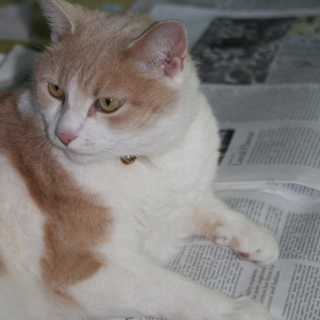
In Brief Legal Writing Services owner Alexandra Bogdanovic's cat, Eli.
In Brief Legal Writing Services mascot Eli under the Christmas Tree. Photo by Alexandra Bogdanovic

The bottom line is that if you’re thinking of getting something more unusual than the average house cat or dog, you’d better know what you’re in for. If you’re serious about getting a skunk, you can find plenty of information on the Internet.  At exoticpets.about.com, you can find advice about skunk behavior, health,  and more. Among other things, there is information about whether or not pet skunks should be spayed or neutered, finding a vet who can treat them, and the proper vaccinations for pet skunks and how to make sure the new addition to your family isn’t a real little stinker.

As far as I know, you can’t have a pet skunk in Connecticut. But that’s fine with me. I’ve got my hands full with Eli.

 

Crooks now preying on vulnerable pet owners

This vintage typwriter is our featured image.

I am keeping it brief today because I really don’t have the words to express my outrage about this. It is so low, so despicable, and so disgusting …. How anyone could stoop to this is beyond me.

I mean, let’s face it — stealing someone’s pet is bad enough. Demanding money from someone who has lost a pet is even worse.

But it happens — and apparently it happens more frequently more than anyone realizes, or cares to admit.

According to one news account, it’s happening in Aurora, Missouri. The story about the family that lost their dog and then got a series of phone calls demanding money in exchange for his return appeared on an ABC affiliate’s website Feb. 17. You can read the details here.

Now imagine how you would feel if this happened to you. What would you do? Where would you turn?

Eli, the In Brief Legal Writing Services mascot.
In Brief Legal Services mascot Eli catching up on the latest news. Photo by Alexandra Bogdanovic

Numerous websites offer advice on the topic. Scambusters.org lists five different shakedowns targeting owners of lost pets and shares tips to keep crooks from taking advantage of you when you’re vulnerable. You should:

  • Make sure your pet is always properly licensed and tagged.
  • Keep your pet indoors, in a secure yard, or on a leash at all times.
  • Limit information in your missing pet advertisements or social media posts  to the essentials.
  • Ask for a phone number if you get a call from someone who says they’ve found your pet and claims to be out-of-state.
  • Make any caller who seems to be ‘fishing’ for information about your pet initiate the questions or comments about your pet’s description.

The Peyton Manning case: Will another idol fall?

This vintage typwriter is our featured image.

Peyton Manning sure has been getting a lot of “exposure” lately.

First, allegations surfaced about some HGH being sent to his wife back in 2011. Then Manning defied the odds and led the Denver Broncos to the Super Bowl title. Now some disturbing information about an incident that occurred when he was a student-athlete at the University of Tennessee has come to light — again.

By now I’m sure you’ve heard all the sordid details, so I’ll keep this brief. According to numerous media reports, Manning’s name came up in a recent lawsuit filed against the university claiming that it mishandled sexual assault complaints involving student-athletes. Although the suit brought by five women pertains mainly to incidents that occurred between 2013 and 2015, it also alludes to prior episodes, presumably to show a pattern of behavior or conduct.

As a student athlete at the university in the late 1990s, Manning reportedly exposed his backside to a female trainer who was treating him at the time. That resulted in the trainer filing a sexual assault complaint against him.

The matter was settled fairly quickly — but the trainer sued the quarterback after information about the event appeared in a book called Manning. That suit was also settled.

Alexandra Bogdanovic
Founder/owner of In Brief Legal Writing Services, Alexandra Bogdanovic. Photo by N. Bogdanovic

Now renewed publicity brings new questions. There has been much talk about if or how this will affect Manning’s legacy. Will one of the NFL’s superstars — who also happens to be a stellar salesman,  weather the storm? Will he retain his credibility? Or will another idol fall?

To me there is a far more important question. Why do we put these athletes on pedestals in the first place? Think about it. From the second a little boy or girl shows that they may be athletically gifted, their parents, teachers, coaches, and peers treat them differently.  The older they get, the more special attention they receive. Why?  What is it about someone who can throw a football, kick a soccer ball, hit a baseball, shoot a basketball or a hockey puck that makes them so special? Why do we care?

And why are we so surprised when they act out? Or when they think they deserve special treatment? Or when they develop entitlement issues? Or when they think they can get away with anything? Or when they do get away with so much reprehensible behavior on and off the field? Or when they refuse to be held accountable for their actions?

Sure the athletes who reach the top of their respective games put in a tremendous amount of hard work and sacrifice a lot to get there. Sure they put themselves at risk in order to entertain the masses. Sure they provide a welcome distraction from the daily grind. And for all of that, they should be admired — but not idolized.

As Charles Barkley once said, “I am not a role model.”

Neither is Peyton Manning.

Crooks sink to new low as ‘dognapping’ cases increase

This vintage typwriter is our featured image.

What would you do if someone stole your dog? Or your cat, for that matter?

It’s probably something that has never crossed your mind. But it is something that you should probably start thinking about. Now.

Eli, the In Brief Legal Writing Services mascot.
In Brief Legal Services mascot Eli catching up on the latest news. Photo by Alexandra Bogdanovic

According to a commonly cited statistic, roughly two million companion animals are stolen in the United States each year.  Some disappear from back yards, and some vanish from “public places.” Some are snatched from cars.  Most are never seen again.

Each Valentine’s Day (February 14), Last Chance for Animals (LCA), a Los Angeles-based animal rights and advocacy group, joins similar organizations throughout the country to celebrate Pet Theft Awareness Day.  Its goal is to promote public awareness of the issue.

But to be honest, I had no idea that pet theft is so pervasive until I came across an article on an Ohio television station’s website. The account includes information about a couple that is suing an “estranged family member” who allegedly stole their dog. Shelby Patton, a plaintiff in the case, has reportedly started a petition in an effort to “change Ohio laws” so litigation is no longer necessary.

Fortunately, LCA says there are things pet owners can do to help prevent thefts. You can read those tips here.


A quick trip to the DMV? Yeah, right…

This vintage typwriter is our featured image.

So here’s a quick survey for you. If you had a choice would you rather:

  1. Have a root canal
  2. Have a colonoscopy
  3. Go to the Department of Motor Vehicles

Sorry, “None of the above” is not an option.

Seriously. Does anyone like going to the DMV? Does anyone enjoy standing in long lines, filling out confusing paperwork and then sitting around for an hour or two or…

You get the point. And if you live in Connecticut, Governor Dannel Malloy feels your pain. Or so he says. According to a recent article in The Courant, the state’s chief executive knows just how to make future trips to the DMV quicker.

If you’re so inclined, you can learn all about Malloy’s plan here. Personally, I think the solution is painfully obvious. Hire and train more people. There’s nothing more infuriating than walking into the Department of Motor Vehicles and seeing one hundred people in line and a grand total of twelve DMV staffers on duty to meet their needs. As long as that’s the case, of course you’ll be waiting forever! Furthermore, and this is an important caveat, make sure the staffers on duty know what they’re doing. If there’s one thing that is more aggravating than the scenario I just mentioned, it’s standing in line forever and then having the person in front of you ask the clerk a difficult question. In my experience, it will add at least fifteen minutes to your wait — less if you are lucky.

Alexandra Bogdanovic
Founder/owner of In Brief Legal Writing Services, Alexandra Bogdanovic. Photo by N. Bogdanovic

Of course this idea will generate a backlash from many Connecticut residents and politicians who bemoan the state of its fiscal health and despise the idea of a bloated government workforce.

If the state can’t or won’t expand DMV staff to meet existing needs, perhaps it could simplify or reduce the rules that  necessitate trips to the DMV.

There are other options. Some have suggested outsourcing or privatization.  Maybe a multi-faceted approach would be best. I guess only time will tell. For now all I know for sure is that something has to give.


Make it stop! A plea for tougher telemarketing laws

This vintage typwriter is our featured image.

After hearing her voice at least once a day every day for God only knows how long, I have come to the conclusion that a day without hearing from “Carmen” is like a day without sunshine.

Apparently, “Carmen” is really concerned about me. For some reason my financial well-being means a great deal to her. “She” really wants to help me improve my credit and get lower interest rates. I know because she calls to tell me so. At least once  per day. Every day.

Alexandra Bogdanovic
Founder/owner of In Brief Legal Writing Services, Alexandra Bogdanovic. Photo by N. Bogdanovic

Sometimes she calls in the morning. Sometimes she calls in the afternoon. Sometimes she calls when I’m in the middle of dinner. If I don’t answer, she leaves a message. She doesn’t care if I hang up. She just calls back. You’d think she could take a hint. Or not.

I have no idea how she got my cell phone number… but sometimes she even calls on that.

To be honest, I’ve had it. I can’t take it anymore. I’m sick of hearing her funky, computer-generated voice. At this point, I just want “her” to quit bugging me. Are you out there “Carmen?” Can you hear me? If so, just leave me alone already! Please!

On a serious note, I guess I should take matters into my own hands. But here in Connecticut, the only way to keep from getting harassed by telemarketers is to sign up with the National Do Not Call Registry. There’s information on the state’s Department Of Consumer Protection website about how to how to join.

The DCP says it also enforces the “Do Not Call” law, so if worst comes to worst, I guess I can always file a complaint with the agency. The only catch is I’d have to put it in writing.

In the meantime, I’m taking this opportunity to appeal to state and federal lawmakers. I am asking nicely… no, I’m begging you. Enact stricter telemarketing laws. Please!

“Carmen” is driving me crazy!


Utter nonsense or common sense?

This vintage typwriter is our featured image.

“I have never met an animal I didn’t like. On the other hand, there are plenty of people I hate.” – Me.

Anyone who has read these posts should know a few things about me by now. First, I love animals. Second, I have definite opinions about the law and related issues. Third, I am not shy about sharing them.

I mean come on, in the last couple of weeks, I’ve expressed my displeasure with the United States Supreme Court and the New York City police commissioner (among others).

So it may come as a surprise that I’m blogging about something that I actually agree with. Specifically, I am applauding Alaskan lawmakers who are trying to break with legal tradition by viewing pets as something other than personal property.

According to a recent KTUU report, state legislators are pondering a proposed rule that allows for the “protection” of pets when their caretakers are getting divorced or are embroiled in domestic violence.  If enacted, the law would:

  • Change the existing regulations so owners of animals confiscated due to neglect or cruelty would have to pay their cost of care through “bond or other security.”
  • Revise current  domestic violence measures to let courts include animals, and their temporary care, when issuing protective orders.
  • Tweak the divorce and marriage dissolution statutes now on the books so animals’ “well-being” is taken into account in court decisions regarding ownership or joint ownership.

“Pets are often considered part of a family and the courts should be able to consider their well-being,” said Rep. Liz Vazquez, who co-sponsored the bill. “This legislation will make it more difficult for a pet to be used by an abuser to keep a victim from reporting that abuse.”

Eli, the In Brief Legal Writing Services mascot.
In Brief Legal Services mascot Eli catching up on the latest news. Photo by Alexandra Bogdanovic

Now from what I’ve read, some Alaskans — who are understandably more pragmatic about animals than those of us who live elsewhere — question the wisdom of this legislation. Apparently they believe other issues deserve a higher priority.

While I fully endorse the proposal, I also understand why some might question it. In particular, I understand why some might mock the idea that courts should be allowed to consider an animal’s “well-being.” Those most likely to do so are the types of people who question the extent of animal intelligence, scoff at the suggestion that the average dog or cat has any self-awareness and shudder at the application of human emotions to our pets.

Personally, I don’t know what goes on in the space between my cat’s ears. But here’s what I know for sure: Eli is smart, sensitive and loyal, among other things. To me he is much more than personal property. He is my best friend. And if anything, I “belong” to him.


Cruel and unusual punishment

This vintage typwriter is our featured image.

As a cops and courts reporter for more than 20 years, I covered more than my share of heartbreaking stories…

There was the aftermath of 9/11 in the New York City suburbs and the accidental drowning death of a small autistic boy. There were homicides, car crashes that claimed young lives and the “war stories” about battered young veterans coming home from Afghanistan or Iraq.

But for some reason the stories that bugged me most — the ones that I remember to this day — are those that involved animal cruelty, abuse or neglect.

As someone who loves animals and as a responsible pet owner, I couldn’t — and still can’t understand why anyone would deliberately hurt or even neglect an innocent dog, cat, horse… or any other creature for that matter. But you don’t need to love, or even like animals in order to find this behavior reprehensible. All you’ve got to be is a compassionate human being.

Alexandra Bogdanovic
Founder/owner of In Brief Legal Writing Services, Alexandra Bogdanovic. Photo by N. Bogdanovic

As someone who loves animals and as a compassionate person, I found a recent account about the confiscation of dozens of animals in Connecticut to be especially disturbing. According to a wtnh.com report, a complaint alerted authorities that something was amiss at the East Hampton complex back in September. Subsequent attempts to ensure the animals — including more than 30 horses — received adequate care on site reportedly yielded mixed results.

“The horses, along with two dogs, several rabbits and more than 80 chickens, were removed from the Fairy Tail Equine facility after an investigation that determined the animals were malnourished, not receiving proper veterinary care and kept in unhealthy conditions,” the Connecticut Department of Agriculture reported February 3. 

 Connecticut officials also said that the horses, which were confiscated pursuant to  a search-and-seizure warrant signed by a Superior Court judge, were transported to the department’s Second Chance large animal rehabilitation facility in Niantic. The smaller animals that were also seized have since been sent to nearby animal shelters.

 An investigation is ongoing and it is unclear whether the owners will face criminal charges.

In some cases, criminal charges aren’t warranted. Some people are simply financially or emotionally incapable of providing adequate care for their animals. Some are just irresponsible. In such cases, a simple ban on future ownership is all that’s needed.


Having said that, studies show in many cases that people who are capable of harming animals also show little regard for human life. As long as that is so, it’s essential that animal cruelty cases continue to be taken seriously and that offenders are prosecuted to the fullest extent of the law.


When the law goes to the dogs

This vintage typwriter is our featured image.

You must admit, my quest for blog fodder has yielded some pretty interesting results. Since I started doing these posts, I’ve written about everything ranging from pets (including my own) to New York City crime, an assessment of the Virginia courts and a recent U.S. Supreme Court ruling.

Alexandra Bogdanovic
Founder/owner of In Brief Legal Writing Services, Alexandra Bogdanovic. Photo by N. Bogdanovic

Last week I came across an interesting article in The Plainville Citizen about a controversial dog confiscation case. The lawsuit reportedly headed for U.S. District Court in Connecticut  “pits” the “owners and trustee” of a pit bull named Luca — who stands accused of biting people in three separate incidents — against the Town of Plainville. For brevity’s sake, I won’t go into too much detail about the litigation but you can read about it here.

I only say that because — as intriguing as it is — the lawsuit itself isn’t really what caught my attention. Now the details about the attorney representing the plaintiffs — that grabbed my attention. The man’s name is Richard Bruce Rosenthal, and according to The Plainville Citizen’s report, he is a self-proclaimed “dog lawyer.” He is also the co-founder of The Lexus Project, which provides “legal defense for all breeds.”

While doing some additional research about the organization, it became evident that some people embrace its mission — and some condemn it. Although I have mixed feelings on the subject, I am unwilling to do either.

However I am curious about whether or not animal advocacy is a growing trend in the legal world. At this point, I know of a former lawyer who is now involved in the mediation of animal disputes. I also read about a character with a similar role in the novel, The Hand That Feeds You by A.J. Rich.

How about you? Are you a lawyer or paralegal involved in animal advocacy? Do you know anyone who is? What do you think of the idea?

Leave a comment and let me know.


NYC’s top cop unfazed by random attacks

This vintage typwriter is our featured image.
Black and white photograph of New York Police Department barriers taken by Alexandra Bogdanovic
NYPD barriers. Photo by Alexandra Bogdanovic

Oh, goody. New York City Police Commissioner Bill Bratton doesn’t seem to think a recent bunch of random attacks on ordinary New Yorkers is cause for alarm.

I feel so much better now. I’ll hop right on the next commuter train headed into the City. Once I get there, I’ll take the subway all over the place without thinking twice, as if nothing’s happened.

Or not.

I’m old enough to remember how scary Manhattan was in the 1970s and ’80s.  When I was little my parents kept a close eye on me on the train, and one of them — usually my father — had a death-grip on my hand from the minute our feet hit the platform at Grand Central. He didn’t let go until we arrived at our final destination, or until we were on the train heading back to the relative safety of the New York City suburbs.

We walked everywhere in Manhattan back then. Or we took a cab. Riding the bus was rare and taking the subway was unheard of. Dad said it was too dangerous — and I believed him.

I am old enough to appreciate the City’s renaissance. By the turn of the 21st century, it was safe enough — and I felt brave enough — to venture into Manhattan alone. I even camped out in Rockefeller Center one night. Of course I did with a group of friends so we could have the best “seats” for an outdoor concert the next day.

After I moved back to Connecticut from Virginia in 2012, I took advantage of my proximity to the greatest city on the face of the earth. In fact I romped all over it. I even gained the confidence to take the bus and the subway where ever I wanted to go.

Now The New York Times report about  random crimes occurring throughout the Big Apple sends shivers down my spine. According to the Jan. 27 article, at least a dozen people have been targeted by men armed with “knives or razors” in recent months.

In and of itself, news of these incidents — some of which have occurred on the subway, in subway stations and on public streets — is chilling. The police commissioner’s response is, too.

“We will always have crime in the city,” Bratton told The New York Times.

That may be true, Mr. Bratton. But it is your agency’s job to do something about it.