Blog

On a personal note

This vintage typwriter is our featured image.
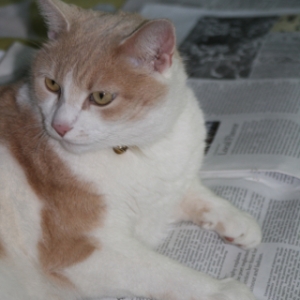
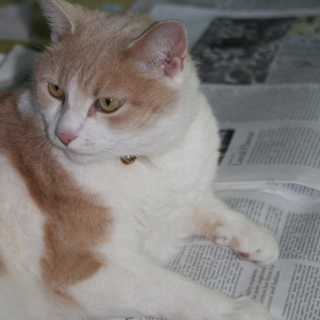
Eli, the In Brief Legal Writing Services mascot.
In Brief Legal Services mascot Eli catching up on the latest news. Photo by Alexandra Bogdanovic

It has been a rough week here at In Brief Legal Writing Services.

On Monday, I learned that the little lump I found on Eli’s back is a tumor.

The good news — if there was any — is that this type of tumor is fairly common in dogs and cats. From what I understand, it tends to be more aggressive in dogs, and affects the liver and spleen in only a small percentage of cats (approximately 10 percent). In most cases, surgery to remove the lump is all that’s needed.

According to the vet, an ultrasound is the best way to determine whether an external mass is the result of cancer affecting the internal organs, so we scheduled one for Wednesday. The next steps would depend on the results.

Before the ultrasound, I tried not to borrow trouble. If anything I took comfort in the fact that the lump was small; that it hadn’t changed shape, size or color since I noticed it; that Eli’s behavior hadn’t changed and most importantly, neither had his appetite.

Being a realist, I also thought long and hard about what I would do in the worst-case scenario. I came to the conclusion that I would not subject him to extensive surgery, no matter what. After all, he just turned 10. I’ve had him — or more accurately, he’s had me wrapped around his little paw, for just about eight years now.

He came into my life in February 2008. I was living in Virginia at the time and had just come home from Australia, where my family gathered to celebrate my grandmother’s 90th birthday and I got to watch my favorite football team win the Super Bowl.

The New York Giants won that championship thanks to some heroics by my favorite quarterback, Eli Manning. So imagine my delight — and surprise — when I glanced at the Fauquier SPCA’s flyer on my way out of the office one day. If memory serves, I stopped dead in my tracks and yelped, “Holy crap! The SPCA has a cat named Eli!”

I went to the shelter and instantly decided to adopt him. As much as I wanted to, I couldn’t take him home right away. He stayed at the shelter so he could be neutered, and as I drove home alone, the sun, which had been noticeably absent all day, peeped out from between the clouds.

I picked him up after work on another cold, dreary winter afternoon a couple of days later. As we drove home together, the sun, which I hadn’t seen all day, made another appearance.

Perhaps it was a mere coincidence. Or maybe it was a cosmic sign of approval from my cat Heals (named after New York Islanders and New York Rangers goalie Glenn Healy) who had died of cancer six months before.

In any case, it didn’t really matter. All I knew for sure is that it was definitely meant to be.


Censorship – alive and well

This vintage typwriter is our featured image.

“Censorship generally is the deletion of speech or any communicative material which may be considered objectionable, harmful, sensitive, or inconvenient to the government or media organizations as determined by a body authorized to censor.”

– As defined on uslegal.com

A disturbing news report surfaced last week.

Apparently some Russian government-types have been burning some “undesirable” books.

Given the heinous and egregious nature of this conduct, I am sure the Russians would have been happy if this remained a closely guarded secret.  Unfortunately (for the alleged offenders) some American media outlets discovered and published accounts of this disgusting behavior.

I found out about it when goodreads.com shared a link to the post on Twitter. Ain’t social media grand?

At any rate, I banged off a snippy response, which was something to the effect of, “And this comes as a surprise?” Not surprisingly, that Tweet didn’t amount to much.

But in all honesty, I wasn’t surprised. Angry? Yes. Disgusted? Of course. Sickened? Absolutely. Flabbergasted, gob-smacked, astonished, taken aback? No. Not at all.

Of course government censorship is alive and well. Let’s face it. In Russia, where Vlad Putin does whatever he wants with impunity, it probably never died.   But what you may not realize – or simply refuse to admit –  is that censorship is practiced with alarming frequency right here in the good old USA.

The restrictions on freedom of expression to which I am referring go far beyond rules and regulations put in place to limit potential exposure to “offensive” material and to hold those who engage in hateful rhetoric accountable for their actions.

I am referring to the vast majority of the censorship that occurs in the Land of the Free and the Home of the Brave, which  is condoned if not officially sanctioned by the politically correct crowd in the government and elsewhere. In an effort to combat the ignorant, misguided and hateful behavior of a vocal minority, the “polite police” are running amok.

Yes, some censorship is blatant. Some is passive-aggressive. Trust me. I speak from personal experience.

Book Cover, Truth Be Told: Adam Becomes Audrey
Image courtesy of Strategic Book Publishing and Rights Agency

You see, I am the award-winning author of what could be considered a somewhat controversial book. In my memoir, Truth Be Told: Adam Becomes Audrey, I share how I met, fell in love with and married the man of my dreams. In vivid detail, I recount how I learned that he self-identified as and planned on having surgery to “become” a woman. I also share what happened after I learned the truth.

Some readers have loved my work. Some have hated it. Most have expressed their opinions in no uncertain terms — which is fine. I have very broad shoulders. There was only one occasion when I was truly insulted, and that was when a local library official told me they’d probably never shelf my book because readers here are “very conservative.”

I wonder what they’ll do if Caitlyn Jenner writes a book.

Injustice, indeed

This vintage typwriter is our featured image.

“Nothing surprises me, but many things disappoint me.”

Alexandra Bogdanovic
Founder/owner of In Brief Legal Writing Services, Alexandra Bogdanovic. Photo by N. Bogdanovic

It’s something I often said while working as a reporter for more than 20 years — and it’s something that remains true today.

So, no, I wasn’t surprised when my daily search for blog fodder unearthed a recent techdirt.com article about the Virginia Supreme Court’s failure to implement new rules that would correct alleged imbalances the Commonwealth’s court system.

But I was definitely disappointed.

As I said, the premise of the article in question is that Virginia’s court system is flawed  and willingly operates in such a way that the odds are constantly stacked against defendants. Furthermore, comprehensive policy review and public pressure has done nothing to convince those in charge to change the status quo.

That may all be true. In fact, after spending more than eight years on the cops and courts beat in Fauquier County, I don’t doubt it.

But perhaps the author wouldn’t have painted Virginia’s judicial system with such a broad — and scathing — brush if he’d been sitting with me in Fauquier County Circuit Court a few years ago.

Back then I was covering a case in which a man employed at the Pentagon was facing charges after he allegedly hit a state trooper with his car at the Virginia Gold Cup (or perhaps it was the International Gold Cup) steeple chase races at the Great Meadow Field Events Center in The Plains. The accused, who held some sort of military rank (I believe he was a lieutenant colonel) had supposedly been drinking and engaged in a verbal dispute with the trooper as he was leaving the grounds. When the trooper told him to stop his car, the man allegedly refused and the vehicle knocked the trooper to the ground.

When the case finally made its way to Circuit Court, the accused appeared in his military uniform. Now to me, that was highly unusual and highly questionable. After all, anyone who has ever covered courts knows that defendants in criminal cases can’t be tried in their “jail jumps” because it could potentially prejudice the jury. So why on earth would a defendant in a criminal case be allowed to appear in a military uniform? Couldn’t that also sway a jury, especially while the U.S. was in the midst of a war in the Middle East?

Never mind. That’s a rhetorical question. In my opinion, it did. In my opinion, this guy was allowed to wear his uniform in order to increase his chances of acquittal. And it worked. He didn’t even get a slap on the wrist. And when he got off, he celebrated by doing a little “victory dance” outside of the courthouse.

As far as I am concerned, his behavior was a disgrace to his uniform, and in his case, the odds were stacked against the prosecution.

It was a grave injustice, indeed.


Oh, no! Not the vet!

This vintage typwriter is our featured image.
Eli, the In Brief Legal Writing Services mascot.
In Brief Legal Services mascot Eli catching up on the latest news. Photo by Alexandra Bogdanovic

So I had to take Eli to the vet today. Actually I was supposed to take him on Wednesday, but luckily for him (or maybe for both of us), it was freezing and I was still recovering from the stomach flu so I decided to reschedule.

Of course that was simply delaying the inevitable.

It doesn’t matter whether he has to go to get his nails trimmed or whether it’s time for his annual shots. He does not like the vet. And, being a cat, he makes his feelings on the subject “purrfectly” clear.

Here’s what always happens: An hour or so before the appointment, I go down to the car and hit the control lever for the front passenger seat until the seat is flat and as far back as possible. Next I go into the basement, grab his carrier and stash it in the upstairs hallway. If I am lucky, I will then find my 15-and-a-half pound cat on my bed so I can easily apply a generous dose of herbal calming gel to his paws.

By this point, there’s usually about 30 minutes until the appointment. Assuming Eli has actually ingested some of the salmon-flavored calming gel (he should theoretically do so when he licks his paws) it is fairly easy to wrangle him into his large blue carrier. Of course the phrase, “fairly easy” is relative… after all, he is a cat.

Getting him into the carrier is one thing. Taking the carrier down a steep set of stairs without breaking my neck is another challenge altogether. By the time I finally get him situated in the car both of us are completely frazzled. By the time I start the engine, a pitiful mewing is sounding from his crate.

Fortunately the trip itself only takes five to ten minutes, depending on the traffic. I drive with one hand on the wheel and one hand on the crate, speaking softly the whole time. I know he’s upset and scared, and I want to offer all the comfort and reassurance I can. After all, I don’t like going to the doctor, either…

When we finally arrive, I wrestle the carrier into the lobby and put it on the floor while I sign in. By now, Eli knows where he is and makes his displeasure known — loudly. With paperwork completed, I take a seat, put the carrier on my lap and give Eli a pep talk — or a lecture, depending on how badly he’s behaving. I breathe a sigh of relief when the vet or vet tech finally takes him into the back room.

But the relief is short-lived. As the minutes tick by I glance between the wall-mounted TV and my cell phone, hoping that Eli is OK and praying that he’s being good. He’s a sweet boy — most of the time. But he has been known to bite, and he fought his old vet so much that she’d have to sedate him just to trim his nails.

Back in those days, Eli would emerge from the clinic looking miserable — and I would leave with a hefty bill.

I shared Eli’s history and my concerns about his behavior with his new vet when we moved back to Connecticut from Virginia. She said in her experience, cats seem to do better when they are not restrained during exams. She also asked whether Eli acts up more when I stay in the exam room — which he does.

Given that, we agreed that Eli would be treated in a separate area while I wait in the lobby. Because I haven’t witnessed any of the procedures, I can’t say exactly what transpires. Apparently it’s working though. To date he hasn’t been sedated and he hasn’t bitten anyone — that I know of. I’ve actually been told that he’s been a good boy.

Perhaps Eli (who just celebrated his 10th birthday) is mellowing in his old age. Or perhaps he’s simply decided to tolerate this new vet and her staff. I can’t say for sure.

I do know that there’s a growing trend towards making vet visits less stressful for pets. You can learn just how they’re doing so in a report on the subject that was recently published on abc.go.com.

Now if only they could do the same for people…


Initiative spotlights convicted animal abusers

If a state task force has its way, it could soon be easier to monitor convicted animal abusers in Connecticut.

Eli, the In Brief Legal Writing Services mascot.
In Brief Legal Writing Services mascot Eli catching up on the latest news. Photo by Alexandra Bogdanovic

Back in October, the co-chairman of the Task Force for the Humane Treatment of Animals classified an initiative calling for the creation of “an animal abuse offender tracking system” as “one of the major proposals for legislation” in 2016.

Existing laws providing for the implementation and management of so-called registries will likely serve as the basis for the proposal, which should be finalized this month and submitted to Connecticut lawmakers when they convene in February.

According to a 2014 report prepared by Connecticut’s Office Of Legislative Research such regulations are already on the books in New York, Tennessee, Rhode Island, Texas and Massachusetts. The report also cites a “model animal abuser registry law” published by The Animal Legal Defense Fund in 2010.

The ALDF’s model law defines an “animal abuser” as a person over eighteen
years of age who has been convicted of a felony violation of [any animal protection
statute] of this state or of the comparable statutes of another state. It mandates when and where an offender must register; the circumstances under which re-registration is required; the personal information the offender must supply; the information the offender must submit pertaining to the incident(s) that resulted in conviction; and the submission of photographs, fingerprints and other identifying characteristics to the law enforcement agency in charge of the registry. It also governs how long an offender must remain on the registry.


Why tougher gun laws will backfire

This vintage typwriter is our featured image.

So here’s the official disclaimer: I am not “pro gun.” I don’t even like guns…

They scare me. I’ve never even touched one (unless you count the toy cap guns and water pistols I played with when I was little). The thought of ordinary, law-abiding citizens having access to, much less toting assault rifles and similar firearms makes me sick. That they’re seemingly the weapons of choice for all manner of criminals, terrorists and other “bad guys” is an issue I will touch on later. For now all you need to know is that absolutely no one outside of the military, para-military organizations (law enforcement) and similar groups needs or should have any access to those types of weapons. Period.

Having said that, I am not a “gun grabber,” either. I fully respect and support the right to bear arms afforded to Americans under the Second Amendment. I believe that most law-abiding citizens who have guns believe and engage in responsible gun ownership. I also believe that any laws aimed at restricting access to certain types of firearms – or limiting gun ownership in general – will always backfire.  Ultimately these well-intentioned but deeply misguided laws will result in more criminal activity and more violence – not less.

The simple reason for this is one that President Obama and the rest of the gun control gang fail to realize: Laws only matter to those of us who choose to follow them.

Black and white photograph of New York Police Department barriers taken by Alexandra Bogdanovic
NYPD barriers. Photo by Alexandra Bogdanovic

Does anyone honestly believe that criminals will be deterred by tougher gun laws? If anything, organized crime groups, gangs, terrorists and their cronies welcome them. Think about it. It’s a simple question of supply and demand. Less or stricter access to “legal” firearms will create an even more lucrative black market. Unfortunately for the general public, the rush to claim the lion’s share of the revenue generated from illegal arms sales could easily result in more competition among certain people who couldn’t care less about who gets caught in the crossfire.

If you don’t believe me, all you have to do is find a U.S. History book and turn to the section on Prohibition…

Then there’s the matter of mass shootings. In their wake, much is made about how the perpetrator obtained his or her weapon(s). While it is largely a moot point, those who call for new gun laws claim stricter rules will reduce public access to the types of weapons used in the course of these tragic events. In a perfect world, that would be true. But we all know this world is far from perfect. Does anyone honestly think that someone desperate  or angry or crazy or determined enough to commit an act of terrorism or a mass shooting is all that concerned about the law? If someone is truly hell-bent on committing such a heinous act, he or she will use any means necessary to do so.

So President Obama can weep and stomp his feet, gnash his teeth and threaten to take executive action on the issue as much as he would like, while the rest of the gun control gang sings his praises.

The rest of us can only hope for the best.


New year, new laws

This vintage typwriter is our featured image.

“The AKC was proud to support this important legislation.” – American Kennel Club

A brand new year always brings changes – some of which are good and some of which we can almost certainly do without. Among them are new laws, some of which affect all of us and some that affect only those of us who live in, visit or travel through certain areas.

In any case, the new rules always get their share of ink and generate plenty of conversation. And that makes for copious blog fodder. Have no fear, I’m hardly about to discuss, or even list, every single law that took effect January 1. In this post, I’ll focus on just one – an act changing the New York State social services law regarding victims of domestic violence and their pets.

Black and white photograph of New York Police Department barriers taken by Alexandra Bogdanovic
NYPD barriers. Photo by Alexandra Bogdanovic

The authorized amendment allows those in need of refuge to bring their service or therapy animals to emergency shelters. You can view the full text of the bill  backed by the American Kennel Club that was ultimately signed into law by Governor Andrew Cuomo here.

On its website, the AKC said it made sense to support the legislation.

“Victims of domestic violence are in a vulnerable and frightening situation, and the practical assistance and comfort that a service/therapy animal provides can be essential,” the organization said. Furthermore, the AKC said that knowing they won’t have to leave their animals behind makes it easier for victims of domestic violence to leave dangerous situations.

For more information about the AKC’s support for the new law and related issues, click here.


All aboard! Amtrak OK’s limited pet travel

This vintage typwriter is our featured image.
Amtrak train photo by Alexandra Bogdanovic
Amtrak train in Washington, D.C. Photo by Alexandra Bogdanovic

The new year brings a new option for people who want or need to travel with small pets.

Now through February 15, Amtrak is allowing passengers traveling on trains between New York and Washington D.C.; Boston and Norfolk, Va.; and Brunswick, Maine, and Boston, to bring their dogs and cats along.

The service, announced in November, is classified as a “pilot program” and as such includes numerous stipulations. For one thing, the length of the entire journey can not exceed seven hours. Passengers traveling with pets must begin their journey at a staffed station where Amtrak workers can verify that certain requirements have been met. Pet owners must sign “pet waivers” and submit them to station staff, conductors or other train crew prior to boarding. Due to limited availability, Amtrak urges people who want to take advantage of the service to make reservations well in advance.

Here are some other things to consider:

  • Passengers must remain with pets at all times.
  • Pets must remain inside their carrier at all times and may not be removed from their carrier while in stations or onboard (sic) trains.
  • Passengers must keep their pet carrier under their own seat. Pet carriers are not permitted under the seat in front of you.
  • Pet carriers are not permitted on train seats.
  • Pets are not permitted in Business class, Café Cars or other food service cars.

To see more fine print, including the rules pertaining to the age and size of acceptable pets, click here. A quote from Amtrak President and CEO Joe Boardman can also be found in an article recently posted on globalanimal.org.

Personally, I applaud Amtrak for implementing its new plan. I think it’s a fantastic option for people who don’t want to subject their pets to the rigors of flying or even a long drive. But given Eli’s propensity for puking and incessant meowing on long trips, I definitely have my “reservations.”


Forget ‘Obama Care’ – get a pet

This vintage typwriter is our featured image.

While it is a noble goal, ensuring that all Americans have access to affordable healthcare is easier said than done. Whether the Affordable Care Act, President Obama’s signature healthcare law, is the best – or even the only – option is strictly a matter of opinion.

On the other hand, research has determined – and nearly everyone who loves animals or has a pet agrees that pet ownership yields tremendous rewards. Over the years, well-publicized research has shown that owning companion animals – or simply interacting with them – lowers blood pressure, improves one’s mood, and reduces stress and anxiety. All of that aside, anyone who has contact with dogs, cats, and even horses, knows that simply being around them always makes a bad day better.

While dogs get most of the ink for their work as  service and therapy animals, cats are gaining recognition for their effectiveness as therapy animals, too.

As a former volunteer with two different therapeutic horseback riding programs, I can also say that the right program – and the right horse – can do wonders for children with physical, emotional and learning difficulties. Equine therapy is also said to benefit adults with similar issues, but I haven’t witnessed that myself.

Now it seems that in addition to the psychological and physical benefits associated with our interactions with domestic animals, there is a financial one, as well. In a recent opinion piece on foxnews.com, Dr. Robin Ganzert, president and CEO of the American Humane Association, cites a new study linking pet ownership with healthcare savings. Specifically, the study shows that pet owners make fewer trips to the doctor than those who don’t have animals, and that people who walk their dogs often are less likely to be significantly overweight than people who don’t have pets.

That’s awesome news, but to be honest it doesn’t really surprise me.

Eli, the In Brief Legal Writing Services mascot.
Eli reading.

I got my first cat, Tiger, when I was 10 and had her for 17 years. After Tiger died at age 20, I got Heals (named after the former NHL goaltender Glenn Healy) and had her for 11 years. Now I’ve got Eli, who just turned 10 on New Years Day. I adopted him from the Fauquier SPCA when  I lived in Virginia and we’ve been together for almost eight years.

In addition to being In Brief Legal Writing Services official mascot, Eli is my best friend, confidant and therapist. Being the strong, silent type, he’s a great listener. He gives wonderful hugs. He doesn’t complain when I cry on his shoulder, even though he hates getting wet. He’s a great hunter. He provides unconditional love in exchange for a warm place to sleep, a clean litter box, access to our deck, and two meals per day (plus snacks). Sure he bites me every once in a while. But hey, nobody’s perfect.


For smokers, 2016 brings new incentive to quit

This vintage typwriter is our featured image.

Happy New Year, everybody! I hope 2016 brings you much happiness, good health, prosperity and all the willpower you need to keep your New Year’s resolutions.

If you’re a smoker, and you’ve vowed that you’ll finally quit this year, I really hope you stick to your plan – no matter what. If you can’t do it for yourself, or your family do it for your pet. Yes, you heard me. Do it for your dog or cat, or any other companion animal that happens to share your life.

Eli, the In Brief Legal Writing Services mascot.
Eli reading.

According to published reports, a new study conducted by researchers at the University of Glasgow found that the poison in secondhand smoke can be just as lethal  – if not more so – to dogs and cats as it can to humans. Specifically, the study linked exposure to secondhand smoke with an increased risk for certain illnesses in dogs and cats.

I can imagine what all of you smokers think. I can just hear it now. Whining about how you are persecuted; how you can no longer smoke in bars, restaurants, or planes. How the “nanny state” is infringing on your freedom and that smoking is your personal choice. You probably don’t believe that secondhand smoke is harmful at all.

But I beg to differ. My father was a smoker. He smoked a pipe and cigars, believing that both were less harmful than cigarettes. As a little girl, I suffered from severe allergies, asthma and bronchitis. As a teen and young adult, exposure to secondhand cigarette smoke resulted in asthma attacks that literally brought me to my knees.

There was an upside to all that though. I was never tempted to smoke at all. I hope you can soon say the same.


For more information about secondhand smoke and pets, click here.