
Blog

By passing HB5344, CT lawmakers take a huge step forward

This vintage typwriter is our featured image.
Alexandra Bogdanovic
Founder/owner of In Brief Legal Writing Services, Alexandra Bogdanovic. Photo by N. Bogdanovic

I’ve heard a woman’s jewelry says a lot about her. It’s a reflection of her personal taste, style and even her socioeconomic status. Think about it. With one glance at a woman’s jewelry, you can tell if she is engaged, married, or if she has children — if you know what to look for. Sometimes you can also learn a lot about her interests, passions or hobbies.

For the last few months, I’ve worn two charms on two simple, sterling silver necklaces. One is a small black diamond charm in the shape of a paw. The other is a plain sterling silver gavel. Collectively, these simple pieces symbolize two of my greatest passions: animal welfare and justice.

Score One For The Good Guys

My interest in these subjects is both personal and professional. So I have been monitoring the progress of a Connecticut bill that I blogged about soon after it was introduced earlier this year. I am now thrilled to announce that the Connecticut legislators passed HB5344.

With Gov. Dannel Malloy’s signature, Public Act No. 16-30, An Act Concerning Support for Cats and Dogs that are Neglected or Treated Cruelly will take effect in October.

As it stands, the act allows for the appointment of a “separate advocate to represent the interest of justice” by court order or request in certain cases. Specifically, these appointments can be made in animal cruelty cases or any other criminal cases involving “the welfare or custody of a cat or dog.”

The advocate in such cases will be a lawyer or law school student who either specializes in or is interested in animal law. Once appointed, he or she will be responsible for:

  • Monitoring the case
  • Consulting with anyone who has pertinent information about the case
  • Attend hearings
  • Present relevant information or make recommendations to the court based on his or her findings

The Commissioner of Agriculture is tasked with keeping a list of volunteers interested in serving in this capacity. The inclusion of law school students is subject to existing rules regarding the practice of law.

What Does This Mean?

Simply stated, this means that dogs and cats who are  mistreated or neglected will have someone with specialized skills and knowledge looking out for them in court. It means that prosecutors and judges will have additional resources to aid in the successful resolution of animal cruelty cases. It means these cases will be less likely to slip through the cracks. Most importantly, it means the offenders are more likely to be convicted.
Random acts of violence as seen through my cat’s eyes

This vintage typwriter is our featured image.

I have never laid a hand on my cat in anger. And I never will. But someone once did. That much is for sure.

I adopted Eli from the Fauquier SPCA when he was two. I’ve had him for eight years. So how can I be so sure that someone harmed him when he was little?

In order to understand, you must first understand the family dynamics at play, and my relationship with Eli. Basically, he’s my best friend. He’s my therapy cat. I’m his “number one person.” He counts on me for everything. Food, shelter, and most importantly, a clean litter box. He trusts me and he loves me. When I’m home, he’s never too far away. He sleeps on my bed at night and on any old t-shirt or pair of sweats that still has a trace of my scent during the day.

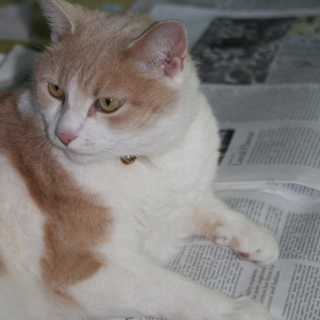
Eli, the In Brief Legal Writing Services mascot.
In Brief Legal Writing Services mascot Eli catching up on the latest news. Photo by Alexandra Bogdanovic

When I lived in Virginia, it was just the two of us. That’s when we really established that wonderful bond. But when I moved back home, Eli had to get used to living with my mom, too. It took a little while for the two of them to get to know each other and establish their own boundaries. Now they get along famously. My mother is officially Eli’s “number two person.”

Having said all of that, it’s been fairly easy to figure out that poor old Eli was either abused or lived in a really dysfunctional environment before I got him. I’ve watched him over the years.  Here’s what I’ve discovered. He is very sensitive. He runs from anything he thinks he can be hit with — even a relatively harmless toy, like shredded cloth tied to the end of a stick. He is very skittish around some people — especially kids and men. He doesn’t like it when someone approaches him too quickly and he hates loud voices.

In fact, angry voices are definitely a trigger. It doesn’t matter if the anger is directed towards him or towards another person. Either way, it makes him really upset. How do I know? For one thing, he meows. And this is a cat who never says anything unless he’s cranky. If he can’t get his point across that way, he resorts to stronger tactics. He uses his teeth. Yes, he bites.

That’s exactly what he did the other day. I was expressing my opinion about the outcome of a soccer game. And because I wasn’t pleased with the result, I was not exactly speaking softly. The next thing I knew, Eli — who I jokingly refer to as a pit bull in a cat costume — was sinking his teeth into my foot. Repeatedly. And since I didn’t have any shoes or socks on, it hurt. A lot.

I told him, in no uncertain terms, that I wasn’t happy about his behavior. Undaunted, he bit me some more. He even tried to jump onto the bed to get at my hands and arms. I rebuked him again — this time using a sterner voice to let him know he had been a very, very, very bad boy. After a few minutes I walked away and thought about what happened.

“You know,” I told my mother, who was in the room and witnessed the whole episode, “I think he was trying to protect you. I think he thought I was mad at you and that I was going to hurt you. ”

In Brief Legal Writing Services owner Alexandra Bogdanovic's cat, Eli.
Eli under the Christmas Tree. Christmas 2013.

If that was indeed the case, it begs a different question. We all know that abuse directed at our pets takes a huge toll on them. But what happens when they witness humans harming one another? How big a toll does it take on our companion animals when they see us physically or verbally harming each other?

I am sure someone has done some sort of research on this. I’m sure their findings are available in a report somewhere. But to be honest, I haven’t found any information about this issue anywhere online.

The Peacemaker

All of that being stated, I do know how it affected one cat. That was Tiger. She was my first cat — the cat I grew up with. And she was a peacemaker.

Anytime there was a family argument — and trust me, we had plenty — my tiny, Siamese-tabby cross got right in the middle of it. She would literally stand between the warring parties and cry until she got our attention. Once she had it she would end the debate by giving us the dirtiest look. It’s almost is if she were saying, What is wrong with you? Knock it off. Stupid people!

If that’s actually what she was saying, she was right.


This is ridiculous

This vintage typwriter is our featured image.

“I can’t make you change your mind. But I can challenge you. I can give you something to think about. The rest is up to you.”

In Wednesday’s post, I voiced my frustration about the ongoing madness in North Carolina and the federal government’s reaction. In case you missed it, I called the United States Attorney General an idiot.

But she’s not alone. The world is full of them. There are idiots clinging desperately to beliefs born out of ignorance and fear. Then there are idiots trying to bully them into changing their minds — which as I have said before — never works. Trying to bully someone into changing their mind is about as effective as resorting to litigation.

Alexandra Bogdanovic
Founder/owner of In Brief Legal Writing Services, Alexandra Bogdanovic. Photo by N. Bogdanovic

Then there’s me. No, I’m not an idiot — although some of you may beg to differ. Nor do I claim to be the smartest person in the room. I am just a paralegal, award-winning author, and journalist who provides all sorts of writing services for attorneys and blogs about the law.

I do a lot of posts about animal law and related issues because I enjoy it. Lately I have been doing a lot of posts about LGBT rights for a couple of reasons. First, it’s an issue that’s been all over the news. Second, as most of you know, my ex-husband is transgender. For those of you who didn’t know that, you can learn more here.

Enough Is Enough

But frankly, I’m sick of hearing about the transgender bathroom law debate. I’m also sick of writing about it. North Carolina sues the government… the government sues North Carolina… Americans on both sides of the issue are engaging in warring protests… It is getting completely out of hand.

On top of all that, a recent court ruling set the stage for an even more heated debate about transgender access to public school bathrooms. Furthermore, according to President Obama, transgender students in public schools across the country must be allowed to use the restrooms for the gender with which they identify. Schools and school districts that fail to comply with this mandate risk losing federal funding.

What About The Rest Of Us?

Here’s the bottom line. Adults understand the nuances of the transgender bathroom law debate — at least some of them do. The same can be said of college and even high school students. One could even argue that older middle school students can engage in an age-appropriate conversation about the issue.

But who on earth is responsible for explaining all of this to little boys and girls who will now be forced to share the bathroom with the opposite gender? Who should tell little Sarah that the person she knows as little Mikey can now come into the girl’s room because little Mikey believes he’s really little Michelle? Their teachers? Their parents? Both?

As I’ve said before, the issue isn’t whether the transgender population should be accommodated. The question is how to balance their needs with everyone else’s. It’s a question some LGBT rights advocates and the Obama administration refuse to address.

And therein lies a huge problem.

By taking this stance, the government and LGBT rights advocates practice active discrimination against the general population. They do so by sending the following message:  It doesn’t matter if you are perfectly content with your own biological gender. It doesn’t matter if you have a reasonable expectation that you will be relatively safe and have a right to privacy in a public restroom or locker room. You must accept the fact that transgender individuals can use the bathroom for the gender with which they identify. You have no choice.

And they wonder why they are getting so much resistance…

In My Humble Opinion…

Of course, this is just my humble opinion. I’m sure most of you disagree. And that’s fine. I can’t make you change your mind. But I can challenge you. I can give you something to think about. The rest is up to you.

So go ahead. Let me know what you think by voting in the poll below.


Any absolute stance on transgender bathroom rights is pointless

This vintage typwriter is our featured image.

“This action is about a great deal more than just bathrooms.  This is about the dignity and respect we accord our fellow citizens, and the laws that we, as a people and as a country, have enacted to protect them – indeed, to protect all of us.”  — Attorney General Loretta E. Lynch.

With all due respect, Ms. Lynch — you just don’t get it. Oh, I’m sure you mean well. But you’re deeply misguided at best. At worst, you’re an absolute idiot.

Having said that, you are right about one thing. The current transgender bathroom law debate is about much more than bathrooms.

But that’s it. You’re completely wrong about everything else.

You see the question isn’t whether transgender people should be treated fairly. Of course they should. That goes without saying. The question isn’t whether transgender people should be allowed to have access to public restrooms  matching the gender with which they self-identify. Of course they should. That goes without saying, too.

The question is how to accommodate the transgender population’s needs without infringing on the rights afforded to the rest of us. The question is how to educate and inform the general public about the transgender population’s needs without lecturing or bullying them. The question is how to let people who disagree with transgender bathroom laws express their opinions without disparaging them and calling them names.

Here’s a hint. Swapping lawsuits with North Carolina is not the answer. After all, litigation is an adversarial process.

Don’t Get Me Wrong…

Clearly there’s no place for hatred in a civilized society. Clearly we need laws to discourage people from acting on hatred and punishing them when they do. Clearly we need to enforce them. Clearly we also need laws in place to protect and ensure the fair treatment of minorities.

Alexandra Bogdanovic
Founder/owner of In Brief Legal Writing Services, Alexandra Bogdanovic. Photo by N. Bogdanovic

But as I have said before, lawmakers and politicians can’t force anyone to understand something they have difficulty grasping. You can’t force anyone to change their beliefs. You can’t force anyone to have an open mind if they’re not so inclined. And you can’t make anyone stop being afraid of something they truly fear.

The more you try, the more the person or people you are trying to influence will cling to their beliefs. The more you try, the more the person or person are trying to influence will resent it. The more you judge and resort to self-righteousness, the more they will resort to anger and hate.

If you don’t believe me, just take a good, hard look at the people who support the so-called bathroom laws.

There’s Got To Be A Better Way

As far as I am concerned, there’s got to be a better way. It would be fantastic if we could all sit down and have a calm, rational, adult conversation. It would be awesome if we could all express our views in a healthy manner — without resorting to name-calling and vitriol. It would be wonderful if we could all learn to respect each other’s differences, even if we don’t understand them.

But judging by what’s going on in America today, I guess that’s just wishful thinking…


North Carolina defies feds over bathroom law

This vintage typwriter is our featured image.

It’s official. A whole bunch of shit hit the fan in North Carolina today. Clearly some people there are really pissed about the federal government’s order to repeal the controversial bathroom law originally known as House Bill 2 or HB2.

One thing is for sure. Gov. Pat McCrory doesn’t give a crap.

In case you haven’t heard the news, McCrory didn’t just defy the Justice Department’s order to invalidate the law by today. He turned the tables on the feds and sued the Department of Justice (DOJ).

North Carolina to DOJ: This Stinks

Last week, the DOJ informed North Carolina officials that the new law is discriminatory. Furthermore, the DOJ said, it violates three federal laws and vowed to withhold applicable funding unless the state acknowledged it would not “comply with or implement HB2.”

The Public Facilities Privacy & Security Act was written and quickly enacted in order to supersede a local ordinance. It prohibits transgender people from using public restrooms and similar facilities for the gender with which they identify. In other words, a man who self-identifies as female cannot use the women’s restroom. Or, to put it even more plainly, everyone must use a public restroom that matches the  gender listed on his or her birth certificate.

McCrory now wants a federal court to interpret federal law — not the Obama administration.

“The Obama administration is bypassing Congress by attempting to rewrite the law and set restroom policies for public and private employers across the country, not just North Carolina,” McCrory said in a statement issued earlier today. “This is now a national issue that applies to every state and it needs to be resolved at the federal level. They are now telling every government agency and every company that employs more than 15 people that men should be allowed to use a women’s locker room, restroom or shower facility.”

The Hypocrisy Is Astounding

So McCrory doesn’t want the federal government telling him what to do. That’s rich.

Did he ever stop to think about the Charlotte lawmakers who originally passed a local law that would have allowed transgender people to use the restroom for the gender with which they identify? Perhaps they didn’t want the state to interfere with their decision.

Aside from all that, this idea that permitting men who self-identify as female into women’s bathrooms, locker rooms and so forth, is an open invitation for sexual predators is ridiculous. As far as I know, there is no such thing as the bathroom police. So anyone who wants to attack a woman or child in a bathroom can do that now.

At The End Of The Day…

Book Cover

By this time, those of you who read this blog on a regular basis know that my ex-husband is transgender. You also know that I wrote a memoir detailing how I found out that the person who was once my best friend, boyfriend, fiancé, and husband was living with such a devastating secret. I also shared what happened after I learned the truth.


So clearly I am sharing a unique perspective when I blog about laws affecting the LGBT community. I know from personal experience that it isn’t necessarily easy to accept or understand that someone can honestly self-identify as the opposite gender. Trust me.

But at the end of the day, the least anyone can do is try.


Author questions morality of having pets

This vintage typwriter is our featured image.

“A better question would be: Should everyone be allowed to have pets?”

With the state of American politics these days, I’ve come across plenty of reading material that has simultaneously left me speechless and sent my blood pressure through the roof. But when I found this story I didn’t know whether to laugh or cry — and it has nothing to do with politics.

The Miami Herald article I discovered was just one of dozens written about a new book called Run, Spot, Run: The Ethics of Keeping Pets. In it, the author, Jessica Pierce, questions whether it is ethical for people to have pets.

“When we see our cats gazing wistfully out the window, or watch a goldfish swim lazy circles in a bowl, we can’t help but wonder: are we doing the right thing, keeping these independent beings locked up, subject to our control,” she asks in the Herald. “Is keeping pets actually good for the pets themselves?”

As you all know, I have a cat and love animals as much as — or maybe more — than most. But with all due respect to Pierce, this is one of the most ridiculous, stupid, idiotic things I have ever heard. I am not quite sure if it is an extreme case of political correctness, an extreme case of anthropomorphism or both.

A More Relevant Question

In her book, Pierce admits that most people do treat animals well but claims others “take them for granted,” or “think they are disposable.”

Sadly it is true that many people neglect, abuse, and abandon companion animals that require love, food, shelter and medical care in order to thrive. So to me, the pertinent question is not whether it is ethical to have pets, but whether everyone should be allowed to have them.

Eli, the In Brief Legal Writing Services mascot.
In Brief Legal Writing Services mascot Eli catching up on the latest news. Photo by Alexandra Bogdanovic

Clearly the answer to that question is a resounding, “no.”

Some people shouldn’t have pets because they are selfish. Some people shouldn’t have pets because they are irresponsible. Some people shouldn’t have pets because they are emotionally incapable of having them, and others shouldn’t have pets because they are financially incapable of having them.

Then there are the people who shouldn’t have pets because they are just plain evil. These are the people who have dogs and either engage in or sanction dog fighting. These are people who take advantage of dog breeds with aggressive tendencies. These are the people who leave their pets locked up in cages, crates or carriers all day. These are the people who abuse, abandon and neglect companion animals. These are the people who run puppy mills. These are the people who believe in killing animals for fun.

Taking Proper Precautions

I didn’t get any of my cats from a pet store, so I don’t know if there are screening processes in place for people who do that. Correct me if I’m wrong, but from what I’ve heard and read, I don’t think there is. If there isn’t, maybe it is time to rethink that.

I’m also unfamiliar with what’s involved with getting a purebred animal directly from a breeder. I assume that legitimate breeders do what they can to make sure puppies, kittens, and other animals end up in good homes. Again, feel free to let me know if this is the case.

As far as adopting from a shelter or rescue group goes, I can only speak from personal experience. When I adopted Eli from the Fauquier SPCA in 2008, I had to fill out some pretty extensive paperwork and pay an adoption fee before I could bring him home.

Prospective adopters had lots of dogs to choose from at the annual Puttin on the Dog show in Greenwich last fall. Photo by A. Bogdanovic
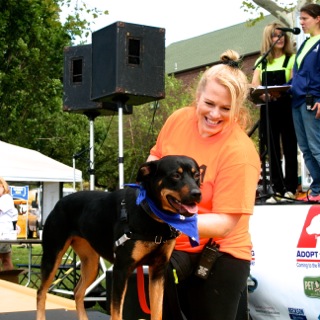
Pick me! An Adopt-a-Dog volunteer with a dog up for adoption at Puttin’ on the Dog in Greenwich. September 2015. Photo by A. Bogdanovic

At the local animal shelter where I volunteer, there is a comprehensive screening process in place to ensure successful matches. Prospective adopters must fill out and submit an application which includes specific information. References are required and checked before an adoption goes through. In the interest of full disclosure, specific information about each dog — including their background, age and compatibility with children and other animals — is also listed on the shelter’s website.

As Far As I’m Concerned…

Personally, I’ll never feel guilty about having a pet. In fact, with so many dogs and cats in need of a good home, the only thing I’ll ever feel badly about is that there’s no way to save them all.


A religious counseling law? What’s next?

This vintage typwriter is our featured image.

“This is yet another case in which I have a unique perspective.”

OK. I have a question. What on earth is going on in Tennessee? Seriously.

I just reread an article about the so-called “religious counseling bill” recently inked by Tennessee Gov. Bill Haslam. In fact I’ve read it a few times. It still doesn’t make any sense.

Oh, wait a second. Let me clarify. The story is fine. It’s Senate Bill 1556/House Bill 1840 — or more accurately, the new law, that blows my mind.

Under the new rule: “No counselor or therapist providing counseling or therapy services shall be required to counsel or serve a client as to goals, outcomes, or behaviors that conflict with the sincerely held principles of the counselor or therapist; provided, that the counselor or therapist coordinates a referral of the client to another counselor or therapist who will provide the counseling or therapy.”

Making A Mountain Out Of A Molehill

Really? Is this necessary?

Proponents say it is. According to the Family Action Council of Tennessee (FACT) the state mandates that “all licensed professional counselors comply with the code of ethics issued by the American Counseling Association (ACA).” As it now stands, the code bars such counselors from referring a client based on the counselor’s “personally held values.” To make matters worse, FACT says, counselors can be disciplined if they don’t play by the rules.

“This is an important bill to safeguard a counselor or therapist’s religious beliefs and moral convictions,” FACT maintains. “It protects the right of conscience of the counselor but also allows the clients to receive treatment from someone who is better suited to treat them.”

On the other hand, those against the new law says it encourages discrimination against the LGBT community.

Chris O’Rear, the president of the Tennessee Association of Pastoral Therapists, expressed his own concern about it in a story in The Christian Times. “I’m not supportive of the bill as it is, but I don’t understand the need for it either. I don’t know what to degree this is actually a problem or whether certain people just want it to be a problem.”

In a statement issued after he signed the bill, Haslam admitted that he also had some concerns. Two of the most significant are addressed in the bill, he added.

“There are two key provisions of this legislation that addressed concerns I had about clients not receiving care. First, the bill clearly states that it ‘shall not apply to a counselor or therapist when an individual seeking or undergoing counseling is in imminent danger of harming themselves or others,” he said. “Secondly, the bill requires that any counselor or therapist who feels they cannot serve a client due to the counselor’s sincerely held principles must coordinate a referral of the client to another counselor or therapist who will provide the counseling or therapy.”

Speaking From Personal Experience

This is yet another case in which I have a unique perspective.

Book Cover

Years ago, it was Adam’s therapist, not Adam himself, who told me he self-identified as a woman. At the time, I resented the fact that my husband lacked the intestinal fortitude to tell me himself. I hated the fact that I had to hear the truth from a stranger. To be brutally honest about it, it was horrible.

But it’s not all about me. Looking back, I am happy that Adam had help and support during an incredibly difficult time. I am glad he could turn to a qualified professional. I shudder to think about what might have happened if he never found her. I also hate to think about what could have happened if he received sub-par treatment or bad advice from someone who felt “forced” to take his case.

Luckily our story had a (somewhat) happy ending. Sadly, that’s not always true.

Teaching cops the art of observation

This vintage typwriter is our featured image.

Cops and reporters are often at odds. But — as someone once told me — we’re also a lot alike. For one thing — as someone also told me — we’re all students of human behavior.

For cops, the ability to read people is literally a matter of life and death. Besides being key to survival on the street, it is also an essential factor in making arrests and the successful prosecution of the offenders.

As a result, good cops can read body language as easily as most people can read a newspaper. The best can spot a “tell” or visual cue about someone’s true intentions, from a proverbial mile away.

But even the best make mistakes. And even honest mistakes can have disastrous consequences.

Clearing Things Up

Let’s face it. Cops are nothing if not cynical. But given the nature of their work, who could really blame them for seeing the world through jaded eyes? Unless, of course, that cynicism morphs into something worse. Once that happens, there’s no going back.

So law enforcement agencies throughout the United States are now turning to an expert in another field in order to help their officers see things differently. Her name is Amy E. Herman, and The New York Times just did a feature story about her.

Black and white photograph of New York Police Department barriers taken by Alexandra Bogdanovic
NYPD barriers. Photo by Alexandra Bogdanovic

The piece, which you can read in print or at nytimes.com, focuses on Herman’s role as an “expert in visual perception” and her work with the New York Police Department. Specifically, the story’s about what happened when Herman took a few of New York’s Finest to the Metropolitan Museum of Art.

As Herman reportedly told them: “I’ve had people say, ‘I hate art,’ and I say, ‘That’s not relevant. This is not a class about Pollock vs. Picasso. I’m not teaching you about art today; I’m using art as a new set of data, to help you clear the slate and use the skills you use on the job. My goal when you walk out the door is that you’re thinking differently about the job.”

In other words, the “field trip” served as a perfect opportunity for the cops to hone their powers of observation.

As I See It

As far as I’m concerned, this is a fantastic program — and the NYPD’s decision to take advantage of it couldn’t make me happier.

Alexandra Bogdanovic
Founder/owner of In Brief Legal Writing Services, Alexandra Bogdanovic. Photo by N. Bogdanovic

You see, I studied art history in high school and college. I loved every single minute of it. Yes, you learn about art and architecture. But that’s not all. You learn how to look at the big picture — and all of the minute details. You learn how to evaluate both, and put everything in its proper context.

To put it another way, you learn critical thinking skills. You learn how to describe what you’ve seen in writing. You’ll find that two people can look at the exact same painting, sculpture or artifact and see something entirely different. But you’ll also learn the importance of seeing something for what it is not what you think it is.

Bullying alleged following female firefighter’s death

This vintage typwriter is our featured image.

This is so sad.

There’s no other way to put it.

Last week, a search and rescue effort in Shenandoah National Park ended in the worst possible way. Searchers found the body of missing Virginia firefighter-paramedic Nicole Mittendorf, who had been missing for several days. Published reports indicate she committed suicide. She was just 31.

Alleged Cyber-Bullying Surfaces

Although authorities found a note, it is unlikely its contents will ever be released to the media or general public. So at this point Mittendorf’s reasons for taking her own life remain unknown. And at this point, no one can say if the three-year veteran of Fairfax, Virginia’s fire and rescue services knew about an apparent online campaign against her and other women in her line of work.

News about the apparent cyber-bullying sparked outrage following Mittendorf’s death.

“It was pretty raunchy. It was raunchy. It was offensive. It was disrespectful. It was ridiculing,” retired federal government worker and Fairfax County resident Jane McKinley said in an article on firechief.com. “I was alarmed and wanted to let the public know that there was this blog out there that was defaming these female firefighters and medics, not only Nicole but others as well.”

According to various media accounts, the sexist posts were anonymous. Needless to say that has prompted considerable speculation about who engaged in the activity and the matter is now the subject of an official investigation.

You’d Think We’d Know Better

When it comes to Internet bullying — or any bullying for that matter — the emphasis is on protecting our kids. And rightly so. But sadly, bullying doesn’t end when school does.

Irrespective of what form it takes or whether it was a factor in this case, there is no doubt that adult bullying is also pervasive in American society. You can read a comprehensive post about the issue here.

Another post on nobullying.com focuses specifically on cyber-bullying by adults. The information found there includes a definition of the activity and characteristics of those who engage in it. Not surprisingly, the first trait these cowards have in common is that they enjoy the anonymity the Internet provides. Other traits include:

  • Accessibility: The cyber bully can approach his victim at any time over the Internet; since the contact is not physical or face-to-face, there is no specific time during which the bully has access.

• Punitive Fears: Victims often fear retaliation from their tormentors; and if the victim is a child, the fear of losing the accessibility of a computer or other technology is a prohibitive factor.

• Bystanders: Bystanders to bullying in the cyber world can be numerous, as the information can be sent via email, cell phones, social media, and other means of technology.

• Disinhibition: The anonymity of the Internet can encourage an individual to commit acts they might not otherwise attempt in person. It affords “false courage” when the bully thinks he can’t be identified.

The post also provides detailed information about another type of cyber-bullying known as “trolling.”

Been There, Survived That

Alexandra Bogdanovic
Founder/owner of In Brief Legal Writing Services, Alexandra Bogdanovic. Photo by N. Bogdanovic

Thankfully I’ve never been targeted online. But I dealt with workplace bullies throughout my newspaper career and I was bullied in school.

A couple of boys made my life miserable for most of my elementary school years. I finally put an end to it in fifth grade. By that time I had been taking judo lessons for a couple of years and when one of the bullies picked a playground fight, I literally kicked his butt. Not that I’m advocating violence — but it worked.

In middle school the bullying started all over again — and this time it was even worse. The bullies were rich, pretty, thin, teenage girls. And they were relentless. I tearfully called my mother at work every day. My schoolwork suffered. My self-esteem was in the tank. I am not exaggerating when I say that those were the worst years of my whole entire life.

Thankfully everything changed in high school. That’s when I started covering school sports for our local newspaper. The popular girls wanted to see their name in print. So let’s just say they were really nice. And I got the last word.

No, you can’t say anything you want

This vintage typwriter is our featured image.

Apparently Curt Schilling isn’t alone. A lot of people seem to agree with him. Or at the very least, they don’t believe the ex-pro baseball player and TV analyst should have been fired for what he did.

In case you don’t know what that was, he shared a post mocking the transgender community on Facebook and added some disparaging comments of his own.

So now some people say Schilling is the victim. They say he was fired because he wasn’t being politically correct. They claim the First Amendment gives him the right to have his say.

I concur — but only to a point. He may have been well within his rights to do what he did, but that doesn’t make it OK. Not by a long shot.

For The Record

Alexandra Bogdanovic
Founder/owner of In Brief Legal Writing Services, Alexandra Bogdanovic. Photo by N. Bogdanovic

As I indicated in my last post — I firmly believe that in a free society, everyone has or should have a right to express their opinion. I also think that the politically correct crowd — also known as the “thought police” or “polite police” — is running amok in the United States.

But the bottom line is, the First Amendment may bar the government from making rules that curtail freedom of speech — but it doesn’t mean that you can or should say whatever you want. For example, as we all learned in elementary school, “you can’t yell fire in a crowded theater.”

In some cases, the government can also restrict activity classified as:

  • speech that incites illegal activity and subversive speech
  • fighting words
  • obscenity and pornography
  • commercial speech
  • symbolic expression

On the other hand, “the U.S. Supreme Court has ruled that speech that merely offends, or hurts the feelings of, another person—without eliciting a more dramatic response—is protected by the First Amendment. The Court has also underscored the responsibility of receivers to ignore offensive speech.”

So it seems America’s highest court believes in that old saying about “sticks and stones.” But that’s where the politically correct crowd comes in. If you say or do something upsetting, you won’t be punished in a court of law, but you will definitely be censured in the court of public opinion.

And as we’ve seen that can have devastating consequences.

Back To The Matter At Hand

As for Schilling, he says he doesn’t hate transgender people or homosexuals. He’s says he’s not scared of them, either. He says he was merely making a legitimate point about the design and use of public restrooms.

At the end of the day, only he knows what his true intentions were. But as far as I’m concerned, it doesn’t really matter.

It’s not a question of being politically correct.  It’s simply a question of being a decent human being.

Apparently common decency is something Curt Schilling is sorely lacking.