There Is No Punishment Harsh Enough In Kitten Drowning Case

This vintage typwriter is our featured image.

As many of you know I was a police reporter for more than 20 years. In my career I covered everything from the aftermath of 9/11 in the New York City suburbs to homicides, courthouse shootings and airplane crashes. So I’ve seen a lot of nasty stuff. To this day, I can’t forget those things. I never will.

And to this day, nothing makes my blood boil more than an animal cruelty case. As far as I’m concerned, there is no punishment harsh enough for anyone who deliberately hurts or kills an animal. I mean think about it. If someone is sick and twisted enough to hurt or kill an animal, they probably won’t think twice about hurting or killing a human being.

Alleged kitten killer arrested

So if what I recently about Junsong Zhang, 21, of Queens, New York, is actually true, they should just lock him up and get rid of the key. Now.

According to published reports, Zhang killed two kittens on January 22, 2019. He allegedly did so by putting them in a cage, putting the cage in the bathtub, turning on the tap, and leaving for nearly an hour.

As Zhang reportedly told authorities, the animals were “lying in the water and not breathing.” So he allegedly put them in a plastic bag and took them to the Animal Medical Center in Manhattan.

Eli, the In Brief Legal Writing Services mascot.
In Brief Legal Writing Services mascot Eli catching up on the latest news. Photo by Alexandra Bogdanovic

In a criminal complaint cited by the New York Daily News, a forensic veterinarian said both kittens were “healthy, and that one kitten had torn nails on its right front paw, left front paw and right back paw.”

A postmortem assessment confirmed that the kittens had drowned. They were just seven months old.

New York City prosecutors told the media that Zhang intended to “cause extreme physical pain” to the animals. As a result, he was arrested earlier this month and charged with two counts of aggravated animal cruelty.

Zhang was reportedly “released under supervision” and ordered to surrender his passport pending future court appearances.

Possible punishment upon conviction

Under Section 353-a of New York’s Agriculture and Markets Law, someone is guilty of aggravated cruelty to animals when he or she, “intentionally kills or intentionally causes serious physical injury to a companion animal with aggravated cruelty.” In this context, aggravated cruelty is defined as conduct that: “(i) is intended to cause extreme physical pain;  or (ii) is done or carried out in an especially depraved or sadistic manner.”

Aggravated cruelty to animals is a felony in New York. The maximum punishment upon conviction is two years in prison.

And as far as I’m concerned, that’s just not good enough.

Connecticut Cat Tax Proposed

This vintage typwriter is our featured image.

It’s official. I’m speechless. Completely. Utterly. Totally. Speechless. Seriously. I’ve got nothing.

And for the record, it takes a lot to put me in this state. I’m never at a loss for words. But I just can’t wrap my head around the Connecticut Cat Tax. l’m serious. Connecticut Democrats want to impose a “cat tax” on those of us who have felines and are still “lucky” enough to live here (sarcasm fully intended).

I read all about it on the Hartford Courant’s website earlier this week. At first I thought it had to be fake news. Unfortunately I checked the Connecticut General Assembly’s website, and it’s true.

What a catastrophe

At this time, raised S.B. 999 is officially known as An Act Concerning The Fee For Adopting a Dog, Cat or Other Domestic Animal From a Municipal Pound and Requiring the Licensing of Such Cats and Other Domestic Animals. 

I kid you not. This is what they decided to call it. Why didn’t they just call it a cat tax? It would have been so much easier that way.

In Brief Legal Writing Services Mascot, Eli.
Eli The Cat. Photo By Alexandra Bogdanovic

At any rate, the stated purpose of this proposed “Act” is to “increase the fee paid by anyone adopting a dog from a municipal shelter and to require the payment of such fee for anyone adopting a cat or other domestic animal from a municipal shelter and to require the licensing of such cats and other domestic animals.”

You can find the link text of the proposed bill here. In the meantime, I’ll just hit the “high points.”

As currently proposed:

  • Any Connecticut resident that  purchases a dog, cat or other domestic animal as a pet will have to pay a $15 fee to the municipal animal shelter or dog pound in order to get a license and tag for it from the town clerk.
  • Anyone that purchases a dog, cat or other domestic animal as a pet in Connecticut will also be required to cover the cost the municipality incurred, if any, to spay or neuter and vaccinate the dog [sic], provided such charge is not more than $150.
  • Any Connecticut resident that owns or keeps a dog that is at least six months old, except those  kept under a kennel license as provided by law; and anyone that owns a cat or other domestic animal adopted from a municipal animal shelter or dog pound  will be required to have the animal licensed in the town clerk’s office in the town where it is kept, on or before June 30th, each year after it turns six-months old.
  • The annual licensing fee for each qualifying neutered or spayed animal would be $10.
  • The annual licensing fee for each unaltered qualifying animal would be $15.
  • In addition to the licensing fee there would be a $2 fee for issuing a license and tag as allowed by law.
  • Anyone required to comply with the new law who failed to do so would be required to pay the appropriate license fee, the town clerk’s fee and a $1 penalty for each month or portion of a month that the animal remains unlicensed.

Why a cat tax simply won’t work…

The public got a chance to have its say at an Environment Committee hearing held March 11.

In a letter to the committee, Ellington resident Diana Bump voiced numerous reasons for her opposition.

“Requiring cats to be licensed will deter adoption and/or barn cat owners from taking in cats and also lead to more euthanizing of shelter cats. Licensing cats will cost more to the state implement than it will actually receive in cat licensing fees, no doubt,” Bump wrote. “Licensing cats will not incentivize spaying/ neutering either as the main reason people do not spay/neuter is because of costs and adding licensing fees will make it even more unaffordable.”

Bump also pointed out that most indoor/outdoor cats wear so-called “break away” collars, which are designed to come off if the cat gets it caught on something, so tags could be lost easily. The use of non-break away collars is unsafe, she added. Finally Bump also noted that any noise made by the tags could alert predators to a cat’s location, putting it at risk.

Hamden resident David Malicki put it even more succinctly.

“As most shelters are often overflowing with animals for adoption, I find this proposed House Bill 999 absolutely sub-human,” he wrote. “This bill should not be even considered for a motion. This bill should have never been proposed. Shame on all of you for this shortsighted proposal.”

Animal advocates also oppose the measure as proposed.

So now it’s your turn. What do you think? Is this a good idea, or not? Let’s talk about it. Leave your thoughts in the comments section below.

New York Following Cali’s Lead On Pet Store Law

This vintage typwriter is our featured image.

If at first you don’t succeed, try, try again. That’s the approach two New York legislators are taking as they push for the passage of a new law regulating how people can acquire pets.

According to recent media reports,  the state lawmakers, who represent different New York City boroughs, co-sponsored the legislation that would prevent pet stores from selling small animals and companion animals obtained from “large commercial breeders.”

Instead, the pet stores will be required to source and sell animals from licensed rescue shelters or humane societies. The law would also allow the humane society or shelter to keep any animal not sold/adopted through the shops.

The proposed measure failed to gain any support last year. However, proponents are optimistic that will now change with the power shift in the state legislature.

Jumping on the bandwagon

This idea isn’t unique to New York. Not too long ago, I wrote about a similar measure currently being considered in Connecticut.

dog parade, puttin on the dog, 2018
An Adopt-A-Dog volunteer with a dog available for adoption. Puttin’ On The Dog, 2018. Photo by A. Bogdanovic

Like the proposed legislation in New York, the Connecticut measure failed to gain any support in the past. Although a fire at a Danbury, Connecticut pet store prompted renewed interest in the issue, it also sparked concern.

“We’ve been sending home between 60 to 80 puppies a month, and we’ve been doing it for 25 years. Most of the people who come to us are looking for pure-bred dogs, which many local rescues don’t offer,” Sean Silverman, the owner of Puppy Love in Danbury told the media.

“If stores like ours are unable to provide the type of puppies that people want, then some 15 to 20 thousand people here in Connecticut will go on the internet, get a dog with zero regulations, and have it shipped, but will not get any guarantees, it’s just putting these people in a bad situations.”

Because some state lawmakers have express reservations as well, there is no guarantee the measure will pass.

California law enactment sets precedence

Earlier this year, California became the first state with this type of law.

Inked by Governor Jerry Brown in October 2017, the new law (which included provisions giving businesses time to adjust) takes aim at so-called “puppy mills” and “kitten factories.” While it does not prohibit people from buying small- and companion animals directly from breeders,  it does mandate that pet stores throughout the state sell only dogs, cats and rabbits sourced from shelters and rescues.

“By offering puppies, kittens, and rabbits for adoption from nearby shelters, pet stores can save the lives of animals in search of a home, save the breeding animals trapped in puppy mills, and relieve pressure on county budgets and local tax payers,” a fact sheet said.

Among other things, SEC. 2. Section 122354.5(c) of California’s Health and Safety Code now mandates that pet stores keep detailed records of the animals made available to the public. Specifically, pet shop owners must “post, in a conspicuous location on the cage or enclosure of each animal, a sign listing the name of the public animal control agency or shelter, society for the prevention of cruelty to animals shelter, humane society shelter, or nonprofit from which each dog, cat, or rabbit was obtained.” Pet shop owners must also make this information available to  public animal control agencies or shelters upon request.

As stipulated in SEC. 2.Section 122354.5(e) of the state Health and Safety Code,  pet store owners that don’t comply with the new law faces a civil penalty (fine) of five hundred dollars ($500) for each animal “offered for sale in violation of this section.”

In conclusion

Clearly, these laws — like any others — have their share of pros and cons. Proponents hope they’ll put an end to puppy mills and kitten factories, while easing the burden on animal shelters and rescue groups. Opponents are concerned about over regulation.

The bottom line is that only time will tell whether the type of legislation passed in California will become law elsewhere.

Painkillers For Pets + People = Dangerous Mix

This vintage typwriter is our featured image.

A few years back, something really strange happened to Eli. Maybe something stung him. Or maybe he hurt his back somehow. Since I didn’t see what happened to cause him so much pain, I guess I’ll never know. But it wasn’t good.

So I took him to the veterinarian — and she couldn’t figure out what happened, either. All she could say for sure was that his back was extremely tender and he was in a lot of discomfort. So she gave him something for the pain and sent him home.

Eli, the In Brief Legal Writing Services mascot.
In Brief Legal Writing Services mascot Eli catching up on the latest news. Photo by Alexandra Bogdanovic

I don’t know what it was. But it drove him crazy. Literally. He hid under the bed for days, only coming out to use his litter box. Of course I stopped giving him the medicine as soon as I figured out it was causing the odd behavior. Even so, it took poor old Eli a few day to recover.

When I told the vet what happened, she confirmed that cats and dogs sometimes have adverse reaction to strong painkillers.

So imagine my shock — and horror — when I came across a recent article about the potential misuse of these drugs by people.

Establishing a link between the prescription of pet painkillers and the American opioid crisis

The article, which appeared on cbsnews.com back in January details the findings of a new study published in JAMA NETWORK OPEN earlier this year.

Based on research conducted during an 11-year period, the study addresses the following question: “What kind of opioids and how many are prescribed by veterinarians?”

To answer it, researchers documented the number of opioid tablets and/or patches dispensed or prescribed by veterinarians at a “multispecialty academic veterinary teaching hospital” in Philadelphia  between January 1, 2007 and December 31, 2017 (all dates inclusive).  They found that 134 veterinarians practicing there during the time in question prescribed:

  • 1 05,1 836 Tramadol tablets
  • 97 547 Hydrocodone tablets
  • 38 939 Codeine tablets
  • 3153 Fentanyl patches

The research also determined that the veterinarians prescribed most of these medications  for dogs (73 percent); followed by cats (22.5 percent); and other species including rabbits, birds, and reptiles (4.5%)

Finally, the research revealed that while the number of animal hospital visits increased by 12.8 percent over the 11-year period, the number of opioid-based medications increased by 41.2 percent.

With a lack of available data for the entire 11-year period, researchers could not make an accurate comparison between the number of new prescriptions and refills. However, a separate assessment of 2017 prescriptions revealed that approximately 10 percent were refills.

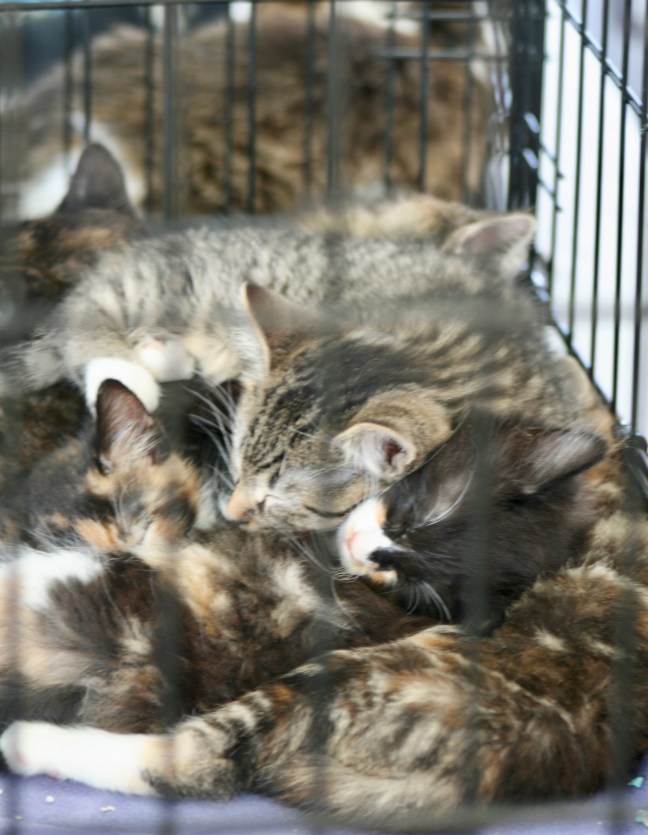
Nap time! Hurricane Harvey kittens take a break at the 30th annual Puttin’ on the Dog festival. Photo by Alexandra Bogdanovic

So what?

In their assessment of these findings, the researchers acknowledge that veterinarians have historically received less education about opioid misuse than medical doctors and dentists. The researchers also acknowledge that increased awareness among physicians and dentists has prompted people who misuse opioids to get opioid-based painkillers elsewhere.

Specifically, the assessment cites the FDA Commissioner’s concerns that, “the recent increased scrutiny of medical and dental opioid prescribing may have redirected some individuals to obtain opioids from veterinarians.”

As a result, the researchers conclude that veterinarians should be subjected to the same rules and regulations as their peers in medicine and dentistry. They also say that veterinarians should receive similar educational outreach.

As things now stand

Rules and regulations

According to the American Veterinary Medical Association there are regulations that mandate reporting when veterinarians dispense controlled substances — including opioids — to patients on the books in 15 states and the District Columbia. These are:

  • Alaska
  • Arkansas
  • California
  • Connecticut
  • Illinois
  • Indiana
  • Michigan
  • New Hampshire
  • New York
  • North Dakota
  • Oklahoma
  • South Carolina
  • Vermont
  • Washington state
  • West Virginia

However, it is important to note that 34 states exempt veterinarians from Prescription Drug Monitoring Programs.

Educational outreach

The U.S. Food and Drug Administration (FDA) has also provided a comprehensive list of tips for veterinarians that stock and prescribe opioid-based medications for animals.

Among other things, it includes advice about how to spot clients and staff that may be “diverting” and misusing these medications.

Some warning signs that a client is potentially abusing opioids may include:

  • Suspect injuries in a new patient
  • Asking for specific medications by name
  • Asking for refills for lost or stolen medications
  • Pet owner is insistent in their request

Some warning signs that veterinary staff may be abusing opioids include:

  • Mood swings, anxiety, or depression
  • Mental confusion and an inability to concentrate
  • Making frequent mistakes at work
  • Not showing up for work

The bottom line

“Combating opioid addiction and addressing misuse of pain medication continues to be one of FDA’s highest priorities,” the agency says. “Veterinarians as medical professionals have an opportunity to partner with FDA and others to take on this deadly epidemic, and the agency encourages them to continue to work with their clients and both local and national organizations to join in the fight.”

Pets And Pills (For Humans) Don’t Mix

This vintage typwriter is our featured image.

As anyone who has a feisty cat or dog knows all too well, it’s almost impossible to get them to take their medicine. They struggle, they squirm, they scratch, they bite. And just when you think they’ve finally swallowed the pill, you find it on the floor.

But then there’s the matter of what happens when our pets accidentally take our medicine.

Accidental poisoning poses real threat to pets

Nap time! Hurricane Harvey kittens take a break at the 30th annual Puttin’ on the Dog festival. Photo by Alexandra Bogdanovic

In a recent column in The Oakland Press, veterinarian “accidental pet poisonings are on the rise, and some of the most common are from human medication.”

Specifically, Dr. says some of the common medications we take to treat minor ailments pose a real threat to companion animals. Examples include nonsteroidal anti-inflammatory drugs, or NSAIDs such as Advil, Aleve and Motrin.

When accidentally swallowed by our pets, these drugs can cause serious ailments ranging from  stomach and intestinal ulcers to kidney failure, says.

Tylenol poses an even bigger danger for cats, which are “especially sensitive to acetaminophen” she adds.

“One regular-strength tablet can damage red blood cells, leaving the blood unable to carry oxygen,”  explains. “Many cats die from acetaminophen ingestion. In dogs at high doses, it can cause liver damage and also damage red blood cells.”

Certain medications used to treat depression in people can also be harmful for pets. As notes, pets that ingest too much  Effexor, Cymbalta and Lexapro can experience “serious neurological problems, such as sedation, tremors, incoordination and seizures.” On the other hand, some  other antidepressants may have the opposite effect, leading to elevated heart rate, blood pressure and body temperature.

“Keep in mind, too, that it seems pets enjoy the taste of Effexor and often will eat the whole pill,” warns.

Finally, she says, medications used in the treatment of human ADHD can also act as stimulants in pets, raising heart rates and creating anxiety.

How to reduce the risk of accidental ingestion

The good news is that there are simple things all “pet parents” can do to prevent or reduce the risk of accidental ingestion. The first is to keep your medicine where Fido or FiFi can’t reach it. The second is to consult your veterinarian before giving your pet any medication not specifically prescribed for that pet.

also recommends taking the following precautions:

  • Never store loose pills in a plastic bag, because pets can chew through them.
  • Reduce the chances of your pills getting mixed up with your pet’s medicine by keeping them separate.
  • If you keep your medication in your purse, make sure to store the purse out of reach because curious pets in search of treats may mistakenly eat the contents.

“Remember, pets metabolize medication differently from humans, so if you have any questions regarding a medication your pet may have ingested, call your vet,” says.

In other words, better safe than sorry…

Estate Planning With Your Pets In Mind

This vintage typwriter is our featured image.

Good morning, everyone! Happy Monday! Are you ready for some thought-provoking questions to start your week? Well, ready or not, here they are.

What will happen to your pet(s) if something happens to you? Who will take care of them? Where will they live? Will they end up in a familiar place with people they know? Or will they end up in a shelter, where they will be left to an uncertain fate? Have you thought about it? Do you have a plan?

You don’t? Why not? Make one. Put it in writing. Share it with your friends and family. Talk to your lawyer about it. Seriously. It’s important!

Runner-up in one of the contests at the 30th annual Puttin' on the Dog festival.
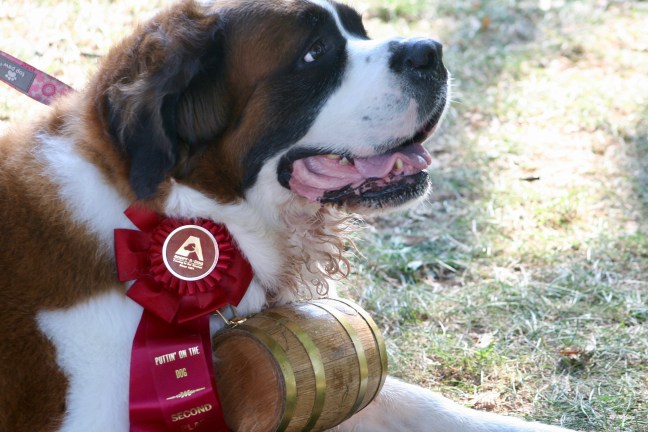
Second place? What do you mean I got second place? The indignity of it all. Puttin’ on the Dog, Greenwich CT. Photo by Alexandra Bogdanovic

Estate planning

Proper estate planning is a proactive rather than a reactive process. As such, it allows you  to  prepare for unanticipated events, instead of simply reacting to them. Specifically, it allows you to create a strategy that can be shared with your family and used in the event of a serious, catastrophic or fatal injury or illness. In other words, this is a way to ensure your wishes — including those about the care of your pet(s) — are documented and followed if/when you are no longer capable of expressing them.

The last will and testament

When most people think about estate planning, making a will is the first thing that comes to mind. This is because a valid will is a legal document required for the settlement of your affairs and distribution of your estate. Or, to put it in plain English, it is a legal document in which you specify who gets what after you die, and designate someone (called an executor) to make sure your wishes are carried out accordingly.

According to The Humane Society of the United States (HSUS), you should keep a few of things in mind if you’re considering including provisions pertaining to the care of your pet(s) in your will. Specifically, you should be aware that:

  1. Your will only takes effect upon your death.
  2. It takes time to sort everything out (determine if the will is valid and so on).
  3. Other complications could arise, especially if someone decides to contest (challenge) the will.

“Even determining the rightful new owner of your pet can get delayed. In other words, it may take a long time before your instructions regarding your pet’s long-term care can be carried out,” the HSUS says. “This doesn’t necessarily mean that you should not include a provision in your will that provides for your pet. It just means that you should explore creating additional documents that compensate for the will’s limitations.”

Setting up a trust

A trust is another type of legal tool used in the estate planning process. It allows you to allocate funds for a specific purpose, such as the care of your pet, if something happens to you. It also allows you to choose someone to manage the trust.

According to the HSUS, the benefits of using a trust in addition to a will are:

  1. It ensures your pet’s immediate needs are met.
  2. It can be used while you are sill alive (in the event of illness/injury).
  3. You can decide when it goes into effect.
  4. It allows for the exclusion of some funds from probate.

“There are many types of wills and trusts,” the HSUS points out. “Determining which is best for you and your pet depends on your situation and needs.”

The organization also stresses the importance of getting proper legal advice from “an attorney who both understands your desire to provide for your pet and can help you create a will and/or trust that best provides for him.”

Because there may be different rules depending on where you live, the HSUS recommends that you and your lawyer verify that the trust established  for the benefit of your pet(s) is valid and enforceable in your state.

Power of attorney

Finally, a third type of legal document, called a power of attorney, allows someone else someone else to handle some or all of your affairs for you while you are alive. As such, they can be written to take effect upon your physical or mental incapacity and remain in effect after you become incapacitated.

They are simpler than trusts and may include provisions  allowing the person authorized to handle your affairs  “to take care of your pets, expend money to do so, and even to place your pets with permanent caregivers if appropriate.”

Short-term solutions

Of course, the strategies used in estate planning are generally devised to address future events. An HSUS fact sheet, called “Providing for Your Pet’s Future Without You,” details not only the issues we have already discussed, but other ways to ensure your pets are taken care of in an emergency.

Its recommendations include but are not limited to:

  • Identifying at least two responsible friends or relatives who agree to serve as temporary caregivers if you have an emergency. Giving them with keys to your home; feeding and care instructions; the name of your veterinarian; and information about the permanent care provisions you have made for your pet.

• Ensuring that your neighbors, friends, and relatives know how many pets you have and the names and contact numbers of the individuals who have agreed to serve as emergency caregivers. Emergency caregivers should also know how to contact each other.

• Carrying a wallet “alert card” that lists the names and phone numbers of your emergency pet caregivers.

• Posting removable “in case of emergency” notices on your doors or windows specifying how many and what types of pets you have. Doing so will let first responders know that you have pets so they can act accordingly.

• Posting a removable notice with relevant information to the inside of your front and back doors.

The HSUS fact sheet also addresses related concerns, such as the importance of making formal arrangements for your pet’s care if something happens to you; keeping in contact with the designated caregivers; entrusting your pet’s care to a specific organization; and more.

You can find the details here.

It is sad, but it is not necessarily inevitable

As a volunteer at a local animal shelter, I became aware of several cases in which dogs were surrendered because their owners could no longer care for them. In a few of those cases, I believe we had an agreement that the dog would be returned to us in such circumstances. In other cases, the animals were simply surrendered by family members who were unable to care for them and had nowhere else to turn.

In any case, it was always sad. But it does not have to be inevitable.


Disclaimer: The preceding article is intended for informational purposes only, and should not be considered as legal advice. For legal advice, including questions and concerns about estate planning; animal law; and providing for your pets in the event of illness, injury or death, consult a qualified attorney in your area.

The Efficacy Of U.S. Pet Protection Laws

This vintage typwriter is our featured image.

As most of you know, I am passionate about two aspects of the law. One is animal law and the other is criminal law. So it shouldn’t come as a surprise that I’ve done a lot of posts on both topics in this forum.

Alexandra Bogdanovic
Founder/owner of In Brief Legal Writing Services, Alexandra Bogdanovic. Photo by N. Bogdanovic

Specifically, I have written about the steps that state lawmakers across the United States have taken to protect companion animals and punish the people who abuse, hoard and neglect them. I must admit, there have been a lot of positive developments since I created this website and started posting here in 2015.

But of course, that’s just my opinion. Let’s see what the Animal Legal Defense Fund (ALDF) has to say about the implementation and efficacy of animal protection laws across the United States as of 2018.

How the states were judged

Last month, the ALDF released its annual Animal Protection Laws Rankings Report , which includes “the best and worst US states and territories when it comes to animal protection.”

Along with the results, American Veterinarian.com published an article explaining how the states were judged. As reported on that website, the ALDF’s criteria included “19 aspects of animal protection, including 5 new categories: the definition of ‘animal,’ courtroom animal advocate programs, laws that allow individuals to rescue dogs from hot parked cars, civil nuisances abatement, and breed-specific legislation.”

Based on its assessment, the ALDF determined that the U.S. as a whole is making progress — but there is still room for improvement.

“Every year, we see more states enacting broader legal protections for animals,” ALDF’s Executive Director Stephen Wells told American Veterinarian.com. “We have a long way to go until animals are fully protected under the legal system as they deserve, especially in the lowest-ranked states.…But as this year’s Ranking Report shows, step by step we as a nation are improving how the law treats animals.”

How the states ranked

Starting with the good news, the top states were:

  1. Illinois
  2. Oregon
  3. Maine
  4. Colorado
  5. Massachusetts

“With the creation of laws banning the sexual assault of animals, Louisiana (7) and Massachusetts (5) were among the most improved states in 2018. Besides Massachusetts, each of the 5 best states has remained consistent with the previous years,” the American Veterinarian.com article notes.

On the other hand, these were the states that ranked near or at the bottom of the list:

46. New Mexico
47. Wyoming
48. Iowa
49. Mississippi
50. Kentucky

Of particular concern is the lack of progress in Kentucky, which was ranked last for the second consecutive year. Specifically, the ALDF’s 2018 report found that, despite its allowance for increased penalties for repeat abusers and/or animal hoarders, Kentucky has not made any significant changes in the following areas:

  • Adequate definitions or standards of basic care
  • Restriction of animal ownership after a conviction
  • Mandatory forfeiture of animals upon conviction

One of the most obvious deficiencies in Kentucky’s animal safety regulations is its lack in felony penalties for animal cruelty (including neglect, sexual assault, or abandonment). Furthermore, Kentucky is still the only state that precludes veterinarians from reporting suspected animal cruelty, abuse, or fighting.

To make matters worse, there are no statutory provisions for post-conviction restitution or forfeiture, except in cases involving horses. In other words, owners who have harmed their pet don’t have to surrender it — so they really aren’t being held fully accountable for their actions.

Why do we need animal protection laws?

Of course, there are plenty of people who don’t like animals — and to them all of this is pointless. In most cases, they argue that people are more important, and lawmakers should concentrate on addressing “more important issues” like healthcare, gun violence and climate change.

Personally, I have a different perspective — one gained during 21 years covering cops and courts in three states. You see, I have written about my share of violent crime. And I know for a fact that the types of people who commit these acts have no qualms about harming animals to begin with.

So, yes animal protection laws do matter. In fact they matter a lot.

Whatever You Do, Do Not Get A Wild Animal As A Pet

This vintage typwriter is our featured image.

“Here’s the thing about sloths. They’re kind of anti-social.”

Not to be obnoxious or anything, but sometimes I really, really, really wonder if there is any end to human stupidity. Seriously.

Alexandra Bogdanovic
Founder/owner of In Brief Legal Writing Services, Alexandra Bogdanovic. Photo by N. Bogdanovic

I mean for one thing, what would make someone think that a wild animal would make a good pet? I honestly thought Sterling North addressed that issue when he wrote Rascal.

If you haven’t read it, please do. It’s about a raccoon, and it’s a classic. And once you’ve finished I am sure you’ll agree that — as cute as Rascal was — he wasn’t the best pet.

Even if you disagree, here are a few things to consider.

Red pandas, and sloths, and sugar gliders, oh no!

According to a recent National Geographic article, you can blame the Internet and social media for the surging popularity of wild animals as pets.

In some cases, owners post videos of wild animals in their care, coddling them as if they were domesticated,” author Annie Roth notes.

Some of the wild animals now in demand include red pandas, sloths and sugar gliders, among others. But, the experts stress, none of these wild animals make good pets.

Red pandas are (not) so cute

Yes, the look adorable, with their sumptuous, rust-colored coats large tufted ears, facial markings, and bushy ringed tails. But appearances are deceiving.

“You don’t want wild animals as pets, and you particularly would not want to have a red panda,” Thane Maynard, director of the Cincinnati Zoo and Botanical Garden told National Geographic. “They have cat-like claws that would tear up your furniture and maybe even you.”

Aside from that, they stink. Literally. As a defense mechanism, they can release a foul-smelling scent from their anal glands. And, Maynard said, “they mark their territory like many mammals do, so it would really be a smelly mess at your house.”

Just as importantly — if not more so — red pandas “are endangered throughout their range and their commercial trade is illegal under the Convention on International Trade in Endangered Species (CITES).”

Solitary sloths

Here’s the thing about sloths. They’re kind of anti-social. The only times they really show any inclination for interacting with each other is when they mate or have babies to raise. And when it comes to interacting with humans… well, let’s just say it’s not a very good idea. In fact, it’s not a good idea at all.

“Sloths are fragile animals,” Cassandra Koenen, global head of exotic pets at the animal welfare nonprofit World Animal Protection, told National Geographic. “Being touched [by humans] on a regular basis can cause them severe psychological damage.”

Finally, their reputation for being “chill” isn’t entirely accurate. Sloths are well equipped with sharp claws and teeth — and they won’t hesitate to use them when they feel upset or threatened.

Not-so-sweet sugar gliders

According to National Geographic, sugar gliders are popular in the exotic pet trade for few reasons. First, they’re easy to find because they’ve been bred in captivity. Secondly, ownership of sugar gliders is legal in the United Kingdom and in some parts of the U.S. and Australia.

In fact, sugar gliders are native to Australia and nearby islands. Unlike sloths, they are highly social and live in large family groups. They live up to their name by using a web of skin that stretches between front and forelimbs to glide from one tree to another. But they also have sharp claws, which make them well-suited for climbing. Within this context, it is also important to note that although a sugar glider’s claws aren’t that long, they can inflict damage on people.

Some other exotics that don’t make good pets

Here’s a short list of some other wild animals included in the National Geographic article that aren’t good pets:

  • The fennec fox
  • Slow lorises
  • Capybara
  • Lemurs
  • Tigers
  • Prairie dogs
  • Asian small-clawed otters

Now here’s the bottom line. Getting a wild animal as a pet is never a good idea. If you love exotics and you must indulge your passion for them, please consider volunteering at a sanctuary or zoo that cares for them. But please don’t indulge your ego. It’s not right and it’s not fair — especially to the animals.


A ‘dogged’ quest for justice

This vintage typwriter is our featured image.

I love it when I find cool stories on the Internet — and I love to share good news. So I was definitely excited when I came across a heartwarming article about Patty Richardson.

Richardson is a North Carolina-based private investigator who “specializes in animal cases.” Right now she’s focused on catching the (alleged) scumbags who swipe and sell dogs.

Now that may come as a surprise to you. Frankly it surprised me, too. But given what I’ve learned about “dognapping” and related scams recently, I’m glad to hear there’s someone out there who’s willing to help people whose dogs have disappeared.

Eli, the In Brief Legal Writing Services mascot.
In Brief Legal Writing Services mascot Eli catching up on the latest news. Photo by Alexandra Bogdanovic

Of course, you might not be lucky enough to have a PI like Richardson where you live. And even if you do, there are steps you can take to find your dog before you summon reinforcements. The website fidofinder.com offers a comprehensive plan of action to follow when panic over a missing sets in. You should:

  • Calm down, take a breath and start with the obvious. Thoroughly check the house, yard and immediate area to make sure your dog is really “gone.”
  • Try to figure out how the dog got out of the house or yard and how long it might have been gone. That will give you clues about where it went and how far to look.
  • Designate someone to stay at home and man the phone when you start the search. That way someone will be available if anyone calls to report finding your dog, or brings it directly back to the house.
  • Be prepared to conduct a thorough preliminary search of the neighborhood by bringing a flashlight and photos of the dog with you.
  • Re-canvas your neighborhood on foot and by car if the initial search was not successful. You should also plaster the area with “missing dog” posters; and contact local veterinarians, animal shelters and animal control.
  • Use all available resources to spread the word, including social media and newspaper ads.
  • Remember the power of word-of-mouth. Tell your family, friends and neighbors about your missing pet.

To end on a personal note, here’s a little advice from yours truly. Don’t be afraid to call the authorities if you have reason to believe someone has stolen your pet. After all, the police are here to protect and serve.

Something old, or something new?

This vintage typwriter is our featured image.

A Connecticut lawmaker’s efforts to strengthen existing animal cruelty laws raises an interesting question — and one that may not be unique to his state. Should there be tougher penalties for offenses committed under the current laws, or should the state’s animal cruelty statute be completely rewritten?

Alexandra Bogdanovic
Founder/owner of In Brief Legal Writing Services, Alexandra Bogdanovic. Photo by N. Bogdanovic

In a recent New Britain Herald article, State Rep. Gary Bryan explained why he’s backing legislation that failed to gain enough support to make it to the governor’s desk last year.  If it is enacted, anyone convicted of deliberately “maiming, torturing or mutilating animals” will face harsher punishments than they do now.

But one skeptic quoted in the story says  more can — and should be done.  In fact, the man in charge of New Britain’s animal control claims that the current rules are outdated and confusing. That makes successful prosecution of animal cruelty cases more difficult, Sgt. Paul Keller tells the New Britain Herald.

The solution? Keller suggests scrapping everything and rewriting the state’s animal cruelty statute with an emphasis on clarity and simplicity.

The thought of doing that might make some legislators run screaming from the room. I mean, why make things easier? Why make things better?

But all joking aside, I think they should do whatever it takes to ensure that anyone who intentionally injures an animal in any way is successfully prosecuted and punished to the fullest extent of the law.

If that means working their butts off to make sure the bill Byron’s backing makes it to the governor’s desk this year, so be it. If that means making partial revisions to the existing statute, then so be it. And if that means rewriting the entire statute, well, so be it.

What do you think? Leave a comment and let me know.