Ah, New York City. Gotham. The Big Apple. It is globally known for its imposing yet beautiful skyline, its culture, its nightlife, its tourist attractions, its sports teams, its subway system, the collective “attitude” of its residents — and its rats.
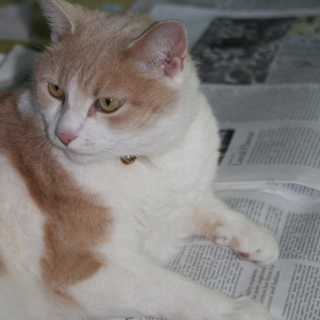
In Brief Legal Writing Services mascot Eli catching up on the latest news. Photo by Alexandra Bogdanovic
Yes, you heard me. Rats. Big, mean, scary rats — well, according to urban legends at any rate. There are millions of them. In fact, a 2014 estimate published in a New York Timesarticle indicated that New York City’s rat population totaled roughly 2 million — give or take a few. Although that article was supposed to debunk the myth that there’s a rat for every New Yorker (which would put the total at approximately 8 million), New York City still ranks as the worst “rat city” in the world.
But never fear! According to published reports, feral cats are coming to the rescue.
Yes, I’m serious.
As the website nymag.com reports in an Oct. 23 article, “Volunteers with the NYC Feral Cat Initiative are working to repurpose some of the city’s population of as many as half-a-million stray cats as feline special forces in the war against the rats.”
Citing accounts from other media outlets, nymag.com explains that the group, “is working to trap wild cat colonies throughout New York, spay or neuter the animals, and when the cats can’t be adopted or returned to the place they were trapped, the group will try to relocate them to areas in need of rodent control.”
So far, it seems to be working. One group of feral cats “assigned” to the loading dock area at the Jacob Javits convention center a few years back has reportedly been highly effective. Today four cats from that group remain on the job. The rest found new homes with some of the center’s employees or with visitors.
The program isn’t unique to New York. Similar efforts are ongoing in large cities elsewhere in the United States.
Historically, shopkeepers throughout the world have also kept cats to control rodents — a practice that continues in New York City today. And we all know about “barn cats” that help fend off rodents in rural areas. What you might not know is that in World War I, cats took to the trenches and ships to hunt rodents.
So the bottom line is that when it comes to putting feral cats “to work” in New York City, no one is reinventing the wheel. But I still think the idea is genius… and so does Eli.
BOMB (verb used without object) — “toexplodeabomborbombs“Dictionary.com
If the circumstances weren’t so serious, the mainstream media’s reaction to the weekend bombing that injured 29 people in New York City would have been laughable. Instead it was just sad.
Rather than focusing on the matter at hand, the media obsessed over:
Donald Trump’s use of the word “bomb” in connection with the incident.
Whether he used the term prematurely.
If and when Hillary Clinton used the same term.
Whether the use of the term was appropriate, no matter who said it or when.
Well, here’s a newsflash (sarcasm fully intended): When something goes “boom” and then disintegrates into a billion pieces that fly through the air damaging property and hurting lots of people in the process, it is pretty safe to say it was a bomb.
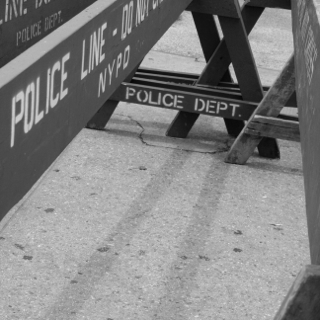
NYPD barriers. Photo by Alexandra Bogdanovic
Of course I suppose one could also argue that by definition an explosion also goes “boom.” However an explosion can be triggered by almost anything. A gas main leak, faulty wiring or even a bomb.
As a former police reporter, I understand why the media initially referred to the incident as an explosion and hesitated to call it something else. I also understand why the media was legally obligated to use words such as “alleged” and “apparent” in the immediate aftermath of the incident.
But I digress. Once all the talk about the use of the word “bomb” got old, the media-fueled speculation turned to whether or not the bombings in Chelsea and Seaside Park, New Jersey, were terrorist acts, whether they were linked, who was responsible and so forth.
Meanwhile, local, state and federal law enforcement officials — who are routinely castigated by the mainstream media — were doing their jobs. A comprehensive investigation, including analysis of evidence found within a few blocks of the Chelsea bomb blast — resulted in the arrest of a New Jersey man on Monday morning.
Ahmad Khan Rahami, 28, the suspect in the bombings, is now facing multiple charges stemming from the gun battle that transpired before police took him into custody.
Founder/owner of In Brief Legal Writing Services, Alexandra Bogdanovic. Photo by N. Bogdanovic
So did you hear the one about the lawyer who (allegedly) robbed a bank?
Are you waiting for the punchline?
There isn’t one.
It really happened. Allegedly.
According to published accounts, Meighan Marie McSherry, 46, of Manhattan, has been charged in connection with a recent bank robbery in Greenwich, Connecticut. She is also the suspect in another one, which happened in New York City last week.
I’m not too sure which Wells Fargo branch in Greenwich McSherry allegedly robbed. I seriously doubt it was the one across the street from my house. But then again, I wouldn’t be surprised if the incident did happen there.
For one thing, there’s no shortage of drama in this neighborhood. Secondly, from what I understand, police caught her on West Putnam Avenue. I don’t know exactly where on West Putnam Avenue, but the beginning (or end) of that particular road isn’t too far from my house.
But anyway, that’s all beside the point. The point is that an attorney who, by all accounts was once very successful, is now facing felony charges. Specifically, Greenwich police charged her with first-degree robbery and second-degree robbery.
Authorities said McSherry left the bank with an untold sum after she passed a note “demanding money and claiming that she had a weapon.” No one actually saw any sort of weapon during the alleged commission of the crime, but police reportedly found other evidence linking McSherry to the incident when they apprehended her.
So we know what McSherry is accused of doing — but lots of questions remain unanswered. The most puzzling of those is why.
Perhaps we’ll learn more as the case wends its way through the court system. McSherry is reportedly scheduled to make a preliminary appearance in state Superior Court in Stamford in a few weeks.
In the meantime, there will be plenty of time to come up with some really bad jokes. I mean, I’ve heard of an attorney robbing someone blind, but this is ridiculous…
Founder/owner of In Brief Legal Writing Services, Alexandra Bogdanovic. Photo by N. Bogdanovic
For the second time in less than a month, authorities confiscated hundreds of animals from a Tri State Area home. But this time the house was on Long Island. And this time the animals weren’t dogs. This time, the animals reportedly rescued from horrid conditions were turtles and birds.
As reported by WABC-TV in New York, the Nassau County SPCA seized the animals after personnel from its law enforcement division executed a search warrant at the Bellmore home yesterday.
On a steamy hot New York morning, authorities found some of the animals didn’t have enough water and others were malnourished. They were also deprived of fresh air and lived in dirty water, according to an account provided by an agency spokesman.
One of the animals — an alligator snapping turtle found living in the basement — belongs to a species capable of hurting people.
“That turtle could take your hand off,” Nassau County SPCA spokesman Gary Rogers told Eyewitness News.
You can learn all about alligator snapping turtles on nationalgeographic.com. But here are a few basics:
You won’t find a bigger freshwater species in North America.
They like to live in rivers, lakes and canals in the southeastern part of the United States.
They can live for 50 to 100 years.
An adult male’s shell can be more than 2 feet long.
An adult male can weigh more than 170 pounds.
Females are much smaller.
They can stay under water for a long time.
They have no natural predators other than us.
Now perhaps you see why they don’t make great pets. And personally I really wouldn’t want to keep one in my basement. Would you?
Never mind. That was a rhetorical question. But if you do want one, there are a few things to consider before taking the plunge. You can read about them on rightpet.com.
At the end of the day, what kind of pet you get is up to you. All I ask is the following:
that you do not further the exotic pet trade
that you do your research before you get any sort of pet
that you engage in responsible pet ownership
If you do all of that, you probably won’t end up on the evening news.
The pressure on North Carolina Gov. Pat McCrory shows no signs of letting up. If anything, it’s growing.
Since HB2, which prevents municipalities in the state from creating their own rules to protect members of LGBT community, became law last week, McCrory has faced considerable corporate and public backlash. The ACLU also jumped into the fray by filing a lawsuit in response to the new law earlier this week.
Now Connecticut Gov. Dannel Malloy has piled on by prohibiting publicly funded travel to the Tar Heel State.
“This law is not just wrong, it poses a public safety risk to Connecticut residents traveling through North Carolina,” Malloy said in a Hartford Courant story published yesterday. Essentially, the law puts everyone who goes there at risk, as well as those who live there, Malloy added.
According to published reports, New York Gov. Andrew Cuomo has also taken steps to prevent “all nonessential, publicly funded travel” to North Carolina.
Yesterday, McCrory indicated that he’s had enough and fought back by calling his critics a bunch of hypocrites. If you haven’t already, you can read exactly what he had to say in Politico by clicking the link in the preceding paragraph.
Sad But True
No one is disputing that it is the government’s job to protect vulnerable citizens. Sadly, no one can deny that we need tough laws to combat hate crimes and other heinous behavior that has no place in a civilized society.
From what I’ve read — and trust me, I’ve read a lot over the last week or so — I don’t think McCrory is denying any of that, either. It seems to me that the issue at the heart of the matter is not whom to protect, but how to protect everyone. What can be done — or more importantly — what should be done to balance LGBT rights with the general public’s rights?
Wrong Answer
Clearly North Carolina lawmakers came up with an imperfect solution — and McCrory didn’t do himself any favors by signing such a flawed bill into law.
Founder/owner of In Brief Legal Writing Services, Alexandra Bogdanovic. Photo by N. Bogdanovic
As far as I am concerned, the state has every right to regulate what transpires in its own facilities. So if the state wants to pass laws prohibiting transgender individuals from using restrooms that match their gender identities in state-owned buildings, so be it. If the state wants to pass laws calling for the creation of “gender neutral” restrooms in state-owned buildings, fine.
But allowing the state to prohibit individual municipalities from creating and enforcing their own rules regarding who can use which bathrooms is ridiculous.
If North Carolina communities are even remotely like those that I covered as a government reporter in New York, Connecticut and Virginia, each one has a town council, a city council or a similar governing body. Among other things that governing body, working with the mayor or town manager, and municipal attorney is tasked with creating the rules and regulations (ordinances) for that community. Whenever a new rule is proposed, there is a series of public discussions. During those discussions — usually held at regularly scheduled meetings or special hearings — residents can share their comments, concerns and opinions. Representatives from other groups that could potentially be impacted by the new rules — can also speak during that time.
In other words, it is an incredibly comprehensive process where everyone has an opportunity to have their say before the governing body votes on the matter. And that’s exactly as it should be.
A Losing Battle?
Figuring out how to balance the rights of the LGBT community with those of the general public is a dilemma that local and state lawmakers across the country have already grappled with, and it is one that more will face as the push for LGBT rights continues.
Figuring out how to put an end to the ignorance and hate that plagues so much of this country is another matter altogether. The only way to start is to encourage an open, honest and objective dialogue. That means taking emotion out of the equation. And therein lies the problem. Human beings are inherently emotional animals. Hate is an incredibly powerful emotion. So is fear.
So our options are limited. But I firmly believe the following:
We can and should continue to put laws on the books to discourage hateful people from acting on their feelings.
We can and should continue to ensure that harsh penalties are in place for those who do.
We can and should create and fund programs that promote understanding, compassion and tolerance.
We can and should instill those values in our children.
Instead of focusing on our similarities, we can and should learn to respect each others’ differences — even if we don’t understand them.
We can and should lead by example.
Regretfully I also believe that at the end of the day, we can’t morally or legally force anyone to exercise tolerance, compassion or understanding if they lack the basic desire or ability to do so.
And as far as I’m concerned, to think otherwise is sheer folly.
I rarely mix business and pleasure. Or should I say, I try not to mix the two. So — even though this blog can sometimes be a bit snarky — there are certain things that are out-of-bounds. Forbidden topics include religion, politics (especially anything having to do with Donald Trump) and, well, blatant self-promotion. I will talk about Eli, but I won’t plug my book here. Nor will I discuss any other extracurricular activities.
Of course, having said all of that, there are exceptions to every rule.
So for the next couple of days, I’m taking a break from writing about murder, mayhem, animals, the nanny state, fantasy sports and our judicial system. Instead I’ll focus on a couple of things that might help you get to know me a little better. And who knows, you may even find them interesting.
An official invitation
First of all, I’d like to invite any of you who live in the New York City area to the opening reception for a group photography exhibition in a couple of weeks. It will be held from 6 to 8 p.m. April 3, at the Art and Sound Gallery in Greenwich, Connecticut.
Invitation to opening reception for a gallery event including photos by In Brief Legal Services Owner/Founder Alexandra Bogdanovic.
Located on the Greenwich side of Mill Street near the Byram River bridge, the gallery is actually just a short walk from the Port Chester train station — so all you have to do is jump on the train if you don’t want to drive. Plus the owner, curator and exhibitors are really cool, so you will definitely have a good time. And just as importantly — okay maybe even more importantly — you’ll get to see some of my work.
Yes, when I’m not working on research, writing or editing projects here at In Brief Legal Writing Services, I am an amateur photographer — among other things.
Picture this
To begin with, I was born in Bronxville, N.Y., and raised in Greenwich, so I am definitely a child of the New York City suburbs. Even so, I’ve always identified with the City, and think of myself as an (unofficial) New Yorker.
Now I channel my passion for the single greatest city on the face of the planet through my photography. I see something new every single time I go there, even if I go to the same places over and over again. The time of day, time of year and the weather all make a huge difference in the types of pictures I can get. It’s always challenging and it’s always fun. I never get bored.
NYPD barriers. Photo by Alexandra Bogdanovic
Out of all the places I go in New York City, Times Square is probably my favorite place to shoot. I think I’m drawn to it because I love big, bold, graphic images — but my interest in photography isn’t limited to urban settings. I also love beach and nature photography, automotive photography and travel photography. In addition to the Big Apple, I’ve shot in Barcelona, Belgrade, Munich, Virginia the Hamptons, Greenwich, Rye, N.Y., and rural Australia. Last year I documented a train trip up and down the east coast, from New York City to Orlando, Florida.
My work has been shown at the Rye Nature Center in 2003, and at the Byram Library in Greenwich last year.
At any rate, it’s kind of ironic that I love photography so much, since it’s something I really started doing as part of my job back when I was a reporter at papers with limited resources. But on the other hand, it’s an interest and passion I share with my mother. It’s also a fantastic creative outlet. When I am behind the camera, I can relax, forget all about any stress or drama I’ve got going on at work or in my personal life and focus on the task at hand.
Founder/owner of In Brief Legal Writing Services, Alexandra Bogdanovic. Photo by N. Bogdanovic
Not too long ago, it seemed sports fans in the Tri-State Area couldn’t watch a game or tune in to their favorite radio talk shows without being barraged by ads urging them to participate in daily fantasy sports contests.
But, as so often happens when any activity attracts an immense following, government officials began to take notice. Much debate ensued about the legitimacy of the contests — and whether winning them requires luck or skill. A whole bunch of proverbial poop really hit the fan back in November, when New York Attorney General Eric Schneiderman said participation in the contests is tantamount to illegal gambling in the state.
While Schneiderman’s stance — aimed at preventing the companies that run the contests from doing business with state residents — set the stage for a legal showdown, lawmakers in a neighboring state are considering a different approach. Specifically, a bill currently making its way through Connecticut’s legislative process would “protect consumers who play daily fantasy sports contests from unfair or deceptive acts or practices.”
Not a chance
Among other things, the bill includes definitions of a “daily fantasy sports contest,” and a “contest of chance.” It also charges the Commissioner of Consumer Protection with adopting rules that:
Stipulate that daily fantasy sports contests are not “contests of chance”
Set the minimum age for participants at 21
Include measures to protect consumer deposits
Ensure “truthful advertising” regarding the activity
Guarantee “the integrity of all daily fantasy sports contests offered in this state”
Include safeguards for “problem gamblers”
Listen up
At a public hearing of the General Law Committee held earlier this month, several speakers voiced concerns and suggested changes to the initial language.
One of them, Chris Grimm, testified on behalf of two well-known fantasy sports companies and the Fantasy Sports Trade Association. He began by pointing out that more than 50 million Americans have played fantasy sports for more than three decades, making the activity “our new national past time [sic].”
Whether they play in the traditional season-long format or the newer daily or weekly format, participants put their skills to the test, Grimm stressed.
“It is not enough to know the most popular teams and their most recognizable stars,” Grimm said. “Fantasy players need to understand scoring systems, the particular strengths of different players, the type of offensive schemes that they play in and the quality of their matchups [sic].”
Sarah Koch, the assistant director of government affairs at Draft Kings, also spoke in favor of the bill, but suggested some changes including:
Writing certain protections into the law itself
Insertion of language that “ensures fantasy sports competitions are based solely on statistics and not on outcome or finishing position” to avoid inadvertently “opening the door to sports betting”
Removing the word “daily” from the definition of fantasy sports in the bill to “provide legal clarity for all fantasy sports encompassed by the definition”
Clarification of the legal status of fantasy contests by inserting language indicating it does not “constitute gambling under the applicable penal code”
Dropping the age restriction from 21 to 18
Tamara Petro, the executive director of the Connecticut Council on Problem Gambling, also addressed the committee.
“This bill largely represents preparedness for a substantial expansion if CT [sic] legalizes daily fantasy sports, which is a very lucrative, multi-billion dollar business,” she said. “We propose that the new era of gambling in CT [sic] necessitates a sustainable framework for Responsible Gambling [sic] and consumer protections, and that the State [sic] has a responsibility to provide this while looking to expanded gambling for revenue.”
Just when New York City and the rest of the Tri-State Area finally got rid of Michael “Don’t You Dare Drink A Soda” Bloomberg, the “nanny state” came along and poured some proverbial salt in the wound. Or something like that.
Food fight
Here’s what happened. Someone — or more likely some group — came up with the brilliant idea that chain restaurants in New York City should put a salt shaker icon next to any menu items that contain or exceed the recommended daily allowance of sodium. Then someone else — likely backed by a bunch of “do-gooders” — decided that this should be mandatory.
Of course someone else decided it wasn’t such a great idea, so of course lawyers got involved and the courts stepped in. Go figure.
Anyhow, from what I’ve read, the New York City “food police” were supposed to start fining restaurants that failed to comply with this last week. A last-minute court ruling put a temporary stop to that, however. You can read the details here.
I suppose you could argue that all of this is no big deal. You could even argue that whole salt shaker icon idea makes sense. After all, it is just simple way to help people make an informed decision, right? I suppose you could also argue that there are lots of people with health issues who shouldn’t have too much salt. So it’s just for their own good.
It’s easy to believe what someone in authority says. So I’m sure if you listen to health gurus and nutritionists and doctors and the government you could list even more reasons to support the idea. Or you can actually think for yourselves and reach your own conclusions. Now there’s a new and revolutionary plan.
Founder/owner of In Brief Legal Writing Services, Alexandra Bogdanovic. Photo by N. Bogdanovic
Personally I don’t need a label on a menu to tell me if something’s too salty. I mean, I’m not a dietitian or a nutritionist but I am pretty sure I could figure it out. So could you. Just put the food in your mouth and taste it. It’s really not that difficult.
If you think about it, it’s not that hard to employ a bit of common sense, either. And common sense dictates that it’s not a good idea to indulge in too much of anything. Of course excessive eating, drinking, smoking and so on will take a toll on your health. Of course your body will rebel if you have too much processed food, caffeine, salt, alcohol, nicotine, sugar… Of course if you combine all of this with a sedentary lifestyle and lack of exercise you’ll probably end up getting really sick. Do you really need anyone to tell you so?
Personally, I don’t. I am an adult. I have a brain. I know how to use it. I know that all actions have consequences. I know that some consequences can be unpleasant. I also know that if I make risky or irresponsible choices about my own health, there’s no one to blame but myself.
Ultimately if I am not drinking and driving or doing drugs, I am not putting anyone but myself at risk. But could I become a burden on my family — or even my fellow taxpayers — if I became chronically ill as a result of poor choices about my health? Sure. Is that sad? Yes. Is it right? No.
Does that mean that the government should be allowed to dictate everything I eat or drink? I should think not.
It’s almost enough to restore my faith in humanity. Of course almost is the key word in that sentence.
But all kidding aside, I rarely find articles I enjoy, much less agree with, in The New York Times. So imagine my surprise when my almost-daily search for blog fodder turned up an utterly cool, totally heartwarming story there earlier this month.
Written by Winnie Hu, the February 7 story was about the pet food pantries popping up in New York City and surrounding suburbs. Thanks to them, a lot of people who are often forced to choose between buying food for themselves or their pets are no longer confronted by that agonizing decision. People who were once forced to surrender — or worse yet abandon — their pet because they couldn’t afford to feed it now know there is a place to get canned food or kibble for their dog or cat.
In Brief Legal Services mascot Eli catching up on the latest news. Photo by Alexandra Bogdanovic
I am sure there are plenty of skeptics — and critics — like the man quoted in Hu’s article. I won’t waste my breath on them. They just don’t get it — and they probably never will … unless they spend some time volunteering at an animal shelter, or at least visiting one. Perhaps if they heard the cries of a dog newly separated from the only owner it has ever known, or seen the look on the owner’s face after he or she has left their dog or cat at a shelter, they would finally understand.
Maybe then they would finally realize what those of us who love our pets have always known; that there is something animals give freely regardless of their caregiver’s race, religion, gender identity, sexual preference or socioeconomic standing. It’s something that people don’t give unconditionally and it’s something all the money in the world can’t buy. It’s something called love … and that’s something to think about.
Oh, goody. New York City Police Commissioner Bill Bratton doesn’t seem to think a recent bunch of random attacks on ordinary New Yorkers is cause for alarm.
I feel so much better now. I’ll hop right on the next commuter train headed into the City. Once I get there, I’ll take the subway all over the place without thinking twice, as if nothing’s happened.
Or not.
I’m old enough to remember how scary Manhattan was in the 1970s and ’80s. When I was little my parents kept a close eye on me on the train, and one of them — usually my father — had a death-grip on my hand from the minute our feet hit the platform at Grand Central. He didn’t let go until we arrived at our final destination, or until we were on the train heading back to the relative safety of the New York City suburbs.
We walked everywhere in Manhattan back then. Or we took a cab. Riding the bus was rare and taking the subway was unheard of. Dad said it was too dangerous — and I believed him.
I am old enough to appreciate the City’s renaissance. By the turn of the 21st century, it was safe enough — and I felt brave enough — to venture into Manhattan alone. I even camped out in Rockefeller Center one night. Of course I did with a group of friends so we could have the best “seats” for an outdoor concert the next day.
After I moved back to Connecticut from Virginia in 2012, I took advantage of my proximity to the greatest city on the face of the earth. In fact I romped all over it. I even gained the confidence to take the bus and the subway where ever I wanted to go.
Now The New York Times report about random crimes occurring throughout the Big Apple sends shivers down my spine. According to the Jan. 27 article, at least a dozen people have been targeted by men armed with “knives or razors” in recent months.
In and of itself, news of these incidents — some of which have occurred on the subway, in subway stations and on public streets — is chilling. The police commissioner’s response is, too.
“We will always have crime in the city,” Bratton told The New York Times.
That may be true, Mr. Bratton. But it is your agency’s job to do something about it.



 In Brief Legal Writing Services