Connecticut gets it right with animal advocacy law

This vintage typwriter is our featured image.

I don’t care if people are leaving Connecticut in droves. I love it here.

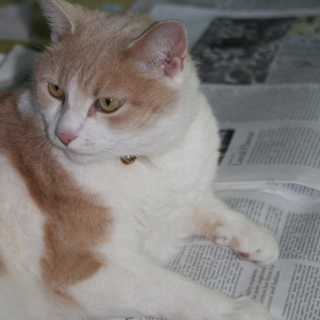
Eli, the In Brief Legal Writing Services mascot.
In Brief Legal Writing Services mascot Eli catching up on the latest news. Photo by Alexandra Bogdanovic

I mean honestly, what’s not to love? I’ve got Long Island Sound as a summertime playground. The greatest city in the world is just a short train ride away. If I want to go to the world’s coolest flea markets, they’re just a short car ride away. The possibilities are endless…

Having said all of that, I can’t honestly say I’m always proud of living here. The state economy is a disaster. State leadership under Gov. Dannel Malloy is a joke. The cost of living is obscene. The traffic is a nightmare. The infrastructure is crumbling.

Without going into too much detail, locally things aren’t much better.

Giving credit where it’s due

But I’ve got to give Connecticut lawmakers credit for one thing… and only one thing. They definitely got it right when they came up with a bill that allows advocates with an interest and/or expertise in animal law to provide courtroom assistance in animal cruelty and neglect cases. I also applaud for Malloy for having the courage to sign it into law.

As those of you who follow this blog faithfully know, I’ve been following developments and blogging about this particular law for some time. But because it is the first of its kind in the United States, “Desmond’s Law” is now attracting national attention.

Here’s where you can learn more:

Silencing the critics

Of course there are more than a few people who don’t like or don’t care about animals. And they probably don’t think this is a good idea. I am sure they think that, at a time when criminal courts are already overburdened, humans should come first.

Well’s here’s what I have to say about that. There is clear evidence that people who are prone to hurting animals are also prone towards engaging in violence against people. So anything that can be done to stop people from hurting animals, and ensuring that they’re punished to the fullest extent of the law when they do is fine with me.

Just saying…

Starving dog’s DNA may hold clues in cruelty case

This vintage typwriter is our featured image.

Her name is Hope.

She is five to seven years old.

She weighed just 30 pounds when a Good Samaritan found her wandering the streets in Branford, Connecticut last month. She was clearly starving. And by all accounts, she was near death.

Eli, the In Brief Legal Writing Services mascot.
In Brief Legal Writing Services mascot Eli catching up on the latest news. Photo by Alexandra Bogdanovic

For weeks, veterinarians at two animal hospitals struggled to save her. Her treatment included surgery to remove an object that had been obstructing her intestines — and a lot of TLC.

Their efforts paid off and today, Hope — whose plight attracted plenty of attention from the media and public —  seems to be well on the road to recovery. If all goes according to plan, she could soon be adopted.

DNA test may yield clues in ongoing investigation

In the meantime, a reward has been offered and authorities are still seeking information about the person or people who may be responsible for neglecting Hope.

Now the administrator of the animal shelter where the Good Samaritan brought Hope says the results of a recent DNA test might provide some additional insight.

“She is actually predominantly Rottweiler, 80 to 90 percent. One of the parents had to be a full-bred and the other parent was a mix,” Laura Burban told the media. “If somebody was breeding a certain type of dog, it would help us in our investigation, potentially, if anyone knows who was breeding this type of dog in the area. For some people who are backyard breeders, they breed long-term. They have many puppies, many litters and we thought it would be helpful.”

Animal cruelty and neglect

Under Connecticut law, someone is guilty of animal cruelty if they:

  • Deprive the animal of essential food and water
  • Abandon it
  • Confines it without providing proper care

The maximum punishment upon conviction for the first offense is a $1,000 fine, one year in prison or both. A second and each subsequent offense is classified as a Class D felony.

Harassing service animals could soon be illegal in Connecticut

This vintage typwriter is our featured image.

Pestering or harassing service animals could soon be illegal in Connecticut.

According to published reports, people who rely on service animals to help them engage in the daily activities most of us take for granted have pushed for the legislation now being considered by Connecticut lawmakers.

Back off!

Unfortunately, Bristol resident Christine Elkins recently shared with some Connecticut legislators and the media, many people just don’t respect boundaries when it comes to interacting with service animals and their handlers. Requests to refrain from approaching or petting the animals usually go unheeded, she says. Some people are ignorant… and others are rude, Elkins adds.

For Elkins, it is no laughing matter. As the Associated Press reports, she has “balance and mobility problems.” In her case, the potential ramifications of a fall caused by someone distracting her service dog are frightening.

The current Connecticut law

Current Connecticut law only prohibits other dog owners from allowing their dogs to interact with service animals. Section 22-364b, Control of dogs in proximity to guide dogs, stipulates:

Eli, the In Brief Legal Writing Services mascot.
In Brief Legal Writing Services mascot Eli catching up on the latest news. Photo by Alexandra Bogdanovic

“The owner or keeper of a dog shall restrain and control such dog on a leash when such dog is not on the property of its owner or keeper and is in proximity to a blind, deaf or mobility impaired person accompanied by his guide dog, provided the guide dog is in the direct custody of such blind, deaf or mobility impaired person, is wearing a harness or an orange-colored leash and collar which makes it readily-identifiable as a guide dog and is licensed in accordance with section 22-345.”

A violation of section 22-364b is an infraction. However, the law also stipulates that an owner whose failure to control their dog results in an attack on and injury to the guide dog is liable for “any damage done to such guide dog…”  Specifically, the owner is liable for:

  • Vet bills (for treatment and “rehabilitation)
  • The cost of a new guide dog, if necessary
  • “Reasonable” attorney’s fees

Under the proposed law, any person who deliberately interferes with a service animal would be guilty of a Class C misdemeanor. The maximum punishment would be three months in prison.

Bill does not prohibit ‘friendly’ interactions

In response to concerns raised by some of their colleagues, Connecticut lawmakers recently changed language in the bill to reflect that it is “only targeting any person who “intentionally interferes” with the service animal’s duties.”

The bill is currently pending review by the House of Representatives.

For information about existing laws in other states, click here.

Hartford reaches settlement with owners of slain St. Bernard

This vintage typwriter is our featured image.

Eleven years ago, a couple of cops shot and killed a St. Bernard because it growled at them. And they did it in front of a little girl.

This wasn’t a pit bull or a Rottweiler or a Doberman. It was a St. Bernard. And no, it wasn’t Cujo. It was a family pet. And the cops shot it in front of a little kid.

Alexandra Bogdanovic
Founder/owner of In Brief Legal Writing Services, Alexandra Bogdanovic. Photo by N. Bogdanovic

To me there is no excuse. There is no justification. And there is not enough money in the world to make up for what they did.

But recently, after a lengthy court battle, the Harris family finally got justice for themselves and Seven, their slain St. Bernard.  Specifically, the Connecticut city of Hartford reached a settlement with the family and agreed to pay them more than $800,000, which “includes damages and legal costs.”

To me an apology would have meant more. But in my opinion, a man who is capable of shooting a dog in cold blood isn’t capable of the human decency, much less the compassion and humility necessary to make a proper apology.

Paws up, don’t shoot!

Police claim Seven “growled” and “sprinted at them” when they showed up at the Harris house without a warrant in 2006.

According to news reports, Sgt. Johnmichael O’Hare and Sgt. Anthony Pia went to the residence after a gang member told them that ” two guns were stashed in an abandoned car in the backyard of (Glenn) Harris’ home.”

The officers didn’t find what they were looking for and were about to leave the yard when Seven acted on instinct. That’s when O’Hare shot and killed him.

According to published reports, “Harris’ daughter, who was nearby, claimed she saw O’Hare put the third bullet in Seven’s head, and that he then told her: ‘Sorry Miss. Your dog isn’t going to make it.'”

See you in court

Glenn Harris took matters into his own hands in 2008. That’s when he filed a lawsuit against the officers alleging constitutional violations and intentional infliction of emotional distress.

But as we all know, the wheels of justice turn very, very slowly. In this case it was four years from the time Harris filed the suit until a jury returned its verdict. When it did, it sided with the cops.

Luckily the story didn’t end there.

In 2012, the 2nd Circuit Court of Appeals in New York revisited the matter. And it reached a different conclusion. Specifically, Judge Rosemary Pooler found that the officers did nothing wrong when they followed up on the tip, However she also said they did not have the right to set foot on the property without a warrant.

If only the cops had figured that out in the first place…

Animal law roundup

This vintage typwriter is our featured image.
Eli, the In Brief Legal Writing Services mascot.
In Brief Legal Writing Services mascot Eli catching up on the latest news. Photo by Alexandra Bogdanovic

At a time when most Americans view companion animals as family members, authorities are cracking down on people engaged in any unscrupulous activities that are harmful to dogs and cats.

Just recently, New York Attorney General Eric Schneiderman announced sanctions against a former Westchester County pet shop owner. Schneiderman’s office has been investigating the man, Richard Doyle, for more than a year and determined that he “sold animals that had serious medical issues, despite claims of being healthy.”

As a result, Doyle can no longer sell pets in New York state. Furthermore, he must surrender all licenses associated with the sales of animals and pay $20,000 in fines. According to media accounts, customers that bought sick animals from Doyle will get most of the money.

“Disturbing cases like these reaffirm my commitment to encouraging those in search of a new pet to adopt from a local shelter, rather than purchasing an animal. This gives an animal in need a home, and gives the consumer the peace of mind that they are receiving a healthy pet,” Schneiderman said.

The Connecticut connection

In an unrelated case, Doyle pleaded guilty to five counts of animal cruelty in Connecticut. The charges reportedly stemmed from arrests at his pet store in Danbury, where he was accused of “of illegally performing surgery on and failing to provide proper care for ill animals.”

As a result, he is also banned from having “any affiliation” with pet stores or animal rescue shelters there for three years.

More than 70 dogs confiscated from NJ pet store

Meanwhile, in New Jersey, the SPCA confiscated more than 70 dogs from an East Hanover pet store where the owner “allegedly failed to provide records and veterinary care for the dogs.”

The owner, identified as Vincent LoSacco in published reports, is now in trouble with the town health department in addition to being investigated by the state attorney general’s office.

In addition to the East Hanover shop, authorities have reportedly closed two of LoSacco’s pet stores in New Jersey and one in New York.

As nbcnewyork.com reports, one of the New Jersey locations closed after LoSacco was charged with 267 counts of animal cruelty late last February. The other “had also been the target of investigations and complaints.”

Inmates in Connecticut prison program benefit from ‘horsing around’

This vintage typwriter is our featured image.

Like most little girls, I loved horses and always wanted one of my own. Unlike most little girl, I was highly allergic to them. So I didn’t start riding until I was a teenager.

Alexandra Bogdanovic
Founder/owner of In Brief Legal Writing Services, Alexandra Bogdanovic. Photo by N. Bogdanovic

Since then I’ve ridden semi-competitively (as the captain of the Manhattanville College Equestrian Team), but mostly for fun. I’ve also volunteered as a “side walker” in  therapeutic horseback riding programs for physically and emotionally challenged kids. And in all honesty, that’s what I miss the most. There’s just something about seeing a kid’s face light up while he or she is riding that’s really, really cool.

Recently, I read about a different kind of therapeutic program that benefits people and horses. This one is based at a women’s prison in Niantic, Connecticut. Co-sponsored by the state Department of Agriculture, it allows the inmates to help care for horses that were confiscated during animal cruelty investigations.

“[The inmates] do everything from help feeding, cleaning out the stalls, moving them around from pen to pen,” Damian Doran, a Supervisor at the York Correctional Facility told a New Haven television station. “The animals have had hard lives, and in some ways the inmates can relate to that because they have had their own struggles, too,” he added.

The inmates learn about responsibility, learn skills they can use after they’ve been released. Most importantly, they learn (or relearn) what it’s like to care for another living creature.

The horses learn (or relearn) to trust people while waiting to be adopted.

Any way you look at it, everyone gets a second chance. And in my book, that’s pretty damned cool.

Connecticut’s new (kid) governor promotes animal advocacy

This vintage typwriter is our featured image.

I know I’ve said it before — and I’ll probably say it again. This is one of the coolest, most awesome stories I’ve come across in a long time. And this time I mean it. Really.

Eli, the In Brief Legal Writing Services mascot.
In Brief Legal Writing Services mascot Eli catching up on the latest news. Photo by Alexandra Bogdanovic

Apparently, Connecticut school kids recently “elected” a new governor. Or more accurately, a new “Kid Governor.” Her name is Jessica Brocksom and she’s in fifth grade.

According to published reports, the John F. Kennedy Elementary School student is the second Kid Governor elected as part of the Connecticut Public Affairs Network’s Kid Governor program.

Brocksom “defeated” six other students from Connecticut schools who submitted campaign videos this year. She secured the victory by capturing most of the 4,000 votes cast by fifth-graders from more than 40 towns.

As one Connecticut TV station reported, the key to Brocksom’s success was a timely and appealing platform.

“I just chose something that I felt very passionate about and I knew animals was one of my things because not many people pay attention to animals,” Brocksom informed the media during her first “post-election” news conference.

Among other things, Brocksom feels strongly about harsher punishments for those convicted of animal abuse.

As the newly elected Kid Governor, Brocksom will share her passion for animal advocacy with her peers beginning after her “inauguration” in January. Specifically, she will share ideas about how kids can get involved in activities to help unwanted and abused animals.

“You can just have a bin and have it like a food drive once or twice a year and you can donate a lot to an animal shelter to help with the animals that have been abused,” said Brocksom.

Organizers said the Connecticut Public Affairs Network created the Kid Governor program in order to “teach kids about civics and state government, but also about civic participation.”

Based on this year’s outcome, I’d say the program’s definitely a success. Congratulations, Jessica. And best of luck in the future. I’d say it’s looking pretty bright.

Connecticut K-9’s death is truly heartbreaking

This vintage typwriter is our featured image.

Last week, Connecticut’s law enforcement family lost a true hero.

According to published reports, Thor, a Wethersfield Police K-9, died in the line of duty. He was just three years old.

The incident ultimately that claimed his life began with an alleged kidnapping in Hartford last Monday. The suspect in the case reportedly took the victim to a Wethersfield motel. The suspect fled into a wooded area nearby, and that’s when Thor gave chase. As he did, he disappeared from view.

Black and white photograph of New York Police Department barriers taken by Alexandra Bogdanovic
NYPD barriers. Photo by Alexandra Bogdanovic

“Officers found someone matching the suspect’s condition in Rocky Hill and a state trooper found Thor on the ground with internal bleeding,” a Connecticut TV station reported.

No one knows exactly how Thor got hurt. Police did say Thor was taken to an animal hospital, where he died last Tuesday from complications after receiving a blood transfusion.

The sergeant in charge of the Wethersfield Police Department’s K-9 unit said the agency plans on honoring the fallen police dog. Details have not yet been publicized, however condolences may be sent to:

Chief of Police James Cetran
Wethersfield Police Department
250 Silas Deane Highway
Wethersfield, CT 06109

Sadly, Thor is not the only K-9 killed in the line of duty last week.  The Volusia County Sheriff’s Office in Florida is also mourning the loss of K-9 Forest.

Information on the portion of the Officer Down Memorial Page website specifically dedicated to fallen police dogs indicates that K-9 Forest was shot and killed “while attempting an apprehension of a vagrant fugitive near Vann Park in Deltona, Florida.”

In that case,  officers also sent the two-year-old German Shepherd into a wooded area. That’s when the fugitive “opened fire on Forest and deputies as Forest attempted an apprehension.” Forest was taken to a nearby animal hospital, where he eventually succumbed to his injury.

Condolences may be sent to:

Sheriff Ben Johnson
Volusia County Sheriff’s Office
123 W. Indiana Avenue
DeLand, FL 32720

Thor and Forest died roughly one week after K-9 Jardo of the Boise City (Idaho) Police Department also succumbed to injuries sustained in the line of duty.

He was reportedly shot while “attempting an apprehension on a suspect wanted for shooting two citizens and carjacking an elderly woman.”

The suspect opened fire when Jardo, a six-year-old Belgian Malinois, found him, striking Jardo, and two officers who were assisting his handler.

Jardo was reportedly transported to an emergency veterinary hospital suffering from a gunshot wound to the chest. He was released several days later, but developed complications. He was taken back to the vet where he died while undergoing additional surgery.

Condolences may be sent to:

Police Chief Bill Jones
Boise Police Department
333 N Mark Stall Place
Boise, ID 83704

Feeding feral cats could soon be illegal in CT town

Officials in Naugatuck, Connecticut, are currently mulling the creation of a new ordinance that would punish people caught feeding feral cats.

According to published reports, the measure being considered by The Naugatuck Board of Mayor and Burgesses would address an alleged feral cat “problem” in a borough neighborhood.

“A couple” brought the issue to the mayor’s attention and requested that a local law be created to “fine people if they choose to feed feral cats.”

Cute Kitten, courtesy of FURRR 911. Photo by A. Bogdanovic
Bolt, a kitten rescued by FURRR 911, at Puttin’ On The Dog & Cats, Too 2016. Photo by A. Bogdanovic

So what will happen next? To start with, the Naugatuck attorney will review an existing ordinance in another community and draft one of his own. Then citizens will get to voice their opinions on the subject at a public hearing. Finally, the board will vote on whether or not to adopt the new ordinance.

Needless to say, that won’t happen overnight.

In the meantime, here are some things to consider:

  • Feral cats are also known as “community cats” by some animal welfare groups.
  • The ASPCA estimates the number of “community cats” in the United States to be in the “tens of millions.”
  • Traditional methods of dealing with feral cat colonies include “lethal extermination” or relocation.
  • Most kittens born into feral colonies don’t live long.
  • Although the practice is often criticized, the ASPCA endorses Trap-Neuter-Return as “the least costly and the most humane, efficient way of stabilizing community cat populations.”
  • Having a “colony caretaker” who “provides food and adequate shelter and monitors the cats’ health,” is key to successful TNR programs.

Personally, as someone who loves cats I have mixed feelings about TNR programs. On one hand I think they’re great. On the other hand, I think it’s sad that we need them at all — and I hope that there will one day be a time when we no longer do.

Until then, there are things we can all do to reduce the number of unwanted cats and kittens in the United States. Please, please, please, do not buy kittens from pet stores. Consider adopting from a shelter rather than buying a kitten from a breeder. Please think carefully about buying or adopting a cat or kitten — it is a big responsibility. Please spay or neuter your cat or kitten — they will be happier and healthier — and it is just the right thing to do.

In CT, repeat offenders in animal cruelty cases now face tougher punishment

This vintage typwriter is our featured image.

A Connecticut law now on the books provides for tougher penalties in some animal cruelty cases. Specifically, the law that took effect Oct. 1 ups the maximum punishment for repeat offenders.

Until recently, anyone convicted of malicious and intentional animal cruelty more than once was guilty of Class D felony. That meant the offender could be sentenced to no more than five years in prison. Now a “subsequent offense” is designated as a Class C felony, with a maximum sentence of 10 years in prison.

Eli, the In Brief Legal Writing Services mascot.
In Brief Legal Writing Services mascot Eli catching up on the latest news. Photo by Alexandra Bogdanovic

Putting it in “plain English” that means anyone found guilty of “maliciously or intentionally maiming, mutilating, torturing, wounding, or killing an animal” in separate cases no longer gets a slap on the wrist. However, someone convicted for the first time is still guilty of a Class D felony.

Penalties for animal neglect remain the same. If convicted, anyone who deprives an animal or animals of adequate “care, food and water” faces up to one year in prison, a $1,000 fine or both. Anyone found guilty of such activity more than once faces up to five years in prison.

There are exceptions to every rule. In Connecticut, people in certain professions, or who engage in certain activities, cannot be prosecuted under the state’s “malicious and intentional animal cruelty” law — as long as they are following “acceptable practices.” For example, veterinarians, people working in abattoirs, and farmers or ranchers are exempt. Researchers and hunters acting within legal parameters are also exempt.

Whether the exemptions are “fair” or “right” is a matter of opinion and can be debated at another time. Whether the laws pertaining to neglect should be changed is also a matter of opinion and a subject for future debate. The same can be said about whether the new law goes far enough.

All anyone can say for certain is that animal abuse and neglect is an American epidemic that must be addressed. Recently compiled statistics show that:

  • The media reports on roughly 1,900 animal abuse cases each year.
  • Most animal abuse cases involve dogs, and of the cases involving dogs, the majority involve pit bulls.
  • Neglect and abandonment are the most common forms of abuse.
  • Hoarding makes up 13 percent of animal cruelty cases.
  • Fighting makes up 9 percent of animal cruelty cases.

As someone who has personally witnessed the effects of animal cruelty as a pet owner (Eli was definitely abused before I adopted him) and as someone who volunteers at a local shelter, I have very strong feelings about the topic. As far as I am concerned there’s simply no punishment harsh enough for anyone who hurts an animal. None.