
Advancing animal advocacy

This vintage typwriter is our featured image.

A new rule currently pending review by the Connecticut General Assembly’s Joint Judiciary Committee calls for additional advocacy for neglected and abused animals.

Speaking up for those who can’t

As proposed, Connecticut House Bill 5344 would allow “a separate advocate” to be appointed “to represent the interests of the animal” or “the interests of justice” in certain cases.

The person selected from a list of qualified volunteers kept by the Commissioner of Agriculture would:

  • Monitor the case
  • Obtain information that would assist the judge or fact finder through consultations with relevant individuals
  • Review relevant records
  • Attend hearings
  • Issue relevant recommendations

Passion and professionalism

The selection of an advocate selected in a case specified under the new rule could be made by the court itself or at the behest of a lawyer or party involved in the case. The advocates would either be attorneys “with knowledge of animal issues and the legal system” or law students from schools that “have students or anticipate having students with an interest in animal issues and the legal system.”

Participating students would be bound by specific guidelines pertaining to legal interns set forth in the Connecticut Practice Book. The “book”  includes the Rules of Professional Conduct, Rules for the Superior Court and Code of Judicial Conduct for Connecticut lawyers.

Personal perspective

Well, here’s another “no-brainer.”
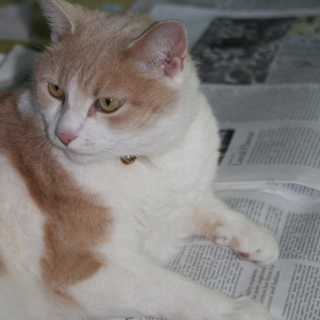
Eli, the In Brief Legal Writing Services mascot.
In Brief Legal Writing Services mascot Eli catching up on the latest news. Photo by Alexandra Bogdanovic

As evidenced by numerous articles on the subject, animal law is a growing discipline requiring a specific skill set. Allowing a separate advocate with the necessary knowledge and/or passion for and interest in the work to do the “heavy lifting” in  cases involving “the welfare or custody of an animal” benefits everyone involved. For one thing, it takes the burden off lawyers who aren’t as well-versed in this particular area. More importantly, it ensures that the person making the final decision has all of the information he or she needs in order to do so.

But most importantly of all, it ensures that there is a “voice” for those who can’t speak for themselves.



A ‘dogged’ quest for justice

This vintage typwriter is our featured image.

I love it when I find cool stories on the Internet — and I love to share good news. So I was definitely excited when I came across a heartwarming article about Patty Richardson.

Richardson is a North Carolina-based private investigator who “specializes in animal cases.” Right now she’s focused on catching the (alleged) scumbags who swipe and sell dogs.

Now that may come as a surprise to you. Frankly it surprised me, too. But given what I’ve learned about “dognapping” and related scams recently, I’m glad to hear there’s someone out there who’s willing to help people whose dogs have disappeared.

Eli, the In Brief Legal Writing Services mascot.
In Brief Legal Writing Services mascot Eli catching up on the latest news. Photo by Alexandra Bogdanovic

Of course, you might not be lucky enough to have a PI like Richardson where you live. And even if you do, there are steps you can take to find your dog before you summon reinforcements. The website fidofinder.com offers a comprehensive plan of action to follow when panic over a missing sets in. You should:

  • Calm down, take a breath and start with the obvious. Thoroughly check the house, yard and immediate area to make sure your dog is really “gone.”
  • Try to figure out how the dog got out of the house or yard and how long it might have been gone. That will give you clues about where it went and how far to look.
  • Designate someone to stay at home and man the phone when you start the search. That way someone will be available if anyone calls to report finding your dog, or brings it directly back to the house.
  • Be prepared to conduct a thorough preliminary search of the neighborhood by bringing a flashlight and photos of the dog with you.
  • Re-canvas your neighborhood on foot and by car if the initial search was not successful. You should also plaster the area with “missing dog” posters; and contact local veterinarians, animal shelters and animal control.
  • Use all available resources to spread the word, including social media and newspaper ads.
  • Remember the power of word-of-mouth. Tell your family, friends and neighbors about your missing pet.

To end on a personal note, here’s a little advice from yours truly. Don’t be afraid to call the authorities if you have reason to believe someone has stolen your pet. After all, the police are here to protect and serve.

Something old, or something new?

This vintage typwriter is our featured image.

A Connecticut lawmaker’s efforts to strengthen existing animal cruelty laws raises an interesting question — and one that may not be unique to his state. Should there be tougher penalties for offenses committed under the current laws, or should the state’s animal cruelty statute be completely rewritten?

Alexandra Bogdanovic
Founder/owner of In Brief Legal Writing Services, Alexandra Bogdanovic. Photo by N. Bogdanovic

In a recent New Britain Herald article, State Rep. Gary Bryan explained why he’s backing legislation that failed to gain enough support to make it to the governor’s desk last year.  If it is enacted, anyone convicted of deliberately “maiming, torturing or mutilating animals” will face harsher punishments than they do now.

But one skeptic quoted in the story says  more can — and should be done.  In fact, the man in charge of New Britain’s animal control claims that the current rules are outdated and confusing. That makes successful prosecution of animal cruelty cases more difficult, Sgt. Paul Keller tells the New Britain Herald.

The solution? Keller suggests scrapping everything and rewriting the state’s animal cruelty statute with an emphasis on clarity and simplicity.

The thought of doing that might make some legislators run screaming from the room. I mean, why make things easier? Why make things better?

But all joking aside, I think they should do whatever it takes to ensure that anyone who intentionally injures an animal in any way is successfully prosecuted and punished to the fullest extent of the law.

If that means working their butts off to make sure the bill Byron’s backing makes it to the governor’s desk this year, so be it. If that means making partial revisions to the existing statute, then so be it. And if that means rewriting the entire statute, well, so be it.

What do you think? Leave a comment and let me know.


Crooks now preying on vulnerable pet owners

This vintage typwriter is our featured image.

I am keeping it brief today because I really don’t have the words to express my outrage about this. It is so low, so despicable, and so disgusting …. How anyone could stoop to this is beyond me.

I mean, let’s face it — stealing someone’s pet is bad enough. Demanding money from someone who has lost a pet is even worse.

But it happens — and apparently it happens more frequently more than anyone realizes, or cares to admit.

According to one news account, it’s happening in Aurora, Missouri. The story about the family that lost their dog and then got a series of phone calls demanding money in exchange for his return appeared on an ABC affiliate’s website Feb. 17. You can read the details here.

Now imagine how you would feel if this happened to you. What would you do? Where would you turn?

Eli, the In Brief Legal Writing Services mascot.
In Brief Legal Services mascot Eli catching up on the latest news. Photo by Alexandra Bogdanovic

Numerous websites offer advice on the topic. Scambusters.org lists five different shakedowns targeting owners of lost pets and shares tips to keep crooks from taking advantage of you when you’re vulnerable. You should:

  • Make sure your pet is always properly licensed and tagged.
  • Keep your pet indoors, in a secure yard, or on a leash at all times.
  • Limit information in your missing pet advertisements or social media posts  to the essentials.
  • Ask for a phone number if you get a call from someone who says they’ve found your pet and claims to be out-of-state.
  • Make any caller who seems to be ‘fishing’ for information about your pet initiate the questions or comments about your pet’s description.

Crooks sink to new low as ‘dognapping’ cases increase

This vintage typwriter is our featured image.

What would you do if someone stole your dog? Or your cat, for that matter?

It’s probably something that has never crossed your mind. But it is something that you should probably start thinking about. Now.

Eli, the In Brief Legal Writing Services mascot.
In Brief Legal Services mascot Eli catching up on the latest news. Photo by Alexandra Bogdanovic

According to a commonly cited statistic, roughly two million companion animals are stolen in the United States each year.  Some disappear from back yards, and some vanish from “public places.” Some are snatched from cars.  Most are never seen again.

Each Valentine’s Day (February 14), Last Chance for Animals (LCA), a Los Angeles-based animal rights and advocacy group, joins similar organizations throughout the country to celebrate Pet Theft Awareness Day.  Its goal is to promote public awareness of the issue.

But to be honest, I had no idea that pet theft is so pervasive until I came across an article on an Ohio television station’s website. The account includes information about a couple that is suing an “estranged family member” who allegedly stole their dog. Shelby Patton, a plaintiff in the case, has reportedly started a petition in an effort to “change Ohio laws” so litigation is no longer necessary.

Fortunately, LCA says there are things pet owners can do to help prevent thefts. You can read those tips here.


How cool is this?

This vintage typwriter is our featured image.

It’s almost enough to restore my faith in humanity. Of course almost is the key word in that sentence.

But all kidding aside, I rarely find articles I enjoy, much less agree with, in The New York Times. So imagine my surprise when my almost-daily search for blog fodder turned up an utterly cool, totally heartwarming story there earlier this month.

Written by Winnie Hu, the February 7 story was about the pet food pantries popping up in New York City and surrounding suburbs. Thanks to them, a lot of people who are often forced to choose between buying food for themselves or their pets are no longer confronted by that agonizing decision. People who were once forced to surrender — or worse yet abandon — their pet because they couldn’t afford to feed it now know there is a place to get canned food or kibble for their dog or cat.

Eli, the In Brief Legal Writing Services mascot.
In Brief Legal Services mascot Eli catching up on the latest news. Photo by Alexandra Bogdanovic

I am sure there are plenty of skeptics — and critics — like the man quoted in Hu’s article. I won’t waste my breath on them. They just don’t get it — and they probably never will … unless they spend some time volunteering at an animal shelter, or at least visiting one. Perhaps if they heard the cries of a dog newly separated from the only owner it has ever known, or seen the look on the owner’s face after he or she has left their dog or cat at a shelter, they would finally understand.

Maybe then they would finally realize what those of us who love our pets have always known; that there is something animals give freely regardless of their caregiver’s race, religion, gender identity, sexual preference or socioeconomic standing. It’s something that people don’t give unconditionally and it’s something all the money in the world can’t buy. It’s something called love … and that’s something to think about.

Utter nonsense or common sense?

This vintage typwriter is our featured image.

“I have never met an animal I didn’t like. On the other hand, there are plenty of people I hate.” – Me.

Anyone who has read these posts should know a few things about me by now. First, I love animals. Second, I have definite opinions about the law and related issues. Third, I am not shy about sharing them.

I mean come on, in the last couple of weeks, I’ve expressed my displeasure with the United States Supreme Court and the New York City police commissioner (among others).

So it may come as a surprise that I’m blogging about something that I actually agree with. Specifically, I am applauding Alaskan lawmakers who are trying to break with legal tradition by viewing pets as something other than personal property.

According to a recent KTUU report, state legislators are pondering a proposed rule that allows for the “protection” of pets when their caretakers are getting divorced or are embroiled in domestic violence.  If enacted, the law would:

  • Change the existing regulations so owners of animals confiscated due to neglect or cruelty would have to pay their cost of care through “bond or other security.”
  • Revise current  domestic violence measures to let courts include animals, and their temporary care, when issuing protective orders.
  • Tweak the divorce and marriage dissolution statutes now on the books so animals’ “well-being” is taken into account in court decisions regarding ownership or joint ownership.

“Pets are often considered part of a family and the courts should be able to consider their well-being,” said Rep. Liz Vazquez, who co-sponsored the bill. “This legislation will make it more difficult for a pet to be used by an abuser to keep a victim from reporting that abuse.”

Eli, the In Brief Legal Writing Services mascot.
In Brief Legal Services mascot Eli catching up on the latest news. Photo by Alexandra Bogdanovic

Now from what I’ve read, some Alaskans — who are understandably more pragmatic about animals than those of us who live elsewhere — question the wisdom of this legislation. Apparently they believe other issues deserve a higher priority.

While I fully endorse the proposal, I also understand why some might question it. In particular, I understand why some might mock the idea that courts should be allowed to consider an animal’s “well-being.” Those most likely to do so are the types of people who question the extent of animal intelligence, scoff at the suggestion that the average dog or cat has any self-awareness and shudder at the application of human emotions to our pets.

Personally, I don’t know what goes on in the space between my cat’s ears. But here’s what I know for sure: Eli is smart, sensitive and loyal, among other things. To me he is much more than personal property. He is my best friend. And if anything, I “belong” to him.


That’s enough

This vintage typwriter is our featured image.

“I’m beginning to think that the definition of a healthy cat is one that has never been to the vet.”

– My mother.

My poor cat.

Until recently, Eli went to the vet for his shots and a check-up once a year. He also went to get his nails trimmed every three months.

Since January 15, he’s been to the vet three times. A fourth visit – this time for surgery – has been scheduled for sometime this week. Needless to say, he’s not very happy about this turn of events. And it should go without saying that neither am I.

By now those of you who have been following this saga know that I initially took Eli, who just turned 10, to the vet for his regular appointment and nail trim. I also mentioned the small lump I’d found on his back, and agreed that the vet should take a sample of it as a precaution. Three days later I learned that the little lump that hadn’t changed color or size since I discovered it was, in fact, a tumor.

In Brief Legal Writing Services owner Alexandra Bogdanovic's cat, Eli.
In Brief Legal Writing Services mascot Eli under the Christmas Tree. Christmas 2013. Photo by A. Bogdanovic

The vet then recommended an ultrasound to make sure that the cancer hadn’t affected Eli’s liver or spleen. Again, I agreed. I also agreed to let the vet get a blood sample while she was at it. Later that day, I was relieved to learn that the ultrasound didn’t show anything horrible; it seemed that after all the drama, a simple operation to remove the mass was all that was necessary.

But, no. It couldn’t be that easy for poor old Eli. The vet did an about-face, saying the surgery we’d initially scheduled had to be postponed until the results of his blood analysis came back. And when they did, it turned out that some of the indicators for kidney function were within the higher end of the acceptable range.

So instead of bringing him in for surgery last Friday, I had to bring him in for more blood work and a urinalysis, instead. The only reason I agreed to those procedures is because the doctor said the results could determine whether they have to take any precautions with the anesthesia when he does have surgery.

I told her that I was kind of concerned that all of this traveling back and forth was taking a toll on Eli. Not to mention what it was doing to my nerves. We’ve both had enough — or to be brutally honest — more than enough.

He’ll have his surgery, and that will be that. Even if the blood work and urinalysis do show some other issues, I am not subjecting him to any more invasive procedures, and I will limit future vet visits as much as I can.

I take pride in being a responsible pet owner; I love Eli more than life and I want him to be healthy. More importantly, I want him to be happy.

He and I have had a great eight years together, and I pray we will have many more. Having said that, I know  I can’t control the future, and I have no idea what it holds.  But I can promise this: as long as Eli is alive, I will do everything in my power to make sure he has the best quality of life possible.

In the end, can anyone ask for more?

Baby, it’s cold outside!

This vintage typwriter is our featured image.

Newsflash: it’s winter, it’s cold and it might snow.

Dateline — Greenwich, Conn. As I write this, the East Coast is bracing for a weekend snow storm. And if the media is to be believed, this will be a storm of epic proportions – especially in the mid-Atlantic states.

Here in the greater New York City suburbs, some meteorologists are actually showing some restraint. They say we will only get 4 to 7 inches where I live and more further to the south and west. I’ll take it — but I must confess that I’ll be much happier if this nor’easter is a total dud. I’d really rather not spend my birthday shoveling snow, especially since I’ll officially be one step closer to the big “5-0.”

Alexandra Bogdanovic
Founder/owner of In Brief Legal Writing Services, Alexandra Bogdanovic. Photo by N. Bogdanovic

But all joking aside, the arrival of winter and all of the unpleasantness that it entails raises serious concerns for pet owners, animal lovers and those of us who are also interested in the law as it relates to the health and safety of dogs and cats.

To that end, local and national news outlets publish tons of stories about caring for companion animals during this time of year. One article that recently caught my attention was about a proposed change to existing rules in Ohio. According to the article on nbc4i.com, state lawmakers are considering proposed legislation requiring pet owners to bring their dogs inside in “extreme weather conditions.” Under current laws, people are allowed to leave healthy dogs outdoors as long as they provide adequate shelter.

Connecticut law also mandates that animals have access to acceptable “protection from the weather.” Anyone who fails to provide it may be charged with cruelty to animals. The penalty upon conviction is a maximum fine of $250, up to one year in jail, or both.

In New York, there are comprehensive rules about what constitutes appropriate shelter for “dogs left outdoors” and the penalties for failing to provide it. Perpetrators face fines ranging from $50 to $100 for the first offense, and $100 to $250 for the second and each ensuing offense. Under the law, violators have a set period of time to bring the standard to acceptable standards. Failure to take necessary action within that period can result in another violation.

Personally, I think it boils down to compassion and common sense. Please use both.


On a personal note

This vintage typwriter is our featured image.
Eli, the In Brief Legal Writing Services mascot.
In Brief Legal Services mascot Eli catching up on the latest news. Photo by Alexandra Bogdanovic

It has been a rough week here at In Brief Legal Writing Services.

On Monday, I learned that the little lump I found on Eli’s back is a tumor.

The good news — if there was any — is that this type of tumor is fairly common in dogs and cats. From what I understand, it tends to be more aggressive in dogs, and affects the liver and spleen in only a small percentage of cats (approximately 10 percent). In most cases, surgery to remove the lump is all that’s needed.

According to the vet, an ultrasound is the best way to determine whether an external mass is the result of cancer affecting the internal organs, so we scheduled one for Wednesday. The next steps would depend on the results.

Before the ultrasound, I tried not to borrow trouble. If anything I took comfort in the fact that the lump was small; that it hadn’t changed shape, size or color since I noticed it; that Eli’s behavior hadn’t changed and most importantly, neither had his appetite.

Being a realist, I also thought long and hard about what I would do in the worst-case scenario. I came to the conclusion that I would not subject him to extensive surgery, no matter what. After all, he just turned 10. I’ve had him — or more accurately, he’s had me wrapped around his little paw, for just about eight years now.

He came into my life in February 2008. I was living in Virginia at the time and had just come home from Australia, where my family gathered to celebrate my grandmother’s 90th birthday and I got to watch my favorite football team win the Super Bowl.

The New York Giants won that championship thanks to some heroics by my favorite quarterback, Eli Manning. So imagine my delight — and surprise — when I glanced at the Fauquier SPCA’s flyer on my way out of the office one day. If memory serves, I stopped dead in my tracks and yelped, “Holy crap! The SPCA has a cat named Eli!”

I went to the shelter and instantly decided to adopt him. As much as I wanted to, I couldn’t take him home right away. He stayed at the shelter so he could be neutered, and as I drove home alone, the sun, which had been noticeably absent all day, peeped out from between the clouds.

I picked him up after work on another cold, dreary winter afternoon a couple of days later. As we drove home together, the sun, which I hadn’t seen all day, made another appearance.

Perhaps it was a mere coincidence. Or maybe it was a cosmic sign of approval from my cat Heals (named after New York Islanders and New York Rangers goalie Glenn Healy) who had died of cancer six months before.

In any case, it didn’t really matter. All I knew for sure is that it was definitely meant to be.