
New animal ambulance comes to the rescue

This vintage typwriter is our featured image.

The First Connecticut Animal Ambulance

As a pet parent, it’s music to my ‘EARS’
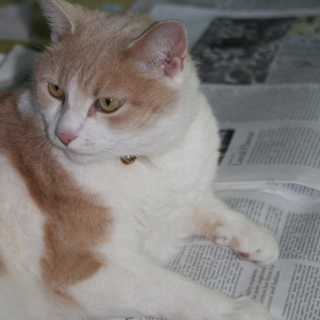
Eli, the In Brief Legal Writing Services mascot.
In Brief Legal Writing Services mascot Eli catching up on the latest news. Photo by Alexandra Bogdanovic

Those of you who follow me on Twitter (@InBriefLegalWS) have already the links to the articles I posted about this. But it’s such a cool issue I felt compelled to share it here, too.

According to its website, a  Shelton Connecticut-based group is now offering an ambulance service devoted specifically to animals. Its something I hope we never need, but I am happy it exists.

“In April our team was presented with an amazing opportunity to acquire a former ambulance to modify in to a fully outfitted animal ambulance – the first in Connecticut,” the Emergency Animal Response Service (EARS) says. “Through a major month-long fundraising effort with contributions from animal hospitals, veterinarians, other rescue groups, and public support, we were able to exceed our goal and we are extremely proud to announce that ‘Rescue 2’ has arrived and is now 100% operational!”

Once used to transport people, the rig is now fully stocked with everything needed to treat animals in distress. The crews that man it are “are certified in pet first aid, life support, and undergo special training involving the safe and compassionate transportation of animals in need.”

If you live in Connecticut, you can learn more about the animal ambulance at various events. The next one is at an EARS fundraiser in Orange tomorrow. If you can’t make it, there is another one on August 21.

In addition to providing the animal ambulance and “rapid response” service, EARS engages in community outreach programs. The programs include demonstrations, workshops and classes.

“Each program we present is individually designed based on the needs of who we are working with. The programs can be altered depending on the type of program, age of participants, size of location, main interest of the group, and many other aspects,” the organization says.

Clearly providing such comprehensive services requires a lot of manpower. EARS encourages anyone interested in volunteering to visit the volunteer page on its website. You can find even more information about how to get involved here.

It sounds like such a cool organization that I definitely encourage you to get involved if you can. And to be honest, I’m already thinking about joining,myself.

On Another Note…

Speaking of animals, I am happy to report that Eli is much better. We took him off the pain killers on Sunday morning, but he was still feeling out of sorts and hid in the basement until Wednesday morning, when I convinced him to come upstairs for breakfast. Since then he’s been back to his old self.

Now let’s hope he stays that way!

Another day, another crisis

This vintage typwriter is our featured image.

“No matter what happens, remember it’s not your fault. Animals are difficult to understand sometimes.” — S.A. Witten (Grandpa)

As I write this, Eli is at the vet — again. And I’m worried sick.

Those of you who have been following this blog since the beginning know that he had a serious health scare earlier this year. He emerged from that (relatively) unscathed and I thought the worst was behind us.

Eli, the In Brief Legal Writing Services mascot.
In Brief Legal Writing Services mascot Eli catching up on the latest news. Photo by Alexandra Bogdanovic

Everything was fine until Friday, when he started coughing. Those of you who have cats know that sound … that cringe worthy sound that usually means Fluffy or Princess is trying to hack up a hair ball. Yes, it sounded like poor old Eli had a really bad one — but he didn’t puke.

On Saturday morning he jumped on my bed at the crack of dawn. In and of itself that is not unusual. The fact that he yowled, hissed and took off for no apparent reason is highly unusual. The fact that he curled up in a little ball and refused to eat all day was also highly unusual.

Over the last couple of days, he’s eaten a little bit of kibble — and that’s it. And that’s highly unusual as well.

This morning, I had the unenviable task of corralling him and putting him in his carrier for the five-minute drive to the veterinarian’s office. Needless to say, he was not very happy. That’s par for the course.

At the office, the vet listened while I gave a detailed description of Eli’s symptoms. She then recommended blood work, an x-ray and exam. I agreed and headed for home.

As I opened the door and came up the stairs, I realized how quiet the house is when Eli’s not around. And I thought about something my 101-year-old grandfather told me on Saturday night.

“No matter what happens, remember it’s not your fault,” he said. “Animals are difficult to understand sometimes.”

So is life.

The curious case of the Connecticut commuter lizards

This vintage typwriter is our featured image.

“And I thought hedge fund guys were the only ‘reptiles’ slithering in and out of Greenwich on Metro North.”

So I came across a really interesting article in the Connecticut Post yesterday. I mean it. It was really cool.

Apparently a Harvard researcher has determined that “non-native Italian wall lizards” are making themselves at home in Greenwich. And he has a fairly outrageous theory about how they got here.

He says they might have taken Metro North. Seriously. Check your calendars. It is not April 1. Then click the link above if you haven’t done so already. Yes, the story is legit. I wouldn’t kid you about something like that.

Alexandra Bogdanovic
Founder/owner of In Brief Legal Writing Services, Alexandra Bogdanovic. Photo by N. Bogdanovic

But back to the matter at hand. This guy claims a bunch of these little critters have been living in The Bronx for a while. And then, for reasons known only to them, they decided to move. Since they can’t drive and it would take forever to walk, I guess they decided to hop some northbound commuter trains to explore life in the suburbs.

“It’s a really nice expressway for them to travel distances,” Colin Donihue told the Post. “Those little guys move pretty fast.”

Can’t you just picture it? Dozens of little creatures — resembling miniature versions of a certain gecko of insurance advertising fame — riding the 6:37 p.m. local? And I thought hedge fund guys were the only “reptiles” slithering in and out of Greenwich on Metro North. Cue rim shot…

But in all seriousness, Donihue says the wall lizards probably followed the train tracks — which afford protection from predators, warmth in cold weather and shade in warmer weather.

Donihue has reportedly observed 15 to 20 lizards in some yards and estimates there could be up to 1,000. Determining how far off the beaten path — er track — they went will help him refine the estimate.

He is also trying to determine if they have made it to Stamford yet.

Personally I doubt it. I live just steps away from the New York State line, and I can see the Metro North train tracks from my house. But, no, I haven’t seen any Italian wall lizards in my yard.

I’ll let you know if that changes.

Life is complicated

This vintage typwriter is our featured image.

That does it. In my next life, I’m coming back as my own cat. Seriously.

Eli, the In Brief Legal Writing Services mascot.
In Brief Legal Writing Services mascot Eli catching up on the latest news. Photo by Alexandra Bogdanovic

I’ve officially decided that human beings are definitely overrated. Just look at everything that’s happened lately.  We’ve had cop killings, terrorism, mall shootings, nightclub shootings, and train attacks carried out by ax-wielding maniacs.  And then there’s the collective insanity otherwise known as presidential politics.

Yes, humans are overrated. We think we’re so special because we have opposable thumbs and souls. We also think our ability to reason sets us apart from other animals. Well, for such an intellectually and technologically advanced species, we sure are screwing things up a lot. And for some strange reason, we seem completely incapable of learning from our mistakes.

Yes, people are overrated. And life is complicated.

Don’t get me wrong. Life isn’t necessarily easy for American dogs and cats, either. As much as we love our pets, the sad reality is that there are millions of unwanted animals in the United States. According to The Humane Society of the United States, more than 2 million “healthy, adoptable” dogs and cats are euthanized in shelters every year. The organization estimates that is roughly one every 13 seconds.

Yes, you can chalk that up to human stupidity, too.

But my cats were lucky. We got Tiger from family friends when they moved to Saudi Arabia; if we hadn’t taken her, she would have been left outside to fend for herself. Heals was a stray. A co-worker found her wandering in the neighborhood and took her in, but couldn’t keep her. If I hadn’t taken her, she would have ended up in the local pound. And Eli — my sweet baby boy — my “pit bull in a cat costume”– he was a pound cat with an attitude when I adopted him. I hate to think what would have happened if I hadn’t chosen him.

Today, I don’t think there’s a cat on the face of the earth that has it better than Eli. Eli is spoiled rotten — and he knows it. His chief concerns are when he’ll get breakfast and dinner. Beyond that, his only worries are whether he’s got enough kibble and whether his litter boxes are clean (yes, he has more than one). Oh… I suppose he also worries about being hauled off to the vet, having his claws clipped and how long it will take one of us to figure out that he wants to go out on the deck.

He does not have to worry about being abused or being abandoned. He’ll never have to worry about being neglected. In other words, he’s got a pretty good life — and he knows it.

After Dallas, Baton Rouge and Nice, I surrender

This vintage typwriter is our featured image.

Phew! The s–t storm that the landscapers were creating in my yard just ended and I can finally hear myself think. More importantly, Eli feels safe enough to come out of hiding.

To me, the tree shredding machine in use for the better part of an hour sounded like a jet engine on steroids. I can only imagine what it sounded like to my cat. All I know is, the second that racket started, he tried to dive under the bed. When he discovered there wasn’t any room there, he sought refuge elsewhere.

Eli, the In Brief Legal Writing Services mascot.
In Brief Legal Writing Services mascot Eli catching up on the latest news. Photo by Alexandra Bogdanovic

Lately I’ve been wishing I could hide under the bed. Not that it would solve anything. But given recent events in Dallas and Nice and Baton Rouge — and current events in Cleveland — I just need a break from all of the madness.

My faith in humanity is taking a beating. My moral outrage is almost spent. I can’t cry anymore. I’ve had it. I’m pooped.

Fortunately, I found some stories that have nothing to do with cop killing, terrorism, or presidential politics. Since I’m exceedingly generous — and since we can all use some good news at this point, I’ve decided to share links to my favorites. In no particular order, here they are:

  1. In California, Ventura County Animal Service just got a big grant from the Petco Foundation. According to published reports, the agency will use it to fund a program that helps people keep their pets. You can read more here.
  2. A new study just identified some really cool pets for people who want something other than a dog or cat. Of course, getting one might be a little tricky. Find out why here.
  3. Eli hates going to the vet. And to be honest, I hate taking him there. If you and your pet feel the same way, “mobile pet care” could be the solution. Read this to learn more.
  4. A large donation will allow a New York State humane society to help people who can’t afford to feed their pets. Read more here.

I hope this lifts your spirits or makes you smile. Maybe things aren’t as bad as they seem, after all.

Law eliminates liability threat for medics, firefighters who treat injured pets

This vintage typwriter is our featured image.
Eli, the In Brief Legal Writing Services mascot.
In Brief Legal Writing Services mascot Eli catching up on the latest news. Photo by Alexandra Bogdanovic

We’ve all seen the heartbreaking pictures and news footage of pets rescued from house fires or natural disasters. And we’ve all seen the heartwarming images of firefighters, paramedics and EMTs rendering First Aid to those hurt and scared cats and dogs.

What you may not know is that in most states, the pet owners can — and do — sue the first responders if their pets die. That’s because the laws in those states prohibit anyone except for licensed veterinarians from treating sick and injured animals.

That’s about to change in Ohio. According to published reports, a law that takes effect there later this summer allows firefighters, paramedics and EMTs to treat injured pets without fear of legal retaliation.

The new law also applies to the treatment of police dogs and companion animals.

“It’s another layer of protection for the good guys,” Cory Smith, director of public policy for companion animals at The Humane Society of the United States, told the Associated Press.

While lawmakers in Ohio –and elsewhere — take steps to protect the first responders who choose to treat injured pets as well as people, another group wants to make sure they are well equipped to do so.

According to an article on iheartdogs.com, the group — Project Breathe — provides fire departments and other first responders with oxygen masks designed specifically for pets. To date, the non-profit organization has donated almost 14,000 masks to U.S. and Canadian fire departments. Training is also provided.

Use of the masks has reportedly saved more than 100 pets.

Sadly, that number is dwarfed by other statistics, however. Some estimates indicate that half a million pets are affected by house fires each year, and 40,000 die.

For information about how to keep your pet safe, visit:

Lax laws enable the exotic pet trade’s success in the United States

This vintage typwriter is our featured image.

“Lions, and tigers and bears, oh my! Lions, and tigers and bears, oh my! Lions, and tigers and bears, oh my!” — Dorothy, the Tin Man and the Scarecrow in The Wizard of Oz

In my last post, I urged you not to get an exotic pet. But even though it’s a really, really bad idea, there are still places where you can legally have one in the United States.

United States map showing where different laws pertaining to the ownership of "dangerous wild animals" are in effect. Courtesy HSUS
Map depicting where ownership of “dangerous wild animals” is allowed, partially banned and totally banned. Courtesy of the Humane Society of the United States.

As of January 2015, all but five states either partially or entirely banned “the keeping of wild dangerous animals as pets;” or required permits for some species. That means if you live in North Carolina, South Carolina, Alabama, Wisconsin or Nevada, where there were no restrictions a year ago, there’s no telling what kinds of pets your neighbors might have.

That being stated, not all exotic pets are created equal. Some are more rare than others; and some pose greater risks to people. The Humane Society of the United States (HSUS) defines “dangerous species” as:

  • big cats (including but not limited to lions and tigers)
  • bears
  • primates (including but not limited to chimpanzees and marmosets)
  • snakes/reptiles (including but not limited to large pythons and boa constrictors)

For Those Who Walk On The Wild Side, It Is All About Ego

But for some inexplicable reason, these are the animals that some people simply must have.

On its website, the HSUS cites statistics indicating that there are thousands of captive tigers in the U.S.A., but less than 500 are kept in officially sanctioned and regulated zoos. Americans also have approximately 15,000 primates, according to the organization. The HSUS does not provide statistics pertaining to the number of captive bears, large snakes or reptiles however.

Perhaps the people who “own” these animals think they are so special that they can tame wild animals. Perhaps they think that if the animals were born in captivity, they are “tame.”

Or perhaps it’s just about the human ego.

In any case, it’s a recipe for disaster.

According to an article on Born Free USA,  people who “own” exotic animals “often attempt to change the nature of the animal rather than the nature of the care provided.” To do so they resort to behavior unique to human beings: cruelty. As a result, their “pets” are subjected to “confinement in small barren enclosures, chaining, beating ‘into submission,’ or even painful mutilations, such as declawing and tooth removal.”

Once they finally figure out that keeping a wild animal isn’t all it’s cracked up to be, exotic pet owners often turn to zoos or sanctuaries for help. If that fails, the animals are usually ditched and left to fend for themselves, or euthanized by authorities.

And then there are the cases where instinct takes over or the animals fight back.

The HSUS alone says it has identified more than 1,700 dangerous incidents pitting exotic animals against people since 1990. These involved “big cats, bears, primates, elephants, large constrictor snakes, and other exotic animals that resulted in scores of deaths and hundreds of injuries.”

Nicole Paquette, HSUS vice president of wildlife protection, says the best way to reduce the risk of future tragedies is to ensure that stricter state and federal laws are in place. Specifically, the HSUS supports laws that prevent people from interacting with and acquiring “dangerous captive wildlife” or “dangerous wild animals.”

“Our position is that these are wild animals who can’t be domesticated and should not be in our homes or backyards,” Paquette said

Words to soothe a savage beast: how reading affects traumatized dogs

This vintage typwriter is our featured image.
Eli, the In Brief Legal Writing Services mascot.
In Brief Legal Writing Services mascot Eli catching up on the latest news. Photo by Alexandra Bogdanovic

A few weeks back, I mentioned that my cat, Eli, is extremely sensitive. And in that regard, nothing’s changed.

But I did learn something interesting the other day. Or more accurately an article in The New York Times confirmed something I’ve always suspected: animals might not understand everything we say, but they definitely understand our tone of voice.

I guess that’s why volunteers read to dogs at the ASPCA in New York City.

“As long as you read in a nice soothing voice, they enjoy it,” Hildy Benick, 69, a volunteer who has been with the reading program since shortly after it started, told the Times.

Victoria Wells is the senior manager of behavior and training at the ASPCA. She started the reading program in 2013, and says it is a great way to help dogs that have to relearn how to trust people.

“You know within each session the progress that they’re making,” she told the Times.  “In the beginning of the session, the dog might be in the back of their kennel cowering, and then they move forward, lie down, relax; their tail might wag.”

Meanwhile, across the country, volunteers are reading to dogs and cats at the Arizona Animal Welfare League and SPCA.

Like their counterparts in New York City, the animals awaiting adoption in Phoenix are good listeners. And apparently they’re not too picky about which reading material their human pals share. If you think about it, that’s saying a lot, considering some of the college kids that volunteer at the shelter often read from their text books, according to Whitney Fletcher, Director of Volunteers & Special Events at AAWL & SPCA.

“As you read out loud, you are focusing on something other than the animal,” she says. “In turn, the animal grows accustomed to your presence and voice, which is calming. Dogs and cats find the rhythmic sound of a voice very comforting and soothing.”

If it works with shelter animals, there’s no reason why it shouldn’t work with our dogs and cats, too. So the next time you curl up with a good book, try reading to your pet and see what happens. He (or she) just might enjoy it.

Finding help for Pulse Orlando shooting victims’ pets

This vintage typwriter is our featured image.
Eli, the In Brief Legal Writing Services mascot.
In Brief Legal Writing Services mascot Eli catching up on the latest news. Photo by Alexandra Bogdanovic

Here’s a surprise. Politicians across the country — including both presumptive presidential nominees — have spent the better part of this week exploiting a national tragedy in order to advance their own agendas.

I don’t know about you, but frankly I find that sickening. I’m not kidding. It makes me want to puke.

On the other hand, there are plenty of people whose selflessness and generosity in the aftermath of the Pulse Orlando nightclub shooting is almost enough to restore my faith in humanity.

Judy Charuhas is one of them.

Helping The Pulse Orlando Shooting Victims’ Pets

According to an article in the Orlando Sentinel, Charuhas is in charge of a “local lost pets group.” In the wake of the mass shooting that reportedly left 49 dead and more than 50 injured early Sunday morning, she launched an effort to help the victims’ pets.

The Sentinel article details how she began by posting a message on the Winter Park Lost Pets page on Facebook. In it, she informed followers that the organization is “compiling a list of rescuers/services/people willing to hold/foster/adopt pets for victims and survivors of the Pulse Orlando shooting,” and encouraged people interested in helping to comment.

Not surprisingly, tons of people responded.

“I’ve got a huge list of resources,” Charuhas told the Sentinel. “We’re basically vetting them out and making sure these people can do what they say they can do. If anyone is willing to step forward, I’ll add them to my list.”

If you live in the Orlando area and you are interested in helping, click the link to the story above to find out how you can contact Charuhas directly. You can also visit the Winter Park Lost Pets page on Facebook for more information.

Friends and relatives of the shooting victims are also encouraged to contact local authorities, animal welfare and rescue groups about any pets in need.

Something Else To Think About

Whether it is the result of a natural disaster, a catastrophic accident or an horrific act of violence like the one that happened at Pulse Orlando, a tremendous loss of life is something that shakes us to the very core of our being. When it is sudden and unexpected, it is a stark reminder of both our vulnerability and our mortality. Anyway you look at it, it is something most of us would rather not think about, much less confront.

Nevertheless, most of us do make provisions for our loved ones in the event that something happens to us. We get life insurance policies. We make wills.

On the other hand, making provisions to ensure that our pets are cared for if we are critically injured or killed  is something that may not cross our minds. That doesn’t mean that it’s something we shouldn’t think about, or that there’s nothing we can do. You can learn more about the issue here.

As you can see, there are plenty of options. So whatever you do, please plan ahead. We owe it to ourselves — and our pets.

New Jersey dog hoarding case will blow your mind

This vintage typwriter is our featured image.

It is simply mind-boggling. There’s just no other way to put it.

Last week, authorities in Monmouth County, New Jersey, reportedly rescued 276 dogs from one home. According to multiple media accounts, some of the dogs had never been outside, some were trapped in walls and some were literally having puppies.

“When the Monmouth County SPCA Law Enforcement Division realized that we were facing an historical hoarding event, we knew that we would need to call on all our partners in animal welfare, law enforcement and emergency responders,” the agency’s police chief and executive director Ross Licitra said.

Personnel from at least five separate animal rescue, animal welfare and law enforcement agencies rallied to the cause. But even with such a massive response, it took workers 15 hours to free all of the animals.

Help Wanted

The Monmouth SPCA is now turning to the community for help, and there are several ways you can do so.

Eli, the In Brief Legal Writing Services mascot.
In Brief Legal Writing Services mascot Eli catching up on the latest news. Photo by Alexandra Bogdanovic

Even if you don’t live in New Jersey, you can donate to help cover the costs of caring for these dogs. You can find a link to a special donation page and additional information about where to send your payment here.

The agency is also welcoming inquires about fostering some of the dogs.

“Dogs in our care, especially in cases like this, have a much easier time adjusting to their new surroundings in a home environment rather than in a shelter,” the organization says.

If you live nearby and are interested in providing a temporary home for one of these dogs, you can send an email to: Fostering@monmouthcountyspca.org.

Finally, you can help by donating items on the shelter’s wish list. This list includes:

  • blankets
  • towels
  • sheets
  • small/medium dog crates
  • dog toys
  • Science Diet dog food
  • Purina One wet puppy food

For more information about where you can drop off your donations, click here.

Finally, the Monmouth County SPCA stresses that the dogs are not yet available for adoption and it will take at least one to two weeks to determine which, if any, will be.

“The dogs we currently have need to be medically cleared, spayed/neutered, and assessed behaviorally before they will be ready to meet potential adopters,” the agency says.

In the meantime, those of you who do live in or near Monmouth County are encouraged to meet some of the SPCA’s shelter animals currently available for adoption.

It’s Sad But True

According to the ASPCA, animal hoarding occurs when someone “is housing more animals than he or she can adequately care for.” Specifically, it is defined by “an inability to provide even minimal standards of nutrition, sanitation, shelter and veterinary care—often resulting in animal starvation, illness and death.”

While extreme hoarding cases make national headlines and grab our attention, the ASPCA says there as many as 900 to 2,000 new animal hoarding cases in the United States every year. Collectively, these incidents may involve as many as 250,000 animals of varying species.

For more information about animal hoarding, including warning signs and what to do if you suspect someone you know may be overwhelmed, click here.

And please remember that no one can save all of the companion animals in need of homes in the United States. But together we can make a big difference for a few.