Unanswered questions remain following Harambe’s death

This vintage typwriter is our featured image.

The rush to judgment following the Cincinnati Zoo incident that resulted in a small boy’s injuries and a gorilla’s death is understandable but unproductive.

It is understandable because the incident involves two issues that ignite our passions: the welfare of children and the welfare of animals. But pointing fingers and laying blame before all of the facts are known doesn’t do anyone any good.

A Comprehensive Investigation Is Warranted

From what I understand, authorities began looking into the matter this week.

Alexandra Bogdanovic
Founder/owner of In Brief Legal Writing Services, Alexandra Bogdanovic. Photo by N. Bogdanovic

An article in The New York Times indicates the Hamilton County prosecutor’s office and Cincinnati police are now trying to learn more about the events leading up to the incident in which a three-year-old boy somehow got into the gorilla’s enclosure at the Cincinnati Zoo.

“The incident at the Cincinnati Zoo involving the young child who fell into the gorilla enclosure is under investigation by the Cincinnati Police Department,” Hamilton County Prosecutor Joseph T. Deters said in a statement issued Tuesday. “Once their investigation is concluded, they will confer with our office on possible criminal charges.”

A second statement issued by Deters’ office yesterday said the police inquiry had been completed and that Deters is reviewing their findings. His own review of the findings could be finished as soon as today.

According to media reports, the little boy was not badly hurt. However his adventure — or misadventure — ended tragically when zoo personnel shot and killed a large male gorilla named Harambe. While there are conflicting accounts about Harambe’s behavior, the  personnel on scene apparently believed he posed a significant danger to the child and acted accordingly.

Because the United States Department of Agriculture oversees zoos, federal authorities will be tasked with conducting a separate investigation should it come to that. Specifically, they would be charged with assessing conditions around the enclosure and determining whether the shooting was justified.

Here’s What I Want To Know

As I’ve already mentioned, there are conflicting accounts about Harambe’s behavior. Since I wasn’t on the scene, here’s what I want to know:

  • Were people screaming after the little boy got into the enclosure?
  • If so did the screaming seem to alarm Harambe?
  • If so why didn’t the zoo workers quiet the crowd?
  • Did zoo workers clear the area?
  • How many workers came to the enclosure?
  • Were they specially trained in dealing with gorillas?
  • What kind of training did they receive?
  • How often are training exercises done?
  • What types of training exercise are done?
  • What is the zoo’s policy regarding the use of lethal force?
  • What is the zoo’s policy regarding public safety?
  • How often are these policies reviewed?

I am sure you have questions, too. Please feel free to share them below.
Kasich inks new Good Samaritan bill

This vintage typwriter is our featured image.

Last week I urged you not to leave your pets — or your kids alone in the car this summer.

Alexandra Bogdanovic
Founder/owner of In Brief Legal Writing Services, Alexandra Bogdanovic. Photo by N. Bogdanovic

But I didn’t tell you what you should do if you see an unsupervised child or animal in a hot car.

To be honest, there are a couple of reasons for that. First, and most importantly, I don’t want anything I write to be construed as legal advice. For one thing, I am not a lawyer so I am not qualified to dispense it.  As a paralegal I can’t dispense it. And aside from all that, we live in an extremely litigious society and I would really rather not get sued.

If I could tell you what to do, here’s what I’d say. “It depends.”

It’s The Law… In Ohio

In Ohio, citizens will soon be able to take immediate action in order to “rescue” an unsupervised child or animal from a hot car. Specifically, the new law that reportedly takes effect later this summer allows a civilian to break into a vehicle in order to free a companion animal or child without fear of reprisal — but only in very specific and very limited circumstances.

The language in Ohio SB215 regarding the removal of a child and the removal of an animal is similar. So for brevity’s sake I’ll share the information regarding  pets.

The new law recently inked by Ohio Gov. John Kasich stipulates that a vehicle owner can not sue someone who breaks into their car to remove an animal for damages if the person who does so:

  • has checked to see if the door is locked before forcing his or her way into the vehicle
  • has reason to believe the animal is in grave and immediate danger
  • has made a legitimate effort to alert authorities before breaking into the car or alerts them as soon as possible afterwards
  • has made a legitimate effort to inform the vehicle owner of what has transpired in writing after forcing his or her way into the car
  • has stayed with the animal in a “safe location” until authorities arrived
  • and has not used unnecessary force to break into the vehicle

Anyone who uses excessive force or tries to aid the animal in a manner not specified by the law automatically loses the protection otherwise afforded by it.

You can read more here.

Other State Laws

As of last year, laws in other states, such as Arizona and California allow certain authorities to use “reasonable” force to remove or rescue animals from motor vehicles. Similar provisions were in place in the following states in 2015:

  • Delaware
  • Illinois
  • Maine
  • Maryland
  • Minnesota
  • Nevada
  • New Hampshire
  • New York
  • North Carolina
  • North Dakota
  • Rhode Island
  • South Dakota
  • Vermont
  • Washington

The New York law also prevents qualified individuals from being sued. In Tennessee, anyone who acts within the scope of the law is also protected.

For more information on the applicable laws in your state, visit your state legislature’s website.

Whatever you do, do not leave your pets in the car this summer

This vintage typwriter is our featured image.

Yes, it’s hot outside. At least, that’s the case here in the northeast. So as we get ready for the Memorial Day weekend and the unofficial start of summer, I am begging you guys to do me a huge favor. Please, whatever you do, do not leave your pets — or your kids — in the car by themselves.

I don’t care if you’ll “only be gone for a couple of minutes.” I don’t care if you leave the windows open. It doesn’t even matter if you parked in the shade.

Leaving your pet in a parked car by itself is a recipe for disaster — and in some states it’s also against the law.

Yes, It’s Criminal

Alexandra Bogdanovic
Founder/owner of In Brief Legal Writing Services, Alexandra Bogdanovic. Photo by N. Bogdanovic

For people in my line of work, certain websites are invaluable. In fact, animallaw.info is the first place I check when I’ve got an especially challenging assignment. With just a few clicks of a mouse I can find just about anything I need — which often saves a lot of time. So naturally that’s the first place I checked when I wanted to find out more about state laws prohibiting people from leaving their animals in parked cars.

According to an article by Rebecca F. Wisch that I found there, leaving an animal in a parked car was illegal in 19 states as of 2015.

“Most of these laws provide that the animals must be confined or unattended in a parked or stationary vehicle,” Wisch says. “Further, the laws add that in order for a person to violate the law, the conditions have to endanger the animal’s life. Some of the statutes specifically state that extreme hot or cold temperatures, lack of adequate ventilation, or failing to provide food and drink meet this definition. Other laws are more vague and just require that the conditions are such that physical injury or death is likely to result.”

In other words, don’t push your luck if you live in one of the following states:

  • Arizona
  • California
  • Delaware
  • Illinois
  • Maine
  • Maryland
  • Minnesota
  • Nevada
  • New Hampshire
  • New Jersey
  • New York
  • North Carolina
  • North Dakota
  • Rhode Island
  • South Dakota
  • Tennessee
  • Vermont
  • Washington
  • West Virginia

A Closer Look

In at least seven of the states with existing laws, leaving an animal in a parked car is a misdemeanor. This typically means punishment upon conviction includes fines, up to a year in jail, or both. In other states, it is a petty misdemeanor, violation or infraction carrying lesser penalties upon conviction. A noticeable exception is New Hampshire, where a “second or subsequent offense” is a Class B felony.

“Even without a local or state law, this action could still constitute cruelty under some circumstances,” Wisch says.

If all of that’s not enough to make you think twice, consider this. How would you like it if someone locked you in a boiling hot car against your will?

This app is a must for pet owners

This vintage typwriter is our featured image.

As a general rule, I try not to “plug” products and services (other than my own) here at In Brief Legal Writing Services. There’s just something about it that doesn’t sit well with me.

That being stated, some rules are meant to be broken — every so often. And since I know a lot of you have pets, I felt compelled to share a really cool article I just found. It’s about a mobile app, which, in my humble opinion, is a must-have not only for pet owners, but for anyone who cares about animals.

Here’s The Deal

A description on the FurAlert website says the free app (which is available at both the App Store and Google Play) is similar to the Amber Alert system used in cases involving missing children. But instead of sending a message to other users about a missing kid, FurAlert lets you send one about a missing pet.

Here’s how it works once you’ve downloaded it. The first and most important step is to create a “profile” for your pet(s). This will include a picture and other relevant information, such as age and breed. You can also select the contact information you’d like to include. Then, if your pet is lost or runs away, you can open the app and report him or her missing. Other users in your area will be notified and receive the information in your missing pet’s profile. If one of them finds your pet, they can then contact you using the cell phone number or email address you provided.

How Cool Is That?

Think about it. Microchipping is great. Eli was “chipped” when I adopted him, and I wouldn’t have it any other way. It gives me some piece of mind to know that there’s a way to reach me if he gets lost. But the truth is, not everyone knows about microchipping and lost animals don’t always get scanned.

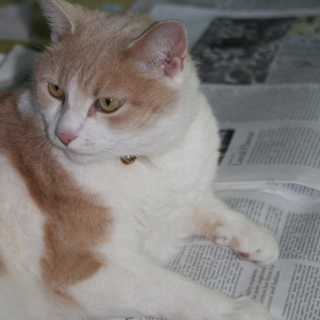
Eli, the In Brief Legal Writing Services mascot.
In Brief Legal Writing Services mascot Eli catching up on the latest news. Photo by Alexandra Bogdanovic

Here’s another tool that can be used in addition to microchipping to defy the odds and help reunite you with your dog or cat.

“Time and distance are the enemy when your pet is lost and the best resource you have at that moment are the people who happen to be nearby,” FurAlert Founder Cory Donovan says on his company’s website. “But you likely don’t know them and they don’t know you need help. So, what if we could quickly mobilize pet owners to help each other in an emergency! Almost 70 percent of U.S. homes have a pet, so the majority of us have that in common.”

Keeping that idea in mind, Donovan says FurAlert is designed for two important purposes. The first is to “reduce the number of pets that are injured, killed or permanently lost.” The second is to “alleviate some of the anxiety that pet owners feel when their pet is missing.”

I know. It is so cool, it almost sounds too good to be true. But there’s also a wealth of information on FurAlert’s FAQ page, so you’ll probably find the answers to your questions there.

After all, there’s no harm in checking it out…

Random acts of violence as seen through my cat’s eyes

This vintage typwriter is our featured image.

I have never laid a hand on my cat in anger. And I never will. But someone once did. That much is for sure.

I adopted Eli from the Fauquier SPCA when he was two. I’ve had him for eight years. So how can I be so sure that someone harmed him when he was little?

In order to understand, you must first understand the family dynamics at play, and my relationship with Eli. Basically, he’s my best friend. He’s my therapy cat. I’m his “number one person.” He counts on me for everything. Food, shelter, and most importantly, a clean litter box. He trusts me and he loves me. When I’m home, he’s never too far away. He sleeps on my bed at night and on any old t-shirt or pair of sweats that still has a trace of my scent during the day.

Eli, the In Brief Legal Writing Services mascot.
In Brief Legal Writing Services mascot Eli catching up on the latest news. Photo by Alexandra Bogdanovic

When I lived in Virginia, it was just the two of us. That’s when we really established that wonderful bond. But when I moved back home, Eli had to get used to living with my mom, too. It took a little while for the two of them to get to know each other and establish their own boundaries. Now they get along famously. My mother is officially Eli’s “number two person.”

Having said all of that, it’s been fairly easy to figure out that poor old Eli was either abused or lived in a really dysfunctional environment before I got him. I’ve watched him over the years.  Here’s what I’ve discovered. He is very sensitive. He runs from anything he thinks he can be hit with — even a relatively harmless toy, like shredded cloth tied to the end of a stick. He is very skittish around some people — especially kids and men. He doesn’t like it when someone approaches him too quickly and he hates loud voices.

In fact, angry voices are definitely a trigger. It doesn’t matter if the anger is directed towards him or towards another person. Either way, it makes him really upset. How do I know? For one thing, he meows. And this is a cat who never says anything unless he’s cranky. If he can’t get his point across that way, he resorts to stronger tactics. He uses his teeth. Yes, he bites.

That’s exactly what he did the other day. I was expressing my opinion about the outcome of a soccer game. And because I wasn’t pleased with the result, I was not exactly speaking softly. The next thing I knew, Eli — who I jokingly refer to as a pit bull in a cat costume — was sinking his teeth into my foot. Repeatedly. And since I didn’t have any shoes or socks on, it hurt. A lot.

I told him, in no uncertain terms, that I wasn’t happy about his behavior. Undaunted, he bit me some more. He even tried to jump onto the bed to get at my hands and arms. I rebuked him again — this time using a sterner voice to let him know he had been a very, very, very bad boy. After a few minutes I walked away and thought about what happened.

“You know,” I told my mother, who was in the room and witnessed the whole episode, “I think he was trying to protect you. I think he thought I was mad at you and that I was going to hurt you. ”

In Brief Legal Writing Services owner Alexandra Bogdanovic's cat, Eli.
Eli under the Christmas Tree. Christmas 2013.

If that was indeed the case, it begs a different question. We all know that abuse directed at our pets takes a huge toll on them. But what happens when they witness humans harming one another? How big a toll does it take on our companion animals when they see us physically or verbally harming each other?

I am sure someone has done some sort of research on this. I’m sure their findings are available in a report somewhere. But to be honest, I haven’t found any information about this issue anywhere online.

The Peacemaker

All of that being stated, I do know how it affected one cat. That was Tiger. She was my first cat — the cat I grew up with. And she was a peacemaker.

Anytime there was a family argument — and trust me, we had plenty — my tiny, Siamese-tabby cross got right in the middle of it. She would literally stand between the warring parties and cry until she got our attention. Once she had it she would end the debate by giving us the dirtiest look. It’s almost is if she were saying, What is wrong with you? Knock it off. Stupid people!

If that’s actually what she was saying, she was right.


Author questions morality of having pets

This vintage typwriter is our featured image.

“A better question would be: Should everyone be allowed to have pets?”

With the state of American politics these days, I’ve come across plenty of reading material that has simultaneously left me speechless and sent my blood pressure through the roof. But when I found this story I didn’t know whether to laugh or cry — and it has nothing to do with politics.

The Miami Herald article I discovered was just one of dozens written about a new book called Run, Spot, Run: The Ethics of Keeping Pets. In it, the author, Jessica Pierce, questions whether it is ethical for people to have pets.

“When we see our cats gazing wistfully out the window, or watch a goldfish swim lazy circles in a bowl, we can’t help but wonder: are we doing the right thing, keeping these independent beings locked up, subject to our control,” she asks in the Herald. “Is keeping pets actually good for the pets themselves?”

As you all know, I have a cat and love animals as much as — or maybe more — than most. But with all due respect to Pierce, this is one of the most ridiculous, stupid, idiotic things I have ever heard. I am not quite sure if it is an extreme case of political correctness, an extreme case of anthropomorphism or both.

A More Relevant Question

In her book, Pierce admits that most people do treat animals well but claims others “take them for granted,” or “think they are disposable.”

Sadly it is true that many people neglect, abuse, and abandon companion animals that require love, food, shelter and medical care in order to thrive. So to me, the pertinent question is not whether it is ethical to have pets, but whether everyone should be allowed to have them.

Eli, the In Brief Legal Writing Services mascot.
In Brief Legal Writing Services mascot Eli catching up on the latest news. Photo by Alexandra Bogdanovic

Clearly the answer to that question is a resounding, “no.”

Some people shouldn’t have pets because they are selfish. Some people shouldn’t have pets because they are irresponsible. Some people shouldn’t have pets because they are emotionally incapable of having them, and others shouldn’t have pets because they are financially incapable of having them.

Then there are the people who shouldn’t have pets because they are just plain evil. These are the people who have dogs and either engage in or sanction dog fighting. These are people who take advantage of dog breeds with aggressive tendencies. These are the people who leave their pets locked up in cages, crates or carriers all day. These are the people who abuse, abandon and neglect companion animals. These are the people who run puppy mills. These are the people who believe in killing animals for fun.

Taking Proper Precautions

I didn’t get any of my cats from a pet store, so I don’t know if there are screening processes in place for people who do that. Correct me if I’m wrong, but from what I’ve heard and read, I don’t think there is. If there isn’t, maybe it is time to rethink that.

I’m also unfamiliar with what’s involved with getting a purebred animal directly from a breeder. I assume that legitimate breeders do what they can to make sure puppies, kittens, and other animals end up in good homes. Again, feel free to let me know if this is the case.

As far as adopting from a shelter or rescue group goes, I can only speak from personal experience. When I adopted Eli from the Fauquier SPCA in 2008, I had to fill out some pretty extensive paperwork and pay an adoption fee before I could bring him home.

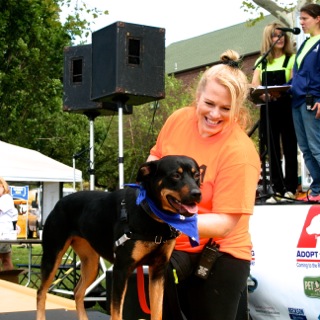
Prospective adopters had lots of dogs to choose from at the annual Puttin on the Dog show in Greenwich last fall. Photo by A. Bogdanovic
Pick me! An Adopt-a-Dog volunteer with a dog up for adoption at Puttin’ on the Dog in Greenwich. September 2015. Photo by A. Bogdanovic

At the local animal shelter where I volunteer, there is a comprehensive screening process in place to ensure successful matches. Prospective adopters must fill out and submit an application which includes specific information. References are required and checked before an adoption goes through. In the interest of full disclosure, specific information about each dog — including their background, age and compatibility with children and other animals — is also listed on the shelter’s website.

As Far As I’m Concerned…

Personally, I’ll never feel guilty about having a pet. In fact, with so many dogs and cats in need of a good home, the only thing I’ll ever feel badly about is that there’s no way to save them all.


This time a pit bull was the victim

This vintage typwriter is our featured image.

Every once in a while, I come across a story that makes me cry. This week I found two.

A Real Tear-Jerker

The first one was an article I found on Yahoo.com. To sum it up, the story is about a man who was afraid of pit bulls — and was scared to death of what his wife’s pit bull-mix might do to their newborn baby. As it turned out, the pit bull-Lab cross loved the little girl. As they grew up together, the bond between the girl and her dog got even stronger.

But one day, everything went horribly wrong. The man, Greg Heynen, claims some neighborhood children poisoned Zack — the pit bull-cross who faithfully followed his daughter to bed every night. Zack died and for the first time, Greg’s daughter didn’t have her faithful companion by her side as she climbed the stairs at bedtime.

That’s when Greg’s own dog, Sam, stepped in. Somehow sensing the little girl’s distress, Sam escorted the little girl upstairs that night — and continued the tradition until his death six years later.

Needless to say, a lot of people commented on this story. Some of them said it made them cry. Others expressed outrage that children killed Zack. One even said that they should be poisoned as well. Others said they should be thrown in jail. Most agreed they should be punished in some way.

I agree. If these children deliberately poisoned Zack, they should be punished to the fullest extent of the law. If permitted under state law, I would charge and try them as adults. Not only did they (allegedly) kill an innocent animal — they robbed a little girl of the rest of her childhood with her best friend. They robbed the Heynen family of a loyal and loving pet.

More importantly, if this was a deliberate act, these children demonstrated the depraved indifference characteristic of hard-core criminals. This is no exaggeration. Scientific studies provide irrefutable proof that children capable of harming animals can and sometimes do grow up to become serial killers.

Leo’s Story

The other story is one that hits closer to home. In fact, it’s about one of the dogs at the animal shelter where I have volunteered for almost three years.

Take me home! A dog up for adoption and an Adopt-a-Dog volunteer. Photo by A. Bogdanovic
An Adopt-a-Dog volunteer with a dog up for adoption at the annual Puttin’ on the Dog show in Greenwich last September. Photo by A. Bogdanovic

At this point, Leo, another pit bull-mix, has been at the shelter almost as long as I have. He came to Adopt-A-Dog in Armonk, N.Y., after a Good Samaritan spotted him by the side of a busy highway and rescued him in the spring of 2014.

He’s such an awesome dog that everyone at the shelter thought a family would adopt him pretty quickly. But a couple of things seemed to work against him from the beginning. For one thing, he will do best in a home with older teenagers. Secondly, he will be happiest in a household without any other pets.

The good news is that he’s thrived in the shelter’s enrichment and training program. He loves agility and he loves to swim, so he’d be a perfect companion for someone who needs a training partner!

You can learn more about Leo by clicking on the “What’s up at Adopt-A-Dog?” link in the sidebar here at inbrieflegalwriting.com tomorrow. You can also visit his profile page on the shelter’s website.

Finally, if you live in the New York metropolitan area and are interested in learning more about Adopt-A-Dog, you can also visit the shelter during our open house and adoption event on Saturday, April 23. The event, at 23 Cox Avenue in Armonk, N.Y., will be held from 10 a.m. to 3 p.m. We look forward to seeing you there!

A worthwhile investment: Americans spend billions on pets

This vintage typwriter is our featured image.

“The pet humanization trend is alive and well and continues to drive growth at the premium end of the market.” – Bob Vetere, president and CEO of the American Pet Products Association

It’s old news by now. But as far as I’m concerned, it’s something that definitely bears repeating.

Last year, Americans spent a record-setting $60.28 billion on our pets. The total amount falls just a little bit short of the target set by the American Pet Products Association (APPA), but it is impressive nevertheless.

Money Matters

A breakdown provided by the APPA shows that we spent the most on pet food ($23.05 billion); followed by supplies and over-the-counter medications ($14.28 billion). Veterinary care accounted for $15.42 billion in expenditures. But the area that reflected the greatest growth in spending compared to 2014 was “other services.”

In a March 17 press release, the APPA explained just what this category covers. Items classified as “other services” include grooming, boarding, walking, training, pet sitting, exercise and yard services. Americans spent $5.41 billion on this sort of stuff last year, as compared to $4.84 billion in 2014, reflecting an 11.8 percent increase.

On the other hand, data provided by the APPA shows we bought fewer pets than we have in the past. The amount spent on “live animal purchases” dipped from $2.15 billion in 2014 to $2.12 billion last year.

Vetere said there are several explanations for the decline. One may be a “decline in pet types available from shelters or breeders.” Another is a “growing number of pet sale bans.” Finally, pets are living longer due to “improved healthcare,” Vetere added.

In My Humble Opinion

Personally, I would love to get another pet. But right now that’s simply out of the question. For one thing, Eli is definitely an “only child.” He’s also a handful.

Eli, the In Brief Legal Writing Services mascot.
In Brief Legal Writing Services mascot Eli catching up on the latest news. Photo by Alexandra Bogdanovic

As many of you know, he had a cancer scare earlier this year. Diagnosis and treatment required several trips to the veterinarian — including one for the surgical removal of a small tumor on his back — in just a few weeks. Needless to say, this wasn’t exactly inexpensive — but it was definitely worthwhile. I am happy to say that the type of tumor he had was fairly benign and is unlikely to recur. I am also happy to say he’s made a complete recovery and is back to his feisty self.

Frankly I’ve lost count of how much we spend on food, cat litter, etc. I’ve also forgotten how much we spent on a live-in pet sitter when we went out of the country for three weeks last year — but that wasn’t exactly inexpensive either.

But at the end of the day, Eli is happy and healthy. And as far as I am concerned, that’s priceless.


Blogging for a good cause

This vintage typwriter is our featured image.

It’s official.

If all goes according to plan, the first entry for our brand new blog, Paws for Thought, will appear on Adopt-a-Dog’s website March 31. Of course, a lot could happen to delay or even derail the project between now and then. Then again, there’s always the chance that everything will go smoothly. Personally, nothing would make me happier.

Coming to the Rescue

Take me home! A dog up for adoption and an Adopt-a-Dog volunteer. Photo by A. Bogdanovic
An Adopt-a-Dog volunteer with a dog up for adoption at the annual Puttin’ on the Dog show in Greenwich last September. Photo by A. Bogdanovic

For those of you who haven’t heard of the organization, I can tell you that it’s one of the most awesome non-profit organizations for which I have ever had the pleasure of volunteering. Based in Armonk, N.Y., its mission is to rescue, provide shelter and then and find “forever homes” for dogs of all ages and breeds.

Doing so is more than a full-time job for the staff at Adopt-a-Dog. It is a labor of love.

The happiness and well-being of each dog that comes to the shelter is paramount, so each one is carefully evaluated upon arrival. With assessments in hand, the staff then ensures that each dog’s needs are fully addressed. Among other things, that means making sure that all of the dogs get proper medical care and those that have behavioral issues get to work with a trainer. All of the dogs get to participate in “enrichment activities” with volunteers and staff.

Prospective adopters had lots of dogs to choose from at the annual Puttin on the Dog show in Greenwich last fall. Photo by A. Bogdanovic
Pick me! An Adopt-a-Dog volunteer with a dog up for adoption at Puttin’ on the Dog in Greenwich. September 2015. Photo by A. Bogdanovic

Anyone interested in adopting a dog is also thoroughly “vetted” before they can bring their new friend home. The process usually begins when someone comes to an event or visits the adoptions page on the organization’s website to see if there are any dogs they’d like to meet. Sometimes they phone the shelter to see if any puppies are available or if they are interested in a specific breed. In any case, they must fill out an application and make an appointment to come to the shelter in order to meet the dog(s).

As part of the application process, prospective adopters must provide references, all of which are checked. In some cases — usually when the applicant has another pet — staff will conduct home visits before the adoption is finalized.

Help Wanted

If you ask anyone at Adopt-a-Dog, they’ll quickly admit that well-trained volunteers are key to the shelter’s success. While most volunteers help out at the shelter itself, a lot also lend a hand at special events. Some, like me, volunteer in multiple capacities. I do administrative office tasks at the shelter once per week, and do reference checks at adoption events when needed. I also photograph special events like the annual Howl and Prowl costume contest and Puttin’ on the Dog show here in Greenwich. Now I’ll also be doing some Pro Bono blogging.

One way or another it all adds up to a lot of hard work. But it’s also a blast, and I wouldn’t have it any other way.

Advancing animal advocacy

This vintage typwriter is our featured image.

A new rule currently pending review by the Connecticut General Assembly’s Joint Judiciary Committee calls for additional advocacy for neglected and abused animals.

Speaking up for those who can’t

As proposed, Connecticut House Bill 5344 would allow “a separate advocate” to be appointed “to represent the interests of the animal” or “the interests of justice” in certain cases.

The person selected from a list of qualified volunteers kept by the Commissioner of Agriculture would:

  • Monitor the case
  • Obtain information that would assist the judge or fact finder through consultations with relevant individuals
  • Review relevant records
  • Attend hearings
  • Issue relevant recommendations

Passion and professionalism

The selection of an advocate selected in a case specified under the new rule could be made by the court itself or at the behest of a lawyer or party involved in the case. The advocates would either be attorneys “with knowledge of animal issues and the legal system” or law students from schools that “have students or anticipate having students with an interest in animal issues and the legal system.”

Participating students would be bound by specific guidelines pertaining to legal interns set forth in the Connecticut Practice Book. The “book”  includes the Rules of Professional Conduct, Rules for the Superior Court and Code of Judicial Conduct for Connecticut lawyers.

Personal perspective

Well, here’s another “no-brainer.”

Eli, the In Brief Legal Writing Services mascot.
In Brief Legal Writing Services mascot Eli catching up on the latest news. Photo by Alexandra Bogdanovic

As evidenced by numerous articles on the subject, animal law is a growing discipline requiring a specific skill set. Allowing a separate advocate with the necessary knowledge and/or passion for and interest in the work to do the “heavy lifting” in  cases involving “the welfare or custody of an animal” benefits everyone involved. For one thing, it takes the burden off lawyers who aren’t as well-versed in this particular area. More importantly, it ensures that the person making the final decision has all of the information he or she needs in order to do so.

But most importantly of all, it ensures that there is a “voice” for those who can’t speak for themselves.