Suburban New York puppy mill law is a no-brainer

This vintage typwriter is our featured image.

What I’m about to say is hard to believe — but it’s true. Every once in a while, local, state (and even federal) lawmakers actually do something that makes sense.

In this case, lawmakers in the New York City suburbs — Westchester County, to be exact — are weighing the pros and cons of a so-called “puppy mill” law.
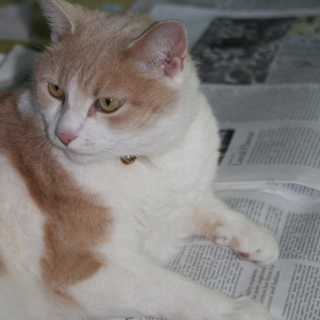
Eli, the In Brief Legal Writing Services mascot.
In Brief Legal Writing Services mascot Eli catching up on the latest news. Photo by Alexandra Bogdanovic

You can read all about it here. For now I will just highlight the key points.

As it currently stands, the new law would:

  • Change current rules that “regulate animal facilities.”
  • Create tougher regulations pertaining to health standards for breeders and pet stores that sell puppies.
  • Ban any transactions involving puppies that were “raised in unhealthy and unsafe conditions.”

County Legislator Jim Maisano, a Republican driving the new legislation, sums it up this way:

“What we really want to do is impact the flow of puppy-mill dogs into Westchester. We want to stop it. So we’re raising the standards the Health Department will enforce to make sure (that), when dogs come into a pet dealer in Westchester County, that they’re not coming from the puppy mills.”

According to published reports, many communities in the county are already taking matters into their own hands. As a result, Mamaroneck, , New Rochelle, Mount Pleasant, Harrison, Yorktown, Rye Brook and Port Chester all have so-called “puppy mill” laws on the books.

Of course, there’s always another side of the story. So those who oppose the county’s efforts say the law currently being considered may have unintended consequences. Specifically, one pet shop owner says passage of the law as it now stands would harm his business by limiting where he can get dogs for his breeding program.

Animal advocates don’t buy that argument, however.

“Westchester is already on the map for making a statement against puppy-mill atrocities and, as a county, we can make that statement even larger,” said Dina Goren, who represents the Coalition for Legislative Action for Animals in the county. “We have the legal right and obligation to protect animals in our own community. Banning the sale of commercially bred dogs and cats in pet stores altogether would do just that.”

I agree.

Unsung heroes — going beyond the call of duty to rescue animals

This vintage typwriter is our featured image.

American cops are certainly getting a lot of bad press these days — and with good reason, some might say. But I recently came across two stories that show just how far some police and animal control officers will go to do the right thing.

Eli, the In Brief Legal Writing Services mascot.
In Brief Legal Writing Services mascot Eli catching up on the latest news. Photo by Alexandra Bogdanovic

The first story, which was widely publicized here in the greater New York City area, is one about some Port Authority police officers who rescued an injured dog on the George Washington Bridge.

Now, you don’t have to live anywhere New York City to know that the GWB is, well, terrifying. At the best of times its upper and lower decks are crammed full of cars and trucks driven by cranky New York drivers in a rush to get across the span. Then there are the drivers trying to cross the bridge who have no idea where they’re going. Put the two groups together, add in some construction (there’s almost always construction), lane closures (that New Jersey Gov. Chris Christie allegedly has no knowledge of) and you’ve got one giant cluster bleep.

Now I don’t know if there were actually any lane closures on the day in question. But chances are there was probably tons of traffic. In any case, just imagine being a poor little puppy stuck in the middle of all of that. And imagine how scared you’d be if you’d gotten hit by a car, too.

Fortunately for little Ronin, who found himself in heaps of trouble after he got away from the person walking him, Port Authority police officers Fred Corrubia and Jonathan Harder were on duty that day. According to published accounts, the officers — who were in the vicinity — responded to a report of an injured dog on the bridge, and brought him to safety. As if that wasn’t enough, the officers also took him to a local animal hospital, where he was treated for leg and paw injuries before being reunited with his owner.

In another recent act of bravery, animal control officers in Guilford, Connecticut, rescued a baby skunk. In media accounts chronicling the incident, officials said the little stinker (pun fully intended) was stuck in a courtyard at a local middle school. Rather than putting the children and the skunk through an unnecessary ordeal, the animal control officers used a humane trap to catch the skunk and then used an innovative method to remove it from the school grounds.

The skunk — which seemed healthy — reportedly emerged from the incident unscathed. And for the record, the animal control officers did, too.

There’s no punishment harsh enough…

This vintage typwriter is our featured image.

I’d like to think that I’m a fairly tolerant person. But there are some things for which I have absolutely no tolerance whatsoever.

I have no tolerance for bullies. I have no tolerance for ignorance. I have no tolerance for anyone who preys upon or otherwise exploits, children, the elderly or animals. Especially animals.

Eli, the In Brief Legal Writing Services mascot.
In Brief Legal Writing Services mascot Eli catching up on the latest news. Photo by Alexandra Bogdanovic

As far as I’m concerned there’s no punishment harsh enough for the owner of an animal shelter in Monroe, Connecticut, who was recently convicted of animal cruelty. Especially because he’s got prior convictions.

According to one news account, Frederick Acker “was convicted of 11 counts of animal cruelty in Ansonia-Milford Superior Court on July 26 and faces up to 11 years in prison at sentencing on Sept. 6.”

To make matters worse, Acker was reportedly convicted on 15 counts of animal cruelty in Litchfield Superior Court last year. He got off with a slap on the wrist.

The good news is that Connecticut politicians — some of whom have been aware of Acker’s exploits for sometime — are now planning on joining forces to close the legal loopholes that have allowed Acker to continue operating an animal shelter.

“We need to change our laws and our regulations to make sure that not only they are strict enough, but to make sure our judicial system is enforcing them,” said Connecticut State Rep. Themis Kalrdies, who learned about Acker’s exploits after she tried to adopt a kitten from the shelter. “We don’t want to stop anybody who is a good and caring person from taking care of animals, we want to make sure people who are clearly taking advantage of the system are not allowed to.”

Speaking as someone who loves animals and as someone who has devoted a considerable amount of time and energy to volunteering at a local animal shelter for the past few years, I hope Connecticut lawmakers follow through on this.

Allowing Acker and those like him to continue working with animals is a slap in the face to everyone who works tirelessly to help unwanted cats and dogs find forever homes.

More importantly, it is unfair to all of the animals who count on people for help.

Hundreds of turtles and birds rescued from Long Island home

This vintage typwriter is our featured image.
Alexandra Bogdanovic
Founder/owner of In Brief Legal Writing Services, Alexandra Bogdanovic. Photo by N. Bogdanovic

For the second time in less than a month, authorities confiscated hundreds of animals from a Tri State Area home. But this time the house was on Long Island. And this time the animals weren’t dogs. This time, the animals reportedly rescued from horrid conditions were turtles and birds.

As reported by WABC-TV in New York, the Nassau County SPCA seized the animals after personnel from its law enforcement division executed a search warrant at the Bellmore home yesterday.

On a steamy hot New York morning, authorities found some of the animals didn’t have enough water and others were malnourished. They were also deprived of fresh air and lived in dirty water, according to an account provided by an agency spokesman.

One of the animals — an alligator snapping turtle found living in the basement — belongs to a species capable of hurting people.

“That turtle could take your hand off,” Nassau County SPCA spokesman Gary Rogers told Eyewitness News.

You can learn all about alligator snapping turtles on nationalgeographic.com. But here are a few basics:

  • You won’t find a bigger freshwater species in North America.
  • They like to live in rivers, lakes and canals in the southeastern part of the United States.
  • They can live for 50 to 100 years.
  • An adult male’s shell can be more than 2 feet long.
  • An adult male can weigh more than 170 pounds.
  • Females are much smaller.
  • They can stay under water for a long time.
  • They have no natural predators other than us.

Now perhaps you see why they don’t make great pets. And personally I really wouldn’t want to keep one in my basement. Would you?

Never mind. That was a rhetorical question. But if you do want one, there are a few things to consider before taking the plunge. You can read about them on rightpet.com.

At the end of the day, what kind of pet you get is up to you. All I ask is the following:

  1. that you do not further the exotic pet trade
  2. that you do your research before you get any sort of pet
  3. that you engage in responsible pet ownership

If you do all of that, you probably won’t end up on the evening news.

Words to soothe a savage beast: how reading affects traumatized dogs

This vintage typwriter is our featured image.
Eli, the In Brief Legal Writing Services mascot.
In Brief Legal Writing Services mascot Eli catching up on the latest news. Photo by Alexandra Bogdanovic

A few weeks back, I mentioned that my cat, Eli, is extremely sensitive. And in that regard, nothing’s changed.

But I did learn something interesting the other day. Or more accurately an article in The New York Times confirmed something I’ve always suspected: animals might not understand everything we say, but they definitely understand our tone of voice.

I guess that’s why volunteers read to dogs at the ASPCA in New York City.

“As long as you read in a nice soothing voice, they enjoy it,” Hildy Benick, 69, a volunteer who has been with the reading program since shortly after it started, told the Times.

Victoria Wells is the senior manager of behavior and training at the ASPCA. She started the reading program in 2013, and says it is a great way to help dogs that have to relearn how to trust people.

“You know within each session the progress that they’re making,” she told the Times.  “In the beginning of the session, the dog might be in the back of their kennel cowering, and then they move forward, lie down, relax; their tail might wag.”

Meanwhile, across the country, volunteers are reading to dogs and cats at the Arizona Animal Welfare League and SPCA.

Like their counterparts in New York City, the animals awaiting adoption in Phoenix are good listeners. And apparently they’re not too picky about which reading material their human pals share. If you think about it, that’s saying a lot, considering some of the college kids that volunteer at the shelter often read from their text books, according to Whitney Fletcher, Director of Volunteers & Special Events at AAWL & SPCA.

“As you read out loud, you are focusing on something other than the animal,” she says. “In turn, the animal grows accustomed to your presence and voice, which is calming. Dogs and cats find the rhythmic sound of a voice very comforting and soothing.”

If it works with shelter animals, there’s no reason why it shouldn’t work with our dogs and cats, too. So the next time you curl up with a good book, try reading to your pet and see what happens. He (or she) just might enjoy it.

New Jersey dog hoarding case will blow your mind

This vintage typwriter is our featured image.

It is simply mind-boggling. There’s just no other way to put it.

Last week, authorities in Monmouth County, New Jersey, reportedly rescued 276 dogs from one home. According to multiple media accounts, some of the dogs had never been outside, some were trapped in walls and some were literally having puppies.

“When the Monmouth County SPCA Law Enforcement Division realized that we were facing an historical hoarding event, we knew that we would need to call on all our partners in animal welfare, law enforcement and emergency responders,” the agency’s police chief and executive director Ross Licitra said.

Personnel from at least five separate animal rescue, animal welfare and law enforcement agencies rallied to the cause. But even with such a massive response, it took workers 15 hours to free all of the animals.

Help Wanted

The Monmouth SPCA is now turning to the community for help, and there are several ways you can do so.

Eli, the In Brief Legal Writing Services mascot.
In Brief Legal Writing Services mascot Eli catching up on the latest news. Photo by Alexandra Bogdanovic

Even if you don’t live in New Jersey, you can donate to help cover the costs of caring for these dogs. You can find a link to a special donation page and additional information about where to send your payment here.

The agency is also welcoming inquires about fostering some of the dogs.

“Dogs in our care, especially in cases like this, have a much easier time adjusting to their new surroundings in a home environment rather than in a shelter,” the organization says.

If you live nearby and are interested in providing a temporary home for one of these dogs, you can send an email to: Fostering@monmouthcountyspca.org.

Finally, you can help by donating items on the shelter’s wish list. This list includes:

  • blankets
  • towels
  • sheets
  • small/medium dog crates
  • dog toys
  • Science Diet dog food
  • Purina One wet puppy food

For more information about where you can drop off your donations, click here.

Finally, the Monmouth County SPCA stresses that the dogs are not yet available for adoption and it will take at least one to two weeks to determine which, if any, will be.

“The dogs we currently have need to be medically cleared, spayed/neutered, and assessed behaviorally before they will be ready to meet potential adopters,” the agency says.

In the meantime, those of you who do live in or near Monmouth County are encouraged to meet some of the SPCA’s shelter animals currently available for adoption.

It’s Sad But True

According to the ASPCA, animal hoarding occurs when someone “is housing more animals than he or she can adequately care for.” Specifically, it is defined by “an inability to provide even minimal standards of nutrition, sanitation, shelter and veterinary care—often resulting in animal starvation, illness and death.”

While extreme hoarding cases make national headlines and grab our attention, the ASPCA says there as many as 900 to 2,000 new animal hoarding cases in the United States every year. Collectively, these incidents may involve as many as 250,000 animals of varying species.

For more information about animal hoarding, including warning signs and what to do if you suspect someone you know may be overwhelmed, click here.

And please remember that no one can save all of the companion animals in need of homes in the United States. But together we can make a big difference for a few.

Author questions morality of having pets

This vintage typwriter is our featured image.

“A better question would be: Should everyone be allowed to have pets?”

With the state of American politics these days, I’ve come across plenty of reading material that has simultaneously left me speechless and sent my blood pressure through the roof. But when I found this story I didn’t know whether to laugh or cry — and it has nothing to do with politics.

The Miami Herald article I discovered was just one of dozens written about a new book called Run, Spot, Run: The Ethics of Keeping Pets. In it, the author, Jessica Pierce, questions whether it is ethical for people to have pets.

“When we see our cats gazing wistfully out the window, or watch a goldfish swim lazy circles in a bowl, we can’t help but wonder: are we doing the right thing, keeping these independent beings locked up, subject to our control,” she asks in the Herald. “Is keeping pets actually good for the pets themselves?”

As you all know, I have a cat and love animals as much as — or maybe more — than most. But with all due respect to Pierce, this is one of the most ridiculous, stupid, idiotic things I have ever heard. I am not quite sure if it is an extreme case of political correctness, an extreme case of anthropomorphism or both.

A More Relevant Question

In her book, Pierce admits that most people do treat animals well but claims others “take them for granted,” or “think they are disposable.”

Sadly it is true that many people neglect, abuse, and abandon companion animals that require love, food, shelter and medical care in order to thrive. So to me, the pertinent question is not whether it is ethical to have pets, but whether everyone should be allowed to have them.

Eli, the In Brief Legal Writing Services mascot.
In Brief Legal Writing Services mascot Eli catching up on the latest news. Photo by Alexandra Bogdanovic

Clearly the answer to that question is a resounding, “no.”

Some people shouldn’t have pets because they are selfish. Some people shouldn’t have pets because they are irresponsible. Some people shouldn’t have pets because they are emotionally incapable of having them, and others shouldn’t have pets because they are financially incapable of having them.

Then there are the people who shouldn’t have pets because they are just plain evil. These are the people who have dogs and either engage in or sanction dog fighting. These are people who take advantage of dog breeds with aggressive tendencies. These are the people who leave their pets locked up in cages, crates or carriers all day. These are the people who abuse, abandon and neglect companion animals. These are the people who run puppy mills. These are the people who believe in killing animals for fun.

Taking Proper Precautions

I didn’t get any of my cats from a pet store, so I don’t know if there are screening processes in place for people who do that. Correct me if I’m wrong, but from what I’ve heard and read, I don’t think there is. If there isn’t, maybe it is time to rethink that.

I’m also unfamiliar with what’s involved with getting a purebred animal directly from a breeder. I assume that legitimate breeders do what they can to make sure puppies, kittens, and other animals end up in good homes. Again, feel free to let me know if this is the case.

As far as adopting from a shelter or rescue group goes, I can only speak from personal experience. When I adopted Eli from the Fauquier SPCA in 2008, I had to fill out some pretty extensive paperwork and pay an adoption fee before I could bring him home.

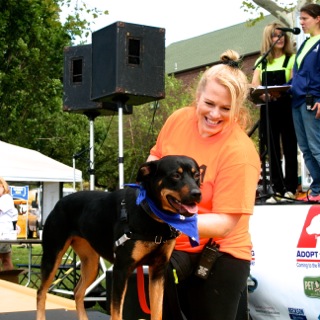
Prospective adopters had lots of dogs to choose from at the annual Puttin on the Dog show in Greenwich last fall. Photo by A. Bogdanovic
Pick me! An Adopt-a-Dog volunteer with a dog up for adoption at Puttin’ on the Dog in Greenwich. September 2015. Photo by A. Bogdanovic

At the local animal shelter where I volunteer, there is a comprehensive screening process in place to ensure successful matches. Prospective adopters must fill out and submit an application which includes specific information. References are required and checked before an adoption goes through. In the interest of full disclosure, specific information about each dog — including their background, age and compatibility with children and other animals — is also listed on the shelter’s website.

As Far As I’m Concerned…

Personally, I’ll never feel guilty about having a pet. In fact, with so many dogs and cats in need of a good home, the only thing I’ll ever feel badly about is that there’s no way to save them all.


This time a pit bull was the victim

This vintage typwriter is our featured image.

Every once in a while, I come across a story that makes me cry. This week I found two.

A Real Tear-Jerker

The first one was an article I found on Yahoo.com. To sum it up, the story is about a man who was afraid of pit bulls — and was scared to death of what his wife’s pit bull-mix might do to their newborn baby. As it turned out, the pit bull-Lab cross loved the little girl. As they grew up together, the bond between the girl and her dog got even stronger.

But one day, everything went horribly wrong. The man, Greg Heynen, claims some neighborhood children poisoned Zack — the pit bull-cross who faithfully followed his daughter to bed every night. Zack died and for the first time, Greg’s daughter didn’t have her faithful companion by her side as she climbed the stairs at bedtime.

That’s when Greg’s own dog, Sam, stepped in. Somehow sensing the little girl’s distress, Sam escorted the little girl upstairs that night — and continued the tradition until his death six years later.

Needless to say, a lot of people commented on this story. Some of them said it made them cry. Others expressed outrage that children killed Zack. One even said that they should be poisoned as well. Others said they should be thrown in jail. Most agreed they should be punished in some way.

I agree. If these children deliberately poisoned Zack, they should be punished to the fullest extent of the law. If permitted under state law, I would charge and try them as adults. Not only did they (allegedly) kill an innocent animal — they robbed a little girl of the rest of her childhood with her best friend. They robbed the Heynen family of a loyal and loving pet.

More importantly, if this was a deliberate act, these children demonstrated the depraved indifference characteristic of hard-core criminals. This is no exaggeration. Scientific studies provide irrefutable proof that children capable of harming animals can and sometimes do grow up to become serial killers.

Leo’s Story

The other story is one that hits closer to home. In fact, it’s about one of the dogs at the animal shelter where I have volunteered for almost three years.

Take me home! A dog up for adoption and an Adopt-a-Dog volunteer. Photo by A. Bogdanovic
An Adopt-a-Dog volunteer with a dog up for adoption at the annual Puttin’ on the Dog show in Greenwich last September. Photo by A. Bogdanovic

At this point, Leo, another pit bull-mix, has been at the shelter almost as long as I have. He came to Adopt-A-Dog in Armonk, N.Y., after a Good Samaritan spotted him by the side of a busy highway and rescued him in the spring of 2014.

He’s such an awesome dog that everyone at the shelter thought a family would adopt him pretty quickly. But a couple of things seemed to work against him from the beginning. For one thing, he will do best in a home with older teenagers. Secondly, he will be happiest in a household without any other pets.

The good news is that he’s thrived in the shelter’s enrichment and training program. He loves agility and he loves to swim, so he’d be a perfect companion for someone who needs a training partner!

You can learn more about Leo by clicking on the “What’s up at Adopt-A-Dog?” link in the sidebar here at inbrieflegalwriting.com tomorrow. You can also visit his profile page on the shelter’s website.

Finally, if you live in the New York metropolitan area and are interested in learning more about Adopt-A-Dog, you can also visit the shelter during our open house and adoption event on Saturday, April 23. The event, at 23 Cox Avenue in Armonk, N.Y., will be held from 10 a.m. to 3 p.m. We look forward to seeing you there!

Blogging for a good cause

This vintage typwriter is our featured image.

It’s official.

If all goes according to plan, the first entry for our brand new blog, Paws for Thought, will appear on Adopt-a-Dog’s website March 31. Of course, a lot could happen to delay or even derail the project between now and then. Then again, there’s always the chance that everything will go smoothly. Personally, nothing would make me happier.

Coming to the Rescue

Take me home! A dog up for adoption and an Adopt-a-Dog volunteer. Photo by A. Bogdanovic
An Adopt-a-Dog volunteer with a dog up for adoption at the annual Puttin’ on the Dog show in Greenwich last September. Photo by A. Bogdanovic

For those of you who haven’t heard of the organization, I can tell you that it’s one of the most awesome non-profit organizations for which I have ever had the pleasure of volunteering. Based in Armonk, N.Y., its mission is to rescue, provide shelter and then and find “forever homes” for dogs of all ages and breeds.

Doing so is more than a full-time job for the staff at Adopt-a-Dog. It is a labor of love.

The happiness and well-being of each dog that comes to the shelter is paramount, so each one is carefully evaluated upon arrival. With assessments in hand, the staff then ensures that each dog’s needs are fully addressed. Among other things, that means making sure that all of the dogs get proper medical care and those that have behavioral issues get to work with a trainer. All of the dogs get to participate in “enrichment activities” with volunteers and staff.

Prospective adopters had lots of dogs to choose from at the annual Puttin on the Dog show in Greenwich last fall. Photo by A. Bogdanovic
Pick me! An Adopt-a-Dog volunteer with a dog up for adoption at Puttin’ on the Dog in Greenwich. September 2015. Photo by A. Bogdanovic

Anyone interested in adopting a dog is also thoroughly “vetted” before they can bring their new friend home. The process usually begins when someone comes to an event or visits the adoptions page on the organization’s website to see if there are any dogs they’d like to meet. Sometimes they phone the shelter to see if any puppies are available or if they are interested in a specific breed. In any case, they must fill out an application and make an appointment to come to the shelter in order to meet the dog(s).

As part of the application process, prospective adopters must provide references, all of which are checked. In some cases — usually when the applicant has another pet — staff will conduct home visits before the adoption is finalized.

Help Wanted

If you ask anyone at Adopt-a-Dog, they’ll quickly admit that well-trained volunteers are key to the shelter’s success. While most volunteers help out at the shelter itself, a lot also lend a hand at special events. Some, like me, volunteer in multiple capacities. I do administrative office tasks at the shelter once per week, and do reference checks at adoption events when needed. I also photograph special events like the annual Howl and Prowl costume contest and Puttin’ on the Dog show here in Greenwich. Now I’ll also be doing some Pro Bono blogging.

One way or another it all adds up to a lot of hard work. But it’s also a blast, and I wouldn’t have it any other way.

How cool is this?

This vintage typwriter is our featured image.

It’s almost enough to restore my faith in humanity. Of course almost is the key word in that sentence.

But all kidding aside, I rarely find articles I enjoy, much less agree with, in The New York Times. So imagine my surprise when my almost-daily search for blog fodder turned up an utterly cool, totally heartwarming story there earlier this month.

Written by Winnie Hu, the February 7 story was about the pet food pantries popping up in New York City and surrounding suburbs. Thanks to them, a lot of people who are often forced to choose between buying food for themselves or their pets are no longer confronted by that agonizing decision. People who were once forced to surrender — or worse yet abandon — their pet because they couldn’t afford to feed it now know there is a place to get canned food or kibble for their dog or cat.

Eli, the In Brief Legal Writing Services mascot.
In Brief Legal Services mascot Eli catching up on the latest news. Photo by Alexandra Bogdanovic

I am sure there are plenty of skeptics — and critics — like the man quoted in Hu’s article. I won’t waste my breath on them. They just don’t get it — and they probably never will … unless they spend some time volunteering at an animal shelter, or at least visiting one. Perhaps if they heard the cries of a dog newly separated from the only owner it has ever known, or seen the look on the owner’s face after he or she has left their dog or cat at a shelter, they would finally understand.

Maybe then they would finally realize what those of us who love our pets have always known; that there is something animals give freely regardless of their caregiver’s race, religion, gender identity, sexual preference or socioeconomic standing. It’s something that people don’t give unconditionally and it’s something all the money in the world can’t buy. It’s something called love … and that’s something to think about.