
The restoration of American greatness has nothing to do with Donald Trump

This vintage typwriter is our featured image.

My Fellow Americans —

As I write this, most of you are no doubt counting the hours until the long holiday weekend. I am sure you are preoccupied with travel plans and dreading the drive to the beach or the lake or the mountains. I am sure you are looking forward to hanging out with family and friends. I have no doubt you are also looking forward to pool parties, parades, barbecues, and fireworks.

Old Glory. American Flag. Photo taken at Memorial Day Ceremony by Alexandra Bogdanovic
American Flag. As seen at Memorial Day ceremony in Warrenton, Virginia. May 2011. Photo by Alexandra Boganovic

As I write this, I am pondering the wisdom of writing a “political” blog on my business site, especially given the political climate in the United States these days. To do so would be professional suicide.

So it’s a good thing this has absolutely nothing to do with politics. It has to do with us.

You see the true measure of American greatness has nothing to do with Donald Trump — or Hillary Clinton, for that matter. It has nothing to do with Bernie Sanders or anyone else who wants to be president. It has nothing to do with who is in the White House or who is in Congress or who is in charge of each state.

It has nothing to do with Republicans or Democrats, or liberals or conservatives. It doesn’t matter if our leaders are progressives or populists.  It has nothing to do any political label or political philosophy.

The true measure of American greatness lies in its people. It lies in each and every one of us. Whether we like it or not. Whether we care to admit it or not.

We The People Of The United States…

The undeniable link between American greatness and its people can be traced through history. In fact, it can be traced to a time before the United States as we know it even existed.

It can be traced back to the time when a bunch of colonists, fed up with British tyranny and oppression, decided to do something about it. They decided to fight back.

In the Declaration of Independence, dated July 4, 1776, they said:

“We hold these truths to be self-evident, that all men are created equal, that they are endowed by their Creator with certain unalienable Rights, that among these are Life, Liberty and the pursuit of Happiness. — That to secure these rights, Governments are instituted among Men, deriving their just powers from the consent of the governed (emphasis added), — That whenever any Form of Government becomes destructive of these ends, it is the Right of the People (emphasis added) to alter or to abolish it, and to institute new Government, laying its foundation on such principles and organizing its powers in such form, as to them shall seem most likely to effect their Safety and Happiness.”

Red, White and Blue Umbrella. Pictured on Memorial Day, 2011. Photo by Alexandra Bogdanovic
Patriotic Colors. Memorial Day Ceremony in Warrenton, Va., May 2011. Photo by Alexandra Bogdanovic

A similar sentiment is conveyed in the Preamble to our Constitution, which reads:

“We the People of the United States, in Order to form a more perfect Union, establish Justice, insure domestic Tranquility, provide for the common defence, promote the general Welfare, and secure the Blessings of Liberty to ourselves and our Posterity, do ordain and establish this Constitution for the United States of America.”

Note how these documents are written. They do not begin with “We, the leaders of the United States of America.” Nor do they say anything about “we, the politicians of the United States of America.”

Gee, I wonder why?

Together, We Can Make America Great Again

Wreath. Shot at Memorial Day Service in Warrenton, Virginia in 2011. Photo by Alexandra Bogdanovic
Memorial Day Wreath. Warrenton, Va., 2011. Photo by Alexandra Bogdanovic

But seriously, putting all sarcasm and snarfiness aside, what does this really mean?

In the simplest terms, it means that as Americans we are in charge of our own destiny. It also means that our future will be shaped not by the decisions our leaders make, but the key decisions we all make every day. They are:

  • How to react to hateful political rhetoric
  • Whether to embrace politicians that engage in hateful rhetoric
  • How to handle our political differences
  • Whether to let those differences tear us apart
  • How to regard compromise (as a sign of strength or weakness)
  • How to react to the things we don’t understand
  • How to react to the things that scare us
  • How to handle disagreements
  • How to express ourselves
  • Whether to exercise our right to vote
  • Whether to do our due diligence so we are fully informed when we cast our ballots
  • Whether to let the mainstream media, educators and pop culture dictate what we think
  • Whether to let others dictate how we behave

When all is said and done, what we choose to do determines not only how others view us, but how we see ourselves. After all, it is easy to blame our leaders for everything that is wrong with our country. It is much harder to look in the mirror.

An (alleged) criminal with a conscience… who knew?

This vintage typwriter is our featured image.

OK. I admit it. I am a cynic. No, make that a dyed-in-the-wool cynic. And I’m proud of it. Not that it should come as a shock or anything. I was a reporter for more than 20 years.

Alexandra Bogdanovic
Founder/owner of In Brief Legal Writing Services, Alexandra Bogdanovic. Photo by N. Bogdanovic

So imagine my surprise when I came across an article with the following headline: “Fugitive pens letter to law enforcement agencies a week after his capture.”

At first I thought the story might have been left over from April Fools’ Day and someone accidentally re-posted it. Then I thought it was a hoax. Then I actually read it.

Yep, it’s for real, alright. Seriously.

Here’s what happened. Apparently this guy in Texas wasn’t happy about getting pulled over by the police. So he decided to get out of the car and run… and with that, a routine traffic stop turned into a royal cluster-bleep.

The good news is that the good guys — and their dogs — did catch him. Eventually. From what I read, the chase lasted an hour before he was finally taken into custody.

“What I witnessed that night by all the law enforcement personnel was a level of professionalism and team work and respect that I’ve never seen before,” Gregory Wylie said in his letter, which FOX 12 News posted along with the story.

Wylie also admits that he ran because he was “not man enough to face the consequence of my action which led up to the point in my life.”

Well, I don’t know about you. But I, for one, applaud Wylie for having the courage to admit that. It takes guts to admit your shortcomings and it takes a certain amount of intestinal fortitude to apologize.

Still, I can’t help but question his motives. Was he really sorry for what he did? Or did he just want to score points with the judge?

Words to soothe a savage beast: how reading affects traumatized dogs

This vintage typwriter is our featured image.
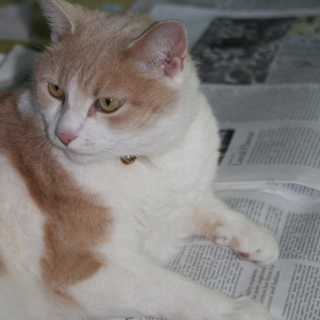
Eli, the In Brief Legal Writing Services mascot.
In Brief Legal Writing Services mascot Eli catching up on the latest news. Photo by Alexandra Bogdanovic

A few weeks back, I mentioned that my cat, Eli, is extremely sensitive. And in that regard, nothing’s changed.

But I did learn something interesting the other day. Or more accurately an article in The New York Times confirmed something I’ve always suspected: animals might not understand everything we say, but they definitely understand our tone of voice.

I guess that’s why volunteers read to dogs at the ASPCA in New York City.

“As long as you read in a nice soothing voice, they enjoy it,” Hildy Benick, 69, a volunteer who has been with the reading program since shortly after it started, told the Times.

Victoria Wells is the senior manager of behavior and training at the ASPCA. She started the reading program in 2013, and says it is a great way to help dogs that have to relearn how to trust people.

“You know within each session the progress that they’re making,” she told the Times.  “In the beginning of the session, the dog might be in the back of their kennel cowering, and then they move forward, lie down, relax; their tail might wag.”

Meanwhile, across the country, volunteers are reading to dogs and cats at the Arizona Animal Welfare League and SPCA.

Like their counterparts in New York City, the animals awaiting adoption in Phoenix are good listeners. And apparently they’re not too picky about which reading material their human pals share. If you think about it, that’s saying a lot, considering some of the college kids that volunteer at the shelter often read from their text books, according to Whitney Fletcher, Director of Volunteers & Special Events at AAWL & SPCA.

“As you read out loud, you are focusing on something other than the animal,” she says. “In turn, the animal grows accustomed to your presence and voice, which is calming. Dogs and cats find the rhythmic sound of a voice very comforting and soothing.”

If it works with shelter animals, there’s no reason why it shouldn’t work with our dogs and cats, too. So the next time you curl up with a good book, try reading to your pet and see what happens. He (or she) just might enjoy it.

Finding help for Pulse Orlando shooting victims’ pets

This vintage typwriter is our featured image.
Eli, the In Brief Legal Writing Services mascot.
In Brief Legal Writing Services mascot Eli catching up on the latest news. Photo by Alexandra Bogdanovic

Here’s a surprise. Politicians across the country — including both presumptive presidential nominees — have spent the better part of this week exploiting a national tragedy in order to advance their own agendas.

I don’t know about you, but frankly I find that sickening. I’m not kidding. It makes me want to puke.

On the other hand, there are plenty of people whose selflessness and generosity in the aftermath of the Pulse Orlando nightclub shooting is almost enough to restore my faith in humanity.

Judy Charuhas is one of them.

Helping The Pulse Orlando Shooting Victims’ Pets

According to an article in the Orlando Sentinel, Charuhas is in charge of a “local lost pets group.” In the wake of the mass shooting that reportedly left 49 dead and more than 50 injured early Sunday morning, she launched an effort to help the victims’ pets.

The Sentinel article details how she began by posting a message on the Winter Park Lost Pets page on Facebook. In it, she informed followers that the organization is “compiling a list of rescuers/services/people willing to hold/foster/adopt pets for victims and survivors of the Pulse Orlando shooting,” and encouraged people interested in helping to comment.

Not surprisingly, tons of people responded.

“I’ve got a huge list of resources,” Charuhas told the Sentinel. “We’re basically vetting them out and making sure these people can do what they say they can do. If anyone is willing to step forward, I’ll add them to my list.”

If you live in the Orlando area and you are interested in helping, click the link to the story above to find out how you can contact Charuhas directly. You can also visit the Winter Park Lost Pets page on Facebook for more information.

Friends and relatives of the shooting victims are also encouraged to contact local authorities, animal welfare and rescue groups about any pets in need.

Something Else To Think About

Whether it is the result of a natural disaster, a catastrophic accident or an horrific act of violence like the one that happened at Pulse Orlando, a tremendous loss of life is something that shakes us to the very core of our being. When it is sudden and unexpected, it is a stark reminder of both our vulnerability and our mortality. Anyway you look at it, it is something most of us would rather not think about, much less confront.

Nevertheless, most of us do make provisions for our loved ones in the event that something happens to us. We get life insurance policies. We make wills.

On the other hand, making provisions to ensure that our pets are cared for if we are critically injured or killed  is something that may not cross our minds. That doesn’t mean that it’s something we shouldn’t think about, or that there’s nothing we can do. You can learn more about the issue here.

As you can see, there are plenty of options. So whatever you do, please plan ahead. We owe it to ourselves — and our pets.

Unanswered questions remain following Harambe’s death

This vintage typwriter is our featured image.

The rush to judgment following the Cincinnati Zoo incident that resulted in a small boy’s injuries and a gorilla’s death is understandable but unproductive.

It is understandable because the incident involves two issues that ignite our passions: the welfare of children and the welfare of animals. But pointing fingers and laying blame before all of the facts are known doesn’t do anyone any good.

A Comprehensive Investigation Is Warranted

From what I understand, authorities began looking into the matter this week.

Alexandra Bogdanovic
Founder/owner of In Brief Legal Writing Services, Alexandra Bogdanovic. Photo by N. Bogdanovic

An article in The New York Times indicates the Hamilton County prosecutor’s office and Cincinnati police are now trying to learn more about the events leading up to the incident in which a three-year-old boy somehow got into the gorilla’s enclosure at the Cincinnati Zoo.

“The incident at the Cincinnati Zoo involving the young child who fell into the gorilla enclosure is under investigation by the Cincinnati Police Department,” Hamilton County Prosecutor Joseph T. Deters said in a statement issued Tuesday. “Once their investigation is concluded, they will confer with our office on possible criminal charges.”

A second statement issued by Deters’ office yesterday said the police inquiry had been completed and that Deters is reviewing their findings. His own review of the findings could be finished as soon as today.

According to media reports, the little boy was not badly hurt. However his adventure — or misadventure — ended tragically when zoo personnel shot and killed a large male gorilla named Harambe. While there are conflicting accounts about Harambe’s behavior, the  personnel on scene apparently believed he posed a significant danger to the child and acted accordingly.

Because the United States Department of Agriculture oversees zoos, federal authorities will be tasked with conducting a separate investigation should it come to that. Specifically, they would be charged with assessing conditions around the enclosure and determining whether the shooting was justified.

Here’s What I Want To Know

As I’ve already mentioned, there are conflicting accounts about Harambe’s behavior. Since I wasn’t on the scene, here’s what I want to know:

  • Were people screaming after the little boy got into the enclosure?
  • If so did the screaming seem to alarm Harambe?
  • If so why didn’t the zoo workers quiet the crowd?
  • Did zoo workers clear the area?
  • How many workers came to the enclosure?
  • Were they specially trained in dealing with gorillas?
  • What kind of training did they receive?
  • How often are training exercises done?
  • What types of training exercise are done?
  • What is the zoo’s policy regarding the use of lethal force?
  • What is the zoo’s policy regarding public safety?
  • How often are these policies reviewed?

I am sure you have questions, too. Please feel free to share them below.

On Memorial Day remember all of the fallen

This vintage typwriter is our featured image.
Red, White and Blue Umbrella. Pictured on Memorial Day, 2011. Photo by Alexandra Bogdanovic
Patriotic Colors. Memorial Day Ceremony in Warrenton, Va., May 2011. Photo by Alexandra Bogdanovic

Happy Memorial Day, everyone. I hope you are enjoying the last day of your three-day weekend. I hope you’ve had fun celebrating the unofficial start of summer, and I hope you celebrated it responsibly. But most importantly I hope you’ve stopped to reflect upon the true meaning and significance of Memorial Day.

Today is not about blockbuster sales, blockbuster movies or backyard barbecues. It is a time to remember those who made the ultimate sacrifice for our country in armed conflicts around the world. It is a time to reflect on their patriotism, sense of duty and courage. It is also a time to remember the families that had to go on after suffering the unspeakable loss of their loved ones.

Remembering America’s Fallen War Dogs

But there is another group we seldom hear about that should not be forgotten. These are the American military animals — mostly (but not all) dogs — that were also killed in action.

In an effort to learn more about the unsung heroes of the U.S.A.’s armed forces, I came across several websites, including eagleid.com. This page pays tribute to “The War Dogs of the United States Military.” Its contents brought me to tears.

Wreath. Shot at Memorial Day Service in Warrenton, Virginia in 2011. Photo by Alexandra Bogdanovic
Memorial Day Wreath. Warrenton, Va., 2011. Photo by Alexandra Bogdanovic

Apparently there was a time, not too long ago, when the American military regarded its dogs the much in the same way it viewed tanks, planes, submarines, guns and bombs. These dogs — living creatures — were “relegated to the status of military equipment instead of personnel.” Among other things, this once meant that the dogs that survived the horrors of war were simply discarded (left behind or put to sleep) once they served their “purpose.” It also meant that the geniuses in charge of the U.S. armed forces historically refused to recognize the part that the dogs killed in action and those that survived played in this country’s military campaigns. According to the author of the article on the Tribute to War Dogs of the United States Military page, the rationale for this was that honoring canine warriors would be “demeaning to servicemen.”

Luckily the public and the “servicemen” themselves roundly castigated the idea. And as so often happens when the establishment is called out in the court of public opinion, significant changes ensued. Most importantly, military dogs are no longer put down or abandoned once their tour(s) of duty end. From what I understand, they either join their handlers once their handlers return to civilian life or are put up for adoption.

Increased media coverage in recent years has also heightened public awareness about the work that military dogs do and the bond between them and their human partners. News about the death of our war dogs is no longer ignored. Military dog handlers who receive honors for their efforts are quick to share credit with their canine partners. Internet stories about dogs grieving for their fallen handlers and troops angered by the loss of their dogs are now commonplace.

Rest In Peace, Brave Warriors

Old Glory. American Flag. Photo taken at Memorial Day Ceremony by Alexandra Bogdanovic
American Flag. As seen at Memorial Day ceremony in Warrenton, Virginia. May 2011. Photo by Alexandra Bogdanovic

In addition to information about the history of U.S. war dogs, eagleid.com provides a  list of the U.S. military dogs that have served in armed conflicts since the Civil War (including those presumed missing or left behind). There are too many to list here, so I will include those designated on the site as “killed in action.” They are:

  • Buster, World War II
  • Buck, German shepherd-mix, Vietnam
  • Royal19X8, German shepherd, Vietnam
  • Duke 383M, German shepherd, Vietnam
  • Clacker, German shepherd, Vietnam
  • Kreiger, German shepherd, Vietnam
  • Poncho, German shepherd, Vietnam
  • SSD Cooper, Yellow Lab (and his handler PFC Kory Wiens), Operation Iraqi Freedom

The Tribute to the War Dogs of the U.S. Military page also includes links to other resources that you can visit if you feel so inclined.

In the meantime, please take a moment to remember all of the fallen.

This app is a must for pet owners

This vintage typwriter is our featured image.

As a general rule, I try not to “plug” products and services (other than my own) here at In Brief Legal Writing Services. There’s just something about it that doesn’t sit well with me.

That being stated, some rules are meant to be broken — every so often. And since I know a lot of you have pets, I felt compelled to share a really cool article I just found. It’s about a mobile app, which, in my humble opinion, is a must-have not only for pet owners, but for anyone who cares about animals.

Here’s The Deal

A description on the FurAlert website says the free app (which is available at both the App Store and Google Play) is similar to the Amber Alert system used in cases involving missing children. But instead of sending a message to other users about a missing kid, FurAlert lets you send one about a missing pet.

Here’s how it works once you’ve downloaded it. The first and most important step is to create a “profile” for your pet(s). This will include a picture and other relevant information, such as age and breed. You can also select the contact information you’d like to include. Then, if your pet is lost or runs away, you can open the app and report him or her missing. Other users in your area will be notified and receive the information in your missing pet’s profile. If one of them finds your pet, they can then contact you using the cell phone number or email address you provided.

How Cool Is That?

Think about it. Microchipping is great. Eli was “chipped” when I adopted him, and I wouldn’t have it any other way. It gives me some piece of mind to know that there’s a way to reach me if he gets lost. But the truth is, not everyone knows about microchipping and lost animals don’t always get scanned.

Eli, the In Brief Legal Writing Services mascot.
In Brief Legal Writing Services mascot Eli catching up on the latest news. Photo by Alexandra Bogdanovic

Here’s another tool that can be used in addition to microchipping to defy the odds and help reunite you with your dog or cat.

“Time and distance are the enemy when your pet is lost and the best resource you have at that moment are the people who happen to be nearby,” FurAlert Founder Cory Donovan says on his company’s website. “But you likely don’t know them and they don’t know you need help. So, what if we could quickly mobilize pet owners to help each other in an emergency! Almost 70 percent of U.S. homes have a pet, so the majority of us have that in common.”

Keeping that idea in mind, Donovan says FurAlert is designed for two important purposes. The first is to “reduce the number of pets that are injured, killed or permanently lost.” The second is to “alleviate some of the anxiety that pet owners feel when their pet is missing.”

I know. It is so cool, it almost sounds too good to be true. But there’s also a wealth of information on FurAlert’s FAQ page, so you’ll probably find the answers to your questions there.

After all, there’s no harm in checking it out…

Random acts of violence as seen through my cat’s eyes

This vintage typwriter is our featured image.

I have never laid a hand on my cat in anger. And I never will. But someone once did. That much is for sure.

I adopted Eli from the Fauquier SPCA when he was two. I’ve had him for eight years. So how can I be so sure that someone harmed him when he was little?

In order to understand, you must first understand the family dynamics at play, and my relationship with Eli. Basically, he’s my best friend. He’s my therapy cat. I’m his “number one person.” He counts on me for everything. Food, shelter, and most importantly, a clean litter box. He trusts me and he loves me. When I’m home, he’s never too far away. He sleeps on my bed at night and on any old t-shirt or pair of sweats that still has a trace of my scent during the day.

Eli, the In Brief Legal Writing Services mascot.
In Brief Legal Writing Services mascot Eli catching up on the latest news. Photo by Alexandra Bogdanovic

When I lived in Virginia, it was just the two of us. That’s when we really established that wonderful bond. But when I moved back home, Eli had to get used to living with my mom, too. It took a little while for the two of them to get to know each other and establish their own boundaries. Now they get along famously. My mother is officially Eli’s “number two person.”

Having said all of that, it’s been fairly easy to figure out that poor old Eli was either abused or lived in a really dysfunctional environment before I got him. I’ve watched him over the years.  Here’s what I’ve discovered. He is very sensitive. He runs from anything he thinks he can be hit with — even a relatively harmless toy, like shredded cloth tied to the end of a stick. He is very skittish around some people — especially kids and men. He doesn’t like it when someone approaches him too quickly and he hates loud voices.

In fact, angry voices are definitely a trigger. It doesn’t matter if the anger is directed towards him or towards another person. Either way, it makes him really upset. How do I know? For one thing, he meows. And this is a cat who never says anything unless he’s cranky. If he can’t get his point across that way, he resorts to stronger tactics. He uses his teeth. Yes, he bites.

That’s exactly what he did the other day. I was expressing my opinion about the outcome of a soccer game. And because I wasn’t pleased with the result, I was not exactly speaking softly. The next thing I knew, Eli — who I jokingly refer to as a pit bull in a cat costume — was sinking his teeth into my foot. Repeatedly. And since I didn’t have any shoes or socks on, it hurt. A lot.

I told him, in no uncertain terms, that I wasn’t happy about his behavior. Undaunted, he bit me some more. He even tried to jump onto the bed to get at my hands and arms. I rebuked him again — this time using a sterner voice to let him know he had been a very, very, very bad boy. After a few minutes I walked away and thought about what happened.

“You know,” I told my mother, who was in the room and witnessed the whole episode, “I think he was trying to protect you. I think he thought I was mad at you and that I was going to hurt you. ”

In Brief Legal Writing Services owner Alexandra Bogdanovic's cat, Eli.
Eli under the Christmas Tree. Christmas 2013.

If that was indeed the case, it begs a different question. We all know that abuse directed at our pets takes a huge toll on them. But what happens when they witness humans harming one another? How big a toll does it take on our companion animals when they see us physically or verbally harming each other?

I am sure someone has done some sort of research on this. I’m sure their findings are available in a report somewhere. But to be honest, I haven’t found any information about this issue anywhere online.

The Peacemaker

All of that being stated, I do know how it affected one cat. That was Tiger. She was my first cat — the cat I grew up with. And she was a peacemaker.

Anytime there was a family argument — and trust me, we had plenty — my tiny, Siamese-tabby cross got right in the middle of it. She would literally stand between the warring parties and cry until she got our attention. Once she had it she would end the debate by giving us the dirtiest look. It’s almost is if she were saying, What is wrong with you? Knock it off. Stupid people!

If that’s actually what she was saying, she was right.


This is ridiculous

This vintage typwriter is our featured image.

“I can’t make you change your mind. But I can challenge you. I can give you something to think about. The rest is up to you.”

In Wednesday’s post, I voiced my frustration about the ongoing madness in North Carolina and the federal government’s reaction. In case you missed it, I called the United States Attorney General an idiot.

But she’s not alone. The world is full of them. There are idiots clinging desperately to beliefs born out of ignorance and fear. Then there are idiots trying to bully them into changing their minds — which as I have said before — never works. Trying to bully someone into changing their mind is about as effective as resorting to litigation.

Alexandra Bogdanovic
Founder/owner of In Brief Legal Writing Services, Alexandra Bogdanovic. Photo by N. Bogdanovic

Then there’s me. No, I’m not an idiot — although some of you may beg to differ. Nor do I claim to be the smartest person in the room. I am just a paralegal, award-winning author, and journalist who provides all sorts of writing services for attorneys and blogs about the law.

I do a lot of posts about animal law and related issues because I enjoy it. Lately I have been doing a lot of posts about LGBT rights for a couple of reasons. First, it’s an issue that’s been all over the news. Second, as most of you know, my ex-husband is transgender. For those of you who didn’t know that, you can learn more here.

Enough Is Enough

But frankly, I’m sick of hearing about the transgender bathroom law debate. I’m also sick of writing about it. North Carolina sues the government… the government sues North Carolina… Americans on both sides of the issue are engaging in warring protests… It is getting completely out of hand.

On top of all that, a recent court ruling set the stage for an even more heated debate about transgender access to public school bathrooms. Furthermore, according to President Obama, transgender students in public schools across the country must be allowed to use the restrooms for the gender with which they identify. Schools and school districts that fail to comply with this mandate risk losing federal funding.

What About The Rest Of Us?

Here’s the bottom line. Adults understand the nuances of the transgender bathroom law debate — at least some of them do. The same can be said of college and even high school students. One could even argue that older middle school students can engage in an age-appropriate conversation about the issue.

But who on earth is responsible for explaining all of this to little boys and girls who will now be forced to share the bathroom with the opposite gender? Who should tell little Sarah that the person she knows as little Mikey can now come into the girl’s room because little Mikey believes he’s really little Michelle? Their teachers? Their parents? Both?

As I’ve said before, the issue isn’t whether the transgender population should be accommodated. The question is how to balance their needs with everyone else’s. It’s a question some LGBT rights advocates and the Obama administration refuse to address.

And therein lies a huge problem.

By taking this stance, the government and LGBT rights advocates practice active discrimination against the general population. They do so by sending the following message:  It doesn’t matter if you are perfectly content with your own biological gender. It doesn’t matter if you have a reasonable expectation that you will be relatively safe and have a right to privacy in a public restroom or locker room. You must accept the fact that transgender individuals can use the bathroom for the gender with which they identify. You have no choice.

And they wonder why they are getting so much resistance…

In My Humble Opinion…

Of course, this is just my humble opinion. I’m sure most of you disagree. And that’s fine. I can’t make you change your mind. But I can challenge you. I can give you something to think about. The rest is up to you.

So go ahead. Let me know what you think by voting in the poll below.


It’s National Scrabble Day!

This vintage typwriter is our featured image.

I knew I was really scraping the bottom of the proverbial barrel when I typed the following into my search favorite search engine just now: “April 13 is national…”

And boy did my computer come up with some interesting answers. But as soon as I saw the first one, I knew exactly what to write about. Today is National Scrabble Day!

I’m serious. If you don’t believe me, just type the same phrase into your own search engine and see what happens. You can also read all about the unofficial holiday here.

The Best Board Game Of All Time

In Brief Legal Writing Services typewriter  illustration
Vintage typewriter key. Photo by Alexandra Bogdanovic

I must admit, I am much happier about this than I should be. But for one thing, I was getting sick and tired of writing about serious stuff. I also had no idea what on earth to write about today. And anyhow, I absolutely love Scrabble. As far as I’m concerned, it’s the best board game of all time. Or one of them, anyway.

By way of full disclosure, I’m old enough to remember playing board games as a child. That’s right. Not video games. Board games. I got my first one when I was five. I think it was Candy Land, but I’m not too sure.

I don’t know exactly how old I was when I started playing Scrabble, either. But chances are my mom taught me how to play — probably after Christmas or Easter dinner.  And we’ve had some pretty intense games since then. What can I say? I’m an extremely competitive person.

Having said that, I also play fair. So on one rare occasion, I was beating Mom quite handily — or at least I thought I was. At any rate, I made a strategic decision to take it easy on her, and it backfired. At the last-minute, she used her two remaining tiles to spell some stupid word like “ox” or “ax” and found a place to put it in order to get a whole bunch of bonus points. With that, she won. And I learned a valuable lesson. I’ve never “thrown a game” since.

Getting Schooled By The Master

Ironically, my favorite memory of playing Scrabble also involved a game that I lost. That time my grandmother beat me fair and square.

On a beautiful Australian afternoon, we set up the game board on the picnic table in my grandparents’ back yard. As my mother, grandfather and a few more relatives watched, my grandmother, who was in her 80s at the time, calmly proceeded to outwit and outplay me. If I remember correctly, she spanked me fairly soundly.

But it was hardly surprising. Grandma was brilliant.

As a farmer’s wife in drought-prone Australia, she raised five kids — including my mom — in some trying circumstances. In addition to running her household with all of the aplomb befitting a banker’s daughter, she was also active in her community.

In her free time, she enjoyed helping my grandfather with his crossword puzzles. She loved to travel and took the opportunity to do it whenever she could. Her adventurous spirit took her across the world on several occasions. She came to the United States for both my high school graduation and  my wedding.

In 2009, she and Grandpa celebrated their 70th wedding anniversary. But her health was failing by then. She died just one week of their 73rd wedding anniversary in July 2012.

Her memory lives on.