
In CT, repeat offenders in animal cruelty cases now face tougher punishment

This vintage typwriter is our featured image.

A Connecticut law now on the books provides for tougher penalties in some animal cruelty cases. Specifically, the law that took effect Oct. 1 ups the maximum punishment for repeat offenders.

Until recently, anyone convicted of malicious and intentional animal cruelty more than once was guilty of Class D felony. That meant the offender could be sentenced to no more than five years in prison. Now a “subsequent offense” is designated as a Class C felony, with a maximum sentence of 10 years in prison.

Eli, the In Brief Legal Writing Services mascot.
In Brief Legal Writing Services mascot Eli catching up on the latest news. Photo by Alexandra Bogdanovic

Putting it in “plain English” that means anyone found guilty of “maliciously or intentionally maiming, mutilating, torturing, wounding, or killing an animal” in separate cases no longer gets a slap on the wrist. However, someone convicted for the first time is still guilty of a Class D felony.

Penalties for animal neglect remain the same. If convicted, anyone who deprives an animal or animals of adequate “care, food and water” faces up to one year in prison, a $1,000 fine or both. Anyone found guilty of such activity more than once faces up to five years in prison.

There are exceptions to every rule. In Connecticut, people in certain professions, or who engage in certain activities, cannot be prosecuted under the state’s “malicious and intentional animal cruelty” law — as long as they are following “acceptable practices.” For example, veterinarians, people working in abattoirs, and farmers or ranchers are exempt. Researchers and hunters acting within legal parameters are also exempt.

Whether the exemptions are “fair” or “right” is a matter of opinion and can be debated at another time. Whether the laws pertaining to neglect should be changed is also a matter of opinion and a subject for future debate. The same can be said about whether the new law goes far enough.

All anyone can say for certain is that animal abuse and neglect is an American epidemic that must be addressed. Recently compiled statistics show that:

  • The media reports on roughly 1,900 animal abuse cases each year.
  • Most animal abuse cases involve dogs, and of the cases involving dogs, the majority involve pit bulls.
  • Neglect and abandonment are the most common forms of abuse.
  • Hoarding makes up 13 percent of animal cruelty cases.
  • Fighting makes up 9 percent of animal cruelty cases.

As someone who has personally witnessed the effects of animal cruelty as a pet owner (Eli was definitely abused before I adopted him) and as someone who volunteers at a local shelter, I have very strong feelings about the topic. As far as I am concerned there’s simply no punishment harsh enough for anyone who hurts an animal. None.

Actually words do matter, Mr. Trump

This vintage typwriter is our featured image.

It is with great trepidation that I am sharing my opinion on recent events in this forum.

As I have mentioned before, this is a business site — and while I have chosen to address controversial issues and share personal experiences here — I have also taken great pains to stick to apolitical topics.

Alexandra Bogdanovic
Founder/owner of In Brief Legal Writing Services, Alexandra Bogdanovic. Photo by N. Bogdanovic

The decision to do so is largely a matter of common sense, given the ugliness of U.S. presidential politics and the candidates currently involved therein. Furthermore, I am a private person who generally has little desire to air my personal opinions publicly.

However, there are times when I simply cannot remain silent. So today, I am writing to refute U.S. presidential nominee Donald J. Trump’s assertion that the lewd and vulgar remarks he made about women 11 years ago are of little consequence.

To begin with, let’s examine Trump’s claims that the remarks were simply “locker room talk” that he engaged in during a private conversation, and that they are not indicative of his true feelings about women.

There are two specific reasons why these claims lack merit.

The first is based upon my personal experience. Having been around plenty of public figures as a journalist, I can say with great certainty that you will very rarely, if ever, see the genuine person when they are in the spotlight. In public, every single second is contrived. Why? Because they know they are being watched. It is only in the private, unguarded moments when they feel safe and at ease, that you will see the person’s true character. So in my humble opinion and experience, the words Trump uttered when he had no reason to fear being caught are definitely indicative of his true character.

The second, and more important is that in Connecticut, where he once had a home and now owns at least one luxury high-rise that I know of, the activity Trump so callously described in his alleged “locker room talk” is a crime. The relevant portion of C.G.S. §53a-72a states that someone is guilty of sexual assault in the third degree when they compel “another person to submit to sexual contact (A) by the use of force against such other person or a third person, or (B) by the threat of use of force against such other person or against a third person, which reasonably causes such other person to fear physical injury to himself or herself or a third person…” The offense is a Class D felony, punishable upon conviction by up to five years in prison and/or a maximum fine of $5,000.

To brag about wanting to, or being able to engage in such conduct — specifically kissing women without their consent or grabbing them by their private parts — and then chalking it up to “locker room talk” is inane at best, and arguably symptomatic of depraved thinking at worst.

Now as Trump and his supporters rightfully contend, it is not illegal to say what he said, as long as he never actually acted on it. And, as Trump and his supporters contend, there are some people who may not find his remarks vulgar, offensive or morally reprehensible at all. Frankly, I don’t know who they are — and I don’t want to know. But I digress.

In the last few days, Trump has repeatedly attempted to mitigate his own behavior by drawing comparisons to things former President Bill Clinton has allegedly said and done. However, his insistence that his verbal denigration of women pales in comparison to Clinton’s alleged and actual sexual transgressions also falls flat for one extremely significant reason.

If elected, Donald J. Trump will find himself in a position where a poor choice of words can have very, very, serious consequences — because words are very powerful.

Throughout the ages, words have been used as weapons and used as tools to broker peace. They have spurred men to action. They have sparked revolutions. They have been used to ensure the punishment of the guilty, and for the wrongful indictment of the innocent. Historically, words have been used to lift people from the depths of despair and to beat them into submission. Words have shaped countries and cultures and people.

The greatest dissidents, the greatest thinkers, the greatest leaders of all time, were known not only for what they did, but for what they said, and what they wrote.

So actually, Mr. Trump, words do matter.

Don’t let the bed bugs bite — it’s illegal!

This vintage typwriter is our featured image.

It’s official. Connecticut has a bed bug law. Or an anti-bed bug law. Or a bed bug extermination law. Or something like that.

On October 1, the new law, officially known as An Act Concerning The Rights And Responsibilities Of Landlords And Tenants Regarding The Treatment Of Bed Bug Infestations, took effect.

It sounds self-explanatory, right? Well in one sense, it is. But then again, nothing is really simple when lawmakers/politicians get involved. I mean in all honesty, it shouldn’t take half a page just to summarize a law.

Eli, the In Brief Legal Writing Services mascot.
In Brief Legal Writing Services mascot Eli catching up on the latest news. Photo by Alexandra Bogdanovic

But in this case, it does. Go figure.

Luckily, it won’t take me nearly that long to get to the point. So here’s the deal:

If you own certain types of rental units specified by law, there are certain things you are now legally obligated to do in the event of a potential or actual bed bug infestation. Some are fairly obvious. For example, you must give your tenants advance notice when you are going to inspect the premises or have it treated. You must also pay for the inspection and any necessary treatment. You must get help for any tenants that are physically unable to “comply with preparation for inspection or treatment procedures.”

As an owner of an applicable rental property in Connecticut, you are prohibited from renting it if you “know or reasonably suspect it is infested.” You must also advise current tenants about infestations, and provide requested information about recent bed bug inspections to prospective tenants.

As the landlord, how you decide to get rid of the bed bugs is up to you. You can do it yourself or you can hire a “pest elimination specialist” do it for you.

Under the new law, tenants have certain responsibilities as well. These include:

  • Advising the landlord about potential or actual bed bug infestations
  • Providing access to the dwelling
  • Assuming any costs of preparing the dwelling for inspection/treatment
  • Following instructions regarding the elimination or control of the infestation; or paying “additional costs arising from noncompliance”
  • Not removing infested material from the premises without permission

The act also lists “remedies”  for landlords and tenants who don’t play by the rules. These include but are not restricted to a $250 fine for “non-compliant landlords” and potential eviction for uncooperative tenants.

Some Interesting Facts About Bed Bugs

Interestingly, as the Centers for Disease Control (CDC) notes, bed bugs do not carry disease or pose “serious medical threat” to most people. And contrary to popular belief, their presence is not necessarily indicative of an unclean environment — although they do like to hide in clutter.

From what I understand, they also like to travel and can be found throughout the world.

Unfortunately they love to bite us while we sleep — prompting our desire to eradicate them from our lives. Aside from that, they seem to be annoying but relatively harmless creatures.

And now that we know what to do about them, I have another suggestion for my state legislators. How about a law governing the elimination of stink bugs?

Just saying…

It’s the law: CT animal advocacy measure among those now in effect

This vintage typwriter is our featured image.

Some time ago, I blogged about Connecticut legislation drafted to permit lawyers and would-be lawyers to “represent” animals in certain cases.

Since my first post, Connecticut Governor Dannel P. Malloy signed the bill into law. I am now happy to report that he Act Concerning Support For Cats and Dogs that are Treated Cruelly officially took effect Oct. 1.

To refresh your memory, the law allows attorneys specializing in animal cruelty and neglect cases — and law school students with an interest in the subject — to “advocate for the interests of justice in certain proceedings involving animals.” There are three circumstances in which this can happen:

Eli, the In Brief Legal Writing Services mascot.
In Brief Legal Writing Services mascot Eli catching up on the latest news. Photo by Alexandra Bogdanovic
  • In animal cruelty or animal fighting cases
  • In “court proceedings stemming from an animal control officer’s seizure of a cruelly treated or neglected animal”
  • In “criminal cases involving the welfare or custody of cats or dogs.”

Qualified advocates (selected from lists kept by the Department of Agriculture) can now attend hearings, act as observers and provide relevant information to the judge or “fact finder.” In certain circumstances, they can also issue recommendations.

In accordance with the new law, any party involved in the case can request a special advocate’s services. The court can also appoint a special advocate.

The law is also summarized here.

New rules pertaining to human trafficking, bed bugs, child support, protection for victims of domestic violence, abuse in nursing homes, and medicinal use of marijuana also took effect Oct. 1.

Now that makes for a lot of blog fodder. So stay tuned…

Equal opportunity? Making a case for young lawyers

This vintage typwriter is our featured image.

Before I get to the point of this post, I must admit to something.

I come from a long line of lawyers — sort of. My grandfather was an attorney. One of his sons (my uncle) had a law degree, and my father — who studied international law at the Sorbonne — might have also gone into the “family business” if he hadn’t been forced to flee from his country (a former Communist regime) as a political refugee.

And now I’m a paralegal — although technically I am not working as one in the conventional sense.

Alexandra Bogdanovic
Founder/owner of In Brief Legal Writing Services, Alexandra Bogdanovic. Photo by N. Bogdanovic

Go figure.

But that actually brings me to my point. Finally.

The reason I’m not working as a paralegal in the conventional sense is because competition for entry-level jobs in the greater New York City area is stiff. And firms that are hiring new paralegals insist that candidates have at least one year of experience.

And that raises the age-old conundrum. How are you supposed to get any experience if no one will hire you because you don’t have any experience?

It is a dilemma that young professionals — and those of us who have switched fields — have always faced. But these days, this predicament is not unique to job-seekers in the legal profession. Aspiring trial lawyers who are gainfully employed often find themselves in a similar quandary.

According to a recent article in The Wall Street Journal, a federal judge’s reaction to a young lawyer’s presence in his New York courtroom highlights the dearth of opportunities for would-be litigators.

Apparently, U.S. District Judge Nicholas Garaufis objected to the fact that a law firm sent a “junior lawyer” to participate in a routine scheduling conference. Strenuously. He reportedly claimed the decision to do so was “outrageous and irresponsible and insulting,” and demanded that Kirkland & Ellis LLP “send a partner” to the next hearing.

Granted, the actual presentation of arguments in the matter, described by The Wall Street Journal as  “a pair of cases alleging Facebook facilitates communication among terrorists,” would best be made by an experienced attorney. But it is not unreasonable to think that a junior attorney could handle something as simple as a scheduling conference. I mean, that’s hardly a matter of life and death.

And according to The Wall Street Journal, many judges agree. Some are even demanding that new lawyers are sent to handle routine matters in their courts.

Current practices just aren’t cutting it, one judge told the Journal.

“If the veteran lawyers of tomorrow get no trial experience, there will be even fewer trials in the future,” said Fifth U.S. Circuit Court of Appeals Judge Gregg Costa.

Kathi Vidal, a California attorney also quoted in the article, agrees.

“People become trial lawyers because they want to be in court—not sit at desks,” she said.

Unsung heroes — going beyond the call of duty to rescue animals

This vintage typwriter is our featured image.

American cops are certainly getting a lot of bad press these days — and with good reason, some might say. But I recently came across two stories that show just how far some police and animal control officers will go to do the right thing.

Eli, the In Brief Legal Writing Services mascot.
In Brief Legal Writing Services mascot Eli catching up on the latest news. Photo by Alexandra Bogdanovic

The first story, which was widely publicized here in the greater New York City area, is one about some Port Authority police officers who rescued an injured dog on the George Washington Bridge.

Now, you don’t have to live anywhere New York City to know that the GWB is, well, terrifying. At the best of times its upper and lower decks are crammed full of cars and trucks driven by cranky New York drivers in a rush to get across the span. Then there are the drivers trying to cross the bridge who have no idea where they’re going. Put the two groups together, add in some construction (there’s almost always construction), lane closures (that New Jersey Gov. Chris Christie allegedly has no knowledge of) and you’ve got one giant cluster bleep.

Now I don’t know if there were actually any lane closures on the day in question. But chances are there was probably tons of traffic. In any case, just imagine being a poor little puppy stuck in the middle of all of that. And imagine how scared you’d be if you’d gotten hit by a car, too.

Fortunately for little Ronin, who found himself in heaps of trouble after he got away from the person walking him, Port Authority police officers Fred Corrubia and Jonathan Harder were on duty that day. According to published accounts, the officers — who were in the vicinity — responded to a report of an injured dog on the bridge, and brought him to safety. As if that wasn’t enough, the officers also took him to a local animal hospital, where he was treated for leg and paw injuries before being reunited with his owner.

In another recent act of bravery, animal control officers in Guilford, Connecticut, rescued a baby skunk. In media accounts chronicling the incident, officials said the little stinker (pun fully intended) was stuck in a courtyard at a local middle school. Rather than putting the children and the skunk through an unnecessary ordeal, the animal control officers used a humane trap to catch the skunk and then used an innovative method to remove it from the school grounds.

The skunk — which seemed healthy — reportedly emerged from the incident unscathed. And for the record, the animal control officers did, too.

In NY and NJ, a bomb by any other name is still a bomb

This vintage typwriter is our featured image.

BOMB (noun) — “an explosive device fused to detonate under specified conditions” Merriam-Webster.

BOMB (verb used with object) — “to explode by means of a bomb or explosive” Dictionary.com

BOMB (verb used without object) — “to explode a bomb or bombs Dictionary.com

If the circumstances weren’t so serious, the mainstream media’s reaction to the weekend bombing that injured 29 people in New York City would have been laughable. Instead it was just sad.

Rather than focusing on the matter at hand, the media obsessed over:

  • Donald Trump’s use of the word “bomb” in connection with the incident.
  • Whether he used the term prematurely.
  • If and when Hillary Clinton used the same term.
  • Whether the use of the term was appropriate, no matter who said it or when.

Well, here’s a newsflash (sarcasm fully intended): When something goes “boom” and then disintegrates into a billion pieces that fly through the air damaging property and hurting lots of people in the process, it is pretty safe to say it was a bomb.

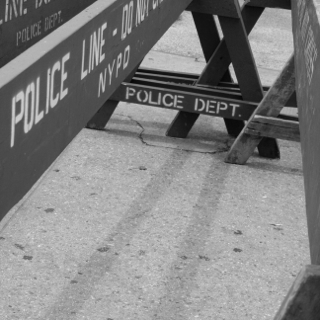
Black and white photograph of New York Police Department barriers taken by Alexandra Bogdanovic
NYPD barriers. Photo by Alexandra Bogdanovic

Of course I suppose one could also argue that by definition an explosion also goes “boom.” However an explosion can be triggered by almost anything. A gas main leak, faulty wiring or even a bomb.

As a former police reporter, I understand why the media initially referred to the incident as an explosion and hesitated to call it something else. I also understand why the media was legally obligated to use words such as “alleged” and “apparent” in the immediate aftermath of the incident.

But I digress. Once all the talk about the use of the word “bomb” got old, the media-fueled speculation turned to whether or not the bombings in Chelsea and Seaside Park, New Jersey, were terrorist acts, whether they were linked, who was responsible and so forth.

Meanwhile, local, state and federal law enforcement officials — who are routinely castigated by the mainstream media — were doing their jobs. A comprehensive investigation, including analysis of evidence found within a few blocks of the Chelsea bomb blast — resulted in the arrest of a New Jersey man on Monday morning.

Ahmad Khan Rahami, 28, the suspect in the bombings, is now facing multiple charges stemming from the gun battle that transpired before police took him into custody.

Score one for the good guys…

Scams, schemes, lies and a lawsuit of epic proportions

This vintage typwriter is our featured image.

At this point I’m not sure who I’ll sue. But I’m going to sue someone. I may even sue a whole bunch of people. And if I have my way, it will be a lawsuit of epic proportions.

But then again, I’m getting a bit ahead of myself. So let me start from the beginning.

Alexandra Bogdanovic
Founder/owner of In Brief Legal Writing Services, Alexandra Bogdanovic. Photo by N. Bogdanovic

To start with, I don’t want to be sued myself. So I can’t name the parties involved in this case. Let’s just call them Company X, Company Y and Company Z.

As I may have mentioned in a prior post, we enlisted the services of Company X in connection with our kitchen renovations earlier this summer. Because Company X is an international conglomeration with a very good reputation, we were confident the project would be completed promptly, on budget and to our satisfaction.

Little did we know…

At any rate, Company X referred us to Company Y, which we paid for general contracting services. We also paid sub-contractors to do the rough plumbing and electrical work, which all went according to plan. We were totally happy… until we phoned the Town Hall to see when the inspections for the rough plumbing and electrical had been scheduled — and found out they weren’t.

So we reached out to Company Y to see what was going on. Phone calls went unanswered. E-mails weren’t returned. A dumpster partially filled with construction debris sat in our driveway.

This went on for weeks.

Finally, we heard from one of our sub-contractors, who called for an update. Without going into too many details, he told us that there was some huge kerfuffle with Company Y — and that we should go ahead and schedule the inspections for the completed work ourselves. So we did.

The inspections went smoothly, but we still couldn’t get a hold of anyone from Company Y. So we got in touch with Company X and they referred us to Company Z. Company Z gave us detailed information about Company Y, and suggested we take legal action against them. Company Z also promised to “make things right” and help us get our project back on schedule.

A week or so after our initial conversation with someone from Company Z, another representative came to meet us in person and assess the status of our project. Based on that conversation, we thought everything would be okay. That was a month ago.

Fast forward to today, when we finally called our attorney to schedule a time to talk about this and then called Company Y to let them know what we’d done. Much to our surprise, someone from Company Y called us back — and told us everything we’d heard from Company Z is a pack of lies.

So we’ll meet with the representative from Company Y next week.

In the meantime, the project that started in June and was supposed to take six to eight weeks is still on hold.

And it’s almost October…

Life lessons: what to do during a traffic stop

This vintage typwriter is our featured image.

Every law-abiding citizen knows that feeling.

It’s the one you get when you hear the siren, glance into the rear view mirror and see the cop car with the flashing lights. It’s the heart pounding, stomach clenching sensation that threatens to overwhelm you when you realize you’re about to get pulled over.

Black and white photograph of New York Police Department barriers taken by Alexandra Bogdanovic
NYPD barriers. Photo by Alexandra Bogdanovic

Perhaps you didn’t realize you were speeding. Maybe you didn’t mean to roll through the stop sign. You know you meant to signal before changing lanes. But by the time the officer’s about to stop you, it’s a moot point.

The only question is what to do next.

In Illinois,  a new law ensures that every new motorist knows exactly what to do. Under the law, driver’s education classes throughout the state will include a section on traffic stop “etiquette.”

State Senator Julie Morrison is the Illinois lawmaker who co-sponsored the bill inked by the governor in August.

“Being pulled over by an officer is really stressful,” Morrison told the Chicago Tribune.  “I think it’s really important, especially in this time that we’re in, that kids and new drivers learn what is expected when they are stopped by an officer, how to respond correctly, to be respectful, and hopefully that will make the encounter as least problematic as possible. I’m hoping it protects both the officer and the driver from things escalating.”

Personally I think this is a great idea. But I would take things one step further. In addition to teaching new drivers what to do during a traffic stop, I think it is even more important to teach them why it is important to do it. In this day and age, it is crucial to help civilians see things from the police officer’s perspective.

It sounds like a cliché, but it is true. For a police officer, there is no such thing as a routine traffic stop. The second the officer steps out of his or her cruiser, he or she is incredibly vulnerable. The risks of being shot, dragged under the car if the motorist decides to flee, or struck by a passing vehicle are real.

Just last month, a law enforcement officer in New Mexico was shot and killed during a traffic stop. Another officer was shot during a traffic stop in Indiana in July. The list goes on.

In another incident in upstate New York this summer, a police officer was reportedly  “pulled alongside the vehicle for almost 40 yards” after making a traffic stop. That’s almost half the length of a football field.

Luckily, the officer was not hurt. The motorist, who was stopped because he was allegedly driving without his headlights on after dark, was charged with with several misdemeanors and traffic violations.

FBI statistics released this May show that 41 law enforcement officers were “feloniously killed in the line of duty in 2015.” Of those, six officers were “conducting traffic pursuits/stops.”

As far as I am concerned, that’s six too many.

Here’s how to make America great again

This vintage typwriter is our featured image.

As a reporter working in the New York City suburbs 15 years ago, I spent months covering the aftermath of the Terrorist Attacks on the World Trade Center. In the ensuing years, I covered the somber ceremonies held on the anniversary of that horrific day.

Those ceremonies are held to remind us what we lost that day. They are held as a reminder of what we stand to lose if our vigilance wanes. Yet they are also held as a reminder of what we stand to gain.

Black and white photograph of Freedom Tower. Photo by Alexandra Bogdanovic
Freedom Tower. Photo by Alexandra Bogdanovic

You see, if we really want to “make America great again,” we cannot forget the most important lessons we learned on September 11, 2001:

  • Take nothing for granted.
  • Thank the people who keep us safe.
  • Tell the people in your life that you love them.
  • Take time to enjoy the “little things” in life; they are the most precious.
  • Make the most of every opportunity presented to you.
  • Know that you are stronger than you think, and that you are capable of more than you can possibly imagine.
  • Never underestimate the resiliency of the human spirit in general and your own in particular.
  • Never underestimate the human capacity for love.
  • Exercise compassion.
  • Know you are blessed and help those who are less fortunate.
  • Do not fear adversity; it will bring out the best in you.
  • Never surrender when confronted by hate.
  • Lead by example.