On Pet Parents Fur Babies And The Joys Of Cleaning Cat Puke

This vintage typwriter is our featured image.

Just for the record, Eli is not my “son.” He is not my “fur baby,” and I am not his “mother.” No, Virginia, I am not a “pet parent.”

That is not to say I don’t love him. Of course I do. That I love him enough to take a bullet for him is well documented in this forum. That I would also beat the living hell out of anyone who even thought about harming one fur on his incredibly adorable little head should also go without saying.
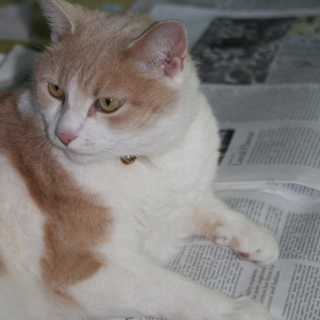
Eli, the In Brief Legal Writing Services mascot.
In Brief Legal Writing Services mascot Eli catching up on the latest news. Photo by Alexandra Bogdanovic

That’s because Eli is a cat. Sure, he is my constant companion, my best friend and my therapist, all wrapped up into one really cute bundle of fur. And yes, he is definitely part of the family. As such, he counts on me and my mother (his people) to provide food, water, a clean litter box, medical care (although he hates the vet), shelter and protection, among other things.

I can’t speak for my mother, but personally I am happy to oblige.

The joys of cleaning up cat puke

Sometimes. No. Make that most of the time. To be brutally honest, there is one aspect of being Eli’s No. 1 person that I really don’t enjoy. I mean, I know he needs one, but I really don’t appreciate that he appointed me sanitation chief. In this capacity, I am not only responsible for cleaning out and changing the litter in his boxes, but I am also solely responsible for cleaning up after him whenever he pukes.

This usually happens when he’s been out on the deck, bingeing on the grass in the containers we leave out for him. And since we have a lot of hardwood floors in our house, there are times when the clean up is relatively easy. And then there are times — like Monday morning — when, for some strange reason, he decides not to puke on a hard surface.

On Monday morning, I came up to my loft/home office to find that my dear, sweet, lovable, adorable cat, whom I love more than life, had puked all over one end of an extremely expensive futon. Needless to say, I was not happy about it.

At least kids learn to clean up after themselves

After spending at least half an hour gathering supplies, cleaning and scrubbing, I finally got rid of the mess. And I found myself thinking that maybe — just maybe — there are some similarities between taking care of a cat and taking care of a child.

“I challenge anyone to tell me that taking care of a cat isn’t like taking care of a little kid,” I told my mother. “I seem to spend a lot of time cleaning up poop and vomit.”

“Yes, she said. But at least children evolve. Animals stay fairly constant.”

She’s got a point. I mean, Eli is brilliant. But unless he suddenly, miraculously sprouts opposable thumbs, learns to walk on his hind legs and gains even more self-awareness, he won’t be cleaning up after himself anytime soon.

But that’s OK. I love him anyway.

End Dogfighting In Connecticut Now

This vintage typwriter is our featured image.

Anyone who knows me at all knows I have a temper. Anyone who knows me at all also knows that I have absolutely, positively, no tolerance whatsoever for criminal activity targeting children, the elderly, or animals.

So imagine how I felt when I read a January 21 article on ctpost.com detailing the prevalence of dogfighting in Connecticut. Let’s just say I wasn’t very happy. In fact, it made my blood boil.

As far as I’m concerned, there is no place for this vicious, cruel, and barbaric activity at all — much less in the 21st century. The time to end it is now.

The harsh reality of dogfighting in Connecticut

Jessica Rubin, a state animal advocate and UConn law professor quoted in the article,  has researched dogfighting charges in Connecticut. While doing so, she  found that 110 people were charged with “dogfighting related offenses” here between 2007 and 2017.

Among other things, Rubin told ctppost.com that  there were no charges in some years and multiple charges in others. She also noted that the activity seems to be most prevalent in areas with the greatest population densities.

“The issues include extreme cruelty, criminal behavior, gambling, giving dogs unauthorized medicines and violence,” Rubin said. “Children are exposed to the offenses and it compounds the dogfighting.”

One of the many dogs available for adoption at a local shelter a few years ago.

Meanwhile, dogs that are lucky enough to survive and escape their ordeal, “usually end up in shelters around the state in hopes that law-abiding dog lovers will adopt them and end their nightmare with care and love.”

And then there are those who aren’t so fortunate.

“When they’re no longer profitable to dog fighters — or if they don’t show enough ‘fighting spirit’— they’re typically killed in atrocious ways, including by being used as ‘bait dogs,’ drowned, electrocuted, beaten or hanged,” Martin Mersereau, vice president of People for the Ethical Treatment of Animals, told ctpost.com. “There are no winners in this sickening blood sport, only abject criminals who represent the very worst of human nature,” Mersereau added.

Freedom’s story

Two years ago, someone found a badly wounded dog — later named Freedom by rescuers —  “wandering on Brushy Plains Road in Branford covered in scars and injuries.”

His story is also chronicled in the ctpost.com article.

According to the account, officials at the Branford Animal Shelter concluded the wounds were the result of dogfighting. They also determined that  Freedom whose teeth were filed down so he couldn’t inflict damage on other dogs,  was probably used as a “bait” dog. As such, it would have been his “job” to  trigger attacks by combatants.

“Based on the wounds, this dog definitely took the brunt of whatever has been going on,” shelter director Laura Burban then told the New Haven Register. “What we can see is that it looks like his feet were tied together and he was used as the bait dog for other dogs to attack him,” she said.

Freedom is not alone…

Currently, dogfighting is not only illegal throughout the United States, but it is also a felony  in all 50 states and the District of Columbia.

Even so, Freedom’s story is not unique.

According to American Society for the Prevention of Cruelty to Animals (ASPCA) statistics cited in the ctpost.com story, there are tens of thousands of dog fight organizers across the country that force hundreds of thousands of dogs to brutally train and fight for sport.

Over the last eight years, the organization says, it has assisted with 200 dogfighting cases in 24 states and has helped rescue and investigate nearly 5,000 victims of dogfighting.

Last year alone, the ASPCA says it directly rescued more than 400 animals from dogfighting rings across 12 states.

“Through our extensive work with law enforcement agencies nationwide, we know that organized dogfighting is taking place in every type of community across the country, causing unimaginable pain and suffering for the animals involved,” Stacy Wolf, senior vice president of ASPCA’s Anti-Cruelty Group told ctpost.com.

And that is unacceptable.

The Efficacy Of U.S. Pet Protection Laws

This vintage typwriter is our featured image.

As most of you know, I am passionate about two aspects of the law. One is animal law and the other is criminal law. So it shouldn’t come as a surprise that I’ve done a lot of posts on both topics in this forum.

Alexandra Bogdanovic
Founder/owner of In Brief Legal Writing Services, Alexandra Bogdanovic. Photo by N. Bogdanovic

Specifically, I have written about the steps that state lawmakers across the United States have taken to protect companion animals and punish the people who abuse, hoard and neglect them. I must admit, there have been a lot of positive developments since I created this website and started posting here in 2015.

But of course, that’s just my opinion. Let’s see what the Animal Legal Defense Fund (ALDF) has to say about the implementation and efficacy of animal protection laws across the United States as of 2018.

How the states were judged

Last month, the ALDF released its annual Animal Protection Laws Rankings Report , which includes “the best and worst US states and territories when it comes to animal protection.”

Along with the results, American Veterinarian.com published an article explaining how the states were judged. As reported on that website, the ALDF’s criteria included “19 aspects of animal protection, including 5 new categories: the definition of ‘animal,’ courtroom animal advocate programs, laws that allow individuals to rescue dogs from hot parked cars, civil nuisances abatement, and breed-specific legislation.”

Based on its assessment, the ALDF determined that the U.S. as a whole is making progress — but there is still room for improvement.

“Every year, we see more states enacting broader legal protections for animals,” ALDF’s Executive Director Stephen Wells told American Veterinarian.com. “We have a long way to go until animals are fully protected under the legal system as they deserve, especially in the lowest-ranked states.…But as this year’s Ranking Report shows, step by step we as a nation are improving how the law treats animals.”

How the states ranked

Starting with the good news, the top states were:

  1. Illinois
  2. Oregon
  3. Maine
  4. Colorado
  5. Massachusetts

“With the creation of laws banning the sexual assault of animals, Louisiana (7) and Massachusetts (5) were among the most improved states in 2018. Besides Massachusetts, each of the 5 best states has remained consistent with the previous years,” the American Veterinarian.com article notes.

On the other hand, these were the states that ranked near or at the bottom of the list:

46. New Mexico
47. Wyoming
48. Iowa
49. Mississippi
50. Kentucky

Of particular concern is the lack of progress in Kentucky, which was ranked last for the second consecutive year. Specifically, the ALDF’s 2018 report found that, despite its allowance for increased penalties for repeat abusers and/or animal hoarders, Kentucky has not made any significant changes in the following areas:

  • Adequate definitions or standards of basic care
  • Restriction of animal ownership after a conviction
  • Mandatory forfeiture of animals upon conviction

One of the most obvious deficiencies in Kentucky’s animal safety regulations is its lack in felony penalties for animal cruelty (including neglect, sexual assault, or abandonment). Furthermore, Kentucky is still the only state that precludes veterinarians from reporting suspected animal cruelty, abuse, or fighting.

To make matters worse, there are no statutory provisions for post-conviction restitution or forfeiture, except in cases involving horses. In other words, owners who have harmed their pet don’t have to surrender it — so they really aren’t being held fully accountable for their actions.

Why do we need animal protection laws?

Of course, there are plenty of people who don’t like animals — and to them all of this is pointless. In most cases, they argue that people are more important, and lawmakers should concentrate on addressing “more important issues” like healthcare, gun violence and climate change.

Personally, I have a different perspective — one gained during 21 years covering cops and courts in three states. You see, I have written about my share of violent crime. And I know for a fact that the types of people who commit these acts have no qualms about harming animals to begin with.

So, yes animal protection laws do matter. In fact they matter a lot.

Whatever You Do, Do Not Get A Wild Animal As A Pet

This vintage typwriter is our featured image.

“Here’s the thing about sloths. They’re kind of anti-social.”

Not to be obnoxious or anything, but sometimes I really, really, really wonder if there is any end to human stupidity. Seriously.

Alexandra Bogdanovic
Founder/owner of In Brief Legal Writing Services, Alexandra Bogdanovic. Photo by N. Bogdanovic

I mean for one thing, what would make someone think that a wild animal would make a good pet? I honestly thought Sterling North addressed that issue when he wrote Rascal.

If you haven’t read it, please do. It’s about a raccoon, and it’s a classic. And once you’ve finished I am sure you’ll agree that — as cute as Rascal was — he wasn’t the best pet.

Even if you disagree, here are a few things to consider.

Red pandas, and sloths, and sugar gliders, oh no!

According to a recent National Geographic article, you can blame the Internet and social media for the surging popularity of wild animals as pets.

In some cases, owners post videos of wild animals in their care, coddling them as if they were domesticated,” author Annie Roth notes.

Some of the wild animals now in demand include red pandas, sloths and sugar gliders, among others. But, the experts stress, none of these wild animals make good pets.

Red pandas are (not) so cute

Yes, the look adorable, with their sumptuous, rust-colored coats large tufted ears, facial markings, and bushy ringed tails. But appearances are deceiving.

“You don’t want wild animals as pets, and you particularly would not want to have a red panda,” Thane Maynard, director of the Cincinnati Zoo and Botanical Garden told National Geographic. “They have cat-like claws that would tear up your furniture and maybe even you.”

Aside from that, they stink. Literally. As a defense mechanism, they can release a foul-smelling scent from their anal glands. And, Maynard said, “they mark their territory like many mammals do, so it would really be a smelly mess at your house.”

Just as importantly — if not more so — red pandas “are endangered throughout their range and their commercial trade is illegal under the Convention on International Trade in Endangered Species (CITES).”

Solitary sloths

Here’s the thing about sloths. They’re kind of anti-social. The only times they really show any inclination for interacting with each other is when they mate or have babies to raise. And when it comes to interacting with humans… well, let’s just say it’s not a very good idea. In fact, it’s not a good idea at all.

“Sloths are fragile animals,” Cassandra Koenen, global head of exotic pets at the animal welfare nonprofit World Animal Protection, told National Geographic. “Being touched [by humans] on a regular basis can cause them severe psychological damage.”

Finally, their reputation for being “chill” isn’t entirely accurate. Sloths are well equipped with sharp claws and teeth — and they won’t hesitate to use them when they feel upset or threatened.

Not-so-sweet sugar gliders

According to National Geographic, sugar gliders are popular in the exotic pet trade for few reasons. First, they’re easy to find because they’ve been bred in captivity. Secondly, ownership of sugar gliders is legal in the United Kingdom and in some parts of the U.S. and Australia.

In fact, sugar gliders are native to Australia and nearby islands. Unlike sloths, they are highly social and live in large family groups. They live up to their name by using a web of skin that stretches between front and forelimbs to glide from one tree to another. But they also have sharp claws, which make them well-suited for climbing. Within this context, it is also important to note that although a sugar glider’s claws aren’t that long, they can inflict damage on people.

Some other exotics that don’t make good pets

Here’s a short list of some other wild animals included in the National Geographic article that aren’t good pets:

  • The fennec fox
  • Slow lorises
  • Capybara
  • Lemurs
  • Tigers
  • Prairie dogs
  • Asian small-clawed otters

Now here’s the bottom line. Getting a wild animal as a pet is never a good idea. If you love exotics and you must indulge your passion for them, please consider volunteering at a sanctuary or zoo that cares for them. But please don’t indulge your ego. It’s not right and it’s not fair — especially to the animals.


Federal Lawmakers Seek Animal Cruelty Ban

This vintage typwriter is our featured image.

“a bipartisan pair of congressional lawmakers from Florida is trying to close a gaping loophole in federal law.”

If there’s one thing I won’t discuss in this forum, it’s politics. For one thing, I hate politics. For another, it’s too risky to discuss politics in the context of work — and since this is my business website — well, the less said, the better.

Having said that, of course there are exceptions to every rule. And the only exception I’ll make to the one I just mentioned is that I’ll continue to write about local, state and federal legislation when our duly elected representatives actually do something constructive. Believe it or not, that actually happens every once in a while.

A case in point

Take a recent New York Times article about federal efforts to crack down on animal abusers by creating a new bill called the Preventing Animal Cruelty and Torture Act. In it, the author, Niraj Chokshi explains that a “a bipartisan pair of congressional lawmakers from Florida is trying to close a gaping loophole in federal law.”

As it now stands, anyone who documents (records) themselves abusing an animal can be charged under federal law. However, they will not face federal charges for the actual commission of the abuse.

If the new legislation passes, however, offenders convicted of “intentionally crushing, burning, drowning, suffocating, impaling or otherwise seriously harming an animal” would face federal felony charges, fines and up to seven years in prison. Within this context it is important to note that he bill “includes exceptions for, among other things, hunting, killing animals for food, scientific research, euthanizing animals, husbandry and veterinary care.”

The back story

In addition to providing a detailed explanation of the proposed legislation, Chokshi also explains why it was created.

As Chokshi tells it, the Humane Society of the United States became aware of and started looking into “crush videos,” approximately 20 years ago. In these videos, “animals are tortured or killed, often under a woman’s foot, in the service of a sexual fetish.” Objects or insects are sometimes used instead of animals in some cases, Chokshi adds.

Eli, the In Brief Legal Writing Services mascot.
In Brief Legal Writing Services mascot Eli catching up on the latest news. Photo by Alexandra Bogdanovic

At any rate, the Humane Society contacted authorities after buying this type of video from someone in California, only to find that there were no adequate remedies under existing laws. Meanwhile, the documentation of animal abuse was increasing because of the Internet.

In search of answers, the then-county district attorney approached former Representative Elton Gallegly. He  in turn introduced a bill banning the production or sale of such videos. With little opposition, it was signed into law in late 1999.

“In 2010, however, the Supreme Court ruled that law unconstitutional on First Amendment grounds,” Chokshi reports.

In response, Gallegly created a new version of the bill, the Animal Crush Video Prohibition Act, which became the law that the recently introduced bipartisan legislation is designed to supplement.

Is this really necessary?

Currently, there are felony provisions in animal cruelty laws in all 50 states. So while the creation of a federal animal cruelty law may seem unnecessary, proponents say it’s an important step in the right direction.

First, as Sara Amundson, the president of the Humane Society Legislative Fund, the legislative and political arm of the Humane Society told the Times, it would address cases in which abused animals are taken across state lines. Secondly, it would help in cases where there are limited resources.

“It’s oftentimes the scenario where states don’t have the resources or they don’t have the knowledge in a situation to be able to carry these animal cruelty cases to prosecution,” Amundson said.

Finally, proponents hope it will serve as an effective deterrent because it is a known fact that animal abuse can often be a precursor to the commission of violent acts against people.

What do you think? Is this a good idea? Is it necessary? Leave your thoughts in the comments below.


Well This Is Certainly Long Overdue

This vintage typwriter is our featured image.

Hello, everyone! Yes, it is me. Really. I am alive.

It’s hard to believe it’s already the end of January and I haven’t done a post since last year. In fact, you haven’t heard from me since last April!

The good news is, everything is OK. As a matter of fact, it has been great. Business has been booming here at In Brief Legal Writing Services… and that means I’ve been busy. Very busy. And that keeps me out of trouble… allegedly.

The bad news is that I have been so busy doing legal content writing (and other assignments) for my clients that I haven’t had time to keep up with my own website. I know, I know. It’s not good at all.

New year, new personal and professional goals

Alexandra Bogdanovic
Founder/owner of In Brief Legal Writing Services, Alexandra Bogdanovic. Photo by N. Bogdanovic

But, it’s a new year, so of course I’ve set new goals — for myself and for my business. That means a lot of exciting things will be happening here at In Brief Legal Writing Services. Hopefully! No. Make that, definitely! In no specific order, here’s what I’ve got planned for 2019 and beyond:

  1. Greater engagement with clients and prospective clients;
  2. New and better website (upgrades);
  3. Regular blog posts and more interaction with you guys (I promise);
  4. Growth, growth and more growth;
  5. Having plenty of fun along the way.

In terms of content, I still plan on writing about my passions — namely animal and criminal law. In other words, I will continue to keep you apprised of all of the latest developments that may be of interest to all of the “pet parents” out there. As things stand right now, I plan on doing at least a couple of posts per week, and I expect you guys to hold me accountable if I don’t.

Having said all of that, I’m also counting on you guys to let me know what you think about these posts. If you like them, please let me know. If you don’t like them, that’s okay, too. Be honest about what you want to see, what you don’t want to see, and why. I am open to suggestions.

New year, same mascot!

Eli the cat.
In Brief Legal Writing Services mascot, Eli the cat.

One thing that hasn’t changed — and I’m hoping that it won’t change anytime soon — is that my best buddy, Eli the cat, is still the mascot here at In Brief Legal Writing Services. I’m happy to say he is still his happy, relatively healthy and feisty self. Of course, he is also a year older, having turned 13 on January 1 (his official unofficial birthday), but he is also as handsome as ever, so I’m sure I’ll be using lots of cute pictures with these posts.

And on that note, I’d better run. Until next time…


On Pit Bull ‘Attacks,’ Naughty Cats and Other Topics

This vintage typwriter is our featured image.

The longer I live, the more I hate people.

Alexandra Bogdanovic
Founder/owner of In Brief Legal Writing Services, Alexandra Bogdanovic. Photo by N. Bogdanovic

OK, that’s not entirely accurate. Let’s just say the longer I live, the less tolerance I have for human stupidity. And considering I that I never had much tolerance for that in the first place, that’s saying a lot.

So you’re probably wondering what triggered this little rant. Well, a few things to be honest. The first is a news story about a pit bull that recently “attacked” someone on a New York City subway. I put the word “attacked” in quotation marks because I wasn’t there so I don’t know exactly what happened. From what I can gather from the news accounts (which I would never rely upon to draw a conclusion) the owner claims the dog was provoked. Others dispute that. Authorities say the dog is a known menace.

Based on limited information, all I know is this: Something triggered that animal. Perhaps (and I stress perhaps) the person who got bitten did deliberately or inadvertently provoke the dog. Or perhaps the dog was simply stressed by being in a crowded, claustrophobic, noisy environment. Perhaps it was scared, or overstimulated by being in that subway car. I mean, let’s be honest. Riding the New York City subway is stressful for a human. Imagine how overwhelming it must be for any animal.

No, I am not making excuses. Frankly, I think the whole entire situation is inexcusable. I don’t care if it really is a “service animal” (which is another topic for another blog). That dog should never have been put in that situation. Ever. Period. End. Of. Story.

Allowing that to happen  was clearly a recipe for disaster. It was irresponsible. And it was sad. It was sad because that owner should have known better — and if he didn’t he never should have been allowed to have the dog in the first place. It was sad because human stupidity may very well cost that dog its life.

Bad cat, or stupid people?

But that’s not all that’s bugging me. I’m also annoyed about a recent Facebook conversation with one of my cousins. To sum it up, she made a post about the action she planned to take against a neighbor’s cat that had used her garden as its personal latrine. I believe she mentioned the use of a  “super-soaker”  at least once.

Don’t get me wrong. I understand why she’s upset — especially since she has young children and there is clearly a double-standard regarding dogs and cats in her community. However, the point I made when I joined the discussion is that the cat is just being a cat. I seriously doubt that it has any malicious intent. That being stated, I as I also told my cousin, the owners are being irresponsible idiots by letting the cat run around unsupervised. In other words, don’t blame the animal. Blame the people.

As pet owners or pet “parents,” we are responsible for our animals. As long as they are in our lives, we are responsible for all aspects their health and well-being. We’re responsible for keeping them out of trouble… and like it or not, we’re responsible for their behavior. After all, we’re the ones with the consciences, and ability to reason. Allegedly.

I would take a bullet for my cat — and I am not alone

This vintage typwriter is our featured image.

Hi everyone! Yes it is really me. And yes, I know it has been ages since I’ve done a post. In fact I think it’s been about six months.

The reason I’ve been away so long is because business is booming. I’ve been so busy blogging (and doing other assignments) for clients that I haven’t had time to concentrate on my own blog. I know, I know. It’s no excuse… but it’s true.

At any rate, the good news is I’ve been hoarding blog fodder, so finding a topic for today’s post was actually a cinch. My inspiration came from this article about the bond that people have with their pets, and the lengths they’ll go to for their furry friends. It turns out that some people will literally risk their own lives in order to save their dogs and cats. Some have even died while doing so.

The article gives several recent examples of people who perished while trying to save their pets from devastating injury or certain death. It also provides a lengthy explanation about why we are so attached to our canine and feline companions.

Nevertheless, to people who don’t have pets or don’t like animals, it is inexplicable. To them, a person’s life is way more valuable than a dog’s or cat’s. To them, dogs and cats and other pets, are well — “just animals.”

Eli, the In Brief Legal Writing Services mascot.
In Brief Legal Writing Services mascot Eli catching up on the latest news. Photo by Alexandra Bogdanovic

To me, that is sad. In fact, I think it’s very sad — because frankly I would take a bullet for my cat. I would throw myself in front of a car for him. I’d fend off a coyote or a dog for him. I’d run back into my house if it were on fire, and I’d never leave him to fend for himself in a storm. And have no doubt about it —  I would beat the hell out of anyone who even thought about hurting him.

Yes, I love him. I love him fiercely — as fiercely as I have ever loved anyone. Perhaps it’s because he was abused before I got him. Perhaps it’s because, as long as he’s with me, he counts on me for everything — for food, for shelter, for medical care, for companionship and for protection. Perhaps it’s because of what he gives me in return — companionship, friendship, love, comfort. Perhaps it’s because I can’t imagine a day at work without him curled up nearby or an evening at home without him curled up on my lap. Perhaps it’s because he knows how to make me laugh, or how to cheer me up. Perhaps it’s because he’s quick to forgive me when I’m angry. Or perhaps it’s because he’s so damned smart… and so damned cute.

At the end of the day it doesn’t really matter why I feel the way I do. All you need to know is that I’ll do whatever it takes to protect my cat. And I am not alone.

California’s anti-puppy mill legislation goes to governor

This vintage typwriter is our featured image.

It all boils down to supply and demand. By passing A.B. 485, California lawmakers have demanded that puppy mills and similar operations no longer supply pet shops with companion animals.

Specifically the  legislation currently awaiting Gov. Gerry Brown’s signature takes aim at the unscrupulous breeders by ensuring that the pet stores can only acquire dogs, cats and rabbits from animal rescue groups, shelters and similar organizations.

A dog available for adoption at Adopt-a-Dog. Photo by Alexandra Bogdanovic

As reported by Newsweek, “The purpose of the bill is to encourage pet stores to move into the rescue business and to reduce the number of animals killed at shelters due to lack of space.”

According to the ASPCA:

  • Approximately 6.5 million companion animals enter U.S. animal shelters nationwide every year. Of those, approximately 3.3 million are dogs and 3.2 million are cats.
  • Each year, approximately 1.5 million shelter animals are euthanized (670,000 dogs and 860,000 cats).
  • Approximately 3.2 million shelter animals are adopted each year (1.6 million dogs and 1.6 million cats).

Data provided by the American Pet Products Association (APPA) indicates that most people who have cats got them from shelters, friends or family, while most people who have dogs got them from breeders or shelters.

Many pet stores are already providing another option for people seeking companion animals. As Newsweek reported, “Some pet stores, including PetCo and Petfood Express, have already moved away from selling cats, dogs, and rabbits bred for profit and instead donate space to rescues and host adoption events.” According to its website, PetSmart is also on board.

“At PetSmart, we never sell dogs or cats. Together with PetSmart Charities, we help save over 1,300 pets every day through adoption,” the company says. In all, PetSmart claims it has saved more than 7.6 million animals through its adoption program.

Of course, there are always two sides to every story. And apparently, the AKC is not a fan of A.B. 485.

“AB 485’s proponents misleadingly claim that the bill will promote the purchasing of purebred dogs from local breeders. That claim, however, fails to shed light on the fact that many local anti-breeding laws and breeding restrictions, also supported by these groups, have already eliminated hobby breeding and now make obtaining a specific type of dog bred by a local breeder increasingly difficult,” the AKC says.

However, A.B. 485 does not ban Californians from getting purebred pets if they so choose. It simply bans them from doing so through pet stores. If the bill becomes law, they would still be able to get companion animals by contacting private breeders directly.

What do you think? Is this a good idea? Or will it do more harm than good? Let me know by leaving your thoughts in the comments section below.

As seen at the 30th annual Puttin’ on the Dog festival

This vintage typwriter is our featured image.

As the old saying goes, sometimes a picture is worth 1,000 words. So without further ado, here are some of my favorite photos from the 30th annual Puttin’ on the Dog festival. Enjoy!

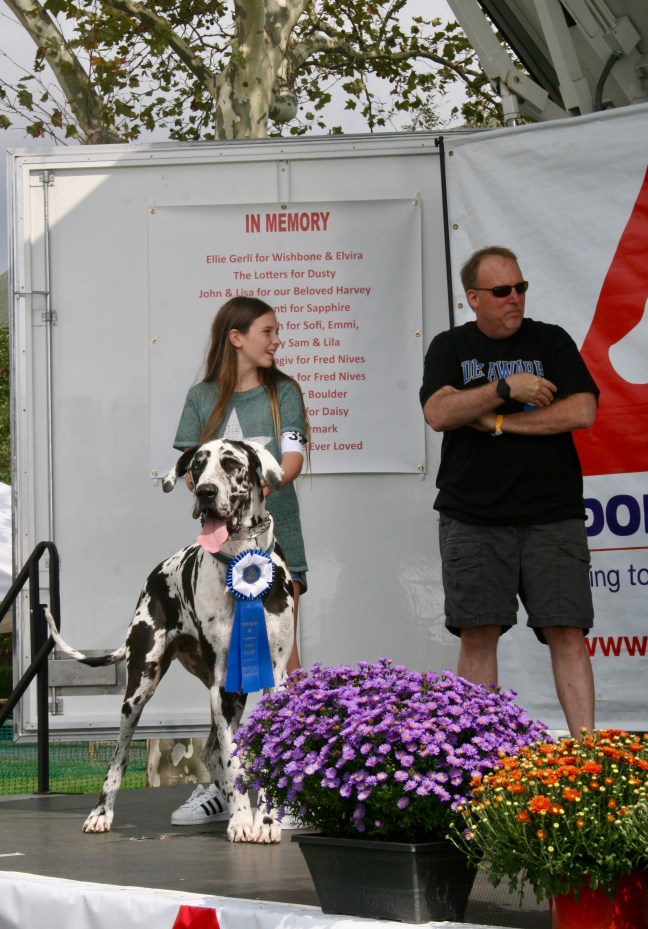
Great Dane wins Best Lap Dog contest at Puttin' on the Dog.
Best Lap Dog winner. Puttin’ on the Dog. Photo by Alexandra Bogdanovic
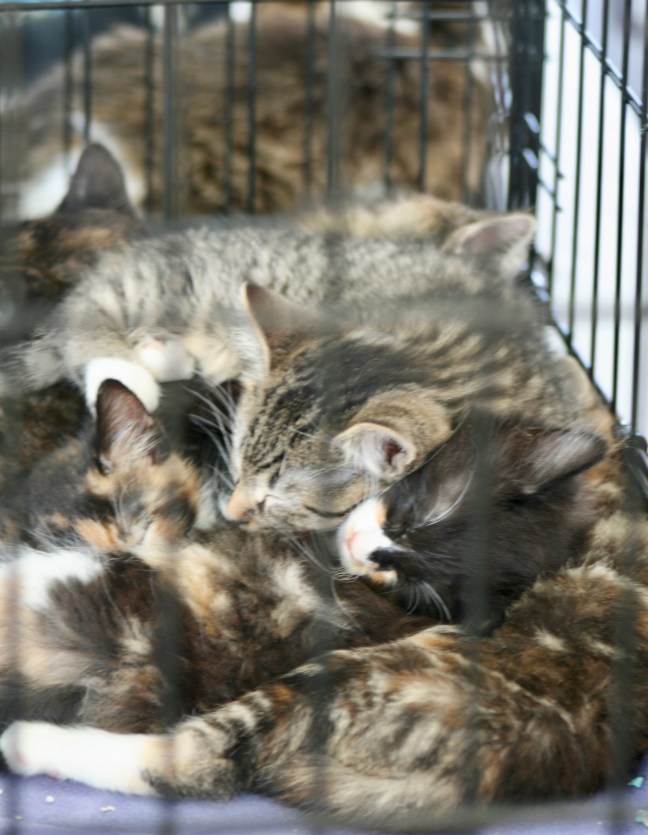
Furr-911 rescues Hurricane Harvey kittens.
Hurricane Harvey kittens make an appearance at Puttin’ on the Dog festival, courtesy of FURR-911. Photo by Alexandra Bogdanovic
Owner and dog get a helping hand on the agility course.
Balancing act. Action in the agility ring at Puttin’ on the Dog. Photo by Alexandra Bogdanovic
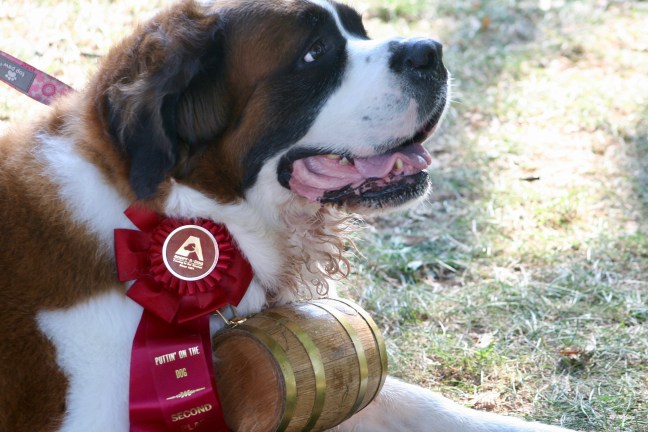
Runner-up in one of the contests at the 30th annual Puttin' on the Dog festival.
Second place? What do you mean I got second place? The indignity of it all. Puttin’ on the Dog, Greenwich CT. Photo by Alexandra Bogdanovic
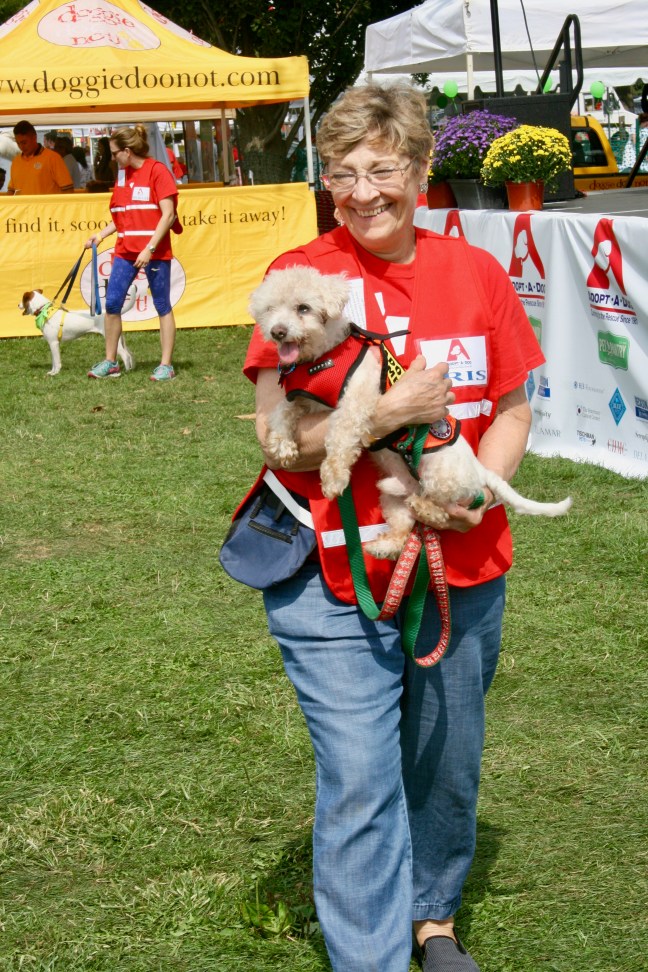
Adopt-a-Dog volunteer with her charge at Puttin' on the Dog.
Take me home! A senior dog steals the show in the first parade at the Puttin’ on the Dog festival. Photo by Alexandra Bogdanovic


Nap time! Hurricane Harvey kittens take a break at the 30th annual Puttin’ on the Dog festival. Photo by Alexandra Bogdanovic