Montana May Implement Crackdown On Fake Service Animals

This vintage typwriter is our featured image.

Now it’s Montana’s turn.

According to a recent account, the Treasure State may soon join a growing list of states that have cracked down on the use of fake service animals.

With an 85-15 vote earlier this week, Montana’s House of Representatives endorsed a bill establishing punishments for people who pass their pets off as service animals. As it now stands, HB 439 would make  the misrepresentation of service animals a misdemeanor offense. Anyone convicted would face:

  • A $50 fine for a first offense
  • A fine ranging from $75 to $200 for a second offense
  • A fine ranging from $100 to $1,000 for a third/subsequent offense

HB 439 also stipulates that anyone convicted of the offense may be required to perform community service for an organization that advocates on the behalf of persons with disabilities.

Eli, the In Brief Legal Writing Services mascot.
In Brief Legal Writing Services mascot Eli catching up on the latest news. Photo by Alexandra Bogdanovic

Within this context, it is important to note that these punishments could only be imposed if:

  • the offender had previously received a written warning regarding the misrepresentation of his or her pet as a service animal; and
  • continued to represent the pet as a service animal
  • in order to gain any rights or privileges afforded to a service animal.

Misrepresentation of a service animal

HB 439 defines misrepresentation of a service animal as activity in which someone:

  • equips the animal with a leash, collar, cape, harness, backpack, or sign identifying it as a service animal; or
  • says or provides written material claiming that the animal is a service animal;
  • in order to access certain places with the animal; and
  • it is determined that the animal is not properly trained to perform a service animal’s functions.

Legally, a determination regarding lack of sufficient training necessary for a service animal could be based on: whether or not the dog is housebroken; whether it is under the handler’s control; and the handler’s ability or inability to bring the dog under control.

Additional provisions

If the bill becomes law, establishments that don’t provide access to pets would have to post signs indicating that:

  1. They do allow service animals.
  2.  They are legally allowed to ask the owner if the animal is a service animal required because of a disability and what work or task the animal is trained to perform.

Furthermore, establishments may not be able to make complaints against suspected offenders unless they have posted a public notice indicating that they reserve the right to do so regarding the misrepresentation of service animals.

Finally, animals that are not under their handler’s control or are not housebroken may be asked to leave in accordance with the bill, which is similar to language in the Americans with Disabilities Act.

Pros and cons

People in favor of and opposed to the measure voiced their opinions at a House Judiciary Committee Meeting on March 11.

William Austin, a disabled veteran who has a service dog, spoke first. Because people misrepresent their pets as service animals in order to take them into certain establishments, people who have legitimate need of service dogs are challenged, he said. In large part this is because the “fake” service animals are disruptive and don’t behave well, he added.

But Austin said an even greater concern is the safety of real service dogs and their handlers. Specifically, he shared a story about a “fake” service dog that attacked a real service dog belonging to a friend.

“There needs to be something done to stop folks who deliberately falsify their animals as service animals,” Austin concluded.

When It Comes To U.S. Pet Stats, Consider The Source

This vintage typwriter is our featured image.

Here’s the thing about “facts.” They can be manipulated — and it happens all of the time. An individual or group with a specific agenda either does a study or commissions one that will prove their point or advance their cause. And the sad thing is that most Americans take these “facts” on face value.

Of course there are always exceptions to the rule. Call me a cynic, a skeptic, or just an ex-journalist. But I don’t take anything on face value — even U.S. pet statistics. So I wasn’t all that surprised when I recently came across an interesting article questioning the validity of the data.

When the numbers don’t add up

The Washington Post article compared and contrasted U.S. pet ownership data for 2016 published by the American Pet Products Association (APPA) and the American Veterinary Medical Association (AVMA).

The APPA indicated that 68 percent of U.S. households owned some sort of pet that year, and that dogs (90 million) and cats (94 million) accounted for most of the pets. On the other hand, the AVMA reported only 57 percent of households had pets at the end of that year, and that the “overall pet population” during the time in question included included 77 million dogs and 58 million cats.

So what’s the big deal? Well, if you think about it, a lot of people base business and personal decisions on these statistics. As the Washington Post article notes, information about pet ownership and the types of people have is can potentially influence actions taken by pet companies, veterinarians, veterinary schools, not to mention millions of others.

Consequently, the use of vastly disparate data is bothersome to Andrew Rowan, a former chief executive of the Humane Society International and a longtime scholar of pet demographics. As he told the Post: “You can’t really make public policy decisions in the absence of data.”

There was too much excitement at Puttin' on the Dog for these little kittens!
We’re pooped! Hurricane Harvey kittens at Puttin’ on the Dog, 2017. Photo by Alexandra Bogdanovic

The Post article also suggests that more reliable data is available. Specifically, it cites the Simmons National Consumer Study, which conducts annual household surveys.  For 2018, it found that  53 percent of U.S. households owned pets, including at least 77 million dogs and 54 million cats.

Another source of pet ownership identified in the Post story is U.S. Census Bureau’s American Housing Survey, which asked about pet ownership in 2013 and 2017. According to the Post, it “most recently reported that 49 percent of households included pets.”

How the Internet influences the outcome

In addition to examining the discrepancies in the APPA and AVMA data, the Post story addresses how these organizations came up with these numbers. Apparently the use of “opt-in” online surveys plays a significant part in the outcome — even though some experts have questioned their accuracy and recommended against their use.

Within this context, it is interesting to note that the APPA and AVMA  both relied on traditional mailed surveys until fairly recently, and the results changed significantly once they switched to Internet surveys.

An APPA representative quoted in the Post story confirmed that the organization “believes the switch from mail to web was responsible for the large increase,” and said “researchers sought to combat bias by tracking which types of people completed the survey.”

An AVMA representative also told the Post that its most recent report is “more sophisticated” than prior studies “because it targeted non-pet owners and weighted better for factors like geography and gender.”

An exercise in critical thinking

With all of that being stated, here’s how I evaluate any given set of “facts:”

  1. I consider who is presenting the “facts”
  2. I consider their agenda or objective
  3. I draw my own conclusions

It’s really not that hard. It’s simply an exercise in critical thinking.

Cat Fanatic Proves You Can Fight City Hall

This vintage typwriter is our featured image.

Here’s a question for you. Do you think the government (town, city, county or state) should be allowed to regulate how many pets you have?

Personally I have mixed feelings on the topic. On one hand I think it’s a great way to prevent hoarding — as long as the laws are actually enforced before things get out of hand. I also think it’s a good way to encourage responsible pet ownership — even if it can’t guarantee that people will treat their pets properly.

And then there’s the rebellious part of me. This is the part that says, “Wait just a minute. How dare you tell me how many pets I can have?”

Fighting city hall — and winning

Apparently a Utah man feels the same way. As recently reported in The Salt Lake Tribune, a West Valley City resident has two black cats and wanted to get another one. But when he went to the local animal shelter to get one, he learned that he couldn’t because of a city regulation limiting the number of cats and dogs residents could have to two per household.

Furr-911 rescues Hurricane Harvey kittens.
Hurricane Harvey kittens make an appearance at Puttin’ on the Dog festival, courtesy of FURR-911. Photo by Alexandra Bogdanovic

When he learned the only way to change that was to convince the city to change the rules, he took the challenge seriously. And after six months of lobbying, his persistence finally paid off.

Earlier this month, the City Council unanimously passed an amended ordinance that “would allow for pet owners to apply for a permit to have up to four cats or dogs.” However, the restriction pertaining to the total number of pets is unchanged, meaning that residents still can’t have four cats and four dogs. An exception to the limit for kittens and puppies up to 4-months old is also unchanged.

A matter of personal preference

As it stands, I have had cats since I was 10. But the only time I had more than one was when my ex and I were married. And I’ll be honest. Having two cats in a small apartment was an adventure, especially since my cat was the alpha.

After I got divorced, Heals came home with me. She also moved to Virginia with me, and live there for three years before she died of cancer in 2007. I was still living in Virginia when I got Eli in 2008 and I’ve had him ever since. Sometimes I think about getting another one — but it wouldn’t be fair to him — or to me, for that matter.

Eli the cat.
In Brief Legal Writing Services mascot, Eli the cat.

For one thing, Eli is a “pit bull in a cat costume.” He is loyal, affectionate, and super-smart. But because he was abused before I adopted him, he is very easily triggered and acts accordingly. You’d think that he would mellow out as he gets older, especially since he’s been in a stable, loving environment for so long. As it turns out, that’s wishful thinking. Finding ways to address his redirected aggression is an ongoing process.

Secondly, having a cat is expensive. Or should I say, having this cat is expensive. There’s food, and cat litter, and vet bills. Oh, the vet bills. And because Eli is such a handful, I have to take him to the vet to have his claws clipped every three months. At $23 and change for each trimming, even that adds up.

Not to mention that I’m busy and I travel. So the bottom line for me is that — as much as I love cats — I don’t think I’ll ever have more than one at a time again.

How about you? Do you have pets? How many? How many is “too many?” I’d love to hear your thoughts, so feel free to comment.

New Dating App Caters To Dog People: What’s Not To Love?

This vintage typwriter is our featured image.

From what I’ve heard, dating in the digital world isn’t easy. For one thing, you never know who you’re really talking to online. It could be your soul mate. Or it could be a serial killer. You just never know.

Personally, I’m in no hurry to find out. For one thing, I am happily divorced after a colossal betrayal by the person I believed to be the love of my life (and I met him back in the good old days — before the Internet was even a thing). Secondly, I am way too busy to be bothered. And thirdly, I have a zero-tolerance policy for BS or stupidity of any kind. So you get the picture.

A dating app for dog people

Anyhow, I digress. The point of all of this is that I just came across a really cool article in my weekly quest for blog fodder. As reported by Narcity, a (relatively) new dating app called Dig App is about to launch in Miami.

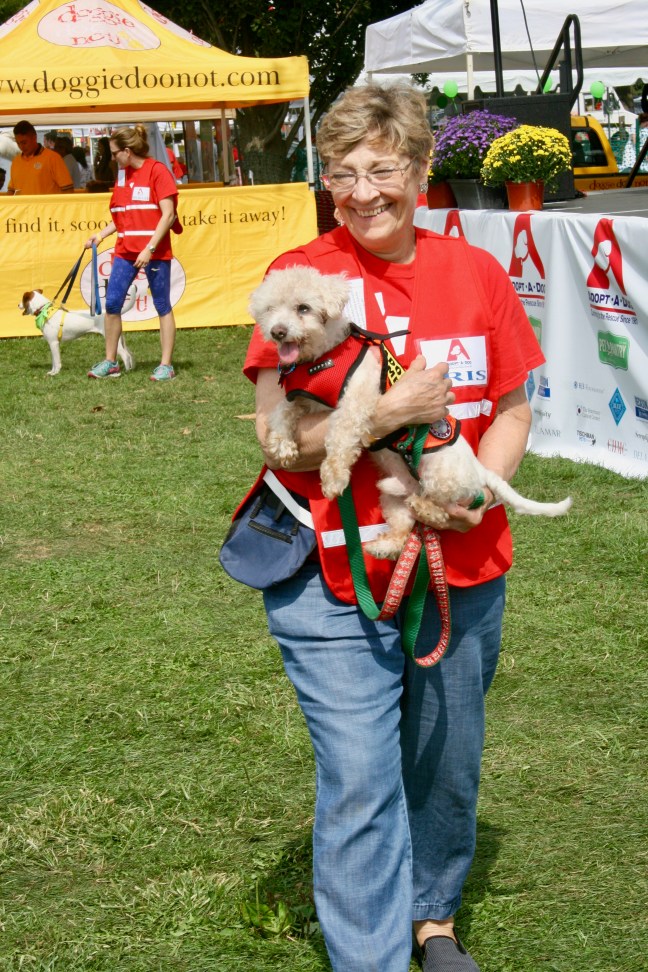
Adopt-a-Dog volunteer with her charge at Puttin' on the Dog.
Take me home! A senior dog steals the show in the first parade at the Puttin’ on the Dog festival. Photo by Alexandra Bogdanovic

So what’s the big deal? How is it different from all of the other dating apps out there? Well, this one specifically caters to dog people. That’s right. If you love dogs, you can use this app to connect with other like-minded singles.  As for the rest… Well, I’ll just skip the predictable puns about puppy love.

Details, details…

Created by a New Orleans-based company, Dig App is also available in New York City and other major markets including San Francisco, Boston, Chicago and Los Angeles.

According to its website, Dig will soon be launching in Atlanta, Nashville and Denver, too.

Even though they created the app because they were “being duped by fake dog lovers too many times,” co-founders Leigh and Casey Isaacson stress that the app isn’t limited to people who have dogs. You just have to like them — and be honest about it.

“[Leigh and Casey] created Dig because being a dog lover isn’t just another box to check off on a long list of your attributes,” Dig’s website states. “It’s a way of life for a growing number of single people, and it’s crucial to know that up front when dating.”

Consequently, Dig allows users to connect with other singles who enjoy spending time with dogs even if they don’t have one, or search for dogs according to size. The app also allows users to “help plan dog friendly dates, learn tips and tricks, and connect dog lovers with local dog friendly businesses.”

Users must be at least 18 and those that have dog businesses are not allowed to promote them on their profiles. However, there are other options for such promotions on the app.

You can get Dig from the Apple Store or Google Play. You can also learn more here.

In my humble opinion

I must confess, this sounds intriguing, especially since I do love dogs. If I weren’t so busy (and so cynical), I may even be tempted to check it out. In the meantime, Eli and I have a very important question. Where’s the dating app for cat lovers?

Just a thought…

There Is No Punishment Harsh Enough In Kitten Drowning Case

This vintage typwriter is our featured image.

As many of you know I was a police reporter for more than 20 years. In my career I covered everything from the aftermath of 9/11 in the New York City suburbs to homicides, courthouse shootings and airplane crashes. So I’ve seen a lot of nasty stuff. To this day, I can’t forget those things. I never will.

And to this day, nothing makes my blood boil more than an animal cruelty case. As far as I’m concerned, there is no punishment harsh enough for anyone who deliberately hurts or kills an animal. I mean think about it. If someone is sick and twisted enough to hurt or kill an animal, they probably won’t think twice about hurting or killing a human being.

Alleged kitten killer arrested

So if what I recently about Junsong Zhang, 21, of Queens, New York, is actually true, they should just lock him up and get rid of the key. Now.

According to published reports, Zhang killed two kittens on January 22, 2019. He allegedly did so by putting them in a cage, putting the cage in the bathtub, turning on the tap, and leaving for nearly an hour.

As Zhang reportedly told authorities, the animals were “lying in the water and not breathing.” So he allegedly put them in a plastic bag and took them to the Animal Medical Center in Manhattan.

Eli, the In Brief Legal Writing Services mascot.
In Brief Legal Writing Services mascot Eli catching up on the latest news. Photo by Alexandra Bogdanovic

In a criminal complaint cited by the New York Daily News, a forensic veterinarian said both kittens were “healthy, and that one kitten had torn nails on its right front paw, left front paw and right back paw.”

A postmortem assessment confirmed that the kittens had drowned. They were just seven months old.

New York City prosecutors told the media that Zhang intended to “cause extreme physical pain” to the animals. As a result, he was arrested earlier this month and charged with two counts of aggravated animal cruelty.

Zhang was reportedly “released under supervision” and ordered to surrender his passport pending future court appearances.

Possible punishment upon conviction

Under Section 353-a of New York’s Agriculture and Markets Law, someone is guilty of aggravated cruelty to animals when he or she, “intentionally kills or intentionally causes serious physical injury to a companion animal with aggravated cruelty.” In this context, aggravated cruelty is defined as conduct that: “(i) is intended to cause extreme physical pain;  or (ii) is done or carried out in an especially depraved or sadistic manner.”

Aggravated cruelty to animals is a felony in New York. The maximum punishment upon conviction is two years in prison.

And as far as I’m concerned, that’s just not good enough.

Addressing The Controversial Decision Not To Have Pets Vaccinated

This vintage typwriter is our featured image.

It’s something every pet parent has experienced at the veterinarian’s office. A dog in the lobby cowers at the end of its leash — shivering with its tail tucked between its legs — and stubbornly refuses to walk into the exam room. A cat in a carrier yowls to make its feelings known, and anyone brave enough to take a closer look is most likely confronted by the sight of a decidedly unhappy feline, complete with bristled fur, a lashing tail and bared teeth.

No, it’s not a secret that most of our pets hate going to the vet, especially if they need shots. Luckily for some, their human caretakers don’t seem to think vaccinations are necessary. But is that really a good thing? Well, it depends on who you ask.

To vaccinate or not: that is the question

Personally, I must confess that I wasn’t aware there was a controversy about pet vaccinations until I read about it on time.com. I mean, it never occurred to me not to have Eli’s shots done. And now that I am thinking about it, I have mixed feelings.

In Brief Legal Writing Services Mascot, Eli.
Eli The Cat. Photo By Alexandra Bogdanovic

On one hand, my life would be so much easier if I didn’t have to take him to the vet for shots. He is an indoor cat, so I could easily justify the decision not to. On the other hand, the thought of him getting some horrible disease — like rabies — is enough to make me glad I’m following the rules.

Even though Eli is an indoor cat,  his penchant for eating the mice he catches puts him at risk for picking up all sorts of nasty bugs — and passing them on to me. His penchant for biting when he’s feeling threatened, scared or mad, is also plenty of incentive to make sure his shots are up to date.

My dog doesn’t need any shots, thank you

But I digress. The point, according to the time.com article is that so-called “anti-vaxxers” are refusing to have their dogs vaccinated based on  misguided fears. Specifically, their opposition seems largely based on the belief that  vaccines are “unnecessary, dangerous and that they can cause a form of (canine) autism, along with other diseases.”

While it says evidence about opposition to pet vaccinations in the United States seems mostly anecdotal and highly localized, TIME reports that “anti-vax activists” in some states are pushing for the loosening of mandatory pet vaccination laws. TIME also reports that some states, including Connecticut, have entertained measures that would do so. So far, those measures have not garnered the support needed to become law.

Meanwhile, in the United Kingdom, there is more concrete information about growing reluctance to have pets vaccinated. As cited by TIME, the PDSA Animal Wellbeing (PAW) Report for 2018 indicates that:

  • One quarter of owners report that their dog wasn’t vaccinated when it was young.
  • The total number of young dogs that weren’t vaccinated is approximately 2.2. million.
  • The number of owners who say they didn’t have their young dogs vaccinated “has levelled [sic] off after a significant increase last year.”
  • Twenty-three percent of dogs “have not received regular boosters.”

Furthermore, 20 percent of owners said initial vaccinations are unnecessary; 19 percent cited cost; and 11 percent said they “haven’t thought about it.”  Dog owners gave similar reasons for not ensuring that their pets get annual shots. Fourteen percent stated that their vet “hasn’t recommended annual vaccinations,” and 13 percent said they disagree with the practice.

My cats don’t need any shots, either

Low vaccination rates in the U.K. are not unique to dogs, however. According to the same report:

  • Thirty-five percent of owners said cats never had an initial course of vaccines when they were young.
  • Forty-one percent of cats haven’t gotten annual shots.

The top reasons owners gave for failing to ensure that their cats were vaccinated as youngsters were cost, that they find it unnecessary, and that the cat has no contact with other animals. Owners also gave those reasons for failing to have their cats get annual shots. Sixteen percent of owners also said their cats didn’t get annual shots because the cats are too stressed out by vet visits.

“Clearly, more education is needed to impress the importance of regular vaccinations to prevent
potentially fatal diseases in cats. Equally, ways of reducing cat stress in veterinary clinics could also be a way of encouraging more cat owners to take their pet in for vaccinations,” the report states.

The bottom line

The bottom line is that our pets count on us to keep them safe and keep them healthy. As far as I’m concerned, making sure they get their shots is a crucial part of that. But that’s just my opinion. What do you think? Leave your thoughts in the comment section below.

Connecticut Cat Tax Proposed

This vintage typwriter is our featured image.

It’s official. I’m speechless. Completely. Utterly. Totally. Speechless. Seriously. I’ve got nothing.

And for the record, it takes a lot to put me in this state. I’m never at a loss for words. But I just can’t wrap my head around the Connecticut Cat Tax. l’m serious. Connecticut Democrats want to impose a “cat tax” on those of us who have felines and are still “lucky” enough to live here (sarcasm fully intended).

I read all about it on the Hartford Courant’s website earlier this week. At first I thought it had to be fake news. Unfortunately I checked the Connecticut General Assembly’s website, and it’s true.

What a catastrophe

At this time, raised S.B. 999 is officially known as An Act Concerning The Fee For Adopting a Dog, Cat or Other Domestic Animal From a Municipal Pound and Requiring the Licensing of Such Cats and Other Domestic Animals. 

I kid you not. This is what they decided to call it. Why didn’t they just call it a cat tax? It would have been so much easier that way.

In Brief Legal Writing Services Mascot, Eli.
Eli The Cat. Photo By Alexandra Bogdanovic

At any rate, the stated purpose of this proposed “Act” is to “increase the fee paid by anyone adopting a dog from a municipal shelter and to require the payment of such fee for anyone adopting a cat or other domestic animal from a municipal shelter and to require the licensing of such cats and other domestic animals.”

You can find the link text of the proposed bill here. In the meantime, I’ll just hit the “high points.”

As currently proposed:

  • Any Connecticut resident that  purchases a dog, cat or other domestic animal as a pet will have to pay a $15 fee to the municipal animal shelter or dog pound in order to get a license and tag for it from the town clerk.
  • Anyone that purchases a dog, cat or other domestic animal as a pet in Connecticut will also be required to cover the cost the municipality incurred, if any, to spay or neuter and vaccinate the dog [sic], provided such charge is not more than $150.
  • Any Connecticut resident that owns or keeps a dog that is at least six months old, except those  kept under a kennel license as provided by law; and anyone that owns a cat or other domestic animal adopted from a municipal animal shelter or dog pound  will be required to have the animal licensed in the town clerk’s office in the town where it is kept, on or before June 30th, each year after it turns six-months old.
  • The annual licensing fee for each qualifying neutered or spayed animal would be $10.
  • The annual licensing fee for each unaltered qualifying animal would be $15.
  • In addition to the licensing fee there would be a $2 fee for issuing a license and tag as allowed by law.
  • Anyone required to comply with the new law who failed to do so would be required to pay the appropriate license fee, the town clerk’s fee and a $1 penalty for each month or portion of a month that the animal remains unlicensed.

Why a cat tax simply won’t work…

The public got a chance to have its say at an Environment Committee hearing held March 11.

In a letter to the committee, Ellington resident Diana Bump voiced numerous reasons for her opposition.

“Requiring cats to be licensed will deter adoption and/or barn cat owners from taking in cats and also lead to more euthanizing of shelter cats. Licensing cats will cost more to the state implement than it will actually receive in cat licensing fees, no doubt,” Bump wrote. “Licensing cats will not incentivize spaying/ neutering either as the main reason people do not spay/neuter is because of costs and adding licensing fees will make it even more unaffordable.”

Bump also pointed out that most indoor/outdoor cats wear so-called “break away” collars, which are designed to come off if the cat gets it caught on something, so tags could be lost easily. The use of non-break away collars is unsafe, she added. Finally Bump also noted that any noise made by the tags could alert predators to a cat’s location, putting it at risk.

Hamden resident David Malicki put it even more succinctly.

“As most shelters are often overflowing with animals for adoption, I find this proposed House Bill 999 absolutely sub-human,” he wrote. “This bill should not be even considered for a motion. This bill should have never been proposed. Shame on all of you for this shortsighted proposal.”

Animal advocates also oppose the measure as proposed.

So now it’s your turn. What do you think? Is this a good idea, or not? Let’s talk about it. Leave your thoughts in the comments section below.

Fake Service Animal Use Prompts Community Concerns

This vintage typwriter is our featured image.

Apparently, some people in a Pennsylvania community are passing their pets off as service dogs — and the business owners there aren’t happy about it.

According to a recent media account, the concerns about alleged activity prompted a community meeting at the Kennett Public Library in Kennett Square. The chief concern addressed there was that laws designed to protect people who really need service dogs also make it difficult to take any action against people who clearly don’t.

Use of service animals under the ADA

For example, the Americans with Disabilities Act (ADA) defines a service animal as, “a dog that has been individually trained to do work or perform tasks for an individual with a disability. The task(s) performed by the dog must be directly related to the person’s disability.”

guide dog demo
Fidelco Guide Dog Demonstration. Puttin’ On The Dog, 2018. Photo by Alexandra Bogdanovic

In this context, a dog that is taught to detect the onset of a medical emergency such as an epileptic seizure, or hyper/hypoglycemia in a diabetic, and take a specific action to help the person based on that is legally classified as a service animal. A dog that facilitates routine tasks or its handler’s mobility can also be classified as a service animal.

The ADA differentiates service dogs/service animals from emotional support, therapy, comfort, or companion animals, which “provide comfort just by being with a person,” and have not been trained to perform specific tasks.

However, the ADA also stipulates that:

  1. There are no breed restrictions when it comes to service animals.
  2. Exclusion of a service animal based solely on “assumptions or stereotypes about the animal’s breed or how the animal might behave” is not permitted. The only exception to this is if  “a particular service animal behaves in a way that poses a direct threat to the health or safety of others, has a history of such behavior, or is not under the control of the handler.”
  3. Communities that ban certain breeds “must make an exception for a service animal of a prohibited breed, unless the dog poses a direct threat to the health or safety of others.”
  4. There are no requirements pertaining to the use of vests, ID tags, or specific harnesses to identify service animals.
  5. Service animals must be under the control of the handler at all times.

Exclusion of service animals under the ADA

In accordance with the ADA, a handler may be asked to remove the service animal from the premises if it is “out of control” and the handler fails to “take effective action to control it.”

Businesses are also allowed to prevent service animals from entering the premises of admitting them would “fundamentally alter the nature of the service” provided there.

In this context, it is also important to note that proprietors and staff can only ask for limited information in situations where it is not clear whether the dog is really a service animal. Specifically, they can ask: a) is the dog a service animal required because of a disability? and; b) what work or task has the dog been trained to perform?

They cannot ask for any documentation for the dog, demand that the dog demonstrate its task, or ask about the nature of the person’s disability.

In many cases, the Department of Justice says, it would be pointless to ask for documentation even if businesses and proprietors were allowed to do so.

“There are individuals and organizations that sell service animal certification or registration documents online,” the agency explains. “These documents do not convey any rights under the ADA and the Department of Justice does not recognize them as proof that the dog is a service animal.”

What about housing?

The ADA applies to any housing program overseen by a state or local government, such as a public housing authority, and by places of public accommodation, including public and private universities.

Then there’s the Fair Housing Act, which covers nearly every type of housing, regardless of whether it is public or privately owned; including housing covered by the ADA. Under the Fair Housing Act, housing providers must permit, “as a reasonable accommodation,” the use of animals that “work, provide assistance, or perform tasks that benefit persons with a disabilities, or provide emotional support to alleviate a symptom or effect of a disability.”

You can learn more here.

The bottom line

As stories about  “fake” service dogs and emotional support animals continue to make headlines, lawmakers across the country are taking notice. To date, 21 states have taken steps to deter people from wrongfully presenting their pets as service and support animals.

Recently, I wrote about Connecticut’s efforts to thwart the activity. You can find that post here.


New York Following Cali’s Lead On Pet Store Law

This vintage typwriter is our featured image.

If at first you don’t succeed, try, try again. That’s the approach two New York legislators are taking as they push for the passage of a new law regulating how people can acquire pets.

According to recent media reports,  the state lawmakers, who represent different New York City boroughs, co-sponsored the legislation that would prevent pet stores from selling small animals and companion animals obtained from “large commercial breeders.”

Instead, the pet stores will be required to source and sell animals from licensed rescue shelters or humane societies. The law would also allow the humane society or shelter to keep any animal not sold/adopted through the shops.

The proposed measure failed to gain any support last year. However, proponents are optimistic that will now change with the power shift in the state legislature.

Jumping on the bandwagon

This idea isn’t unique to New York. Not too long ago, I wrote about a similar measure currently being considered in Connecticut.

dog parade, puttin on the dog, 2018
An Adopt-A-Dog volunteer with a dog available for adoption. Puttin’ On The Dog, 2018. Photo by A. Bogdanovic

Like the proposed legislation in New York, the Connecticut measure failed to gain any support in the past. Although a fire at a Danbury, Connecticut pet store prompted renewed interest in the issue, it also sparked concern.

“We’ve been sending home between 60 to 80 puppies a month, and we’ve been doing it for 25 years. Most of the people who come to us are looking for pure-bred dogs, which many local rescues don’t offer,” Sean Silverman, the owner of Puppy Love in Danbury told the media.

“If stores like ours are unable to provide the type of puppies that people want, then some 15 to 20 thousand people here in Connecticut will go on the internet, get a dog with zero regulations, and have it shipped, but will not get any guarantees, it’s just putting these people in a bad situations.”

Because some state lawmakers have express reservations as well, there is no guarantee the measure will pass.

California law enactment sets precedence

Earlier this year, California became the first state with this type of law.

Inked by Governor Jerry Brown in October 2017, the new law (which included provisions giving businesses time to adjust) takes aim at so-called “puppy mills” and “kitten factories.” While it does not prohibit people from buying small- and companion animals directly from breeders,  it does mandate that pet stores throughout the state sell only dogs, cats and rabbits sourced from shelters and rescues.

“By offering puppies, kittens, and rabbits for adoption from nearby shelters, pet stores can save the lives of animals in search of a home, save the breeding animals trapped in puppy mills, and relieve pressure on county budgets and local tax payers,” a fact sheet said.

Among other things, SEC. 2. Section 122354.5(c) of California’s Health and Safety Code now mandates that pet stores keep detailed records of the animals made available to the public. Specifically, pet shop owners must “post, in a conspicuous location on the cage or enclosure of each animal, a sign listing the name of the public animal control agency or shelter, society for the prevention of cruelty to animals shelter, humane society shelter, or nonprofit from which each dog, cat, or rabbit was obtained.” Pet shop owners must also make this information available to  public animal control agencies or shelters upon request.

As stipulated in SEC. 2.Section 122354.5(e) of the state Health and Safety Code,  pet store owners that don’t comply with the new law faces a civil penalty (fine) of five hundred dollars ($500) for each animal “offered for sale in violation of this section.”

In conclusion

Clearly, these laws — like any others — have their share of pros and cons. Proponents hope they’ll put an end to puppy mills and kitten factories, while easing the burden on animal shelters and rescue groups. Opponents are concerned about over regulation.

The bottom line is that only time will tell whether the type of legislation passed in California will become law elsewhere.

Pit Bulls As Police Dogs — Now That’s Cool!

This vintage typwriter is our featured image.

Time for another confession. I love pit bulls. I think they are so cool. I’d definitely get one (or more) if I could. But unfortunately, I am allergic to dogs, I live in a small house, and the pet I do have is definitely an only child. So I’ll just have to “settle” for a pit bull in a cat costume.

I’ll also take any chance I can get to advocate for these wonderful dogs, which are all too frequently exploited, vilified and discarded by irresponsible and ignorant people. And I’m not the only one.

Recently I came across an article about a program that trains rescued pit bulls as police dogs. No, I am not kidding. Along with German Shepherd Dogs and Belgian Malinois, Bloodhounds, Dutch Shepherds and Labrador Retrievers and similar breeds, some American law enforcement agencies are using pit bulls as police dogs.

As a former cops and courts reporter, and as someone who volunteered at a local animal shelter for several years, I think that is pretty (bleeping) awesome. In fact, I think it’s so awesome, I’ve probably written about it before. But if I did, it was more than a year ago… so I’m going to write about it again.

Animal Farm Foundation + Sector K9 = Success

The story that caught my attention was about Sector K9’s latest graduating class, starring Pepper, Hype, and Maverick. All three are pit bulls, all of them were pulled from animal shelters around the country, and each of them now has a second chance at life.

K-9 Demonstration at Puttin’ On The Dog, 2018. Photo by A. Bogdanovic

Grant funding from the New York-based Animal Farm Foundation allows Sector K9 to train rescued pit bulls as police dogs. But not only that. The  Midlothian, Texas organization trains their handlers, too. Once they’ve completed the program, some of the canine and human partners hit the streets in search of drugs and guns. Others head “back to school,” where they help provide a secure learning environment for kids. All of them are expected to participate in community out reach, and act as ambassadors for the breed.

“Participating in our Police Detection Dog Donation Program is more than conducting a sniff of a vehicle or a building. It’s about educating school kids and sharing your K9 with the community at events,” Sector K9 says. “We carefully select departments and handlers who share these values.”

Saving money, saving lives

According to the Animal Foundation, law enforcement agencies often spend a small fortune (more than $20,000) to acquire one purebred, purpose-bred dog capable of doing the same jobs as a Sector K9 graduate.

On the other hand, Animal Farm Foundation’s grant allows authorities to acquire K9s at no cost. Just as importantly, it improves the quality of life in the communities they serve while giving the dogs opportunities to do meaningful work.

So far, brief bios for more than 30 detection dogs and their partners are featured on the Animal Foundation’s website.

There’s also plenty of praise for the dogs from the people who know them best.

“The best thing about having K9 Wilson is that he did not just benefit one community. He has brought several communities together because other agencies have contacted us to do searches for them as well, thus creating a partnership between our communities,” says Officer Lucky Huff of the Quinton Police Department in Oklahoma.

At a time when law enforcement is often maligned by politicians and the press, having a pit bull as a partner can actually help kids overcome their distrust of the police, another officer says.
“[The program] benefits the community a great deal by impacting young kids and bringing them closer to the police department as a whole with the help of K9 Athena’s presence. Hopefully, after they meet Athena, they walk away with a better outlook on police officers,” says Office Jody Bullard, who is assigned to the Dallas Independent School District.