
Yes, there’s protective custody for pets, too

This vintage typwriter is our featured image.

In a recent article, Martinsville Bulletin reporter Amie Knowles posed an interesting and important question.
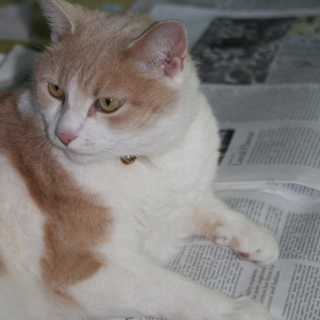
Eli, the In Brief Legal Writing Services mascot.
In Brief Legal Writing Services mascot Eli catching up on the latest news. Photo by Alexandra Bogdanovic

“When pet owners are arrested, what happens to their pets?”

In Martinsville (Virginia), the issue surfaced when police arrested the owner of a dog and six cats on drug charges — and her house got condemned.

“In this particular case, Martinsville building officials condemned Roknich’s house due to ingress/egress and sanitation issues” after authorities executed a search warrant there, the Bulletin reported.

“With the owner taken into custody and the house being condemned, we didn’t feel it was safe to leave the pets there,” Martinsville Police Chief Sean Dunn said.

They ended up at the pound, instead. At least, the dog did. The cats went to the local SPCA.

SPCA of Martinsville-Henry County Executive Director Nichole Harris told the Bulletin that all six cats, which are being housed at the shelter, appear to be doing well.

“The pound’s not really set up to house felines,” Harris said, while the SPCA had available space.

Although they ended up in different places, all of the animals will receive the medical care and attention they need.

According to Dunn, the facilities will provide short-term care for the animals’ food and medical costs could be at the owner’s expense if arrangements are not quickly made. He also encouraged her friends or relatives to inquire about the pets and take them in if possible.

“We provide custody holds until something is facilitated,” Harris told the Bulletin. There’s no limit on how long the SPCA will provide a custody hold for an animal, he added.

“Especially if it’s an investigated case, it might take three or four months depending on court dates and if there’s a continuation,” Harris said. “It’s been four or five months before.”

Inmates in Connecticut prison program benefit from ‘horsing around’

This vintage typwriter is our featured image.

Like most little girls, I loved horses and always wanted one of my own. Unlike most little girl, I was highly allergic to them. So I didn’t start riding until I was a teenager.

Alexandra Bogdanovic
Founder/owner of In Brief Legal Writing Services, Alexandra Bogdanovic. Photo by N. Bogdanovic

Since then I’ve ridden semi-competitively (as the captain of the Manhattanville College Equestrian Team), but mostly for fun. I’ve also volunteered as a “side walker” in  therapeutic horseback riding programs for physically and emotionally challenged kids. And in all honesty, that’s what I miss the most. There’s just something about seeing a kid’s face light up while he or she is riding that’s really, really cool.

Recently, I read about a different kind of therapeutic program that benefits people and horses. This one is based at a women’s prison in Niantic, Connecticut. Co-sponsored by the state Department of Agriculture, it allows the inmates to help care for horses that were confiscated during animal cruelty investigations.

“[The inmates] do everything from help feeding, cleaning out the stalls, moving them around from pen to pen,” Damian Doran, a Supervisor at the York Correctional Facility told a New Haven television station. “The animals have had hard lives, and in some ways the inmates can relate to that because they have had their own struggles, too,” he added.

The inmates learn about responsibility, learn skills they can use after they’ve been released. Most importantly, they learn (or relearn) what it’s like to care for another living creature.

The horses learn (or relearn) to trust people while waiting to be adopted.

Any way you look at it, everyone gets a second chance. And in my book, that’s pretty damned cool.

Whatever you do, don’t give your kid a pet for Christmas

This vintage typwriter is our featured image.
In Brief Legal Writing Services owner Alexandra Bogdanovic's cat, Eli.
Eli under the Christmas Tree. Christmas 2013.

No matter how much little Sally begs, no matter how many times little Johnny promises to be good, and no matter how “cute” you think it would be — do everyone a favor. Please, please, please do not give your child a pet for Christmas. Or Hanukkah, or any other holiday you celebrate at this time of the year.

True, lots of dogs and cats desperately need good homes. And yes, adopting a pet is wonderful. It’s fantastic. Speaking as someone who adopted/or otherwise “rescued” all three of my cats, I highly recommend it. But not if you’re doing so for the wrong reasons.

Think about it. By definition, a domestic animal is largely dependent on people for survival. So whether you adopt a dog or cat from the local pound, or buy a pet from a breeder, you are responsible for that animal’s well-being — for the rest of its life. That means you’d better be prepared to provide that animal with food, shelter, and medical care — for the rest of its life. That also means that you’d better be prepared to meet that animal’s emotional needs — for the rest of its life.

And yes, our pets do have emotional needs. After all, they are incredibly intelligent (probably more intelligent than most people give them credit for). They are incredibly perceptive. They can express themselves — and they have phenomenal memories.

They are not just “property” as defined by American law. They are not just “things” as defined by certain humans imbued with  an overwhelming sense of their own superiority. They are not disposable.

Consequently, reputable shelters frown on “impulse adoptions,” and have policies in place to prevent them. At the shelter where I volunteer, visitors must have an appointment in order to meet the dogs available for adoption. “Drop-ins” are encouraged to visit our website to learn about the available dogs and fill out a pre-adoption application before making an appointment. Prospective adopters that make it through the initial screening process must also provide references before the final adoption goes through. Depending on the circumstances, the entire process can take several days.

Think about it. You can’t adopt a child on a whim. So why should you be able to adopt a pet on an impulse?

To learn more about why giving your child a pet for the holidays is a bad idea, click here.

Yet another good reason to stop smoking

This vintage typwriter is our featured image.

I know it’s hard to believe, but another year is almost over. That means it’s almost time to start thinking about New Year’s resolutions. And for many smokers, that means it’s time to start thinking about quitting — again.

Eli, the In Brief Legal Writing Services mascot.
In Brief Legal Writing Services mascot Eli catching up on the latest news. Photo by Alexandra Bogdanovic

Of course, there’s always plenty of incentive to quit. Smoking is a filthy, dangerous habit that affects not only smokers, but everyone around them. It even affects their pets.

According to published reports, dogs and cats  inhale secondhand smoke directly, and ingest chemical particles from smoke while grooming. Exposure to the material can worsen existing health conditions and cause new illnesses in our pets.

The U.S. Food and Drug Administration (FDA) says the ways in which secondhand smoke affects dogs depends largely on the length of the dog’s nose.

Because more toxins tend to get trapped there, dogs with longer noses, such as greyhounds and Dobermans are more likely to get nose cancer, the FDA says. On the other hand, breeds with comparatively smaller noses are at greater risk of getting lung cancer from exposure to secondhand smoke.

Cats that live with smokers are also at risk for serious and potentially fatal illness, but for different reasons. Because they are obsessive about cleanliness, cats can ingest toxic residue from tobacco smoke while grooming.

“Studies show that cats living in smoking households have a two to four-times increased risk of an aggressive type of mouth cancer called oral squamous cell carcinoma. The cancer is often found under the base of the tongue, where the thirdhand smoke particles tend to collect after grooming,” the FDA says. There is currently no known cure.

Citing additional research, the FDA says that cats “that live with people who smoke more than one pack of cigarettes a day have three times the risk of developing lymphoma, a cancer of the body’s immune system similar to non-Hodgkin’s lymphoma in people.” Most cats with this type of cancer live for just a few months.

So there you have it. If you don’t care about your own health, and you don’t care if smoking affects the people around you — quit for your pet. You’ll both be better off.

Pit bull puppy comes to the rescue in Brooklyn atatck

This vintage typwriter is our featured image.

As a volunteer at a local animal shelter, I’ve seen my share of mistreated and unwanted pit bulls. And it’s heartbreaking. For the most part, these are wonderful, affectionate dogs in desperate need of loving homes.

They get a bad wrap — and they don’t deserve it.

Take me home! A dog up for adoption and an Adopt-a-Dog volunteer. Photo by A. Bogdanovic
An Adopt-a-Dog volunteer with a dog up for adoption at the annual Puttin’ on the Dog show in Greenwich last September. Photo by A. Bogdanovic

If you don’t believe me, just wait until you hear this story about an heroic pit bull puppy. According to various media accounts, Apollo, a five-month-old pit bull, was out for a walk with his master’s girlfriend when he came to her rescue.

As the New York Post reports, Maya Fairweather, 18, decided to take Apollo for a walk in the Red Hook section of Brooklyn, N.Y., at approximately 10 p.m. Monday. She had just turned the puppy loose in a neighborhood park when an unknown man allegedly attacked her.

“I felt someone pull my headphones,” Fairweather told the Post. “I thought it was my boyfriend grabbing me, so I turned around and smiled — but it wasn’t my boyfriend.”

As the alleged assailant knocked her to the ground and tried to remove her pants, Apollo intervened. Showing remarkable bravery, tenacity and loyalty, the puppy bit the man and held on until Fairweather could get away.

“He was protective,” Fairweather said, referring to Apollo. “I think it would’ve been a lot worse. I wouldn’t have been so lucky.”

Fortunately, Apollo also emerged from the incident unscathed.

Police are now looking for the suspect in the case — and with all of the publicity it has generated, it is unlikely he will remain at large for long.

And with all of the fuss over Apollo’s heroism, it’s unlikely anyone will mess with his master or Fairweather again. If nothing else, Apollo can always lick someone to death, she said.

“He is a sweet dog. I never thought he would bite anyone. He never bit anyone before. He’s usually very friendly and just jumps on everyone,” she told the Post.

Connecticut’s new (kid) governor promotes animal advocacy

This vintage typwriter is our featured image.

I know I’ve said it before — and I’ll probably say it again. This is one of the coolest, most awesome stories I’ve come across in a long time. And this time I mean it. Really.

Eli, the In Brief Legal Writing Services mascot.
In Brief Legal Writing Services mascot Eli catching up on the latest news. Photo by Alexandra Bogdanovic

Apparently, Connecticut school kids recently “elected” a new governor. Or more accurately, a new “Kid Governor.” Her name is Jessica Brocksom and she’s in fifth grade.

According to published reports, the John F. Kennedy Elementary School student is the second Kid Governor elected as part of the Connecticut Public Affairs Network’s Kid Governor program.

Brocksom “defeated” six other students from Connecticut schools who submitted campaign videos this year. She secured the victory by capturing most of the 4,000 votes cast by fifth-graders from more than 40 towns.

As one Connecticut TV station reported, the key to Brocksom’s success was a timely and appealing platform.

“I just chose something that I felt very passionate about and I knew animals was one of my things because not many people pay attention to animals,” Brocksom informed the media during her first “post-election” news conference.

Among other things, Brocksom feels strongly about harsher punishments for those convicted of animal abuse.

As the newly elected Kid Governor, Brocksom will share her passion for animal advocacy with her peers beginning after her “inauguration” in January. Specifically, she will share ideas about how kids can get involved in activities to help unwanted and abused animals.

“You can just have a bin and have it like a food drive once or twice a year and you can donate a lot to an animal shelter to help with the animals that have been abused,” said Brocksom.

Organizers said the Connecticut Public Affairs Network created the Kid Governor program in order to “teach kids about civics and state government, but also about civic participation.”

Based on this year’s outcome, I’d say the program’s definitely a success. Congratulations, Jessica. And best of luck in the future. I’d say it’s looking pretty bright.

Connecticut K-9’s death is truly heartbreaking

This vintage typwriter is our featured image.

Last week, Connecticut’s law enforcement family lost a true hero.

According to published reports, Thor, a Wethersfield Police K-9, died in the line of duty. He was just three years old.

The incident ultimately that claimed his life began with an alleged kidnapping in Hartford last Monday. The suspect in the case reportedly took the victim to a Wethersfield motel. The suspect fled into a wooded area nearby, and that’s when Thor gave chase. As he did, he disappeared from view.

Black and white photograph of New York Police Department barriers taken by Alexandra Bogdanovic
NYPD barriers. Photo by Alexandra Bogdanovic

“Officers found someone matching the suspect’s condition in Rocky Hill and a state trooper found Thor on the ground with internal bleeding,” a Connecticut TV station reported.

No one knows exactly how Thor got hurt. Police did say Thor was taken to an animal hospital, where he died last Tuesday from complications after receiving a blood transfusion.

The sergeant in charge of the Wethersfield Police Department’s K-9 unit said the agency plans on honoring the fallen police dog. Details have not yet been publicized, however condolences may be sent to:

Chief of Police James Cetran
Wethersfield Police Department
250 Silas Deane Highway
Wethersfield, CT 06109

Sadly, Thor is not the only K-9 killed in the line of duty last week.  The Volusia County Sheriff’s Office in Florida is also mourning the loss of K-9 Forest.

Information on the portion of the Officer Down Memorial Page website specifically dedicated to fallen police dogs indicates that K-9 Forest was shot and killed “while attempting an apprehension of a vagrant fugitive near Vann Park in Deltona, Florida.”

In that case,  officers also sent the two-year-old German Shepherd into a wooded area. That’s when the fugitive “opened fire on Forest and deputies as Forest attempted an apprehension.” Forest was taken to a nearby animal hospital, where he eventually succumbed to his injury.

Condolences may be sent to:

Sheriff Ben Johnson
Volusia County Sheriff’s Office
123 W. Indiana Avenue
DeLand, FL 32720

Thor and Forest died roughly one week after K-9 Jardo of the Boise City (Idaho) Police Department also succumbed to injuries sustained in the line of duty.

He was reportedly shot while “attempting an apprehension on a suspect wanted for shooting two citizens and carjacking an elderly woman.”

The suspect opened fire when Jardo, a six-year-old Belgian Malinois, found him, striking Jardo, and two officers who were assisting his handler.

Jardo was reportedly transported to an emergency veterinary hospital suffering from a gunshot wound to the chest. He was released several days later, but developed complications. He was taken back to the vet where he died while undergoing additional surgery.

Condolences may be sent to:

Police Chief Bill Jones
Boise Police Department
333 N Mark Stall Place
Boise, ID 83704

Curbing the use of comfort pets: an emotional issue

This vintage typwriter is our featured image.

Earlier this year, I teamed up with a client and one of her colleagues to co-research and co-write an article about the use of Service Animals and Emotional Support Animals (ESAs).

The article appeared “Animal Law” edition of the Maryland Bar Journal. You can find it here. Because it’s a fairly long piece, I totally understand if you don’t have time to read the whole thing. In fact, I’d be happy to hit the high points for you.

Eli, the In Brief Legal Writing Services mascot.
In Brief Legal Writing Services mascot Eli catching up on the latest news. Photo by Alexandra Bogdanovic

Basically, we began by describing Services Animals and ESAs, and discussed the rules and regulations governing their use. We also touched on some of the controversies stemming from their use. Most importantly, we shared ideas about how to accommodate everyone’s needs without resorting to costly and ineffective litigation.

Little did I know how timely that article would turn out to be. Since its publication this summer, I have seen countless stories about the same topics in the mainstream media. In fact, I found this one just a couple of weeks ago. It’s about someone taking a duck on a plane.

Yes, you heard me. A duck! I’m sorry. That’s utterly ridiculous. I’ve heard of people being allowed to take service dogs on planes (and even that causes problems sometimes). But a duck?

Yes, it sounds crazy. But apparently it’s not all that unusual. In fact, if a passenger has proper documentation, it seems like almost anything goes.

“We have seen service monkeys, even comfort pigs,” TSA spokesperson Mike McCarthy told the media. “There really isn’t much that would surprise our officers,” he added.

There’s no doubt that service animals, Emotional Support Animals and therapy animals help people cope with and overcome serious physical and psychological issues. And I suppose there’s no rule that says that a service animal, Emotional Support Animal or therapy animal must be a dog or cat. Horses have “worked” as therapy animals for years.

I can’t say for sure but I would venture to guess that most reasonable, open-minded people don’t mind if someone travels with a service animal or ESA — as long as there is a legitimate need. From what I’ve seen and heard, troubles arise when it is obvious that the person with the service animal or ESA abuses the rules.

Beyond that, there are other legitimate concerns. As someone who was once horribly allergic to dogs, cats (and just about every other animal you could possibly imagine), I am not to sure how I would have felt about being cooped up on an airplane with a dog nearby.

There are also people who are afraid of some animals — especially dogs. Who knows. Perhaps there are some people who are equally afraid of pigs, ducks, lizards and any other assortment of animals permitted on public transportation these days. Is it really fair to subject them to emotional distress just to accommodate someone else’s needs?

For the purposes of this blog, that is a rhetorical question. But it also warrants serious thought.

Unfortunately, there is no easy answer.

As long as people love animals — and as long as service animals, ESAs and therapy animals continue to help their human counterparts cope with physical and psychological challenges — the debate will continue.

‘Little old lady’ beats black bear in brawl

This vintage typwriter is our featured image.

So here’s a really cool little story to share with your family and friends over the holiday weekend.

It’s about a black bear and a “little old lady” from Maryland. Apparently, this black bear decided that this little old lady was an easy target. Apparently the bear was somewhat mistaken.

Eli, the In Brief Legal Writing Services mascot.
In Brief Legal Writing Services mascot Eli catching up on the latest news. Photo by Alexandra Bogdanovic

According to one account of the seemingly lopsided brawl, the “little old lady” gave as good as she got.

The encounter reportedly happened approximately 45 miles west of Baltimore, in Frederick, Maryland. Apparently annoyed when a dog forced one of her cubs up a tree, Mamma Bear took her anger out on Karen Osborne. Osborne, 63, who had gone outside to check on a barking dog, retaliated by “punching [the bear] in the face a couple of times,” her husband told the Associated Press. When that didn’t work, she “played dead.”

While she didn’t actually die (obviously) Osborne hardly emerged unscathed. In fact, she ended up in the hospital where she was treated for a broken arm and severe “bite wounds.”

The bear also paid a hefty price for the attack, however. In fact, the bear paid with her life. The state’s Natural Resources Police told the AP that the wildlife specialists “tracked and euthanized the 200-pound female bear under a policy mandating death for bears that attack people.”

Officials quoted by the AP also said the 200-pound bear had a habit of getting into trouble. Specifically, they said that she had been “tagged” after she broke into a chicken coop last year.

Karen Osborne’s daughter acknowledged that the bear was “known” in the neighborhood.

“She’s been in the area forever. We all kind of love her,” Tara Snuffin told the AP. “We’re all very sad that this had to happen this way.”

To learn what you can do to avoid conflicts with black bears, visit the Maryland DNR’s “Living with Black Bears” page.

Woman Who Defies Court-Imposed Pet Ban Is Beyond Contempt

This vintage typwriter is our featured image.

For some strange reason, some people just don’t get it.

In a society governed by rule of law, you can’t do whatever you want.

Well, you can try. But you probably won’t get away with it. So if you do break the rules, you’d better be prepared for the consequences. Because let’s face it. Chances are you will probably get caught. You will probably be convicted. And then you will probably be punished accordingly.

Eli, the In Brief Legal Writing Services mascot.
In Brief Legal Writing Services mascot Eli catching up on the latest news. Photo by Alexandra Bogdanovic

If you’re caught, tried and convicted, you might as well take your punishment like a big boy (or girl) and be done with it.

But like I said, some people just don’t get it.

For example, take this 71-year-old Maine woman who was reportedly convicted of animal cruelty. As part of her punishment, the court prohibited her from having more pets.

Apparently that doesn’t matter to her. Carol Murphy seems to think she can do whatever she wants.

As the Associated Press reported, “Murphy was convicted of animal cruelty in 2005 and was banned from having pets. She was convicted of the charge five years later, and was again barred from owning animals.”

Of course, Murphy insists she never did anything wrong. Clearly it seems she sees nothing wrong with having more pets — even though she was banned from doing so.

Yes, Carol Murphy definitely seems to hold the deeply misguided belief that she can do whatever she wants. With impunity.

Apparently someone disagrees. So she was convicted of contempt of court.

As far as I’m concerned, she’s beyond contempt. But that’s just my humble opinion.