Estate Planning With Your Pets In Mind

This vintage typwriter is our featured image.

Good morning, everyone! Happy Monday! Are you ready for some thought-provoking questions to start your week? Well, ready or not, here they are.

What will happen to your pet(s) if something happens to you? Who will take care of them? Where will they live? Will they end up in a familiar place with people they know? Or will they end up in a shelter, where they will be left to an uncertain fate? Have you thought about it? Do you have a plan?

You don’t? Why not? Make one. Put it in writing. Share it with your friends and family. Talk to your lawyer about it. Seriously. It’s important!
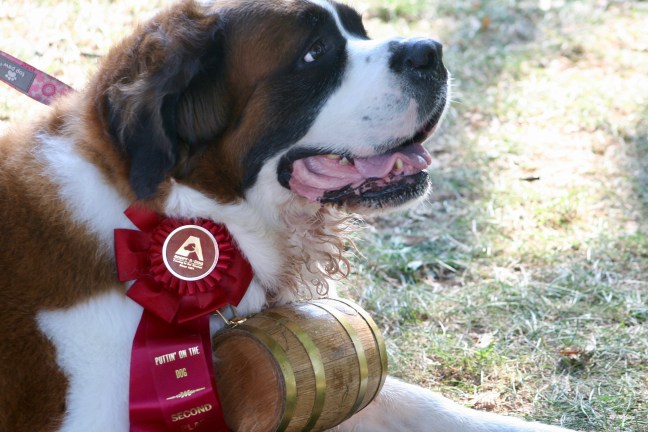
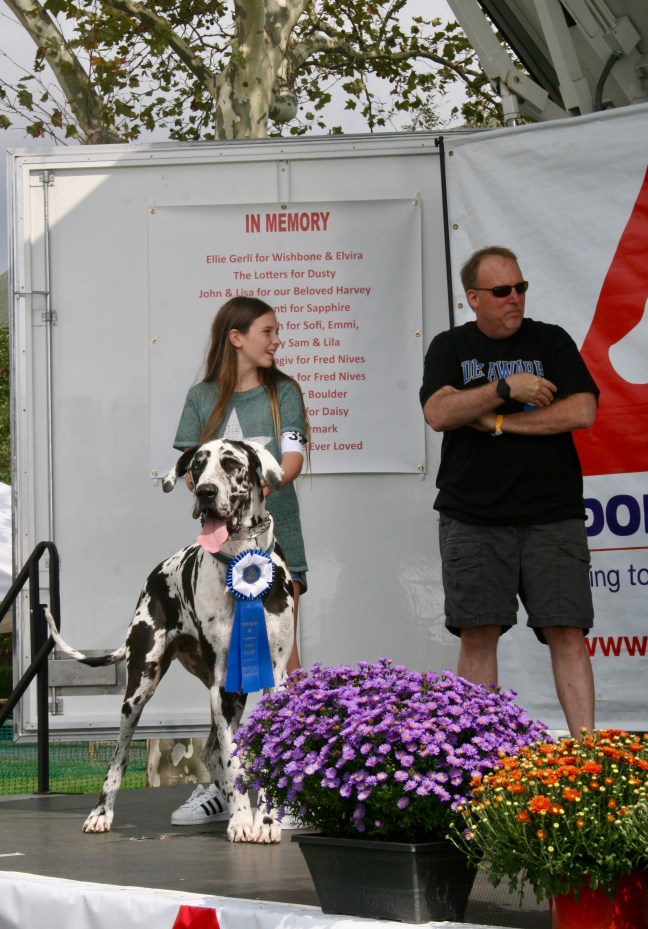
Runner-up in one of the contests at the 30th annual Puttin' on the Dog festival.
Second place? What do you mean I got second place? The indignity of it all. Puttin’ on the Dog, Greenwich CT. Photo by Alexandra Bogdanovic

Estate planning

Proper estate planning is a proactive rather than a reactive process. As such, it allows you  to  prepare for unanticipated events, instead of simply reacting to them. Specifically, it allows you to create a strategy that can be shared with your family and used in the event of a serious, catastrophic or fatal injury or illness. In other words, this is a way to ensure your wishes — including those about the care of your pet(s) — are documented and followed if/when you are no longer capable of expressing them.

The last will and testament

When most people think about estate planning, making a will is the first thing that comes to mind. This is because a valid will is a legal document required for the settlement of your affairs and distribution of your estate. Or, to put it in plain English, it is a legal document in which you specify who gets what after you die, and designate someone (called an executor) to make sure your wishes are carried out accordingly.

According to The Humane Society of the United States (HSUS), you should keep a few of things in mind if you’re considering including provisions pertaining to the care of your pet(s) in your will. Specifically, you should be aware that:

  1. Your will only takes effect upon your death.
  2. It takes time to sort everything out (determine if the will is valid and so on).
  3. Other complications could arise, especially if someone decides to contest (challenge) the will.

“Even determining the rightful new owner of your pet can get delayed. In other words, it may take a long time before your instructions regarding your pet’s long-term care can be carried out,” the HSUS says. “This doesn’t necessarily mean that you should not include a provision in your will that provides for your pet. It just means that you should explore creating additional documents that compensate for the will’s limitations.”

Setting up a trust

A trust is another type of legal tool used in the estate planning process. It allows you to allocate funds for a specific purpose, such as the care of your pet, if something happens to you. It also allows you to choose someone to manage the trust.

According to the HSUS, the benefits of using a trust in addition to a will are:

  1. It ensures your pet’s immediate needs are met.
  2. It can be used while you are sill alive (in the event of illness/injury).
  3. You can decide when it goes into effect.
  4. It allows for the exclusion of some funds from probate.

“There are many types of wills and trusts,” the HSUS points out. “Determining which is best for you and your pet depends on your situation and needs.”

The organization also stresses the importance of getting proper legal advice from “an attorney who both understands your desire to provide for your pet and can help you create a will and/or trust that best provides for him.”

Because there may be different rules depending on where you live, the HSUS recommends that you and your lawyer verify that the trust established  for the benefit of your pet(s) is valid and enforceable in your state.

Power of attorney

Finally, a third type of legal document, called a power of attorney, allows someone else someone else to handle some or all of your affairs for you while you are alive. As such, they can be written to take effect upon your physical or mental incapacity and remain in effect after you become incapacitated.

They are simpler than trusts and may include provisions  allowing the person authorized to handle your affairs  “to take care of your pets, expend money to do so, and even to place your pets with permanent caregivers if appropriate.”

Short-term solutions

Of course, the strategies used in estate planning are generally devised to address future events. An HSUS fact sheet, called “Providing for Your Pet’s Future Without You,” details not only the issues we have already discussed, but other ways to ensure your pets are taken care of in an emergency.

Its recommendations include but are not limited to:

  • Identifying at least two responsible friends or relatives who agree to serve as temporary caregivers if you have an emergency. Giving them with keys to your home; feeding and care instructions; the name of your veterinarian; and information about the permanent care provisions you have made for your pet.

• Ensuring that your neighbors, friends, and relatives know how many pets you have and the names and contact numbers of the individuals who have agreed to serve as emergency caregivers. Emergency caregivers should also know how to contact each other.

• Carrying a wallet “alert card” that lists the names and phone numbers of your emergency pet caregivers.

• Posting removable “in case of emergency” notices on your doors or windows specifying how many and what types of pets you have. Doing so will let first responders know that you have pets so they can act accordingly.

• Posting a removable notice with relevant information to the inside of your front and back doors.

The HSUS fact sheet also addresses related concerns, such as the importance of making formal arrangements for your pet’s care if something happens to you; keeping in contact with the designated caregivers; entrusting your pet’s care to a specific organization; and more.

You can find the details here.

It is sad, but it is not necessarily inevitable

As a volunteer at a local animal shelter, I became aware of several cases in which dogs were surrendered because their owners could no longer care for them. In a few of those cases, I believe we had an agreement that the dog would be returned to us in such circumstances. In other cases, the animals were simply surrendered by family members who were unable to care for them and had nowhere else to turn.

In any case, it was always sad. But it does not have to be inevitable.


Disclaimer: The preceding article is intended for informational purposes only, and should not be considered as legal advice. For legal advice, including questions and concerns about estate planning; animal law; and providing for your pets in the event of illness, injury or death, consult a qualified attorney in your area.


End Dogfighting In Connecticut Now

This vintage typwriter is our featured image.

Anyone who knows me at all knows I have a temper. Anyone who knows me at all also knows that I have absolutely, positively, no tolerance whatsoever for criminal activity targeting children, the elderly, or animals.

So imagine how I felt when I read a January 21 article on ctpost.com detailing the prevalence of dogfighting in Connecticut. Let’s just say I wasn’t very happy. In fact, it made my blood boil.

As far as I’m concerned, there is no place for this vicious, cruel, and barbaric activity at all — much less in the 21st century. The time to end it is now.

The harsh reality of dogfighting in Connecticut

Jessica Rubin, a state animal advocate and UConn law professor quoted in the article,  has researched dogfighting charges in Connecticut. While doing so, she  found that 110 people were charged with “dogfighting related offenses” here between 2007 and 2017.

Among other things, Rubin told ctppost.com that  there were no charges in some years and multiple charges in others. She also noted that the activity seems to be most prevalent in areas with the greatest population densities.

“The issues include extreme cruelty, criminal behavior, gambling, giving dogs unauthorized medicines and violence,” Rubin said. “Children are exposed to the offenses and it compounds the dogfighting.”

One of the many dogs available for adoption at a local shelter a few years ago.

Meanwhile, dogs that are lucky enough to survive and escape their ordeal, “usually end up in shelters around the state in hopes that law-abiding dog lovers will adopt them and end their nightmare with care and love.”

And then there are those who aren’t so fortunate.

“When they’re no longer profitable to dog fighters — or if they don’t show enough ‘fighting spirit’— they’re typically killed in atrocious ways, including by being used as ‘bait dogs,’ drowned, electrocuted, beaten or hanged,” Martin Mersereau, vice president of People for the Ethical Treatment of Animals, told ctpost.com. “There are no winners in this sickening blood sport, only abject criminals who represent the very worst of human nature,” Mersereau added.

Freedom’s story

Two years ago, someone found a badly wounded dog — later named Freedom by rescuers —  “wandering on Brushy Plains Road in Branford covered in scars and injuries.”

His story is also chronicled in the ctpost.com article.

According to the account, officials at the Branford Animal Shelter concluded the wounds were the result of dogfighting. They also determined that  Freedom whose teeth were filed down so he couldn’t inflict damage on other dogs,  was probably used as a “bait” dog. As such, it would have been his “job” to  trigger attacks by combatants.

“Based on the wounds, this dog definitely took the brunt of whatever has been going on,” shelter director Laura Burban then told the New Haven Register. “What we can see is that it looks like his feet were tied together and he was used as the bait dog for other dogs to attack him,” she said.

Freedom is not alone…

Currently, dogfighting is not only illegal throughout the United States, but it is also a felony  in all 50 states and the District of Columbia.

Even so, Freedom’s story is not unique.

According to American Society for the Prevention of Cruelty to Animals (ASPCA) statistics cited in the ctpost.com story, there are tens of thousands of dog fight organizers across the country that force hundreds of thousands of dogs to brutally train and fight for sport.

Over the last eight years, the organization says, it has assisted with 200 dogfighting cases in 24 states and has helped rescue and investigate nearly 5,000 victims of dogfighting.

Last year alone, the ASPCA says it directly rescued more than 400 animals from dogfighting rings across 12 states.

“Through our extensive work with law enforcement agencies nationwide, we know that organized dogfighting is taking place in every type of community across the country, causing unimaginable pain and suffering for the animals involved,” Stacy Wolf, senior vice president of ASPCA’s Anti-Cruelty Group told ctpost.com.

And that is unacceptable.

On Pit Bull ‘Attacks,’ Naughty Cats and Other Topics

This vintage typwriter is our featured image.

The longer I live, the more I hate people.

Alexandra Bogdanovic
Founder/owner of In Brief Legal Writing Services, Alexandra Bogdanovic. Photo by N. Bogdanovic

OK, that’s not entirely accurate. Let’s just say the longer I live, the less tolerance I have for human stupidity. And considering I that I never had much tolerance for that in the first place, that’s saying a lot.

So you’re probably wondering what triggered this little rant. Well, a few things to be honest. The first is a news story about a pit bull that recently “attacked” someone on a New York City subway. I put the word “attacked” in quotation marks because I wasn’t there so I don’t know exactly what happened. From what I can gather from the news accounts (which I would never rely upon to draw a conclusion) the owner claims the dog was provoked. Others dispute that. Authorities say the dog is a known menace.

Based on limited information, all I know is this: Something triggered that animal. Perhaps (and I stress perhaps) the person who got bitten did deliberately or inadvertently provoke the dog. Or perhaps the dog was simply stressed by being in a crowded, claustrophobic, noisy environment. Perhaps it was scared, or overstimulated by being in that subway car. I mean, let’s be honest. Riding the New York City subway is stressful for a human. Imagine how overwhelming it must be for any animal.

No, I am not making excuses. Frankly, I think the whole entire situation is inexcusable. I don’t care if it really is a “service animal” (which is another topic for another blog). That dog should never have been put in that situation. Ever. Period. End. Of. Story.

Allowing that to happen  was clearly a recipe for disaster. It was irresponsible. And it was sad. It was sad because that owner should have known better — and if he didn’t he never should have been allowed to have the dog in the first place. It was sad because human stupidity may very well cost that dog its life.

Bad cat, or stupid people?

But that’s not all that’s bugging me. I’m also annoyed about a recent Facebook conversation with one of my cousins. To sum it up, she made a post about the action she planned to take against a neighbor’s cat that had used her garden as its personal latrine. I believe she mentioned the use of a  “super-soaker”  at least once.

Don’t get me wrong. I understand why she’s upset — especially since she has young children and there is clearly a double-standard regarding dogs and cats in her community. However, the point I made when I joined the discussion is that the cat is just being a cat. I seriously doubt that it has any malicious intent. That being stated, I as I also told my cousin, the owners are being irresponsible idiots by letting the cat run around unsupervised. In other words, don’t blame the animal. Blame the people.

As pet owners or pet “parents,” we are responsible for our animals. As long as they are in our lives, we are responsible for all aspects their health and well-being. We’re responsible for keeping them out of trouble… and like it or not, we’re responsible for their behavior. After all, we’re the ones with the consciences, and ability to reason. Allegedly.

I would take a bullet for my cat — and I am not alone

This vintage typwriter is our featured image.

Hi everyone! Yes it is really me. And yes, I know it has been ages since I’ve done a post. In fact I think it’s been about six months.

The reason I’ve been away so long is because business is booming. I’ve been so busy blogging (and doing other assignments) for clients that I haven’t had time to concentrate on my own blog. I know, I know. It’s no excuse… but it’s true.

At any rate, the good news is I’ve been hoarding blog fodder, so finding a topic for today’s post was actually a cinch. My inspiration came from this article about the bond that people have with their pets, and the lengths they’ll go to for their furry friends. It turns out that some people will literally risk their own lives in order to save their dogs and cats. Some have even died while doing so.

The article gives several recent examples of people who perished while trying to save their pets from devastating injury or certain death. It also provides a lengthy explanation about why we are so attached to our canine and feline companions.

Nevertheless, to people who don’t have pets or don’t like animals, it is inexplicable. To them, a person’s life is way more valuable than a dog’s or cat’s. To them, dogs and cats and other pets, are well — “just animals.”

Eli, the In Brief Legal Writing Services mascot.
In Brief Legal Writing Services mascot Eli catching up on the latest news. Photo by Alexandra Bogdanovic

To me, that is sad. In fact, I think it’s very sad — because frankly I would take a bullet for my cat. I would throw myself in front of a car for him. I’d fend off a coyote or a dog for him. I’d run back into my house if it were on fire, and I’d never leave him to fend for himself in a storm. And have no doubt about it —  I would beat the hell out of anyone who even thought about hurting him.

Yes, I love him. I love him fiercely — as fiercely as I have ever loved anyone. Perhaps it’s because he was abused before I got him. Perhaps it’s because, as long as he’s with me, he counts on me for everything — for food, for shelter, for medical care, for companionship and for protection. Perhaps it’s because of what he gives me in return — companionship, friendship, love, comfort. Perhaps it’s because I can’t imagine a day at work without him curled up nearby or an evening at home without him curled up on my lap. Perhaps it’s because he knows how to make me laugh, or how to cheer me up. Perhaps it’s because he’s quick to forgive me when I’m angry. Or perhaps it’s because he’s so damned smart… and so damned cute.

At the end of the day it doesn’t really matter why I feel the way I do. All you need to know is that I’ll do whatever it takes to protect my cat. And I am not alone.

California’s anti-puppy mill legislation goes to governor

This vintage typwriter is our featured image.

It all boils down to supply and demand. By passing A.B. 485, California lawmakers have demanded that puppy mills and similar operations no longer supply pet shops with companion animals.

Specifically the  legislation currently awaiting Gov. Gerry Brown’s signature takes aim at the unscrupulous breeders by ensuring that the pet stores can only acquire dogs, cats and rabbits from animal rescue groups, shelters and similar organizations.

A dog available for adoption at Adopt-a-Dog. Photo by Alexandra Bogdanovic

As reported by Newsweek, “The purpose of the bill is to encourage pet stores to move into the rescue business and to reduce the number of animals killed at shelters due to lack of space.”

According to the ASPCA:

  • Approximately 6.5 million companion animals enter U.S. animal shelters nationwide every year. Of those, approximately 3.3 million are dogs and 3.2 million are cats.
  • Each year, approximately 1.5 million shelter animals are euthanized (670,000 dogs and 860,000 cats).
  • Approximately 3.2 million shelter animals are adopted each year (1.6 million dogs and 1.6 million cats).

Data provided by the American Pet Products Association (APPA) indicates that most people who have cats got them from shelters, friends or family, while most people who have dogs got them from breeders or shelters.

Many pet stores are already providing another option for people seeking companion animals. As Newsweek reported, “Some pet stores, including PetCo and Petfood Express, have already moved away from selling cats, dogs, and rabbits bred for profit and instead donate space to rescues and host adoption events.” According to its website, PetSmart is also on board.

“At PetSmart, we never sell dogs or cats. Together with PetSmart Charities, we help save over 1,300 pets every day through adoption,” the company says. In all, PetSmart claims it has saved more than 7.6 million animals through its adoption program.

Of course, there are always two sides to every story. And apparently, the AKC is not a fan of A.B. 485.

“AB 485’s proponents misleadingly claim that the bill will promote the purchasing of purebred dogs from local breeders. That claim, however, fails to shed light on the fact that many local anti-breeding laws and breeding restrictions, also supported by these groups, have already eliminated hobby breeding and now make obtaining a specific type of dog bred by a local breeder increasingly difficult,” the AKC says.

However, A.B. 485 does not ban Californians from getting purebred pets if they so choose. It simply bans them from doing so through pet stores. If the bill becomes law, they would still be able to get companion animals by contacting private breeders directly.

What do you think? Is this a good idea? Or will it do more harm than good? Let me know by leaving your thoughts in the comments section below.

As seen at the 30th annual Puttin’ on the Dog festival

This vintage typwriter is our featured image.

As the old saying goes, sometimes a picture is worth 1,000 words. So without further ado, here are some of my favorite photos from the 30th annual Puttin’ on the Dog festival. Enjoy!

Great Dane wins Best Lap Dog contest at Puttin' on the Dog.
Best Lap Dog winner. Puttin’ on the Dog. Photo by Alexandra Bogdanovic
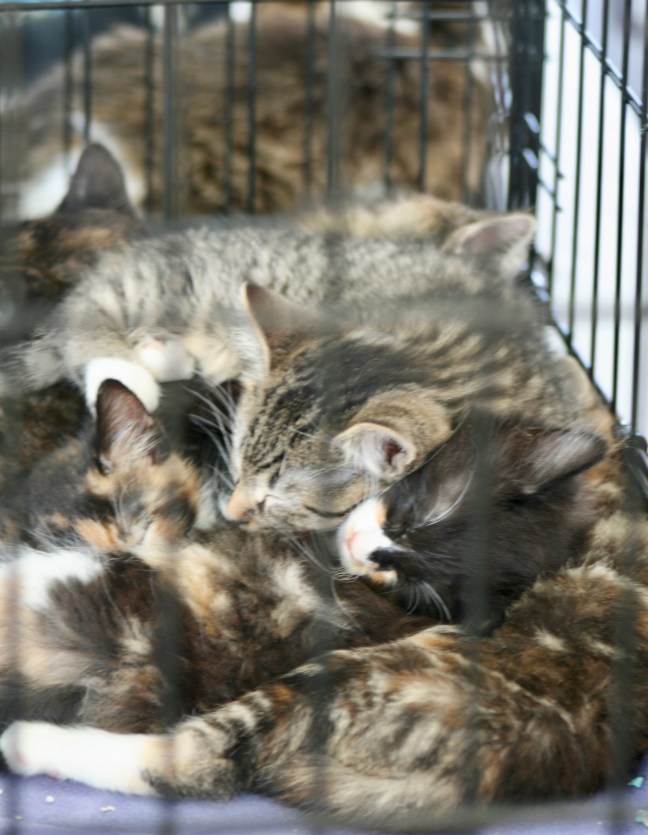
Furr-911 rescues Hurricane Harvey kittens.
Hurricane Harvey kittens make an appearance at Puttin’ on the Dog festival, courtesy of FURR-911. Photo by Alexandra Bogdanovic
Owner and dog get a helping hand on the agility course.
Balancing act. Action in the agility ring at Puttin’ on the Dog. Photo by Alexandra Bogdanovic
Runner-up in one of the contests at the 30th annual Puttin' on the Dog festival.
Second place? What do you mean I got second place? The indignity of it all. Puttin’ on the Dog, Greenwich CT. Photo by Alexandra Bogdanovic
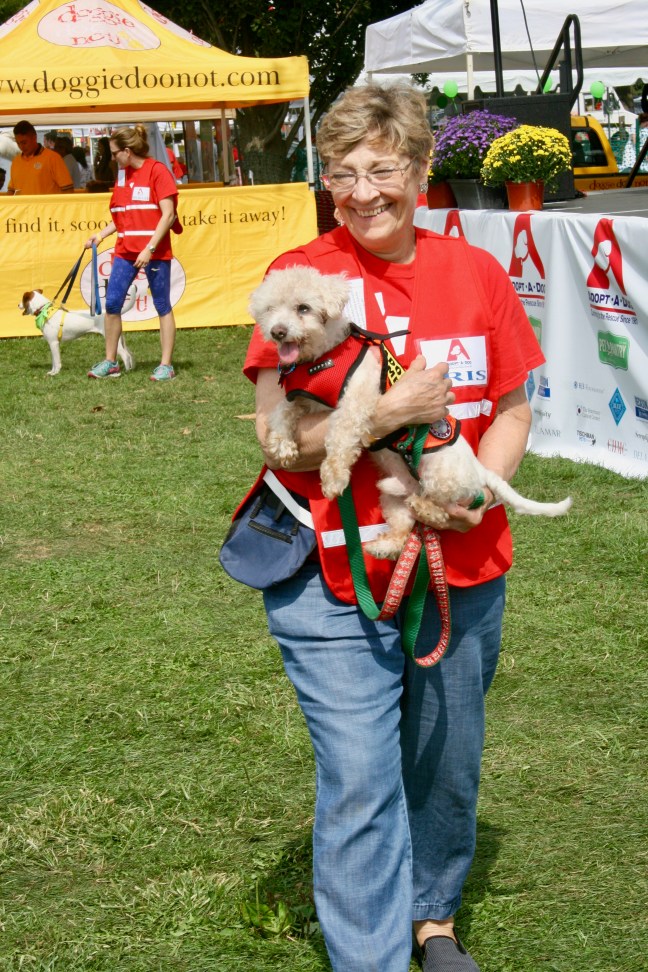
Adopt-a-Dog volunteer with her charge at Puttin' on the Dog.
Take me home! A senior dog steals the show in the first parade at the Puttin’ on the Dog festival. Photo by Alexandra Bogdanovic


Nap time! Hurricane Harvey kittens take a break at the 30th annual Puttin’ on the Dog festival. Photo by Alexandra Bogdanovic

Why I would never abandon my cat in a natural disaster

This vintage typwriter is our featured image.

It’s absolutely heartbreaking. In the wake of Hurricane Harvey and Hurricane Irma, social media sites have been saturated with news and photos about the dogs, cats, horses and other animals left to fend for themselves when their owners fled.

There have been harrowing tales of heroic rescues from rising flood waters. But there have also been heartwarming tales about all of the animal welfare groups working to reunite these animals with their families, or trying to find new homes for the pets that have been displaced.

Eli the cat.
In Brief Legal Writing Services mascot, Eli the cat.

As an animal lover and pet owner, I have mixed feelings about all of this. On the one hand, it makes me furious. From a purely emotional standpoint, I find myself wondering how anyone could abandon their pet in such horrible circumstances. As a reporter who has covered my share of natural disasters and the aftermath — I know a little bit of pre-planning could save a lot of heartache in the long run.

On the other hand, I find myself trying not to rush to judgment. After all, an argument could be made that no one really knows how they would react when confronted by a storm the magnitude of Harvey or Irma. It is easy to be an armchair quarterback from the warmth and safety of your house.

All of that being said, I didn’t leave Eli during Superstorm Sandy. And I would never leave my cat to fend for himself in a storm. Ever.

My reason for this is simple. As a person, I have the ability to make certain choices; ride out a big storm at home or seek shelter elsewhere, listen to the official weather advisories or ignore them, plan in advance, or take my chances. So to a certain extent, I have some control over what happens to me — even in the worst of circumstances. Eli doesn’t have that luxury. He is entirely dependent on me to take care of him and keep him safe. No matter what. He is my responsibility.

Yes, I’ve said it before and I will say it again. I will keep saying it until people not only listen, but act accordingly. As pet owners, we are responsible for what happens to our dogs, cats, horses, snakes,  gerbils, ferrets, birds… Our companions are not disposable. They are living, breathing beings with specific physical and emotional needs.

Can they adapt? Of Course. Can they survive without us? Yes. Should we put them in a position where they’re forced to do so? Absolutely, positively not.

That being stated, I’m keeping an eye on Tropical Storm Jose. And from what I’ve seen, if you live anywhere in the northeast, I suggest you do the same.

It’s time for the annual Puttin’ on the Dog festival

This vintage typwriter is our featured image.

Whatever you do, don’t try to get a hold of me on Sunday. I’ll be busy. All day. And by the time I get home, I’ll be dog tired (literally), hot and bothered. But I’ll also be happy.

Cute Kitten, courtesy of FURRR 911. Photo by A. Bogdanovic
Bolt, a kitten rescued by FURRR 911, at Puttin’ On The Dog & Cats, Too 2016. Photo by A. Bogdanovic

On Sunday, I’ll spend the entire day shooting the 30th annual Puttin’ on the Dog festival, which will be held at Roger Sherman Baldwin Park in Greenwich, CT. Hosted by Adopt-a-Dog, the event is billed as the biggest of its kind between New York and Boston and benefits several local animal rescue and welfare groups.

In addition to raising money and awareness for worthy causes, the festival gives animal lovers a chance to meet some of the dogs and cats that are available for adoption. It also gives dogs and their people a chance to show off by participating in various contests.

You can learn more about the fun and games here.

This will be the fifth straight year I’ve volunteered at the event. And personally, I’m looking forward to hanging out in the cat pavilion, photographing the action in the demonstration rings and on stage, and checking out the silent auction.

On that note, I’d better run. Hopefully I’ll see you on Sunday. If not, don’t call me. I’ll call you!

Newsflash: pets are not disposable!

This vintage typwriter is our featured image.

I have got to stay off of Facebook.

For one thing, it can be really depressing. And for another, it is definitely not good for my blood pressure.

Last week alone, I saw at least three different posts that made my blood boil. And I’m not even talking about the political posts. I’m talking about the posts about animal cruelty and neglect. I’m talking about the posts that clearly demonstrate that some people simply should not have pets.

Eli the cat.
In Brief Legal Writing Services mascot, Eli the cat. Photo by Alexandra Bogdanovic

By far the most disturbing of these was a post shared by a former friend. I stress “former” because I told him off as soon as I saw it. And then I “unfriended” him — on Facebook and in “real life.”

So what could possibly be so outrageous? It wasn’t so much the post in which he asked if anyone knew of a local rescue or pound that would take his two cats. It was his reason for giving them away. In the simplest terms, he said he was “done” with indoor animals. That’s it. He just didn’t want them anymore. Period. End of story.

Now, there are plenty of legitimate reasons for people to part with their pets. Illness. Allergies. Moving to another country or to a new apartment or condo that doesn’t allow pets. The inability to continue to pay vet bills or buy food… These are all heartbreaking circumstances… but at least they’re understandable.

But to simply say, “I’m done with animals,” or “I just don’t want them anymore,” is beyond unacceptable. It is irresponsible. And it is cruel.

Sadly, my former friend — whom I now classify as one of the most selfish, self-centered, egotistical, self-absorbed, narcissistic people ever to walk the face of the earth — is not alone.

Just as my outrage about his post was starting to ebb, I saw another post that was equally as outrageous. In this case, some people from Virginia were moving in a couple of weeks and didn’t want to take their 10-year-old dog to their new house. So they were willing to give him away, surrender him, or have him put down. But of course, that didn’t stop them from getting a 1-year-old puppy…

Fortunately, in that case, the little old guy was really cute, and the post generated a lot of responses from people interested in adopting him.

And finally, there was the case of an Australian man jailed for committing some of the most heinous and unspeakable acts against animal that I have ever heard of. Not only did he whip his poor dog, but he fed it sausages laced with broken glass! I kid you not.

As far as I’m concerned, there is a very special place in hell reserved for someone like that. And as far as I’m concerned, he can’t get there soon enough.

Paws up, don’t shoot!

This vintage typwriter is our featured image.

These days, much is made about fatal or near-fatal encounters between police officers and civilians — and rightly so. However, there are other stories that don’t get as much publicity. These are the stories about the lethal or near-lethal encounters between police officers and “dangerous” dogs.

Alexandra Bogdanovic
Founder/owner of In Brief Legal Writing Services, Alexandra Bogdanovic. Photo by N. Bogdanovic

Most — but not all — of these encounters tend to occur when the officer is on or approaching someone’s property.  Sadly, these stories usually end badly — for the dogs.

For example, as reported by Red Alert Politics, a Minnesota police officer recently shot two family pets, both of which are also emotional support animals.  The officer allegedly shot one of the dogs, a Staffordshire terrier, in the face, causing serious injuries.

“Jennifer LeMay, the dogs’ owner, released security footage of the shooting. The video shows an officer climbing over a seven-foot tall fence and entering the yard housing two Staffordshire terriers,” according to media accounts.

“The officer backpedaled and drew his gun as Circo ran towards him. The dog stopped about five feet in front of the man, then, wagging his tail, slowly approached the officer.  The officer shot the first dog in the face, which fell and fled, and then shot multiple times at the second dog, Rocko, which briefly ran into the camera footage.”

Police claim the dog “charged” at the officer, prompting the use of force.

LeMay emphatically refutes that claim, however.

“He was wagging his tail,” LeMay said about Ciroc. “My dog wasn’t even moving, lunging toward him or anything.”

“My dogs were doing their job on my property,” she continued. “We have a right to be safe in our yard.”

In a Facebook post following the incident, the Minneapolis police chief called for an investigation and said the department “will be implementing updated mandatory training specifically for officers identifying effective tools and tactical strategies with police and dog encounters.”

Meanwhile, the LeMay family is faced with thousands in veterinary bills stemming from the injuries to both dogs. LeMay is reportedly pursuing legal recourse.

But there is hope. Another article tells another story. In this case, the officer did the right thing.

According to the account, “Oklahoma police officer Storm Barrett responded to a call about two angry pit bulls who were running wild in a busy area of El Reno. Luckily, the former dog handler knew exactly what to do. Instead of trying to use force, Officer Barrett got up onto the hood of his cruiser. He pulled a bystander onto the car with him.”
Concerned that the dogs could harm children at a nearby school, Barrett distracted them until backup arrived.
“Both dogs were captured ten minutes later and returned to their owner – who was given a citation for allowing the dogs to get loose,” the report states.