
Animal law roundup

This vintage typwriter is our featured image.
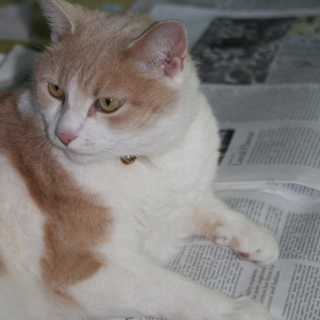
Eli, the In Brief Legal Writing Services mascot.
In Brief Legal Writing Services mascot Eli catching up on the latest news. Photo by Alexandra Bogdanovic

At a time when most Americans view companion animals as family members, authorities are cracking down on people engaged in any unscrupulous activities that are harmful to dogs and cats.

Just recently, New York Attorney General Eric Schneiderman announced sanctions against a former Westchester County pet shop owner. Schneiderman’s office has been investigating the man, Richard Doyle, for more than a year and determined that he “sold animals that had serious medical issues, despite claims of being healthy.”

As a result, Doyle can no longer sell pets in New York state. Furthermore, he must surrender all licenses associated with the sales of animals and pay $20,000 in fines. According to media accounts, customers that bought sick animals from Doyle will get most of the money.

“Disturbing cases like these reaffirm my commitment to encouraging those in search of a new pet to adopt from a local shelter, rather than purchasing an animal. This gives an animal in need a home, and gives the consumer the peace of mind that they are receiving a healthy pet,” Schneiderman said.

The Connecticut connection

In an unrelated case, Doyle pleaded guilty to five counts of animal cruelty in Connecticut. The charges reportedly stemmed from arrests at his pet store in Danbury, where he was accused of “of illegally performing surgery on and failing to provide proper care for ill animals.”

As a result, he is also banned from having “any affiliation” with pet stores or animal rescue shelters there for three years.

More than 70 dogs confiscated from NJ pet store

Meanwhile, in New Jersey, the SPCA confiscated more than 70 dogs from an East Hanover pet store where the owner “allegedly failed to provide records and veterinary care for the dogs.”

The owner, identified as Vincent LoSacco in published reports, is now in trouble with the town health department in addition to being investigated by the state attorney general’s office.

In addition to the East Hanover shop, authorities have reportedly closed two of LoSacco’s pet stores in New Jersey and one in New York.

As nbcnewyork.com reports, one of the New Jersey locations closed after LoSacco was charged with 267 counts of animal cruelty late last February. The other “had also been the target of investigations and complaints.”

The mysterious case of the Long Island wallaby

This vintage typwriter is our featured image.

How did an animal native to Australia end up in a filthy, freezing, Long Island garage?

That’s the disturbing question that surfaced after authorities responding to an anonymous tip found a wallaby locked in an East Rockaway, N.Y., garage yesterday.

Alexandra Bogdanovic
Founder/owner of In Brief Legal Writing Services, Alexandra Bogdanovic. Photo by N. Bogdanovic

“There is not adequate heat in there, there’s no food or water and there are feces all over,” Gary Rogers of the Nassau County SPCA told the New York City media. “We are in contact with the district attorney’s office about possible charges.”

For one thing, town and county laws make it illegal to keep wallabies in East Rockaway. And then there’s the matter of potential animal cruelty or neglect.

The adult male wallaby found in self-described “exotic animal expert” Larry Wallach’s garage appeared to be starving and weighed roughly 20 pounds or half of what it should if it were healthy, according to published reports.

“Wallabies are typically small to medium-sized mammals, but the largest can reach 6 feet (1.8 meters) from head to tail,” according to a description posted on nationalgeographic.com. “They have powerful hind legs they use to bound along at high speeds and jump great distances. When wallabies are threatened by predators, or when males battle each other, they may also use these legs to deliver powerful kicks.”

They can live for up to nine years in the wild.

The wallaby rescued from the East Rockaway garage is being treated at a local animal hospital and “the SPCA is currently looking at options for a new home for him,” according to media accounts.

Yet another good reason to stop smoking

This vintage typwriter is our featured image.

I know it’s hard to believe, but another year is almost over. That means it’s almost time to start thinking about New Year’s resolutions. And for many smokers, that means it’s time to start thinking about quitting — again.

Eli, the In Brief Legal Writing Services mascot.
In Brief Legal Writing Services mascot Eli catching up on the latest news. Photo by Alexandra Bogdanovic

Of course, there’s always plenty of incentive to quit. Smoking is a filthy, dangerous habit that affects not only smokers, but everyone around them. It even affects their pets.

According to published reports, dogs and cats  inhale secondhand smoke directly, and ingest chemical particles from smoke while grooming. Exposure to the material can worsen existing health conditions and cause new illnesses in our pets.

The U.S. Food and Drug Administration (FDA) says the ways in which secondhand smoke affects dogs depends largely on the length of the dog’s nose.

Because more toxins tend to get trapped there, dogs with longer noses, such as greyhounds and Dobermans are more likely to get nose cancer, the FDA says. On the other hand, breeds with comparatively smaller noses are at greater risk of getting lung cancer from exposure to secondhand smoke.

Cats that live with smokers are also at risk for serious and potentially fatal illness, but for different reasons. Because they are obsessive about cleanliness, cats can ingest toxic residue from tobacco smoke while grooming.

“Studies show that cats living in smoking households have a two to four-times increased risk of an aggressive type of mouth cancer called oral squamous cell carcinoma. The cancer is often found under the base of the tongue, where the thirdhand smoke particles tend to collect after grooming,” the FDA says. There is currently no known cure.

Citing additional research, the FDA says that cats “that live with people who smoke more than one pack of cigarettes a day have three times the risk of developing lymphoma, a cancer of the body’s immune system similar to non-Hodgkin’s lymphoma in people.” Most cats with this type of cancer live for just a few months.

So there you have it. If you don’t care about your own health, and you don’t care if smoking affects the people around you — quit for your pet. You’ll both be better off.

Connecticut’s new (kid) governor promotes animal advocacy

This vintage typwriter is our featured image.

I know I’ve said it before — and I’ll probably say it again. This is one of the coolest, most awesome stories I’ve come across in a long time. And this time I mean it. Really.

Eli, the In Brief Legal Writing Services mascot.
In Brief Legal Writing Services mascot Eli catching up on the latest news. Photo by Alexandra Bogdanovic

Apparently, Connecticut school kids recently “elected” a new governor. Or more accurately, a new “Kid Governor.” Her name is Jessica Brocksom and she’s in fifth grade.

According to published reports, the John F. Kennedy Elementary School student is the second Kid Governor elected as part of the Connecticut Public Affairs Network’s Kid Governor program.

Brocksom “defeated” six other students from Connecticut schools who submitted campaign videos this year. She secured the victory by capturing most of the 4,000 votes cast by fifth-graders from more than 40 towns.

As one Connecticut TV station reported, the key to Brocksom’s success was a timely and appealing platform.

“I just chose something that I felt very passionate about and I knew animals was one of my things because not many people pay attention to animals,” Brocksom informed the media during her first “post-election” news conference.

Among other things, Brocksom feels strongly about harsher punishments for those convicted of animal abuse.

As the newly elected Kid Governor, Brocksom will share her passion for animal advocacy with her peers beginning after her “inauguration” in January. Specifically, she will share ideas about how kids can get involved in activities to help unwanted and abused animals.

“You can just have a bin and have it like a food drive once or twice a year and you can donate a lot to an animal shelter to help with the animals that have been abused,” said Brocksom.

Organizers said the Connecticut Public Affairs Network created the Kid Governor program in order to “teach kids about civics and state government, but also about civic participation.”

Based on this year’s outcome, I’d say the program’s definitely a success. Congratulations, Jessica. And best of luck in the future. I’d say it’s looking pretty bright.

Curbing the use of comfort pets: an emotional issue

This vintage typwriter is our featured image.

Earlier this year, I teamed up with a client and one of her colleagues to co-research and co-write an article about the use of Service Animals and Emotional Support Animals (ESAs).

The article appeared “Animal Law” edition of the Maryland Bar Journal. You can find it here. Because it’s a fairly long piece, I totally understand if you don’t have time to read the whole thing. In fact, I’d be happy to hit the high points for you.

Eli, the In Brief Legal Writing Services mascot.
In Brief Legal Writing Services mascot Eli catching up on the latest news. Photo by Alexandra Bogdanovic

Basically, we began by describing Services Animals and ESAs, and discussed the rules and regulations governing their use. We also touched on some of the controversies stemming from their use. Most importantly, we shared ideas about how to accommodate everyone’s needs without resorting to costly and ineffective litigation.

Little did I know how timely that article would turn out to be. Since its publication this summer, I have seen countless stories about the same topics in the mainstream media. In fact, I found this one just a couple of weeks ago. It’s about someone taking a duck on a plane.

Yes, you heard me. A duck! I’m sorry. That’s utterly ridiculous. I’ve heard of people being allowed to take service dogs on planes (and even that causes problems sometimes). But a duck?

Yes, it sounds crazy. But apparently it’s not all that unusual. In fact, if a passenger has proper documentation, it seems like almost anything goes.

“We have seen service monkeys, even comfort pigs,” TSA spokesperson Mike McCarthy told the media. “There really isn’t much that would surprise our officers,” he added.

There’s no doubt that service animals, Emotional Support Animals and therapy animals help people cope with and overcome serious physical and psychological issues. And I suppose there’s no rule that says that a service animal, Emotional Support Animal or therapy animal must be a dog or cat. Horses have “worked” as therapy animals for years.

I can’t say for sure but I would venture to guess that most reasonable, open-minded people don’t mind if someone travels with a service animal or ESA — as long as there is a legitimate need. From what I’ve seen and heard, troubles arise when it is obvious that the person with the service animal or ESA abuses the rules.

Beyond that, there are other legitimate concerns. As someone who was once horribly allergic to dogs, cats (and just about every other animal you could possibly imagine), I am not to sure how I would have felt about being cooped up on an airplane with a dog nearby.

There are also people who are afraid of some animals — especially dogs. Who knows. Perhaps there are some people who are equally afraid of pigs, ducks, lizards and any other assortment of animals permitted on public transportation these days. Is it really fair to subject them to emotional distress just to accommodate someone else’s needs?

For the purposes of this blog, that is a rhetorical question. But it also warrants serious thought.

Unfortunately, there is no easy answer.

As long as people love animals — and as long as service animals, ESAs and therapy animals continue to help their human counterparts cope with physical and psychological challenges — the debate will continue.

‘Little old lady’ beats black bear in brawl

This vintage typwriter is our featured image.

So here’s a really cool little story to share with your family and friends over the holiday weekend.

It’s about a black bear and a “little old lady” from Maryland. Apparently, this black bear decided that this little old lady was an easy target. Apparently the bear was somewhat mistaken.

Eli, the In Brief Legal Writing Services mascot.
In Brief Legal Writing Services mascot Eli catching up on the latest news. Photo by Alexandra Bogdanovic

According to one account of the seemingly lopsided brawl, the “little old lady” gave as good as she got.

The encounter reportedly happened approximately 45 miles west of Baltimore, in Frederick, Maryland. Apparently annoyed when a dog forced one of her cubs up a tree, Mamma Bear took her anger out on Karen Osborne. Osborne, 63, who had gone outside to check on a barking dog, retaliated by “punching [the bear] in the face a couple of times,” her husband told the Associated Press. When that didn’t work, she “played dead.”

While she didn’t actually die (obviously) Osborne hardly emerged unscathed. In fact, she ended up in the hospital where she was treated for a broken arm and severe “bite wounds.”

The bear also paid a hefty price for the attack, however. In fact, the bear paid with her life. The state’s Natural Resources Police told the AP that the wildlife specialists “tracked and euthanized the 200-pound female bear under a policy mandating death for bears that attack people.”

Officials quoted by the AP also said the 200-pound bear had a habit of getting into trouble. Specifically, they said that she had been “tagged” after she broke into a chicken coop last year.

Karen Osborne’s daughter acknowledged that the bear was “known” in the neighborhood.

“She’s been in the area forever. We all kind of love her,” Tara Snuffin told the AP. “We’re all very sad that this had to happen this way.”

To learn what you can do to avoid conflicts with black bears, visit the Maryland DNR’s “Living with Black Bears” page.

Woman Who Defies Court-Imposed Pet Ban Is Beyond Contempt

This vintage typwriter is our featured image.

For some strange reason, some people just don’t get it.

In a society governed by rule of law, you can’t do whatever you want.

Well, you can try. But you probably won’t get away with it. So if you do break the rules, you’d better be prepared for the consequences. Because let’s face it. Chances are you will probably get caught. You will probably be convicted. And then you will probably be punished accordingly.

Eli, the In Brief Legal Writing Services mascot.
In Brief Legal Writing Services mascot Eli catching up on the latest news. Photo by Alexandra Bogdanovic

If you’re caught, tried and convicted, you might as well take your punishment like a big boy (or girl) and be done with it.

But like I said, some people just don’t get it.

For example, take this 71-year-old Maine woman who was reportedly convicted of animal cruelty. As part of her punishment, the court prohibited her from having more pets.

Apparently that doesn’t matter to her. Carol Murphy seems to think she can do whatever she wants.

As the Associated Press reported, “Murphy was convicted of animal cruelty in 2005 and was banned from having pets. She was convicted of the charge five years later, and was again barred from owning animals.”

Of course, Murphy insists she never did anything wrong. Clearly it seems she sees nothing wrong with having more pets — even though she was banned from doing so.

Yes, Carol Murphy definitely seems to hold the deeply misguided belief that she can do whatever she wants. With impunity.

Apparently someone disagrees. So she was convicted of contempt of court.

As far as I’m concerned, she’s beyond contempt. But that’s just my humble opinion.

Raccoons now at the center of New Jersey court battle

This vintage typwriter is our featured image.

When I was little, one of my favorite books was Rascal by Sterling North. In it, North recounts his boyhood experiences — including his unique friendship with a raccoon called Rascal. North’s relationship with Rascal begins when Rascal is just a little cub — and they have more than their share of interesting adventures. But Rascal is never really tame — and North soon realizes the folly of keeping his “pet.”

Alexandra Bogdanovic
Founder/owner of In Brief Legal Writing Services, Alexandra Bogdanovic. Photo by N. Bogdanovic

Before he turns Rascal loose, however, North also realizes that hunting and trapping — activities he has always enjoyed — put Rascal and animals like him — at risk.

He says: “How could anyone mutilate the sensitive questing hands of an animal like Rascal… I burned my fur catalogues in the furnace and hung my traps in the loft in the barn, never to use them again. Men had stopped killing other men in France that day; ad on that day I signed a permanent peace treaty with the animals and the birds. It is perhaps the only peace treaty that was ever kept.”

Today, almost 100 years after North reached that conclusion, a debate about racoon trapping is still raging — in New Jersey, of all places.

According to published reports, animal rights advocates say the use of certain traps recently approved by a state agency is inhumane. The state disagrees and the matter is reportedly heading to the New Jersey Supreme Court.

As it now stands, all New Jersey trappers must abide by the following rules:

  • A trapping license is required and a Trapper Education
    course must be passed.
  • All traps set or used must bear a legible tag of
    durable material with the name and address of
    the person setting, using and maintaining the
    traps. Trap tags with Fish and Wildlife-issued
    trap identification number or the trapper’s Conservation
    Identification Number (CID#) may be
    used in lieu of name and address to mark each trap.
  • All traps must be checked and tended at least
    once every 24 hours, preferably in the morning.
  • No trap shall be permitted to remain set on any
    property at the close of the trapping season.
  • It is illegal to possess or use steel-jawed leghold
    traps anywhere in New Jersey.

The rules that now apply specifically to the use of “foothold traps” for raccoon trapping are as follows:

  • All triggering and restraining mechanisms shall
    be enclosed by a housing.
    • The triggering and restraining mechanism is accessible
    only by a single opening when the trap is set.
    • The access opening does not exceed 2 inches in
    diameter or when measured diagonally.
    • The triggering mechanism can be activated only
    by a pulling force.
    • The trap has a swivel-mounted anchoring system.

Whether or not the rules pertaining to foothold traps will remain in effect remains to be seen.  So all I can say about the matter for now is, stay tuned…

Suburban New York puppy mill law is a no-brainer

This vintage typwriter is our featured image.

What I’m about to say is hard to believe — but it’s true. Every once in a while, local, state (and even federal) lawmakers actually do something that makes sense.

In this case, lawmakers in the New York City suburbs — Westchester County, to be exact — are weighing the pros and cons of a so-called “puppy mill” law.

Eli, the In Brief Legal Writing Services mascot.
In Brief Legal Writing Services mascot Eli catching up on the latest news. Photo by Alexandra Bogdanovic

You can read all about it here. For now I will just highlight the key points.

As it currently stands, the new law would:

  • Change current rules that “regulate animal facilities.”
  • Create tougher regulations pertaining to health standards for breeders and pet stores that sell puppies.
  • Ban any transactions involving puppies that were “raised in unhealthy and unsafe conditions.”

County Legislator Jim Maisano, a Republican driving the new legislation, sums it up this way:

“What we really want to do is impact the flow of puppy-mill dogs into Westchester. We want to stop it. So we’re raising the standards the Health Department will enforce to make sure (that), when dogs come into a pet dealer in Westchester County, that they’re not coming from the puppy mills.”

According to published reports, many communities in the county are already taking matters into their own hands. As a result, Mamaroneck, , New Rochelle, Mount Pleasant, Harrison, Yorktown, Rye Brook and Port Chester all have so-called “puppy mill” laws on the books.

Of course, there’s always another side of the story. So those who oppose the county’s efforts say the law currently being considered may have unintended consequences. Specifically, one pet shop owner says passage of the law as it now stands would harm his business by limiting where he can get dogs for his breeding program.

Animal advocates don’t buy that argument, however.

“Westchester is already on the map for making a statement against puppy-mill atrocities and, as a county, we can make that statement even larger,” said Dina Goren, who represents the Coalition for Legislative Action for Animals in the county. “We have the legal right and obligation to protect animals in our own community. Banning the sale of commercially bred dogs and cats in pet stores altogether would do just that.”

I agree.

Police pit bulls — now that’s awesome

This vintage typwriter is our featured image.

There’s no doubt about it. Pit bulls get a really bad rap.

Some people say there’s a good reason for all of the bad press. But personally, I love pit bulls. I think they’re awesome dogs.

Take me home! A dog up for adoption and an Adopt-a-Dog volunteer. Photo by A. Bogdanovic
An Adopt-a-Dog volunteer with a dog up for adoption at the annual Puttin’ on the Dog show in Greenwich last September. Photo by A. Bogdanovic

So I was really happy and really excited when I came across this article about some pit bulls that not only found new homes, but also got new jobs. First, there’s Kiah. She’s “the first-ever pit bull K9 officer in the state of New York.”

As author Laura Goldman explains, “Kiah joined the Poughkeepsie Police Department after being rescued from a Texas shelter, where she’d ended up after her owner was arrested for animal cruelty.”

From what I understand, the department got her for free after a San Antonio, Texas-based business that specializes in training K9s teamed up with a New York-based organization devoted to saving pit bulls.

Generally speaking, law enforcement agencies have two options when it comes to their K9 programs. They either budget a small fortune for acquisition and training or they pursue other funding sources.  So by working together to send Kiah to Poughkeepsie, the Texas business and New York pit bull advocacy group saved the Poughkeepsie PD a lot of money. More importantly, they ensured that Kiah got a new home and a good job.

And clearly Kiah is a natural when it comes to police work and public relations.

“When they’re not at their jobs, Kiah and her partner, Officer Justin Bruzgul, visit schools and conferences to educate people about the importance of animal rescue,” Goldman explains. “Kiah is also a pit bull ambassador, showing that any dog breed can have amazing underlying potential.”

While Kiah was the first of her breed to become a K9 in New York, she is not alone. Law enforcement agencies across the country are welcoming rescued pit bulls to their ranks.

You can read more about K9 Wilson, K9 Mollie, K9 Libby, and K9 Ruby, here.