
Federal Lawmakers Seek Animal Cruelty Ban

This vintage typwriter is our featured image.

“a bipartisan pair of congressional lawmakers from Florida is trying to close a gaping loophole in federal law.”

If there’s one thing I won’t discuss in this forum, it’s politics. For one thing, I hate politics. For another, it’s too risky to discuss politics in the context of work — and since this is my business website — well, the less said, the better.

Having said that, of course there are exceptions to every rule. And the only exception I’ll make to the one I just mentioned is that I’ll continue to write about local, state and federal legislation when our duly elected representatives actually do something constructive. Believe it or not, that actually happens every once in a while.

A case in point

Take a recent New York Times article about federal efforts to crack down on animal abusers by creating a new bill called the Preventing Animal Cruelty and Torture Act. In it, the author, Niraj Chokshi explains that a “a bipartisan pair of congressional lawmakers from Florida is trying to close a gaping loophole in federal law.”

As it now stands, anyone who documents (records) themselves abusing an animal can be charged under federal law. However, they will not face federal charges for the actual commission of the abuse.

If the new legislation passes, however, offenders convicted of “intentionally crushing, burning, drowning, suffocating, impaling or otherwise seriously harming an animal” would face federal felony charges, fines and up to seven years in prison. Within this context it is important to note that he bill “includes exceptions for, among other things, hunting, killing animals for food, scientific research, euthanizing animals, husbandry and veterinary care.”

The back story

In addition to providing a detailed explanation of the proposed legislation, Chokshi also explains why it was created.

As Chokshi tells it, the Humane Society of the United States became aware of and started looking into “crush videos,” approximately 20 years ago. In these videos, “animals are tortured or killed, often under a woman’s foot, in the service of a sexual fetish.” Objects or insects are sometimes used instead of animals in some cases, Chokshi adds.
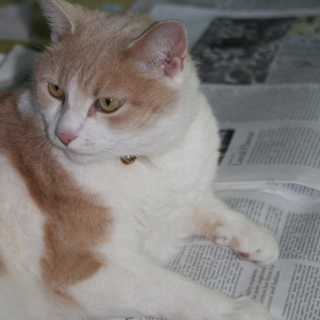
Eli, the In Brief Legal Writing Services mascot.
In Brief Legal Writing Services mascot Eli catching up on the latest news. Photo by Alexandra Bogdanovic

At any rate, the Humane Society contacted authorities after buying this type of video from someone in California, only to find that there were no adequate remedies under existing laws. Meanwhile, the documentation of animal abuse was increasing because of the Internet.

In search of answers, the then-county district attorney approached former Representative Elton Gallegly. He  in turn introduced a bill banning the production or sale of such videos. With little opposition, it was signed into law in late 1999.

“In 2010, however, the Supreme Court ruled that law unconstitutional on First Amendment grounds,” Chokshi reports.

In response, Gallegly created a new version of the bill, the Animal Crush Video Prohibition Act, which became the law that the recently introduced bipartisan legislation is designed to supplement.

Is this really necessary?

Currently, there are felony provisions in animal cruelty laws in all 50 states. So while the creation of a federal animal cruelty law may seem unnecessary, proponents say it’s an important step in the right direction.

First, as Sara Amundson, the president of the Humane Society Legislative Fund, the legislative and political arm of the Humane Society told the Times, it would address cases in which abused animals are taken across state lines. Secondly, it would help in cases where there are limited resources.

“It’s oftentimes the scenario where states don’t have the resources or they don’t have the knowledge in a situation to be able to carry these animal cruelty cases to prosecution,” Amundson said.

Finally, proponents hope it will serve as an effective deterrent because it is a known fact that animal abuse can often be a precursor to the commission of violent acts against people.

What do you think? Is this a good idea? Is it necessary? Leave your thoughts in the comments below.

 

On Pit Bull ‘Attacks,’ Naughty Cats and Other Topics

This vintage typwriter is our featured image.

The longer I live, the more I hate people.

Alexandra Bogdanovic
Founder/owner of In Brief Legal Writing Services, Alexandra Bogdanovic. Photo by N. Bogdanovic

OK, that’s not entirely accurate. Let’s just say the longer I live, the less tolerance I have for human stupidity. And considering I that I never had much tolerance for that in the first place, that’s saying a lot.

So you’re probably wondering what triggered this little rant. Well, a few things to be honest. The first is a news story about a pit bull that recently “attacked” someone on a New York City subway. I put the word “attacked” in quotation marks because I wasn’t there so I don’t know exactly what happened. From what I can gather from the news accounts (which I would never rely upon to draw a conclusion) the owner claims the dog was provoked. Others dispute that. Authorities say the dog is a known menace.

Based on limited information, all I know is this: Something triggered that animal. Perhaps (and I stress perhaps) the person who got bitten did deliberately or inadvertently provoke the dog. Or perhaps the dog was simply stressed by being in a crowded, claustrophobic, noisy environment. Perhaps it was scared, or overstimulated by being in that subway car. I mean, let’s be honest. Riding the New York City subway is stressful for a human. Imagine how overwhelming it must be for any animal.

No, I am not making excuses. Frankly, I think the whole entire situation is inexcusable. I don’t care if it really is a “service animal” (which is another topic for another blog). That dog should never have been put in that situation. Ever. Period. End. Of. Story.

Allowing that to happen  was clearly a recipe for disaster. It was irresponsible. And it was sad. It was sad because that owner should have known better — and if he didn’t he never should have been allowed to have the dog in the first place. It was sad because human stupidity may very well cost that dog its life.

Bad cat, or stupid people?

But that’s not all that’s bugging me. I’m also annoyed about a recent Facebook conversation with one of my cousins. To sum it up, she made a post about the action she planned to take against a neighbor’s cat that had used her garden as its personal latrine. I believe she mentioned the use of a  “super-soaker”  at least once.

Don’t get me wrong. I understand why she’s upset — especially since she has young children and there is clearly a double-standard regarding dogs and cats in her community. However, the point I made when I joined the discussion is that the cat is just being a cat. I seriously doubt that it has any malicious intent. That being stated, I as I also told my cousin, the owners are being irresponsible idiots by letting the cat run around unsupervised. In other words, don’t blame the animal. Blame the people.

As pet owners or pet “parents,” we are responsible for our animals. As long as they are in our lives, we are responsible for all aspects their health and well-being. We’re responsible for keeping them out of trouble… and like it or not, we’re responsible for their behavior. After all, we’re the ones with the consciences, and ability to reason. Allegedly.

Why I would never abandon my cat in a natural disaster

This vintage typwriter is our featured image.

It’s absolutely heartbreaking. In the wake of Hurricane Harvey and Hurricane Irma, social media sites have been saturated with news and photos about the dogs, cats, horses and other animals left to fend for themselves when their owners fled.

There have been harrowing tales of heroic rescues from rising flood waters. But there have also been heartwarming tales about all of the animal welfare groups working to reunite these animals with their families, or trying to find new homes for the pets that have been displaced.

Eli the cat.
In Brief Legal Writing Services mascot, Eli the cat.

As an animal lover and pet owner, I have mixed feelings about all of this. On the one hand, it makes me furious. From a purely emotional standpoint, I find myself wondering how anyone could abandon their pet in such horrible circumstances. As a reporter who has covered my share of natural disasters and the aftermath — I know a little bit of pre-planning could save a lot of heartache in the long run.

On the other hand, I find myself trying not to rush to judgment. After all, an argument could be made that no one really knows how they would react when confronted by a storm the magnitude of Harvey or Irma. It is easy to be an armchair quarterback from the warmth and safety of your house.

All of that being said, I didn’t leave Eli during Superstorm Sandy. And I would never leave my cat to fend for himself in a storm. Ever.

My reason for this is simple. As a person, I have the ability to make certain choices; ride out a big storm at home or seek shelter elsewhere, listen to the official weather advisories or ignore them, plan in advance, or take my chances. So to a certain extent, I have some control over what happens to me — even in the worst of circumstances. Eli doesn’t have that luxury. He is entirely dependent on me to take care of him and keep him safe. No matter what. He is my responsibility.

Yes, I’ve said it before and I will say it again. I will keep saying it until people not only listen, but act accordingly. As pet owners, we are responsible for what happens to our dogs, cats, horses, snakes,  gerbils, ferrets, birds… Our companions are not disposable. They are living, breathing beings with specific physical and emotional needs.

Can they adapt? Of Course. Can they survive without us? Yes. Should we put them in a position where they’re forced to do so? Absolutely, positively not.

That being stated, I’m keeping an eye on Tropical Storm Jose. And from what I’ve seen, if you live anywhere in the northeast, I suggest you do the same.

It’s time for the annual Puttin’ on the Dog festival

This vintage typwriter is our featured image.

Whatever you do, don’t try to get a hold of me on Sunday. I’ll be busy. All day. And by the time I get home, I’ll be dog tired (literally), hot and bothered. But I’ll also be happy.

Cute Kitten, courtesy of FURRR 911. Photo by A. Bogdanovic
Bolt, a kitten rescued by FURRR 911, at Puttin’ On The Dog & Cats, Too 2016. Photo by A. Bogdanovic

On Sunday, I’ll spend the entire day shooting the 30th annual Puttin’ on the Dog festival, which will be held at Roger Sherman Baldwin Park in Greenwich, CT. Hosted by Adopt-a-Dog, the event is billed as the biggest of its kind between New York and Boston and benefits several local animal rescue and welfare groups.

In addition to raising money and awareness for worthy causes, the festival gives animal lovers a chance to meet some of the dogs and cats that are available for adoption. It also gives dogs and their people a chance to show off by participating in various contests.

You can learn more about the fun and games here.

This will be the fifth straight year I’ve volunteered at the event. And personally, I’m looking forward to hanging out in the cat pavilion, photographing the action in the demonstration rings and on stage, and checking out the silent auction.

On that note, I’d better run. Hopefully I’ll see you on Sunday. If not, don’t call me. I’ll call you!

Small child and snake video: harmless fun or accident in the making?

This vintage typwriter is our featured image.

To think that we are always in control of any situation involving an animal is the height of human arrogance.

A video making the rounds on social media has prompted quite a debate. Some people think it’s cute. Others think it’s an accident waiting to happen.

The video in question, which has gotten more than 1.4 million views, shows a young child sitting on a sofa with what appears to be some sort of albino boa constrictor or python. As the camera rolls, the little child says “do it,” and the snake appears to “yawn.”

I’ve shared the post on my business page, so you can draw your own conclusions.

Here’s what I think

For what it’s worth, here’s what I’ve said publicly:

Alexandra Bogdanovic
Founder/owner of In Brief Legal Writing Services, Alexandra Bogdanovic. Photo by N. Bogdanovic

An objective and realistic assessment of any situation involving a small child and any animal, is that animals can be unpredictable, no matter how well they’ve been looked after and no matter how well “informed” their handlers/owners are. Animals act on instinct, accidents happen, and people (and the animals) get hurt. The only way to minimize the risk is to avoid potentially risky behavior. This is not a condemnation of snakes; the same thing can be said about dogs, cats, horses and other “mainstream” pets. To me a little common sense goes a long way. But that’s just me. We all have choices.

Just because this snake seems docile in this photo does not guarantee that this is “safe,” or that nothing will go wrong. To think that we are always in control of any situation involving an animal is the height of human arrogance.

What I haven’t said publicly (until now) is that it is one thing for adults to take risks. For an adult to put a child at risk is another thing altogether…

What are the odds?

With that in mind, I scoured the Internet in search of pet python and/or boa constrictor-related deaths and injuries in the United States. Here’s what I found.

According to the Humane Society,  incidents involving large “captive constrictors” resulted in 17 deaths in the United States between 1978 and 2012. Most of the fatal encounters (12) happened between 1990 and 2012.

Citing various sources in a 69-page report, the Humane Society summarized dozens of fatal and non-fatal incidents reported in 45 states. Here are just a few.

Fatal encounters…

July 1, 2009/Sumter County, Florida: A 2-year-old girl was killed in her crib by an
8½-foot Burmese python who escaped from an enclosure in her home. Weighing
only 13 pounds, the snake was determined to be severely underweight. The snake
had been purchased seven years earlier at a flea market. The child’s mother and her boyfriend were convicted of third degree murder, manslaughter and child neglect and sentenced to 12 years in prison.

August 22, 2001/Westmoreland County, Pennsylvania: An 8-year-old girl was
strangled by her father’s 11-foot, 26-pound pet Burmese python. The child had
been left home alone, and the snake broke through the top of the cage. Paramedics said she was not breathing when they arrived; she was taken to a hospital and placed on a ventilator until she was pronounced brain-dead two days later. An autopsy showed the cause of death was compression of her neck and chest.

August 29, 1999/Centralia, Illinois: A couple’s 1-year-old, 7½-foot African rock
python escaped from an enclosure and killed their 3-year-old son while he was
sleeping. They had obtained the snake three months earlier.

July 20, 1993/Commerce City, Colorado: A 15-year-old was killed by his brother’s
11½-foot pet Burmese python. He had snake bites on his body, and an autopsy
found he was suffocated. The 8-year-old snake had been a family pet since she was only a foot long.

Non-fatal encounters

August 11, 1997/Anaheim, California: A 10-year-old boy was attacked by his pet 12-
foot, 65-pound African rock python. The python, who was described “as thick as a
man’s thigh,” latched onto the boy’s hand and coiled tightly around his arm as he
was giving him a bowl of water. The boy’s older brother stabbed the snake several
times while waiting for paramedics to arrive. Worried that the snake would break
his arm, paramedics decapitated the snake with a kitchen knife. The boy was
treated at a medical center. One paramedic commented this was the third child he
has rescued “from the suffocating embrace of pythons.”

August 30, 2008/Las Vegas, Nevada: A 13-year-old girl visiting her father was
attacked by a pet Burmese python while she was sleeping in a bed. Responding to
the commotion, her father and uncle were unable to uncoil the snake. They
decapitated the approximately 15-foot snake with a butcher knife to rescue the girl. The teenager was hospitalized overnight with bruised ribs and a swollen abdomen. The snake reportedly escaped from a large tank with locks. The same day, a student zookeeper in Venezuela was crushed to death by a Burmese python.

I rest my case…

And with all of that being said, I rest my case. But please feel free to share your thoughts in the comments section below (and in the court of public opinion, of course)…


Source(s): http://www.humanesociety.org/assets/pdfs/wildlife/captive/constrictor-snake-attacks.pdf

http://www.humanesociety.org/assets/pdfs/wildlife/…/captive-constrictor-snake-incidents.pdf

Making a case for the dogs in Connecticut

This vintage typwriter is our featured image.

Judging by an article I just found, the old saying about the wheels of justice turning slowly doesn’t just apply to people. It applies to animals as well.

In Connecticut, it specifically applies to “dangerous” dogs that are  “accused” of committing certain “crimes.” And as far as I am concerned, that’s just not right.

Alexandra Bogdanovic
Founder/owner of In Brief Legal Writing Services, Alexandra Bogdanovic. Photo by N. Bogdanovic

You see these dogs — which are often acting on instinct, or training rather than malice — face the ultimate penalty for their alleged actions. Yes, there is a “dog death penalty here.”

Don’t get me wrong. There are some cases in which such a policy is definitely warranted — and many where it isn’t. But that’s not the point.

The point of this particular post is to address a different but related matter; namely the amount of time the state can or should keep a “dangerous” dog in “custody” before it is euthanized.

Currently,  Connecticut “has no standards for determining when an animal should be euthanized, leaving it to the discretion of local animal control officers,” according to attorneys for a Connecticut dog owner whose Rottweilers have been living on what the media calls “a canine death row” for five years.

According to published reports, Kato and Kleo’s owner says they got out of their yard and bit a neighbor “only after they were attacked.” The state then ordered them to be put down.

Lawyers for plaintiffs in a recent federal class action lawsuit are now arguing that the lack of standards in such circumstances is a violation of dog owners’ rights. Specifically, they say it is “a violation of due process and an unreasonable seizure of property.”

I’m not a lawyer — but I happen to agree.

What do you think? Share your opinion in the comments section below.


The best investment you’ll ever make

This vintage typwriter is our featured image.

I must admit, I’m a bit preoccupied this morning. I should be working, but I just can’t concentrate.

Eli is out of sorts, too. I can tell because he’s sleeping under my bed. And he only does that when he doesn’t feel well, or he’s upset, or he just doesn’t want to be bothered.

Eli the cat.
In Brief Legal Writing Services mascot, Eli the cat. Spring 2017. Photo by Alexandra Bogdanovic

Perhaps he’s still miffed about what happened yesterday. On what was arguably one of the most beautiful days of the summer here in Connecticut, he got stuck inside. By himself. All day. And to add insult to injury, no one said goodbye. No one left a fan on for him. And, most importantly, his number one person (yours truly) forgot to clean out his litter box before she left.

Trust me, he found a creative — and frankly disgusting — way to let the sanitation committee (yours truly) know that he was not happy about the latter.

What can I say? He’s a sensitive boy.

If I ever had any doubt about that — which I haven’t — he reminded me on Saturday. I was, once again, voicing my anguish, anger, unhappiness and disgust about our general contractor’s insistence on “boxing in” a set of pipes (that had previously been capped in the attic and were no longer going to be used). By doing so, he completely screwed up the portion of my brand new, open concept living area, where I was dreaming of having a little reading nook. I was also lamenting my mother’s decision to install two small closets and a sewing station there… but that’s another story.

Of course, Eli had no idea why I was so upset. He could just tell that I was unhappy by the tone (and volume) of my voice, and my body language. So he came over to me and offered what little comfort he could, rubbing his head on my leg. Please don’t be sad, he seemed to be saying. It will all be OK.

And in that instant, I relaxed. I actually felt my heart rate and blood pressure drop as I patted Eli and felt the steady thrum of his purr…

And that finally brings me to the point of this post, which was to share an interesting article I just found on marketwatch.com. In it, the author says that in our quest for happiness, spending money on pets is far more rewarding than spending it on material stuff.

Personally, I couldn’t agree more.

How about you? Share your thoughts about your pets and pet ownership in the comments section below.

Nine years later… animal intelligence debate still rages

This vintage typwriter is our featured image.

Earlier this week, my mother handed me an interesting edition of National Geographic — from March 2008.

The cover featured a picture of an adorable black and white border collie and the headline, “Inside Animal Minds: Birds, Apes, Dolphins, and a Dog With a World-Class Vocabulary.”

Eli, the In Brief Legal Writing Services mascot.
In Brief Legal Writing Services mascot Eli catching up on the latest news. Photo by Alexandra Bogdanovic

The inside headline was just as intriguing. It said: “Minds of their Own: Animals are smarter than you think.”

According to the article, Uek, a New Caledonian crow, “solves problems and creates and uses tools — once thought the domain solely of primates.” Then there’s Azy, an Orangutan who “shows cognitive complexity and flexibility rivaling that of chimps,” and Shanthi, an Asian elephant who is capable of retaining long memories and “has a sense of self.” Even an unnamed African Cichlid can determine “social rank according to observation,” which is a “step on the way to logical reasoning,” according to the article.

The list goes on.

Edward, a Black Leicester Longwool sheep belongs to a species that can “recognize individual faces and remember them longterm.” JB, a Giant Pacific octopus, and the rest of his kind, have distinct personalities, use tools and recognize individuals.

But according to the article, few wild or domesticated animals can top Betsy. Betsy the Border Collie, who was six at the time, had a staggering vocabulary that totaled 340 words “and counting…”

The debate goes on…

Nine years later, the debate about animal intelligence goes on. And if anything, it has intensified as more and more people view companion animals as family members.

Ask anyone who has a pet about its intelligence you will no doubt be regaled with dozens of anecdotes. After all, people love to brag about their dogs, cats, horses, gerbils, ferrets, birds, rats….

But then again, there are those people who don’t like animals, don’t have pets and scoff at the mere mention of “animal intelligence.” Of course, these people also think that they’re the “smartest people in the room.” To them, there is simply no comparison to human intelligence… or human superiority for that matter.

That’s their opinion — and of course, they’re entitled to it.

Personally, I disagree. And as far as I’m concerned, there’s no end to human stupidity…

Connecticut gets it right with animal advocacy law

This vintage typwriter is our featured image.

I don’t care if people are leaving Connecticut in droves. I love it here.

Eli, the In Brief Legal Writing Services mascot.
In Brief Legal Writing Services mascot Eli catching up on the latest news. Photo by Alexandra Bogdanovic

I mean honestly, what’s not to love? I’ve got Long Island Sound as a summertime playground. The greatest city in the world is just a short train ride away. If I want to go to the world’s coolest flea markets, they’re just a short car ride away. The possibilities are endless…

Having said all of that, I can’t honestly say I’m always proud of living here. The state economy is a disaster. State leadership under Gov. Dannel Malloy is a joke. The cost of living is obscene. The traffic is a nightmare. The infrastructure is crumbling.

Without going into too much detail, locally things aren’t much better.

Giving credit where it’s due

But I’ve got to give Connecticut lawmakers credit for one thing… and only one thing. They definitely got it right when they came up with a bill that allows advocates with an interest and/or expertise in animal law to provide courtroom assistance in animal cruelty and neglect cases. I also applaud for Malloy for having the courage to sign it into law.

As those of you who follow this blog faithfully know, I’ve been following developments and blogging about this particular law for some time. But because it is the first of its kind in the United States, “Desmond’s Law” is now attracting national attention.

Here’s where you can learn more:

Silencing the critics

Of course there are more than a few people who don’t like or don’t care about animals. And they probably don’t think this is a good idea. I am sure they think that, at a time when criminal courts are already overburdened, humans should come first.

Well’s here’s what I have to say about that. There is clear evidence that people who are prone to hurting animals are also prone towards engaging in violence against people. So anything that can be done to stop people from hurting animals, and ensuring that they’re punished to the fullest extent of the law when they do is fine with me.

Just saying…

For tenants with pets, fear of eviction is real

This vintage typwriter is our featured image.

As a little kid, I always wanted a pet. But I couldn’t have one. For one thing, I was horribly allergic to just about everything. If I patted or got licked by a dog, I had an asthma attack or broke out in hives. If I got scratched by a cat, I got an antihistamine reaction.

When I was 10, everything changed. We got a cat. Her name was Tiger. We got her from some friends that were moving to Saudi Arabia. She was supposed to live in our attic.

Eli, the In Brief Legal Writing Services mascot.
In Brief Legal Writing Services mascot Eli catching up on the latest news. Photo by Alexandra Bogdanovic

And she was only supposed to stay with us long enough to eradicate the mice that were running rampant in our apartment. She never caught a mouse. And I had her for 17 years.

It’s a good thing our landlord was cool with it. That’s not always the case.

The case of the selective ‘no pets policy’

In an article I came across the other day, the author answered an interesting question about an allegedly selective “no pets policy.” Specifically, the reader who submitted the question to The New York Times “Ask Real Estate” page, wanted to know if his (or her) new landlord could make good on a threat to evict him (or her). The alleged threat to do so  is based on a claim that the reader has a pet and is therefore in violation of his (or her) lease.

In this case, the reader lives in a “rent-stabilized apartment” in Brooklyn. His (or her) chihuahua has also lived there for the past 10 years.

Based on the information provided the short answer is “no.” You can read a more detailed explanation here.

In the same article, you can also learn why the new building owners are well within their rights to extend “pet friendly” leases to some new tenants, but not to others.

If there’s one thing scarier than getting kicked out of your home…

Being homeless is a frightening prospect for anyone. But if there’s one thing scarier for an animal lover, it’s being forced to choose between their home and their pet.

With that in mind, I’m including a list of resources below  that you can consult if you or someone you know is facing eviction. Please keep in mind that this material is provided strictly for informational purposes and is not legal advice.