
Connecticut Cat Tax Proposed

This vintage typwriter is our featured image.

It’s official. I’m speechless. Completely. Utterly. Totally. Speechless. Seriously. I’ve got nothing.

And for the record, it takes a lot to put me in this state. I’m never at a loss for words. But I just can’t wrap my head around the Connecticut Cat Tax. l’m serious. Connecticut Democrats want to impose a “cat tax” on those of us who have felines and are still “lucky” enough to live here (sarcasm fully intended).

I read all about it on the Hartford Courant’s website earlier this week. At first I thought it had to be fake news. Unfortunately I checked the Connecticut General Assembly’s website, and it’s true.

What a catastrophe

At this time, raised S.B. 999 is officially known as An Act Concerning The Fee For Adopting a Dog, Cat or Other Domestic Animal From a Municipal Pound and Requiring the Licensing of Such Cats and Other Domestic Animals. 

I kid you not. This is what they decided to call it. Why didn’t they just call it a cat tax? It would have been so much easier that way.

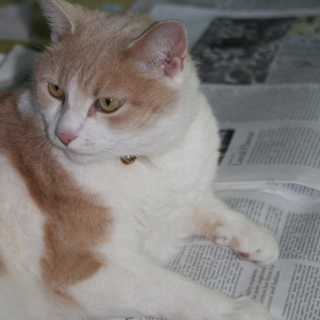
In Brief Legal Writing Services Mascot, Eli.
Eli The Cat. Photo By Alexandra Bogdanovic

At any rate, the stated purpose of this proposed “Act” is to “increase the fee paid by anyone adopting a dog from a municipal shelter and to require the payment of such fee for anyone adopting a cat or other domestic animal from a municipal shelter and to require the licensing of such cats and other domestic animals.”

You can find the link text of the proposed bill here. In the meantime, I’ll just hit the “high points.”

As currently proposed:

  • Any Connecticut resident that  purchases a dog, cat or other domestic animal as a pet will have to pay a $15 fee to the municipal animal shelter or dog pound in order to get a license and tag for it from the town clerk.
  • Anyone that purchases a dog, cat or other domestic animal as a pet in Connecticut will also be required to cover the cost the municipality incurred, if any, to spay or neuter and vaccinate the dog [sic], provided such charge is not more than $150.
  • Any Connecticut resident that owns or keeps a dog that is at least six months old, except those  kept under a kennel license as provided by law; and anyone that owns a cat or other domestic animal adopted from a municipal animal shelter or dog pound  will be required to have the animal licensed in the town clerk’s office in the town where it is kept, on or before June 30th, each year after it turns six-months old.
  • The annual licensing fee for each qualifying neutered or spayed animal would be $10.
  • The annual licensing fee for each unaltered qualifying animal would be $15.
  • In addition to the licensing fee there would be a $2 fee for issuing a license and tag as allowed by law.
  • Anyone required to comply with the new law who failed to do so would be required to pay the appropriate license fee, the town clerk’s fee and a $1 penalty for each month or portion of a month that the animal remains unlicensed.

Why a cat tax simply won’t work…

The public got a chance to have its say at an Environment Committee hearing held March 11.

In a letter to the committee, Ellington resident Diana Bump voiced numerous reasons for her opposition.

“Requiring cats to be licensed will deter adoption and/or barn cat owners from taking in cats and also lead to more euthanizing of shelter cats. Licensing cats will cost more to the state implement than it will actually receive in cat licensing fees, no doubt,” Bump wrote. “Licensing cats will not incentivize spaying/ neutering either as the main reason people do not spay/neuter is because of costs and adding licensing fees will make it even more unaffordable.”

Bump also pointed out that most indoor/outdoor cats wear so-called “break away” collars, which are designed to come off if the cat gets it caught on something, so tags could be lost easily. The use of non-break away collars is unsafe, she added. Finally Bump also noted that any noise made by the tags could alert predators to a cat’s location, putting it at risk.

Hamden resident David Malicki put it even more succinctly.

“As most shelters are often overflowing with animals for adoption, I find this proposed House Bill 999 absolutely sub-human,” he wrote. “This bill should not be even considered for a motion. This bill should have never been proposed. Shame on all of you for this shortsighted proposal.”

Animal advocates also oppose the measure as proposed.

So now it’s your turn. What do you think? Is this a good idea, or not? Let’s talk about it. Leave your thoughts in the comments section below.

New York Following Cali’s Lead On Pet Store Law

This vintage typwriter is our featured image.

If at first you don’t succeed, try, try again. That’s the approach two New York legislators are taking as they push for the passage of a new law regulating how people can acquire pets.

According to recent media reports,  the state lawmakers, who represent different New York City boroughs, co-sponsored the legislation that would prevent pet stores from selling small animals and companion animals obtained from “large commercial breeders.”

Instead, the pet stores will be required to source and sell animals from licensed rescue shelters or humane societies. The law would also allow the humane society or shelter to keep any animal not sold/adopted through the shops.

The proposed measure failed to gain any support last year. However, proponents are optimistic that will now change with the power shift in the state legislature.

Jumping on the bandwagon

This idea isn’t unique to New York. Not too long ago, I wrote about a similar measure currently being considered in Connecticut.

dog parade, puttin on the dog, 2018
An Adopt-A-Dog volunteer with a dog available for adoption. Puttin’ On The Dog, 2018. Photo by A. Bogdanovic

Like the proposed legislation in New York, the Connecticut measure failed to gain any support in the past. Although a fire at a Danbury, Connecticut pet store prompted renewed interest in the issue, it also sparked concern.

“We’ve been sending home between 60 to 80 puppies a month, and we’ve been doing it for 25 years. Most of the people who come to us are looking for pure-bred dogs, which many local rescues don’t offer,” Sean Silverman, the owner of Puppy Love in Danbury told the media.

“If stores like ours are unable to provide the type of puppies that people want, then some 15 to 20 thousand people here in Connecticut will go on the internet, get a dog with zero regulations, and have it shipped, but will not get any guarantees, it’s just putting these people in a bad situations.”

Because some state lawmakers have express reservations as well, there is no guarantee the measure will pass.

California law enactment sets precedence

Earlier this year, California became the first state with this type of law.

Inked by Governor Jerry Brown in October 2017, the new law (which included provisions giving businesses time to adjust) takes aim at so-called “puppy mills” and “kitten factories.” While it does not prohibit people from buying small- and companion animals directly from breeders,  it does mandate that pet stores throughout the state sell only dogs, cats and rabbits sourced from shelters and rescues.

“By offering puppies, kittens, and rabbits for adoption from nearby shelters, pet stores can save the lives of animals in search of a home, save the breeding animals trapped in puppy mills, and relieve pressure on county budgets and local tax payers,” a fact sheet said.

Among other things, SEC. 2. Section 122354.5(c) of California’s Health and Safety Code now mandates that pet stores keep detailed records of the animals made available to the public. Specifically, pet shop owners must “post, in a conspicuous location on the cage or enclosure of each animal, a sign listing the name of the public animal control agency or shelter, society for the prevention of cruelty to animals shelter, humane society shelter, or nonprofit from which each dog, cat, or rabbit was obtained.” Pet shop owners must also make this information available to  public animal control agencies or shelters upon request.

As stipulated in SEC. 2.Section 122354.5(e) of the state Health and Safety Code,  pet store owners that don’t comply with the new law faces a civil penalty (fine) of five hundred dollars ($500) for each animal “offered for sale in violation of this section.”

In conclusion

Clearly, these laws — like any others — have their share of pros and cons. Proponents hope they’ll put an end to puppy mills and kitten factories, while easing the burden on animal shelters and rescue groups. Opponents are concerned about over regulation.

The bottom line is that only time will tell whether the type of legislation passed in California will become law elsewhere.

NY Farm Bureau Pledges More Support For Those Who Enforce Animal Cruelty Laws

This vintage typwriter is our featured image.

A few years ago, the New York Farm Bureau — a volunteer organization dedicated to serving and strengthening agriculture in the state — teamed up with the New York State Humane Association. Together, they convinced state legislators and the governor that a new law created a to help provide law enforcement training in existing animal cruelty laws would be worthwhile.

The law mandates that the New York State Department of Agriculture and Markets work with the Municipal Police Training Council and the Division of Criminal Justice Services to:

  • develop training,
  • create materials and
  • provide information regarding animal cruelty statutes for New York’s police agencies, officers and district attorneys.

“Crimes against animals are a significant public safety, health and quality of life concern for communities across New York State” said Susan McDonough of the New York State Humane Association. “Improved access and understanding of the state’s cruelty statutes will enhance the efforts of officers and ensure better outcomes for animals and people.”

Unfortunately,  nothing has transpired due to a lack of funding in the state budget since then. The New York Farm Bureau now says that is not acceptable.

A top priority

Back in January, the organization issued its list of legislative priorities for 2019. Among other things, the organization pledged to support training for authorities and prosecutors that investigate animal cruelty laws included in the current statute in Agriculture and Markets Law.

“Farmers take animal care seriously and believe law enforcement could be better equipped to deal with abuse cases by receiving adequate training on Agriculture and Markets Law,” said Jeff Williams, New York Farm Bureau’s Director of Public Policy.

It makes sense. These laws are complicated.

New York’s animal cruelty laws

Eli, the In Brief Legal Writing Services mascot.
In Brief Legal Writing Services mascot Eli catching up on the latest news. Photo by Alexandra Bogdanovic

To begin with, look how the state defines animal cruelty. In Article 26, Section 353 of the Agriculture and Markets law, it is classified as activity in which someone:

  • overdrives, overloads, tortures or cruelly beats or unjustifiably injures, maims, mutilates or kills any animal, whether wild or tame, and whether belonging to himself or to another; or
  • deprives any animal of necessary sustenance, food or drink, or neglects or refuses to furnish it such sustenance or drink; or
  • causes, procures or permits any animal to be overdriven, overloaded, tortured, cruelly beaten, or unjustifiably injured, maimed, mutilated or killed, or to be deprived of necessary food or drink; or
  • wilfully sets on foot, instigates, engages in, or in any way furthers any act of cruelty to any animal, or any act tending to produce such cruelty.

Then there are the laws pertaining to aggravated animal cruelty, and related offenses set forth in Section 353-b through Section 353-f.

Additional resources

Of course, authorities and lawyers aren’t completely without guidance when it comes to this topic. Here are just a few of the available resources.

The New York City Bar Association’s Committee on Legal Issues Pertaining to Animals makes comprehensive information available online. This information is specifically tailored for prosecutors, defense lawyers and judges.

The New York State Humane Association also makes How to Investigate Animal Cruelty in NY State – A Manual of Procedures available online. This guide covers numerous topics of interest and use to authorities including:

  • how to receive and investigate a complaint,
  • all NYS laws pertinent to animals – along with explanations,
  • pertinent case law
  • basic animal care standards

It also includes:

  • appendices including forms that can be used in cruelty investigations,
  • pamphlets on various animal care topics,
  • relevant articles

The bottom line is that knowledge is power — especially when it comes to fighting animal cruelty.

CT Regulation Of Gig Economy Pet Businesses Stirs Debate

This vintage typwriter is our featured image.

GIG ECONOMY(noun): A way of working that is based on people having temporary jobs or doing separate pieces of work, each paid separately, rather than working for an employer…

Of course, this definition is from the dictionary. And as such, it is accurate. But it is also rather generic and somewhat outdated. Since I’m an active participant in the 21st century version, I prefer to think of the gig economy as: a system in which Internet platforms and/or apps are created to: a) offer certain services, and b) facilitate hiring of independent contractors to provide them.

If that sounds too convoluted, here are some examples. First, there are platforms that specifically cater to “creatives” and other skilled professionals, such as Upwork and Freelancer. And then there’s:

  • Uber
  • Lyft
  • Instacart
  • DoorDash
  • TaskRabbit

The list goes on, and on….

Don’t forget Rover and Wag

There are even apps that cater to those of us who have — and those of us who enjoy working with — companion animals. Take Rover, for example. This website/app lets people sign up as pet sitters. If they are approved (following an application process that includes a basic background check),  they are paired with pet owners in need of boarding, house sitting, dog walking, “doggy daycare,” and home visits.

Great Dane wins Best Lap Dog contest at Puttin' on the Dog.
Best Lap Dog winner. Puttin’ on the Dog. Photo by Alexandra Bogdanovic

Specifically, pet owners can use Rover to find sitters in their area and arrange for the services they need.

Another website/app called Wag also caters to people interested in becoming dog walkers and dog sitters/boarders. Like its counterpart, Wag claims that it puts applicants through comprehensive screening process before they are approved. Once they are, they are paired with pet owners in need of specific services.

In Connecticut, the law struggles to keep up

As the gig economy keeps on booming, legislators across the country are struggling to keep up. In Connecticut, for example, lawmakers have come up with two approaches for addressing regulatory concerns associated with Internet/app-based pet care services.

Introduced by state Senator Catherine Osten, proposed S.B. No. 250 is also known as “An Act Concerning the Regulation of Commercial Kennels.”  If approved, it would change the language in existing laws so a commercial kennel would be legally classified as “a place maintained for boarding or grooming five or more cats or dogs.”  That way, anyone who cares for four or fewer animals belonging to other people  in their own homes would not be defined and regulated as commercial kennels.

Osten said she proposed the legislation as a way to protect thousands of people in Connecticut that work as gig economy pet sitters from being regulated in the same way as traditional commercial kennels.

Then there’s proposed H.B. No. 5399 or “Ann Act Concerning the Definition of Kennel for the Purposes of Commercial Kennel Regulation,” which was introduced by state Rep. Kim Rose. It also calls for changes to existing language so that a kennel is defined as “a facility rather than to a pack or collection of dogs.” Doing so would “clarify the statutory provisions for  commercial kennel registration and regulation by the Department of Agriculture.”

“We’re not trying to tell these internet businesses ‘you can’t do business in Connecticut,’” Rose told the Hartford Courant. “All we’re asking them to do is the right thing: become licensed and inspected so we can make sure you’re taking good, healthy care of our pets.”

What do you think? Leave your thoughts in the comments below.

Helping California’s Homeless Humans And Their Pets

This vintage typwriter is our featured image.

Pets are family, the human animal bond is not diminished whether living on the streets or living in a home. — Front Street Animal Shelter Manager Gina Knepp

Alexandra Bogdanovic
Founder/owner of In Brief Legal Writing Services, Alexandra Bogdanovic. Photo by N. Bogdanovic

In the interest of full disclosure and at considerable risk of alienating some of you, there’s something I must confess. I am an East Coast girl, born and bred (sort of). So I love New York… and by New York, I mean New York City. I also hate California. Passionately.

Yes, I’ve been there. In fact I’ve been there several times. And as far as I’m concerned, its only redeeming feature is (some of) its residential architecture. Apart from that, the less said the better…

Bill addresses Golden State homelessness

Putting my personal feelings aside, I was intrigued when I recently came across an article about proposed legislation that takes an interesting approach to addressing homelessness in California.

As reported on time.com, state Sen. Robert Hertzberg introduced the bill that would allow shelters throughout the Golden State more inviting to the homeless by accommodating their pets, too.

The details are also available on Hertzberg’s website, where he explains that only six out of 46 shelters serving the Los Angeles area allow homeless people to bring their pets. Hertzberg hopes his measure will help to change that by allocating $5,000,000 in grants to homeless shelters that provide shelter, food, and basic veterinary services to the pets of people experiencing homelessness.

“The act of opening up shelters to pets may seem simple, but it will have a huge impact on the goal of reducing the number of individuals who are sleeping on the streets,” Hertzberg said. “Providing these resources for shelters is just one small way we can make a dent in this incredible issue facing our state, while also improving the lives of our most vulnerable.”

California: a state in crisis

Last year, the U.S. Department of Housing and Urban Development once again issued its Annual Homeless Assessment Report (AHAR) to Congress. In it, the agency’s Office Of Community Planning And Development shared data detailing the extent of homelessness throughout the country.

In this context, the agency also revealed the true scope of California’s homeless crisis in 2018. Specifically, it indicated that there approximately 130,000 homeless people could be found there on any given night. Perhaps even more alarmingly, the report noted that 69 percent of people experiencing homelessness in the Golden State were found in “unsheltered locations.”

Given that, Stephanie Klasky-Gamer, president and CEO of LA Family Housing said Hertzberg’s proposal makes sense.

“As a service provider, we often find that people experiencing homelessness will refuse Bridge Housing if it means leaving their support animal behind,” she said. “Allowing support animals onsite eliminates that barrier, allowing us to keep the unit together, and move more people off of the streets.”

Front Street Animal Shelter — bridging the gap

Given the debate over whether homeless people should even be allowed or encouraged to have pets, there’s no guarantee that Hertzberg’s colleagues will support the measure. And there’s no guarantee that the governor will ink it if they do.

So for now, some people are taking the matter into their own hands. Take the situation in Sacramento, where there is a lack of consistency regarding pet policies at the county’s shelters. In the capital, Front Street Animal Shelter has intervened and uses its own funds to  provide “everything from kenneling and microchipping to food and leash donations for the pets of individuals in shelters.”

As far as Front Street Animal Shelter Manager Gina Knepp is concerned, if the shelter can do its part, state lawmakers follow suit.

“It is imperative that funding be included for the animal component if we are ever to solve the homeless crisis,” she said. “Pets are family, the human animal bond is not diminished whether living on the streets or living in a home. Failure to appropriately give consideration to this aspect of the crisis would be a travesty. The positive impact on the lives of pet owners experiencing homelessness would exponentially rise should we do what is most humane and humanitarian for both ends of the leash.”

What do you think? Is this a good idea? Why or why not? Let’s talk about it. Leave your thoughts in the comments below, or cast your vote here.

Pot And Pets Don’t Mix Either

This vintage typwriter is our featured image.

In my last post, I shared all of the reasons why it’s not a good idea to let your pets get a hold of your prescription and over the counter medication. As it turns out, it’s not a good idea to let them get a hold of your medical or recreation marijuana, either. In other words, pot and pets don’t mix.

What’s up, doc?

This is hardly breaking news. There have been lots of articles about this topic as more states have legalized marijuana for recreational and medicinal purposes. The latest of these is a recent Boston Herald article that cites statistics indicating that the number of marijuana-related calls to the American Society for the Prevention of Cruelty to Animals 24-hour Poison Control Center was nearly nine times greater in 2018 than in 2008. As the article also notes, the number of calls to the center made by concerned Massachusetts pet owners also increased significantly over the 10-year period.


In fact, as one area veterinarian told the Herald, it is not unusual for the animal hospital where she works to treat 20 to 25 dogs for marijuana ingestion each month. The number of pooches treated there after ingesting the substance contained in brownies or some other sort of food, has increased significantly in recent years, the vet says.

Luckily for cat owners, felines aren’t as likely to eat marijuana-laced brownies and similar “treats” because they don’t like sweets as much as their canine counterparts, the veterinarian explains.

Symptoms and treatment

The good news for the veterinarians faced with treating dogs for marijuana ingestion is that owners are now being more open about the cause of their pets’ distress in states where marijuana is legal.

That’s important because it ensures prompt treatment for dogs with symptoms including:

  • lethargy
  • slow heart rate
  • incontinence

The bad news is that depending on the amount of marijuana ingested, our pets can sometimes get pneumonia. Furthermore, marijuana-laced brownies or other chocolate “goodies” pose an even greater threat to dogs because chocolate is also poisonous for them. And sometimes,  our pets don’t survive.

For those that do, treatment isn’t pleasant. It includes forced vomiting and the administration of intravenous fluids and charcoal to counteract the toxin over a few days.

A simple solution

Experts say there’s a very simple solution to this problem. Don’t leave your pot where your pets can get it. Sounds like good advice to me.


Connecticut Pet Store Fire Sparks Controversial Puppy Mill Bill

This vintage typwriter is our featured image.

A recent fire at a Danbury, Connecticut, pet store has apparently prompted a handful of state lawmakers to revisit proposed legislation targeting puppy mills.

According to published reports, the so-called “Puppy Mill Bill” would  “address shutting down so-called puppy mills and kitten factories, which are large-scale commercial facilities that breed animals and sell them to many local puppy stores in Connecticut and New York.”

The media also notes that the way the bill is written and designed is similar to a new California law that just went into effect. Like its west coast counterpart, the Connecticut bill seeks to prevent pet stores from selling dogs, cats and rabbits unless they are sourced from animal shelters or rescue groups. If passed, however, the Connecticut bill would not affect  local breeders who sell the animals directly to the public.

There was too much excitement at Puttin' on the Dog for these little kittens!
We’re pooped! Hurricane Harvey kittens at Puttin’ on the Dog, 2017. Photo by Alexandra Bogdanovic

Critics push back

Even so, not everyone is happy about the proposed legislation. In an ensuing interview, the owner of Puppy Love, the pet store where the fire occurred, said the law would  be “a huge mistake.”

Specifically, Sean Silverman, who sources the animals he sells from “reputable breeders” with “complete guarantees,” says the law could put him out of business.

“Most of the people who come to us are looking for pure-bred dogs, which many local rescues don’t offer,” Silverman said. “If stores like ours are unable to provide the type of puppies that people want, then some 15 to 20 thousand people here in Connecticut will go on the internet, get a dog with zero regulations, and have it shipped, but will not get any guarantees, it’s just putting these people in a bad situations.”

Silverman also said that his business complies with all applicable state regulations.

“I pay about $7,000 a month in vet bills back to customers whose dog or cat may have had issues within 20 days of the purchase,” he explained. “Stores like ours do this because it’s the law. I have a five-year congenital warranty as well, something that would not be offered by a shelter or home breeder.”

Businesses like his are already “heavily regulated,” Silverman concluded. Given that, he said, it is clear that a bill targeting them “would be a huge mistake.”

State Representative Representative Richard Smith from New Fairfield also told the media that he has some concerns about the broad language in the proposed legislation and cannot support it in its current form.

Seeking support

On the other hand Representative Steven Harding has no problem supporting the measure.

““As a dog owner myself, I am happy to support initiatives that help to ensure that pets are treated safely and humanely,” he told the media.

Representative Raghib Allie-Brennan, from Connecticut’s 2nd Assembly District, which includes  Bethel, Danbury, Newtown, and Redding, is currently leading a bipartisan delegation of seven legislators backing the proposed legislation. Of the seven on the committee, five are co-sponsoring the bill with him.

Although Allie-Brennan is now seeking more support from colleagues who have these type of pet stores in their districts, only time will tell whether the legislation finally gets the backing it needs.

What do you think? Should Connecticut approve this bill? Why or why not? Share your thoughts in the comments section below.

On Pet Parents Fur Babies And The Joys Of Cleaning Cat Puke

This vintage typwriter is our featured image.

Just for the record, Eli is not my “son.” He is not my “fur baby,” and I am not his “mother.” No, Virginia, I am not a “pet parent.”

That is not to say I don’t love him. Of course I do. That I love him enough to take a bullet for him is well documented in this forum. That I would also beat the living hell out of anyone who even thought about harming one fur on his incredibly adorable little head should also go without saying.

Eli, the In Brief Legal Writing Services mascot.
In Brief Legal Writing Services mascot Eli catching up on the latest news. Photo by Alexandra Bogdanovic

That’s because Eli is a cat. Sure, he is my constant companion, my best friend and my therapist, all wrapped up into one really cute bundle of fur. And yes, he is definitely part of the family. As such, he counts on me and my mother (his people) to provide food, water, a clean litter box, medical care (although he hates the vet), shelter and protection, among other things.

I can’t speak for my mother, but personally I am happy to oblige.

The joys of cleaning up cat puke

Sometimes. No. Make that most of the time. To be brutally honest, there is one aspect of being Eli’s No. 1 person that I really don’t enjoy. I mean, I know he needs one, but I really don’t appreciate that he appointed me sanitation chief. In this capacity, I am not only responsible for cleaning out and changing the litter in his boxes, but I am also solely responsible for cleaning up after him whenever he pukes.

This usually happens when he’s been out on the deck, bingeing on the grass in the containers we leave out for him. And since we have a lot of hardwood floors in our house, there are times when the clean up is relatively easy. And then there are times — like Monday morning — when, for some strange reason, he decides not to puke on a hard surface.

On Monday morning, I came up to my loft/home office to find that my dear, sweet, lovable, adorable cat, whom I love more than life, had puked all over one end of an extremely expensive futon. Needless to say, I was not happy about it.

At least kids learn to clean up after themselves

After spending at least half an hour gathering supplies, cleaning and scrubbing, I finally got rid of the mess. And I found myself thinking that maybe — just maybe — there are some similarities between taking care of a cat and taking care of a child.

“I challenge anyone to tell me that taking care of a cat isn’t like taking care of a little kid,” I told my mother. “I seem to spend a lot of time cleaning up poop and vomit.”

“Yes, she said. But at least children evolve. Animals stay fairly constant.”

She’s got a point. I mean, Eli is brilliant. But unless he suddenly, miraculously sprouts opposable thumbs, learns to walk on his hind legs and gains even more self-awareness, he won’t be cleaning up after himself anytime soon.

But that’s OK. I love him anyway.

End Dogfighting In Connecticut Now

This vintage typwriter is our featured image.

Anyone who knows me at all knows I have a temper. Anyone who knows me at all also knows that I have absolutely, positively, no tolerance whatsoever for criminal activity targeting children, the elderly, or animals.

So imagine how I felt when I read a January 21 article on ctpost.com detailing the prevalence of dogfighting in Connecticut. Let’s just say I wasn’t very happy. In fact, it made my blood boil.

As far as I’m concerned, there is no place for this vicious, cruel, and barbaric activity at all — much less in the 21st century. The time to end it is now.

The harsh reality of dogfighting in Connecticut

Jessica Rubin, a state animal advocate and UConn law professor quoted in the article,  has researched dogfighting charges in Connecticut. While doing so, she  found that 110 people were charged with “dogfighting related offenses” here between 2007 and 2017.

Among other things, Rubin told ctppost.com that  there were no charges in some years and multiple charges in others. She also noted that the activity seems to be most prevalent in areas with the greatest population densities.

“The issues include extreme cruelty, criminal behavior, gambling, giving dogs unauthorized medicines and violence,” Rubin said. “Children are exposed to the offenses and it compounds the dogfighting.”

One of the many dogs available for adoption at a local shelter a few years ago.

Meanwhile, dogs that are lucky enough to survive and escape their ordeal, “usually end up in shelters around the state in hopes that law-abiding dog lovers will adopt them and end their nightmare with care and love.”

And then there are those who aren’t so fortunate.

“When they’re no longer profitable to dog fighters — or if they don’t show enough ‘fighting spirit’— they’re typically killed in atrocious ways, including by being used as ‘bait dogs,’ drowned, electrocuted, beaten or hanged,” Martin Mersereau, vice president of People for the Ethical Treatment of Animals, told ctpost.com. “There are no winners in this sickening blood sport, only abject criminals who represent the very worst of human nature,” Mersereau added.

Freedom’s story

Two years ago, someone found a badly wounded dog — later named Freedom by rescuers —  “wandering on Brushy Plains Road in Branford covered in scars and injuries.”

His story is also chronicled in the ctpost.com article.

According to the account, officials at the Branford Animal Shelter concluded the wounds were the result of dogfighting. They also determined that  Freedom whose teeth were filed down so he couldn’t inflict damage on other dogs,  was probably used as a “bait” dog. As such, it would have been his “job” to  trigger attacks by combatants.

“Based on the wounds, this dog definitely took the brunt of whatever has been going on,” shelter director Laura Burban then told the New Haven Register. “What we can see is that it looks like his feet were tied together and he was used as the bait dog for other dogs to attack him,” she said.

Freedom is not alone…

Currently, dogfighting is not only illegal throughout the United States, but it is also a felony  in all 50 states and the District of Columbia.

Even so, Freedom’s story is not unique.

According to American Society for the Prevention of Cruelty to Animals (ASPCA) statistics cited in the ctpost.com story, there are tens of thousands of dog fight organizers across the country that force hundreds of thousands of dogs to brutally train and fight for sport.

Over the last eight years, the organization says, it has assisted with 200 dogfighting cases in 24 states and has helped rescue and investigate nearly 5,000 victims of dogfighting.

Last year alone, the ASPCA says it directly rescued more than 400 animals from dogfighting rings across 12 states.

“Through our extensive work with law enforcement agencies nationwide, we know that organized dogfighting is taking place in every type of community across the country, causing unimaginable pain and suffering for the animals involved,” Stacy Wolf, senior vice president of ASPCA’s Anti-Cruelty Group told ctpost.com.

And that is unacceptable.

Whatever You Do, Do Not Get A Wild Animal As A Pet

This vintage typwriter is our featured image.

“Here’s the thing about sloths. They’re kind of anti-social.”

Not to be obnoxious or anything, but sometimes I really, really, really wonder if there is any end to human stupidity. Seriously.

Alexandra Bogdanovic
Founder/owner of In Brief Legal Writing Services, Alexandra Bogdanovic. Photo by N. Bogdanovic

I mean for one thing, what would make someone think that a wild animal would make a good pet? I honestly thought Sterling North addressed that issue when he wrote Rascal.

If you haven’t read it, please do. It’s about a raccoon, and it’s a classic. And once you’ve finished I am sure you’ll agree that — as cute as Rascal was — he wasn’t the best pet.

Even if you disagree, here are a few things to consider.

Red pandas, and sloths, and sugar gliders, oh no!

According to a recent National Geographic article, you can blame the Internet and social media for the surging popularity of wild animals as pets.

In some cases, owners post videos of wild animals in their care, coddling them as if they were domesticated,” author Annie Roth notes.

Some of the wild animals now in demand include red pandas, sloths and sugar gliders, among others. But, the experts stress, none of these wild animals make good pets.

Red pandas are (not) so cute

Yes, the look adorable, with their sumptuous, rust-colored coats large tufted ears, facial markings, and bushy ringed tails. But appearances are deceiving.

“You don’t want wild animals as pets, and you particularly would not want to have a red panda,” Thane Maynard, director of the Cincinnati Zoo and Botanical Garden told National Geographic. “They have cat-like claws that would tear up your furniture and maybe even you.”

Aside from that, they stink. Literally. As a defense mechanism, they can release a foul-smelling scent from their anal glands. And, Maynard said, “they mark their territory like many mammals do, so it would really be a smelly mess at your house.”

Just as importantly — if not more so — red pandas “are endangered throughout their range and their commercial trade is illegal under the Convention on International Trade in Endangered Species (CITES).”

Solitary sloths

Here’s the thing about sloths. They’re kind of anti-social. The only times they really show any inclination for interacting with each other is when they mate or have babies to raise. And when it comes to interacting with humans… well, let’s just say it’s not a very good idea. In fact, it’s not a good idea at all.

“Sloths are fragile animals,” Cassandra Koenen, global head of exotic pets at the animal welfare nonprofit World Animal Protection, told National Geographic. “Being touched [by humans] on a regular basis can cause them severe psychological damage.”

Finally, their reputation for being “chill” isn’t entirely accurate. Sloths are well equipped with sharp claws and teeth — and they won’t hesitate to use them when they feel upset or threatened.

Not-so-sweet sugar gliders

According to National Geographic, sugar gliders are popular in the exotic pet trade for few reasons. First, they’re easy to find because they’ve been bred in captivity. Secondly, ownership of sugar gliders is legal in the United Kingdom and in some parts of the U.S. and Australia.

In fact, sugar gliders are native to Australia and nearby islands. Unlike sloths, they are highly social and live in large family groups. They live up to their name by using a web of skin that stretches between front and forelimbs to glide from one tree to another. But they also have sharp claws, which make them well-suited for climbing. Within this context, it is also important to note that although a sugar glider’s claws aren’t that long, they can inflict damage on people.

Some other exotics that don’t make good pets

Here’s a short list of some other wild animals included in the National Geographic article that aren’t good pets:

  • The fennec fox
  • Slow lorises
  • Capybara
  • Lemurs
  • Tigers
  • Prairie dogs
  • Asian small-clawed otters

Now here’s the bottom line. Getting a wild animal as a pet is never a good idea. If you love exotics and you must indulge your passion for them, please consider volunteering at a sanctuary or zoo that cares for them. But please don’t indulge your ego. It’s not right and it’s not fair — especially to the animals.