When the law goes to the dogs

This vintage typwriter is our featured image.

You must admit, my quest for blog fodder has yielded some pretty interesting results. Since I started doing these posts, I’ve written about everything ranging from pets (including my own) to New York City crime, an assessment of the Virginia courts and a recent U.S. Supreme Court ruling.

Alexandra Bogdanovic
Founder/owner of In Brief Legal Writing Services, Alexandra Bogdanovic. Photo by N. Bogdanovic

Last week I came across an interesting article in The Plainville Citizen about a controversial dog confiscation case. The lawsuit reportedly headed for U.S. District Court in Connecticut  “pits” the “owners and trustee” of a pit bull named Luca — who stands accused of biting people in three separate incidents — against the Town of Plainville. For brevity’s sake, I won’t go into too much detail about the litigation but you can read about it here.

I only say that because — as intriguing as it is — the lawsuit itself isn’t really what caught my attention. Now the details about the attorney representing the plaintiffs — that grabbed my attention. The man’s name is Richard Bruce Rosenthal, and according to The Plainville Citizen’s report, he is a self-proclaimed “dog lawyer.” He is also the co-founder of The Lexus Project, which provides “legal defense for all breeds.”

While doing some additional research about the organization, it became evident that some people embrace its mission — and some condemn it. Although I have mixed feelings on the subject, I am unwilling to do either.

However I am curious about whether or not animal advocacy is a growing trend in the legal world. At this point, I know of a former lawyer who is now involved in the mediation of animal disputes. I also read about a character with a similar role in the novel, The Hand That Feeds You by A.J. Rich.

How about you? Are you a lawyer or paralegal involved in animal advocacy? Do you know anyone who is? What do you think of the idea?

Leave a comment and let me know.


On a personal note

This vintage typwriter is our featured image.
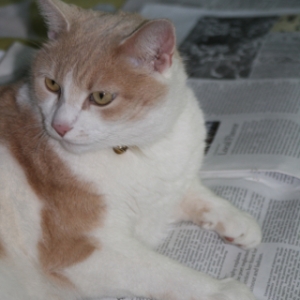
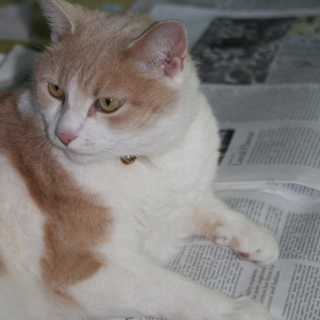
Eli, the In Brief Legal Writing Services mascot.
In Brief Legal Services mascot Eli catching up on the latest news. Photo by Alexandra Bogdanovic

It has been a rough week here at In Brief Legal Writing Services.

On Monday, I learned that the little lump I found on Eli’s back is a tumor.

The good news — if there was any — is that this type of tumor is fairly common in dogs and cats. From what I understand, it tends to be more aggressive in dogs, and affects the liver and spleen in only a small percentage of cats (approximately 10 percent). In most cases, surgery to remove the lump is all that’s needed.

According to the vet, an ultrasound is the best way to determine whether an external mass is the result of cancer affecting the internal organs, so we scheduled one for Wednesday. The next steps would depend on the results.

Before the ultrasound, I tried not to borrow trouble. If anything I took comfort in the fact that the lump was small; that it hadn’t changed shape, size or color since I noticed it; that Eli’s behavior hadn’t changed and most importantly, neither had his appetite.

Being a realist, I also thought long and hard about what I would do in the worst-case scenario. I came to the conclusion that I would not subject him to extensive surgery, no matter what. After all, he just turned 10. I’ve had him — or more accurately, he’s had me wrapped around his little paw, for just about eight years now.

He came into my life in February 2008. I was living in Virginia at the time and had just come home from Australia, where my family gathered to celebrate my grandmother’s 90th birthday and I got to watch my favorite football team win the Super Bowl.

The New York Giants won that championship thanks to some heroics by my favorite quarterback, Eli Manning. So imagine my delight — and surprise — when I glanced at the Fauquier SPCA’s flyer on my way out of the office one day. If memory serves, I stopped dead in my tracks and yelped, “Holy crap! The SPCA has a cat named Eli!”

I went to the shelter and instantly decided to adopt him. As much as I wanted to, I couldn’t take him home right away. He stayed at the shelter so he could be neutered, and as I drove home alone, the sun, which had been noticeably absent all day, peeped out from between the clouds.

I picked him up after work on another cold, dreary winter afternoon a couple of days later. As we drove home together, the sun, which I hadn’t seen all day, made another appearance.

Perhaps it was a mere coincidence. Or maybe it was a cosmic sign of approval from my cat Heals (named after New York Islanders and New York Rangers goalie Glenn Healy) who had died of cancer six months before.

In any case, it didn’t really matter. All I knew for sure is that it was definitely meant to be.


No easy answers

This vintage typwriter is our featured image.

Recently publicized incidents involving New Jersey and Connecticut animal shelters raise important questions for everyone concerned about the plight of unwanted dogs and cats in America.

As reported on NorthJersey.com, the Montclair, NJ, case highlights the controversy and confusion surrounding the use of the term “no-kill” in association with animal centers, shelters, and so forth. Taken on its face value, the term implies that no animal admitted to the facility will be euthanized for any reason. But as experts in the field quickly point out, that’s not necessarily the case. While policies likely vary, some, like those in place at the shelter in question, do permit euthanasia under extenuating circumstances.

Eli, the In Brief Legal Writing Services mascot.
Eli reading.

Meanwhile, the director of one Connecticut shelter is wrestling with an entirely different issue. For years, many northern shelters, adoption and rescue groups have been “saving” unwanted dogs and cats from southern states where – for numerous reasons – their fate is uncertain. According to published reports, the Branford shelter director is wondering if that’s still a good idea. Her argument is that there are plenty of pets in need of good homes in Connecticut as it is, and that their needs should  be prioritized.

I’m not about to weigh in on either one of these debates. All I know is that any way you look at it, there is no easy answer.