
Blog

Suburban New York puppy mill law is a no-brainer

This vintage typwriter is our featured image.

What I’m about to say is hard to believe — but it’s true. Every once in a while, local, state (and even federal) lawmakers actually do something that makes sense.

In this case, lawmakers in the New York City suburbs — Westchester County, to be exact — are weighing the pros and cons of a so-called “puppy mill” law.
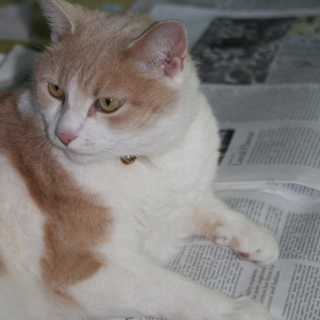
Eli, the In Brief Legal Writing Services mascot.
In Brief Legal Writing Services mascot Eli catching up on the latest news. Photo by Alexandra Bogdanovic

You can read all about it here. For now I will just highlight the key points.

As it currently stands, the new law would:

  • Change current rules that “regulate animal facilities.”
  • Create tougher regulations pertaining to health standards for breeders and pet stores that sell puppies.
  • Ban any transactions involving puppies that were “raised in unhealthy and unsafe conditions.”

County Legislator Jim Maisano, a Republican driving the new legislation, sums it up this way:

“What we really want to do is impact the flow of puppy-mill dogs into Westchester. We want to stop it. So we’re raising the standards the Health Department will enforce to make sure (that), when dogs come into a pet dealer in Westchester County, that they’re not coming from the puppy mills.”

According to published reports, many communities in the county are already taking matters into their own hands. As a result, Mamaroneck, , New Rochelle, Mount Pleasant, Harrison, Yorktown, Rye Brook and Port Chester all have so-called “puppy mill” laws on the books.

Of course, there’s always another side of the story. So those who oppose the county’s efforts say the law currently being considered may have unintended consequences. Specifically, one pet shop owner says passage of the law as it now stands would harm his business by limiting where he can get dogs for his breeding program.

Animal advocates don’t buy that argument, however.

“Westchester is already on the map for making a statement against puppy-mill atrocities and, as a county, we can make that statement even larger,” said Dina Goren, who represents the Coalition for Legislative Action for Animals in the county. “We have the legal right and obligation to protect animals in our own community. Banning the sale of commercially bred dogs and cats in pet stores altogether would do just that.”

I agree.

Police pit bulls — now that’s awesome

This vintage typwriter is our featured image.

There’s no doubt about it. Pit bulls get a really bad rap.

Some people say there’s a good reason for all of the bad press. But personally, I love pit bulls. I think they’re awesome dogs.

Take me home! A dog up for adoption and an Adopt-a-Dog volunteer. Photo by A. Bogdanovic
An Adopt-a-Dog volunteer with a dog up for adoption at the annual Puttin’ on the Dog show in Greenwich last September. Photo by A. Bogdanovic

So I was really happy and really excited when I came across this article about some pit bulls that not only found new homes, but also got new jobs. First, there’s Kiah. She’s “the first-ever pit bull K9 officer in the state of New York.”

As author Laura Goldman explains, “Kiah joined the Poughkeepsie Police Department after being rescued from a Texas shelter, where she’d ended up after her owner was arrested for animal cruelty.”

From what I understand, the department got her for free after a San Antonio, Texas-based business that specializes in training K9s teamed up with a New York-based organization devoted to saving pit bulls.

Generally speaking, law enforcement agencies have two options when it comes to their K9 programs. They either budget a small fortune for acquisition and training or they pursue other funding sources.  So by working together to send Kiah to Poughkeepsie, the Texas business and New York pit bull advocacy group saved the Poughkeepsie PD a lot of money. More importantly, they ensured that Kiah got a new home and a good job.

And clearly Kiah is a natural when it comes to police work and public relations.

“When they’re not at their jobs, Kiah and her partner, Officer Justin Bruzgul, visit schools and conferences to educate people about the importance of animal rescue,” Goldman explains. “Kiah is also a pit bull ambassador, showing that any dog breed can have amazing underlying potential.”

While Kiah was the first of her breed to become a K9 in New York, she is not alone. Law enforcement agencies across the country are welcoming rescued pit bulls to their ranks.

You can read more about K9 Wilson, K9 Mollie, K9 Libby, and K9 Ruby, here.

My cat may not be my child — but he is still my boy

This vintage typwriter is our featured image.

In case you’ve missed it, there’s a debate raging across the Internet. And believe it or not, it’s got nothing to do with the election. It’s not about Democrats or Republicans or conservatives or liberals or Hillary or Trump.  In fact, it’s got nothing to do with politics whatsoever.

But it’s heated. Because this debate pits pet owners against non-pet owners and animal lovers against non-animal lovers.

Eli, the In Brief Legal Writing Services mascot.
In Brief Legal Writing Services mascot Eli catching up on the latest news. Photo by Alexandra Bogdanovic

It all started not too long ago, when a New York Magazine writer penned an article claiming pet owners who think of themselves as “parents” to their dogs and cats are delusional. The headline simply read: Pets Are Not Children So Stop Calling Them That.

As someone who always wanted to have kids of my own but didn’t due to circumstances beyond my control — and as someone who has had pets for most of my life — I actually agree with him. But only to a point.

Personally I think that dressing companion animals in “costumes” resembling human clothing (for any reason other than to keep them warm in exceptionally cold weather) is taking things way too far. I feel the same way about transporting them in strollers and throwing parties to celebrate their birthdays. To me, there’s something about it that just isn’t right.

However, I strongly object to the author’s contention that, “In stark contrast to pets, children are always trying to outgrow, outflank, and outsmart their parents. Children are cunning and devious, with long memories and big plans. They don’t just grow, they develop.”

This comment shows a considerable lack of insight and a remarkable amount of stupidity.

I got my first cat when I was 10. She died when I was 27. So we literally grew up together. Her name was Tiger. She was a little Siamese cross with a huge personality.  And she was a peacemaker. Whenever there was drama in our house (and there was lots of it), Tiger would stand between the warring parties and cry her little lungs out. She didn’t stop making noise until we did. She wasn’t necessarily “cunning and devious,” but she was smart.

Then there was Heals. She came into my life a few months after I lost Tiger. She was a big, outgoing, happy-go-lucky cat. She was also adventurous and insisted on being outdoors, even after I moved twice in a short period. When we lived in West Harrison, she had a habit of wandering into one neighbor’s garage to say “hi.” I don’t know for sure, but I rather suspect she got a few treats there, too. So was she “cunning and devious?” Perhaps. Was she “trying to outflank and outsmart” me? I wouldn’t have put it past her. Was she intelligent? No doubt.

And now I’ve got Eli. My big, sweet, wonderful boy. He came into my life back in 2008. I adopted him from the Fauquier SPCA when I lived in Virginia — and it was clear from the beginning that he’d had a troubled past. He spooked easily and ran from anything he thought he could be hit with. Even soft toys seemed to pose a tremendous threat. He didn’t like men, or little kids and cringed at loud noises. At times, he acted out in ways that were clearly indicative of “fear aggression.”

So can I honestly say he has a “long memory?” Hell, yes. But with time and patience and love, I won his trust. And we now have an unbreakable bond. He is definitely my cat. And I am his number one person.

Like Tiger and Heals did before him, Eli counts on me for everything, but most importantly food, shelter, water, healthcare and a clean litter box. As long as he is alive, I am responsible for his well-being. And as long as he is alive, I will remain fiercely protective of him (as I was with Tiger and Heals).

Anyone who even thinks of putting a hand on him in anger or malice has to come directly through me. Yes, I would literally defend him with my life. I love him that much.

And in that regard, I am no different from any other parent.

Oh, rats! Feral cats now on the job in NYC

This vintage typwriter is our featured image.

Ah, New York City. Gotham. The Big Apple. It is globally known for its imposing yet beautiful skyline, its culture, its nightlife, its tourist attractions, its sports teams, its subway system, the collective “attitude” of its residents — and its rats.

Eli, the In Brief Legal Writing Services mascot.
In Brief Legal Writing Services mascot Eli catching up on the latest news. Photo by Alexandra Bogdanovic

Yes, you heard me. Rats. Big, mean, scary rats — well, according to urban legends at any rate. There are millions of them. In fact, a 2014 estimate published in a New York Times article indicated that New York City’s rat population totaled roughly 2 million — give or take a few. Although that article was supposed to debunk the myth that there’s a rat for every New Yorker (which would put the total at approximately 8 million), New York City still ranks as the worst “rat city” in the world.

But never fear! According to published reports, feral cats are coming to the rescue.

Yes, I’m serious.

As the website nymag.com reports in an Oct. 23 article, “Volunteers with the NYC Feral Cat Initiative are working to repurpose some of the city’s population of as many as half-a-million stray cats as feline special forces in the war against the rats.”

Citing accounts from other media outlets, nymag.com explains that the group, “is working to trap wild cat colonies throughout New York, spay or neuter the animals, and when the cats can’t be adopted or returned to the place they were trapped, the group will try to relocate them to areas in need of rodent control.”

So far, it seems to be working. One group of feral cats “assigned” to the loading dock area at the Jacob Javits convention center a few years back has reportedly been highly effective. Today four cats from that group remain on the job. The rest found new homes with some of the center’s employees or with visitors.

The program isn’t unique to New York. Similar efforts are ongoing in large cities elsewhere in the United States.

Historically, shopkeepers throughout the world have also kept cats to control rodents — a practice that continues in New York City today. And we all know about “barn cats” that help fend off rodents in rural areas. What you might not know is that in World War I, cats took to the trenches and ships to hunt rodents.

So the bottom line is that when it comes to putting feral cats “to work” in New York City, no one is reinventing the wheel. But I still think the idea is genius… and so does Eli.

Defending the indefensible: the demise of American decency

This vintage typwriter is our featured image.

So I was really looking forward to writing about something fun today. I was planning on writing about the use of feral cats to curb the rat population in New York City. Frankly I think it’s genius.

Unfortunately I’ve got more serious things on my mind. Or more accurately, with the U.S. election looming, there’s something important I’ve got to get off my chest. So the post about feral cats being put to work in the Big Apple will just have to wait.

Eli, the In Brief Legal Writing Services mascot.
In Brief Legal Writing Services mascot Eli catching up on the latest news. Photo by Alexandra Bogdanovic

Today I am completely fed up — not only with presidential politics — but with hyper-partisan behavior in general. Americans on both sides of the aisle are happily defending the indefensible and justifying their behavior by saying “well at least he’s not as bad as she is,” or vice-versa.

Frankly it is deeply disturbing on many levels — for many reasons. But the partisan defense of the indefensible is especially troubling when it comes to Donald J. Trump’s (actual and alleged) behavior, Bill Clinton’s (actual and alleged) behavior and Hillary Clinton’s (actual and alleged) behavior.

Let’s begin with Donald J. Trump and Former President Bill Clinton. Both men have been accused of committing serious crimes against women. Trump is currently facing numerous sexual assault allegations. Yet Trump’s supporter loudly proclaim, “at least he’s not as bad as Bill Clinton.” Or something to that effect.” For his part, Former President Clinton has also been accused of sexual assault — and rape.

If nothing else, both men have demonstrated a proclivity for objectifying women. As everyone knows by now, Trump’s tendency to do so recently surfaced when his comments caught on that “hot mic” 11 years ago became public. As for Bill Clinton — well, there was that affair with a White House intern while he was president — among other things. Allegedly.

So what is the objectification of women? Objectification is commonly defined as “viewing and/or treating a person as an object, devoid of thought or feeling.” The definition of sexual objectification is ” the reduction of people to physical objects of sexual desire.”

So what’s the big deal? According to The Huffington Post, a recent study that included nearly 300 participants found that “over one-third of the participants had experienced sexual victimization as defined by the study.” The study also found that participants who experienced unwanted sexual advances — and worse — also reported experiencing objectification at one time or another.

In that sense, the study didn’t break new ground. It merely confirmed prior findings. It also confirmed what I witnessed as a crime reporter. As soon as someone stops seeing a person or group of people as human beings, it is easy to engage in criminal activity targeting that person or group of people.

In other words, it’s all “locker room talk” and “boy talk” until people get hurt. And then it’s not so funny anymore.

Listen Up, Ladies…

If there’s one thing worse than a man who mistreats women, it’s a woman who defends him. Hillary Clinton — who may very well be the leader of the free world come January — is accused of not only enabling her husband’s behavior, but verbally attacking his accusers.

And then there’s Melania Trump, who recently blamed everyone except Donald J. Trump for the comments that he made back in 2005. To her, Donald’s comments were just “boy talk.”

Really? Unbelievable.

Listen up, ladies. It is not okay. It is not acceptable. It is not a joke, and it is not funny.

It is inexcusable. And indefensible.

Period.

Football controversy and a wealth of ignorance in Greenwich, Connecticut

This vintage typwriter is our featured image.

As someone who lives in Greenwich, Connecticut, I am proud to say I defy every stereotype about this place. As someone who has lived in Greenwich for most of my life, I am also happy to say I defy the stereotypes about Greenwich residents.

I am not filthy rich. My family isn’t filthy rich, either. I don’t live in a McMansion. I don’t drive an SUV or crossover, or even a luxurious car. The only time I go overseas is to see family and I haven’t done so since 2015. I don’t work in New York City and I don’t have a house in the Hamptons.

Alexandra Bogdanovic
Founder/owner of In Brief Legal Writing Services, Alexandra Bogdanovic. Photo by N. Bogdanovic

I am not a snob. I am not fake. In fact, you won’t find anyone more forthright, honest, or genuine than I am — if I do say so myself. What you see is what you get. And what you get isn’t always perfect. But for the most part, I’d like to think I’m a fairly decent person.

Having said all of that, perhaps you’ll understand why I’m not only ashamed of what’s been going on around here — I’m disgusted.

According to recent media reports, a Greenwich High School football coach decided to use some rather “unique” signals to counter certain defensive formations. Under his direction, the team used “Stalin” to signal an offensive line shift to the left, and “Hitler” to signal a shift to the right.

No, I’m not kidding.

In an open letter to the community recently posted on the school district’s website, the interim superintendent of schools said the following:

“The shift is called at the line of scrimmage. There is no defensible reason for using those two names. The coach clearly displayed bad judgement, but it was not intended in any way to be an anti-Semitic remark and there is no ‘Hitler’ play. This is not an excuse, only an explanation. It was a bad decision because of its insensitivity. But it is also important to understand that these were not slurs that were directed at anyone. It was an inappropriate use of names that have a horrific history attached to them and we should have been mindful of that. Our coaches should know better and it should never have happened.”

Understandably, the use of Hitler’s name spurred the most visceral reactions and received the most emphasis in Interim Superintendent Salvatore J. Corda’s public apology.

Frankly, as a first-generation American of Eastern European descent, I am outraged by the use of Stalin’s name. And no one has apologized to me.

For those of you who don’t know, Joseph Stalin was just as ruthless as Hitler. And just as evil. Although the exact numbers may never been known, some estimates indicate he may have been responsible for up to 20 million deaths from the time he seized power in the late 1920s until his death in 1953.

A brief summary of Stalin’s “achievements” on history.com includes the following:

“Stalin ruled by terror and with a totalitarian grip in order to eliminate anyone who might oppose him. He expanded the powers of the secret police, encouraged citizens to spy on one another and had millions of people killed or sent to the Gulag system of forced labor camps. During the second half of the 1930s, Stalin instituted the Great Purge, a series of campaigns designed to rid the Communist Party, the military and other parts of Soviet society from those he considered a threat.”

What’s even more disgusting than the repeated use of the names “Hitler” and “Stalin” by a high football team is the community’s reaction to the ensuing controversy on social media. You can read more about that here.

For people outside of Greenwich, it is simply a wealthy New York City suburb. But all this goes to show is that there’s a wealth of ignorance here, too.

And that’s a shame.

Note to Donald J. Trump: Stop playing the victim

This vintage typwriter is our featured image.

Sexual violence: term used to describe “a specific constellation of crimes including sexual harassment, sexual assault, and rape.” — National Institute of Justice

It is something countless Americans endure each year.

I say “countless Americans” because the experience is not unique to women. Men are targeted, too.

Alexandra Bogdanovic
Founder/owner of In Brief Legal Writing Services, Alexandra Bogdanovic. Photo by N. Bogdanovic

In a recent media fact sheet, the National Sexual Violence Resource Center cited a survey in which nearly half the number of women who self-identified as lesbians and half the number of women who self-identified as heterosexual “reported sexual violence other than rape during their lifetimes.” Nearly 75 percent of women who self-identified as bisexual reported the same.

In the same survey, roughly 40 percent of men who self-identified as gay, nearly 50 percent who self-identified as bisexual and approximately 20 percent of those who self-identified as heterosexual said they too experienced sexual violence other than rape.

Another report cited in the same fact sheet indicates that “one in five women and one in 71 men will be raped at some point in their lives.”

And then there are the most heartbreaking statistics of all — those pertaining to the American children preyed upon by sexual predators each year. According to one estimate, one in four girls and one in every six boys will be “sexually abused before they turn 18 years old.”

These are the victims.

U.S. presidential candidate Donald J. Trump, who was caught on tape bragging about and making light of behavior that can definitely be characterized as sexual violence, is decidedly not a victim of anything.

Oh, he says he is. After the 2005 tape in which he bragged about and made light of behavior that could definitely be characterized as sexual violence became public, several women accused him of sexual assault. And he’s been whining and crying about it for days. To hear him tell it, he’s a victim of a media conspiracy, a victim of character assassination, a victim of a slur campaign… and on, and on, and on.

Perhaps his accusers are lying. Or exaggerating.  Or perhaps not.  Perhaps it is a political ploy dreamed up by the Clinton camp and the mainstream media. Or perhaps not. That all remains to be seen.

Hey Donald, There Is No Excuse

What is indisputable is that Donald J. Trump’s “locker room talk” (his words, not mine) was disgusting, reprehensible, vile, inexcusable and indefensible.

In fairness, the Clintons’ conduct (actual and alleged) is also vile, inexcusable and indefensible. But that’s another subject for another blog. For now I’m sticking to the topic at hand.

That Melania Trump said her husband was “egged on” would be laughable if it weren’t so pathetic. To hear Donald J. Trump tell it, he’s a big, tough businessman who doesn’t take c–p from anyone. He does what he wants, when he wants. No one can intimidate him, and so on and so forth…

But we’re supposed to believe that he only engaged in this “locker room talk” because  someone (presumably Billy Bush) pressured him into it? Or because he wanted to be accepted? Or because he wanted to be one of the guys? Come, come now. What a load of garbage. It’s the kind of lame, pitiful, excuse you’d expect from a teenager. As far as I know, Mr. Trump was an adult back in 2005.

Today he is an adult who wants to become president. So my question is this: Should someone who could be so easily influenced and use such poor judgment become the leader of the free world?

Donald J. Trump had an opportunity to exercise true leadership and strength of character 11 years ago. Instead of going along with the “boy talk,” as Melania Trump claims, he had the chance to say, “Hey, man. You know what — that really isn’t cool. Women should be treated with respect. You wouldn’t want someone talking about your mom or sister, or daughter or girlfriend that way. Knock it off…”

But he didn’t.

Legal view on pets is actually changing…slowly

This vintage typwriter is our featured image.

Historically, the law has taken a pragmatic view of animals. Legally they’re not viewed as pets or companions or family members. Legally, animals are property. That’s all. Nothing more, nothing less.

This archaic philosophy — for lack of a better word — is still reflected in Connecticut law. As the Connecticut Humane Society notes, the state’s legal definition of animals includes “all brute creatures and birds.” Under CGS §53-247(a), criminal activity includes “overdriving, overloading, overworking, torturing, depriving of substance, mutilating, cruelly beating or killing, or unjustifiably injuring any animal.”

Eli, the In Brief Legal Writing Services mascot.
In Brief Legal Writing Services mascot Eli catching up on the latest news. Photo by Alexandra Bogdanovic

Judging by the language quoted above, the law can be traced to a time when most animals were literally “beasts of burden.” Fortunately a lot has changed since then. And the law is finally changing, too.

I’ve often blogged about one of the most significant developments — a law that permits the appointment of special advocates for animals in some cases. The law took effect here earlier this month.

As New London, CT, attorney Kean Zimmerman recently told The Connecticut Law Tribune, the passage of “Desmond’s Law” is a significant step in the right direction. But it’s just the beginning.

“Connecticut laws have not made the leap to consider pets more than property, but slowly judges and legislators are seemingly beginning to acknowledge the many intrinsic values pets have. This is especially true when it comes to a dissolution in which the ‘property’ cannot be divided,” Zimmerman said.

Meanwhile, divorce lawyers find themselves in search of creative solutions in cases where the parties don’t agree on what to do with the family pet(s).

“I’ve had parties agree that the family dog would go back and forth with the kids. I’ve had parties agree on financial contributions for the care of a pet,” New Haven attorney Renee Bauer told the Tribune.

The Animal Legal Defense Fund also offers tips for divorcing couples at odds over the family pet.

“Since animals are considered property in the eyes of the law, it may be helpful to offer proof that you were the one who adopted the animal, or if the animal was purchased, that you were the one who purchased the animal,” the organization recommends.

The person didn’t adopt or purchase the animal may still be able to show that he or she should continue to care for the animal, according to the ALDF. Relevant proof may include:

  • Receipts for veterinary care, licensing records.
  • Receipts for grooming, dog training classes, food, and other items purchased for the companion animal.

“If your neighbors saw that you were always the one who walked your dog or took him/her to the park, they may be useful witnesses who can confirm your consistent interaction with the animal and therefore be helpful to your case.”

Feeding feral cats could soon be illegal in CT town

Officials in Naugatuck, Connecticut, are currently mulling the creation of a new ordinance that would punish people caught feeding feral cats.

According to published reports, the measure being considered by The Naugatuck Board of Mayor and Burgesses would address an alleged feral cat “problem” in a borough neighborhood.

“A couple” brought the issue to the mayor’s attention and requested that a local law be created to “fine people if they choose to feed feral cats.”

Cute Kitten, courtesy of FURRR 911. Photo by A. Bogdanovic
Bolt, a kitten rescued by FURRR 911, at Puttin’ On The Dog & Cats, Too 2016. Photo by A. Bogdanovic

So what will happen next? To start with, the Naugatuck attorney will review an existing ordinance in another community and draft one of his own. Then citizens will get to voice their opinions on the subject at a public hearing. Finally, the board will vote on whether or not to adopt the new ordinance.

Needless to say, that won’t happen overnight.

In the meantime, here are some things to consider:

  • Feral cats are also known as “community cats” by some animal welfare groups.
  • The ASPCA estimates the number of “community cats” in the United States to be in the “tens of millions.”
  • Traditional methods of dealing with feral cat colonies include “lethal extermination” or relocation.
  • Most kittens born into feral colonies don’t live long.
  • Although the practice is often criticized, the ASPCA endorses Trap-Neuter-Return as “the least costly and the most humane, efficient way of stabilizing community cat populations.”
  • Having a “colony caretaker” who “provides food and adequate shelter and monitors the cats’ health,” is key to successful TNR programs.

Personally, as someone who loves cats I have mixed feelings about TNR programs. On one hand I think they’re great. On the other hand, I think it’s sad that we need them at all — and I hope that there will one day be a time when we no longer do.

Until then, there are things we can all do to reduce the number of unwanted cats and kittens in the United States. Please, please, please, do not buy kittens from pet stores. Consider adopting from a shelter rather than buying a kitten from a breeder. Please think carefully about buying or adopting a cat or kitten — it is a big responsibility. Please spay or neuter your cat or kitten — they will be happier and healthier — and it is just the right thing to do.

In CT, repeat offenders in animal cruelty cases now face tougher punishment

This vintage typwriter is our featured image.

A Connecticut law now on the books provides for tougher penalties in some animal cruelty cases. Specifically, the law that took effect Oct. 1 ups the maximum punishment for repeat offenders.

Until recently, anyone convicted of malicious and intentional animal cruelty more than once was guilty of Class D felony. That meant the offender could be sentenced to no more than five years in prison. Now a “subsequent offense” is designated as a Class C felony, with a maximum sentence of 10 years in prison.

Eli, the In Brief Legal Writing Services mascot.
In Brief Legal Writing Services mascot Eli catching up on the latest news. Photo by Alexandra Bogdanovic

Putting it in “plain English” that means anyone found guilty of “maliciously or intentionally maiming, mutilating, torturing, wounding, or killing an animal” in separate cases no longer gets a slap on the wrist. However, someone convicted for the first time is still guilty of a Class D felony.

Penalties for animal neglect remain the same. If convicted, anyone who deprives an animal or animals of adequate “care, food and water” faces up to one year in prison, a $1,000 fine or both. Anyone found guilty of such activity more than once faces up to five years in prison.

There are exceptions to every rule. In Connecticut, people in certain professions, or who engage in certain activities, cannot be prosecuted under the state’s “malicious and intentional animal cruelty” law — as long as they are following “acceptable practices.” For example, veterinarians, people working in abattoirs, and farmers or ranchers are exempt. Researchers and hunters acting within legal parameters are also exempt.

Whether the exemptions are “fair” or “right” is a matter of opinion and can be debated at another time. Whether the laws pertaining to neglect should be changed is also a matter of opinion and a subject for future debate. The same can be said about whether the new law goes far enough.

All anyone can say for certain is that animal abuse and neglect is an American epidemic that must be addressed. Recently compiled statistics show that:

  • The media reports on roughly 1,900 animal abuse cases each year.
  • Most animal abuse cases involve dogs, and of the cases involving dogs, the majority involve pit bulls.
  • Neglect and abandonment are the most common forms of abuse.
  • Hoarding makes up 13 percent of animal cruelty cases.
  • Fighting makes up 9 percent of animal cruelty cases.

As someone who has personally witnessed the effects of animal cruelty as a pet owner (Eli was definitely abused before I adopted him) and as someone who volunteers at a local shelter, I have very strong feelings about the topic. As far as I am concerned there’s simply no punishment harsh enough for anyone who hurts an animal. None.